


Restaurant Equipment for Professional Food Service
From prep and refrigeration to the hot kitchen, the pass, the dishwashing area, and service: A well-designed restaurant layout integrates all work areas into a seamless, efficient workflow. The right equipment depends primarily on the menu, guest volume, production methods, available space, and team organization. Restaurant Guide »
Especially for restaurant














Setting Up a Restaurant: The Menu Determines the Decor
Professional restaurant equipment includes the appliances, work surfaces, and functional areas for storage, preparation, cooking, plating, serving, beverage service, and cleaning. The key is not to include as many appliances as possible, but to tailor the equipment to the actual restaurant concept. A small à la carte restaurant with a limited menu operates differently than an establishment with an extensive selection of dishes, a busy lunch service, or an additional takeout option. Restaurants with a high proportion of freshly prepared dishes also require different capacities than concepts that rely more heavily on pre-prepared components. The starting point for planning is therefore the menu. Which dishes share the same cooking methods? Which ingredients must be available chilled right at the station? What is prepared in advance, what is made à la minute, and which components must come together simultaneously at the pass? Only once these processes are clear can restaurant equipment be properly sized.
Viewing the Kitchen as a Coherent Production Line
A professional restaurant kitchen does not consist of independent stations. Storage, prep, the cooking line, the serving station, and the dishwashing area all influence one another. An efficient cooking station is of little use if ingredients have to be fetched from a distant cold storage area for every order. Similarly, fast production is of limited help if finished components at the serving station are waiting for plates, garnishes, or other ingredients. Workflow paths should therefore ideally follow a logical sequence: ingredients move from storage and refrigeration to prep, then proceed to the respective cooking station, and are assembled into finished dishes at the serving station. Dirty dishes and used utensils, on the other hand, should be routed via a separate return path to the sink whenever possible. This ensures that clean production areas and the return path do not constantly intersect.
Select cooking technology based on the menu and peak load
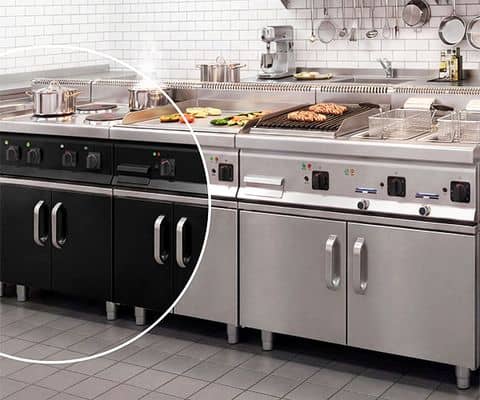
Cooking appliances form the core of hot food preparation in many restaurants. Stoves, griddles, deep fryers, stock pots, and other equipment are selected not based on theoretical versatility, but according to the cooking methods regularly required. A restaurant with a strong focus on pasta and pan-fried dishes has different priorities than one specializing in grilled dishes or fried items. Peak volume is also a key factor. The cooking equipment must not only handle the daily volume but, above all, the period during which a particularly large number of orders come in simultaneously. If a large portion of the day’s business is produced within an hour, the capacity of individual stations determines whether orders flow smoothly or back up in front of a single appliance. Having some reserve capacity can be useful. On the other hand, too much unused equipment takes up space, increases cleaning efforts, and ties up the investment budget.
Flexibly Integrating Combination Ovens into the Production Workflow
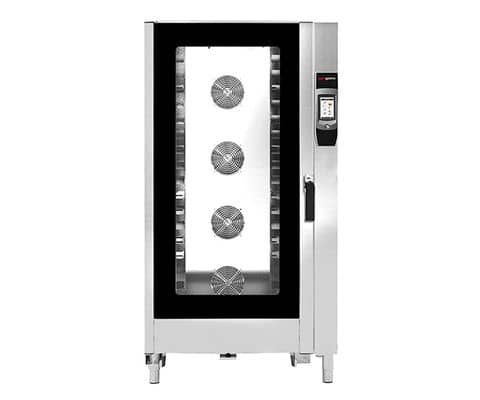
Combi ovens can perform a variety of tasks related to food preparation and hot food production in many restaurant concepts. Depending on the menu, they can be used, for example, to consolidate production steps, further process prepared components, or organize multiple cooking processes in a structured manner. However, the key factor is how frequently these functions are actually used in day-to-day restaurant operations. The capacity must also align with the production rhythm. A unit that can handle only part of the peak load can itself become a bottleneck. A significantly oversized solution, on the other hand, takes up space and ties up capital without automatically generating a corresponding operational benefit. The appliance’s location within the kitchen is also important. Baking sheets, GN containers, and prepared ingredients must be able to be efficiently transported to the appliance and then quickly processed further or served.
Mise en place determines the speed of service
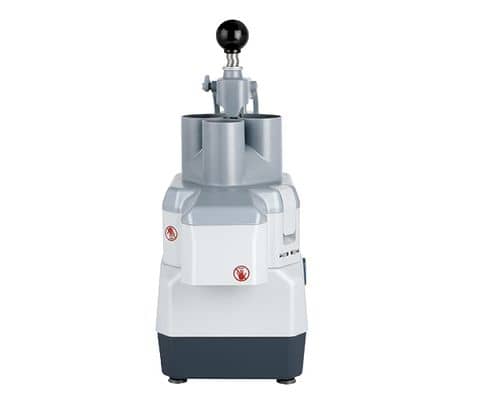
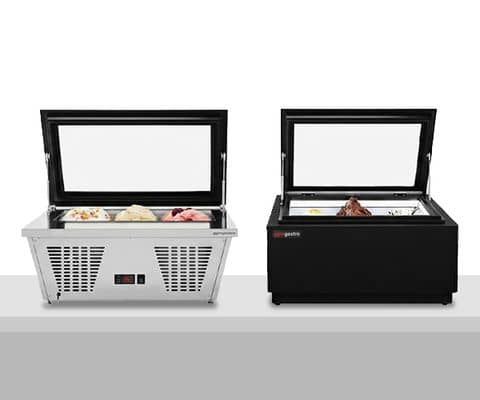
Many bottlenecks don’t occur during cooking, but rather before it begins. Cutting vegetables, portioning meat, preparing sauces, setting out side dishes, and arranging ingredients properly are key factors in determining how smoothly a kitchen can operate during service. Salad stations & refrigerated counters combine workspace with production-oriented refrigeration. Frequently used ingredients can remain readily available at the respective station, while larger reserves are stored in the storage refrigeration. This creates two distinct refrigeration tasks: The main refrigeration system safeguards inventory, while station-based refrigeration supports the daily workflow. Especially during peak hours, even a few extra steps per order can make a significant difference. Ingredients, utensils, and containers used in nearly every dish should therefore be within immediate reach whenever possible.
Quick Checklist for Choosing the Right Restaurant Equipment
Five points can help narrow down your actual equipment needs:
- Menu: Which dishes and cooking methods account for the majority of your business?
- Peak Load: How many dishes need to be produced simultaneously during the busiest 30- to 60-minute period?
- Production methods: What is prepared in advance, what is made fresh à la minute, and what, if anything, is reheated?
- Staffing structure: How many employees work simultaneously on prep, the cooking line, and the serving station?
- Sales channels: Will the restaurant stick to traditional dine-in service, or will takeout and delivery be added?
These factors determine which stations need to be designed for high performance and where a more compact solution will suffice.
Separate cooling by inventory and workstation
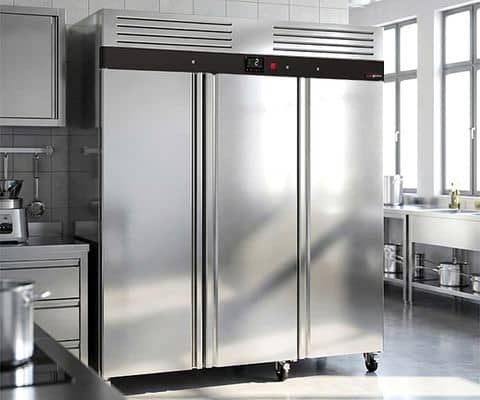
Restaurant kitchens often require multiple cooling zones. Larger quantities of inventory and deliveries can be stored in refrigerators, freezers, or cold storage rooms. Daily supplies, on the other hand, should be kept as close as possible to the respective production area. Meat, fish, vegetables, sauces, and prepared ingredients do not all need to be refrigerated in the same place. What matters is where they are needed in the workflow. A sensibly distributed refrigeration layout reduces walking distances and prevents employees from having to leave the main production area regularly during service. At the same time, not every available space should be filled with additional refrigeration units. More individual units also mean more floor space, cleaning, and organizational effort. The refrigeration layout must therefore align with the actual flow of goods.
Work Surfaces and Stainless Steel Furniture as a Factor in Productivity
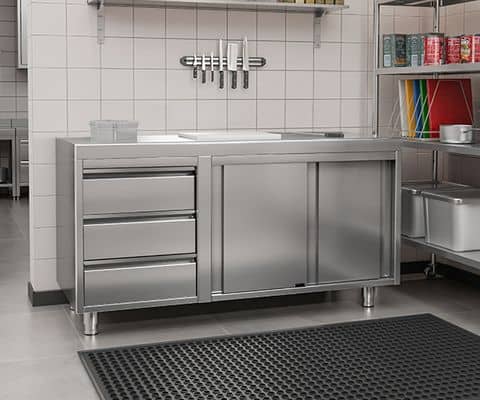
Work surfaces may seem less impressive than cooking and refrigeration equipment, but they have a significant impact on daily workflow. Preparation, portioning, temporary storage, and plating all require sufficient space. Without it, containers end up being placed on appliances, work areas are used for multiple purposes, and individual steps are constantly interrupted. Stainless steel furniture can combine work surfaces, storage, and shelving within a functional kitchen layout. Intermediate surfaces are particularly important at high-traffic workstations. In addition to cooking appliances, for example, containers, tools, or prepared ingredients must be able to be set aside temporarily. Base cabinets can also be used to keep frequently needed equipment readily available right at the respective workstation. A well-designed kitchen, therefore, does not maximize space but uses it wisely: enough equipment to meet performance needs and enough free counter space so that this equipment can be used efficiently.
Design the pass as a link between the kitchen and the dining room
The pass-through is one of the most important handoff points in a restaurant. This is where components from different kitchen stations come together. Plates are plated, checked for completeness and order, and then handed off to the service staff. If this area is too small or poorly organized, even a high-performing kitchen can lose its throughput. Finished dishes wait, plates get in the way, and multiple staff members access the same space at the same time. The pass-through therefore needs sufficient space for the actual number of dishes being prepared simultaneously. Plates, garnishes, and frequently used utensils should also be within easy reach. Depending on the restaurant’s concept, holding equipment can support individual processes, but it should not become a permanent holding area for poorly coordinated production times. The quality of the pass-through is particularly evident during the busiest service window: when multiple tables order at the same time, yet pathways, responsibilities, and handoffs remain clear.
Check whether the variety of menu items exceeds the kitchen's capacity
A wide-ranging menu may seem attractive to guests at first, but it places greater demands on storage, preparation, and production. Each additional product category may require new ingredients, containers, refrigeration space, and cooking methods. At the same time, the training requirements for the team increase. Therefore, a larger menu does not automatically mean a more efficient restaurant operation. It becomes particularly challenging when several popular dishes share the same station. For example, if many best-selling items are prepared simultaneously using a single deep fryer, grill, or sauté station, a bottleneck will occur there regardless of the kitchen’s overall size. Equipment should therefore be planned sensibly based on the core products that are actually sold. Equipment for rarely ordered dishes is given a different priority than appliances that account for a significant portion of sales during every shift.
Adapt restaurant setups to different service times
Many restaurants do not experience the same level of demand throughout the day. A busy lunch service requires high throughput within a short period of time. In contrast, evening service may involve longer customer stays with more elaborate plating. Other establishments combine à la carte service with events, takeout, or a terrace area that sees higher seasonal traffic. The kitchen must be able to handle these varying workload profiles without having to set up a completely separate set of equipment for every situation. Flexibly configurable workstations and thoughtfully combined equipment can help meet changing demands. However, it remains crucial that core production operates reliably during the most important sales period.
Don't just tack takeout and delivery onto the pass
Restaurants with takeout service create an additional production and distribution process. After cooking, meals must be packaged, inspected, supplemented with side dishes or beverages as needed, and clearly assigned to an order. If this process takes place directly on the traditional restaurant counter, service and delivery operations can interfere with one another. Therefore, if takeout accounts for a significant portion of business, it’s worth designating a specific packing and handoff zone. Boxes, bags, cutlery, and other materials are assigned fixed locations without taking up space on the serving counter intended for restaurant service. Guests picking up orders and delivery drivers should also be kept out of the traffic area between the kitchen and the dining area whenever possible. This allows for additional revenue without the second sales channel hindering the operations of the first.
Consider beverage service as a separate area of work
In addition to the kitchen, restaurant operations also involve beverage management. Depending on the concept, wine refrigerators, beer counters, beverage cooling systems, or coffee and espresso equipment may be required. These areas have their own peak times and workflows. Especially after a meal, multiple coffee or espresso orders may come in at the same time. If the necessary equipment is poorly located or if there is a shortage of cups, milk, or counter space, service is unnecessarily delayed. Wine and other chilled beverages should also be available where they are needed during service. A well-organized beverage station thus reduces the workload for both the service staff and the kitchen and prevents unnecessary trips to areas that are actually intended for food preparation.
Size the flushing zone based on the actual return flow
Dishwashing Technology is not just a secondary, downstream function for a restaurant. It keeps plates, silverware, glasses, cookware, and GN containers in circulation. The required capacity is therefore not determined solely by the number of seats. The menu, place settings, glassware selection, cookware, and peak occupancy also influence the actual dishwashing load. If capacity is insufficient, a backlog builds up. There is a shortage of clean dishes, and used items take up space needed for other tasks. Just as important as the machine itself is the surrounding organization: receiving dirty dishes, pre-sorting, washing, and preparing clean items all require a clear workflow. Ideally, this return flow should not interfere with food service or central production routes.
Consider ventilation and technical infrastructure early on
Depending on the equipment used, a restaurant kitchen generates heat, steam, grease, and odors. Ventilation must therefore be included in the technical planning of the cooking line from the very beginning. Especially with griddles, deep fryers, grills, and other heavily used heat sources, the ventilation system must be sized to handle the actual load. Electricity, gas, water, and wastewater also influence the choice of equipment. A piece of equipment may be a good technical fit for the restaurant’s concept but still be unsuitable for the intended location if the power supply, space, or infrastructure are insufficient. For a new opening or major renovation, it is therefore worthwhile to coordinate these requirements before finalizing the selection of individual appliances.
Integrating Hygiene and Cleaning into the Production Flow
In a restaurant, raw ingredients, prepared components, finished dishes, and used equipment pass through numerous stations during a workday. Clearly defined work areas make it easier to keep these processes organized. Smooth and accessible surfaces, sufficient space for cleaning, and designated spots for tools and containers reduce the need for daily improvisation. The choice of equipment also affects the amount of cleaning required. Anything that is used intensively every day must be cleaned just as regularly. Accessibility and practical handling are therefore among the key decision-making criteria, alongside performance and capacity. A kitchen that requires extensive reconfiguration after every service just to be cleaned creates a constant burden of additional work time.
Prioritizing Restaurant Equipment Based on Cost-Effectiveness
If you’re working with a limited budget, it’s worth starting by looking at the processes that drive daily revenue and quality. Refrigeration, prep, cooking capacity, work surfaces, the pass, and dishwashing equipment form the operational foundation of many restaurant concepts. Specialized equipment becomes more important when the corresponding dishes actually account for a significant portion of the business. Even during modernization projects, the visible bottleneck isn’t always the actual cause. Long order processing times can stem from an undersized cooking station—but just as easily from a lack of mise en place, inadequate refrigeration, or a poorly organized serving station. In this case, a more powerful individual appliance may simply shift the bottleneck elsewhere. The economically sound investment, therefore, improves the entire workflow at the point where time, labor, or capacity are regularly lost.
Equip Your Restaurant Professionally with GGM Gastro
From small à la carte restaurants to busy lunch spots to establishments with extensive menus and additional takeout services, kitchen workflows and capacity requirements vary significantly. GGM Gastro offers professional restaurant equipment for these needs, ranging from cooking equipment and combi-steamers to refrigerated counters, cold storage rooms, and stainless steel furniture, as well as food warming systems, beverage equipment, and dishwashing solutions. This allows you to configure everything from complete functional areas for a new opening to targeted upgrades tailored to your actual operational workflows.