


Beer Dispensers & Keg Coolers
Beer counters & keg coolers keep beer kegs cold right in the serving area and help ensure fast, clean workflows behind the bar. They are suitable for bars, pubs, restaurants, beer gardens, hotels, and event venues with professional draft beer service. Guide to Beer Counters & Keg Coolers »
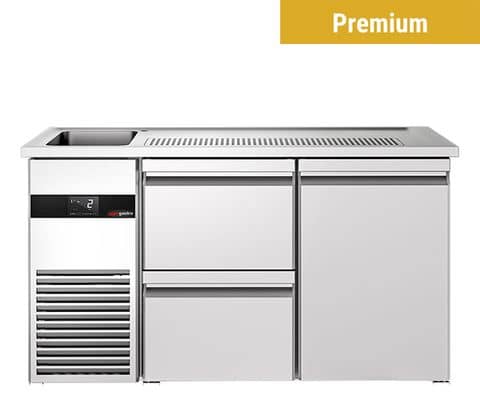

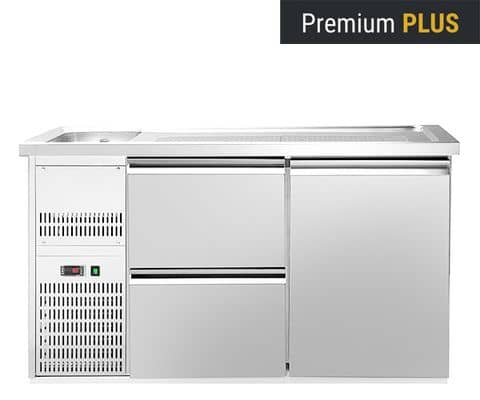
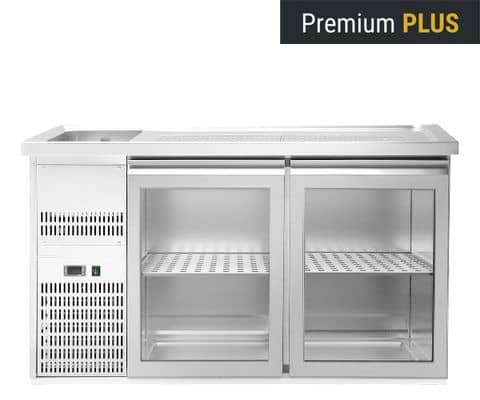
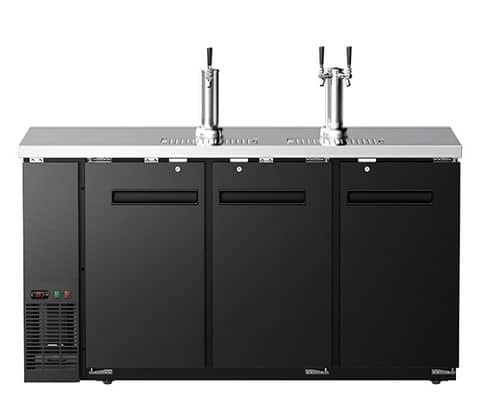



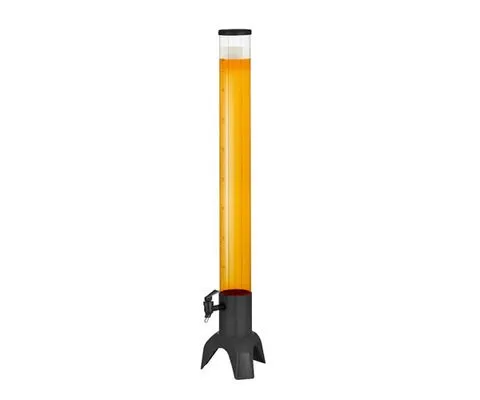
Beer Dispensers & Keg Coolers for Reliable Service
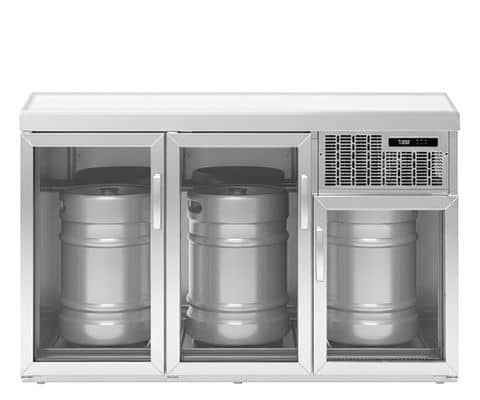
Beer counters and keg coolers are commercial cooling solutions for beer kegs and serving areas. They keep draft beer chilled at the counter, provide easily accessible storage space, and help minimize walking distances during service.
In bars, pubs, restaurants, hotel bars, beer gardens, and event venues, the layout of the bar area often determines how smoothly a team can work during peak hours. When kegs, the tap area, sinks, doors, drawers, and countertops are arranged thoughtfully, there are fewer trips to find items and fewer bottlenecks. A suitable beer bar can serve as an integrated solution for permanent service, while a keg cooler provides targeted cooling capacity for beer kegs.
Beer Dispenser or Keg Cooler: Choosing the Right Solution
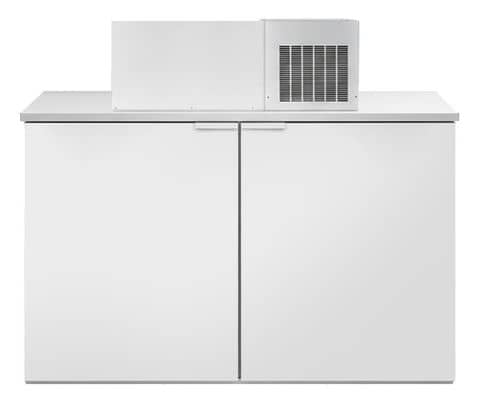
A beer counter combines refrigeration with counter functionality. Depending on the model, it features stainless steel doors, glass doors, drawers, sinks, or work surfaces, and is often used in areas where serving, cleaning, and storage take place side by side. Keg coolers are designed primarily to store beer kegs at a cool temperature, such as 20-, 30-, or 50-liter kegs. They can be selected with a built-in refrigeration unit, a top-mounted unit, or without a refrigeration unit, depending on the existing cooling system and the planned installation.
Key decision criteria include keg capacity, the available space behind the bar, the desired door type, the temperature range, and whether the unit should be ready to plug in and use. In a small taproom, a compact beer cooler with a tap may be a practical choice. For high serving volumes, such as in a beer garden or at event catering venues, larger keg coolers with multiple keg slots are often the better choice.
Design of the counter area: short distances, clear workflows, reliable refrigeration
Beer counters and keg coolers shouldn’t be considered in isolation. What matters most is how they fit into the workflow. Behind the bar, every move counts: changing kegs, pouring, rinsing, refilling, cleaning, and checking must all work smoothly even when the place is packed.
A typical example is evening service in a bar. When chilled kegs are within easy reach, the tapping area is easily accessible, and the sink is positioned thoughtfully, the workflow remains more organized. In a beer garden or event area, on the other hand, cooling capacity is often the key factor: multiple kegs must be reliably stored without the team having to walk long distances to a separate storage cooler.
Quick Checklist for Selection:
-
How many kegs need to be chilled and ready at the same time during peak hours?
-
Do the width, depth, and height fit the available counter space?
-
Is an integrated refrigeration unit, a top-mounted unit, or a unit-less solution required?
-
Are the doors, drawers, and sinks arranged to support the service workflow?
-
Is the interior easy to clean and maintain hygienic standards?
Materials, Hygiene, and Durability in Daily Use
In the bar area, moisture, cleaning chemicals, frequent door openings, heavy kegs, and mechanical stress all converge in a confined space. That’s why durable materials and easily accessible interior spaces are important. Stainless steel surfaces are particularly important in the foodservice industry because they are durable, easy to maintain, and suitable for hygienic work areas.
The equipment should also be suited to the operation. Glass doors facilitate visual inspections, stainless steel doors look particularly solid and durable, and drawers help organize accessories. For keg coolers, it’s also important to check whether the interior height and layout are compatible with the keg size being used. Before installation, consider the connection type, footprint, ventilation of the unit, and accessibility for cleaning and maintenance.
Economic benefits result from proper integration
A well-chosen beer counter or a properly sized keg cooler can significantly streamline daily operations. The benefit lies not only in the cooling itself, but in the combination of keg capacity, accessibility, hygiene, and flow rate. When kegs are cooled in the right location, it reduces unnecessary walking and makes the team’s work easier during periods of high demand.
For operators, realistic sizing is particularly important. Insufficient cooling capacity leads to frequent rearranging or additional cooling. Units that are too large tie up space and capital without necessarily improving workflow. A sensible solution is one that matches beer sales, bar width, operating mode, and expected peak times.
A Well-Coordinated Operational Concept for Beer Counters and Keg Coolers
Beer counters and keg coolers work best when they are part of a well-planned serving area. In addition, [bar and beverage refrigerated counters] can be useful for bottles, cans, and pre-prepared drinks. For larger stock quantities or separate storage areas, a refrigerated room can support centralized cold storage. In the immediate work area, stainless steel furniture helps to neatly organize storage surfaces, pathways, and cleaning routines. When planning for return flows and glassware management, the appropriate dishwashing equipment should also be considered.
This transforms the cooler into a well-organized serving station: The kegs stay reliably chilled, the team’s workflow is streamlined, cleaning can be easily scheduled, and focused work remains possible even during peak hours.
Shop for Beer Dispensers & Keg Coolers at GGM Gastro
GGM Gastro offers beer counters and keg coolers for a variety of serving concepts—from compact serving areas to high-traffic bars or event spaces. Operators can choose from various designs, door options, keg capacities, and refrigeration unit configurations, tailoring the solution to space requirements, beer sales volume, and workflow.
Professional planning involves considering not only the price of the equipment but also its suitability for everyday use: appropriate dimensions, sufficient cooling capacity, easy cleaning, robust construction, and reliable availability. This way, beer counters and keg coolers become a functional part of the business—ensuring chilled draft beer, organized workflows, and a serving area that supports day-to-day operations.