


Commercial Cooking Appliances for Hospitality and Catering Kitchens
Professional cooking appliances support food preparation, service and production output in commercial kitchens. At GGM Gastro, you will find cooking equipment for restaurants, hotels, takeaways, catering, staff canteens and other professional applications. Find out which equipment suits your business in our buying guide »
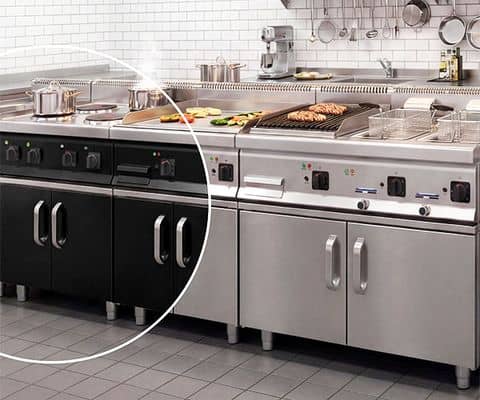
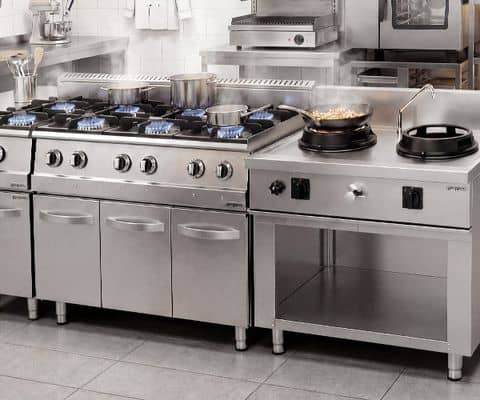
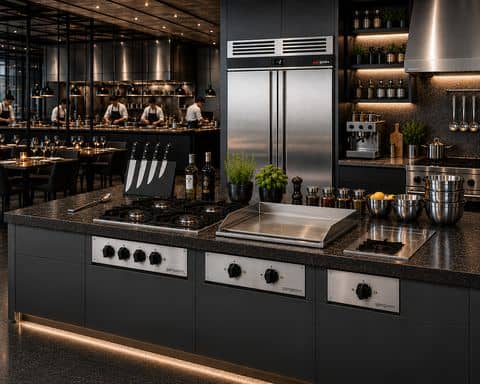
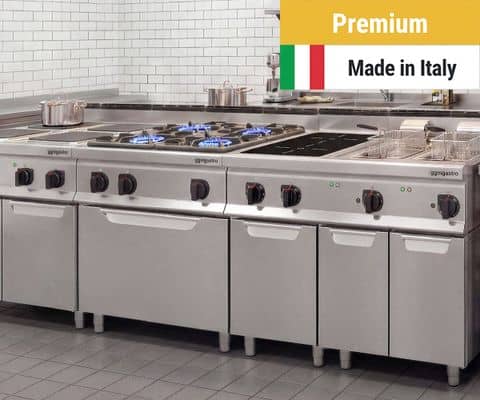
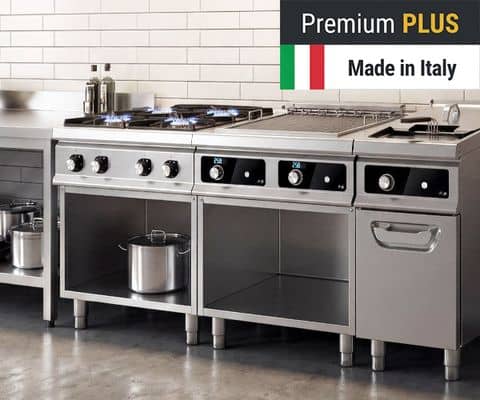
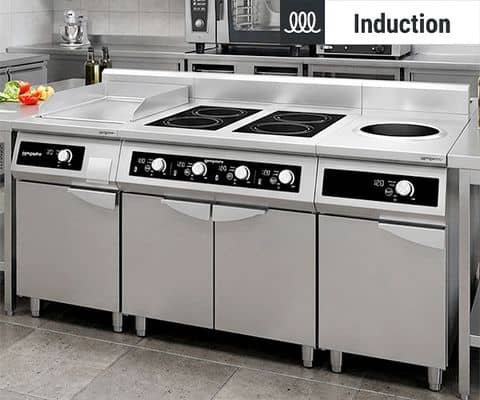
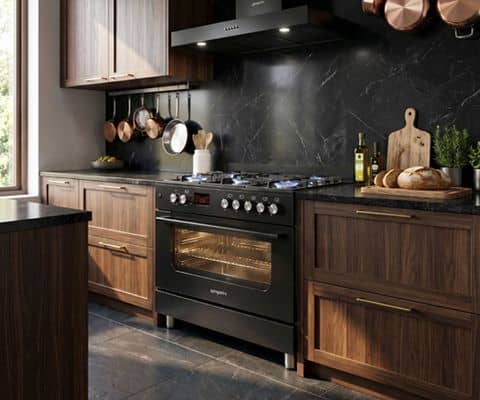
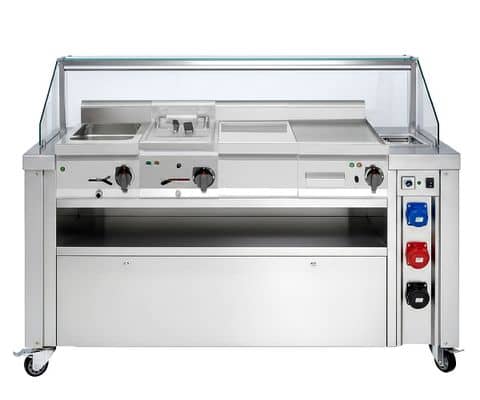
Commercial Cooking Ranges & Modular Cooking Suites
Devices
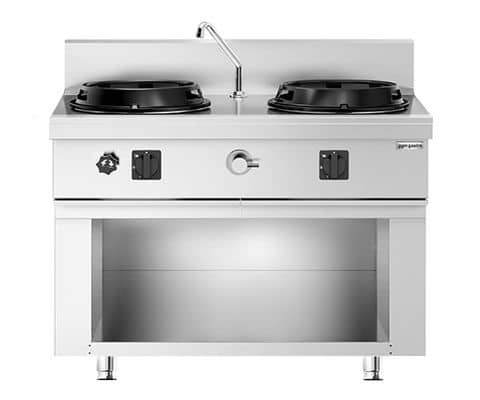
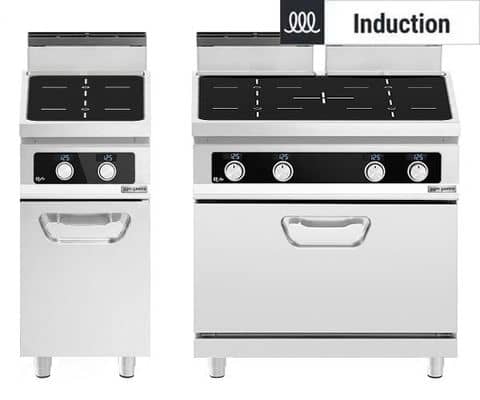
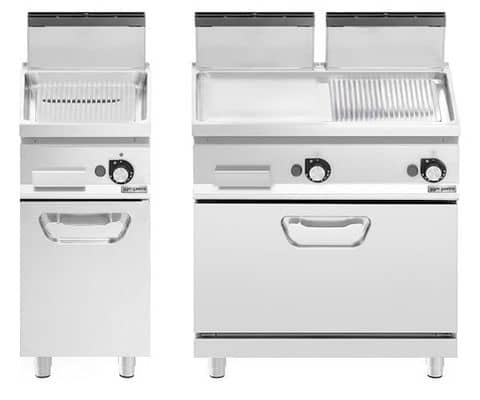
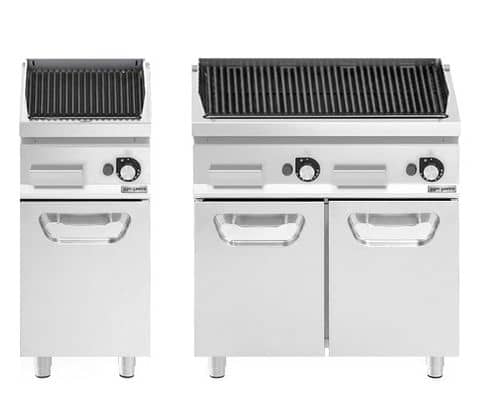
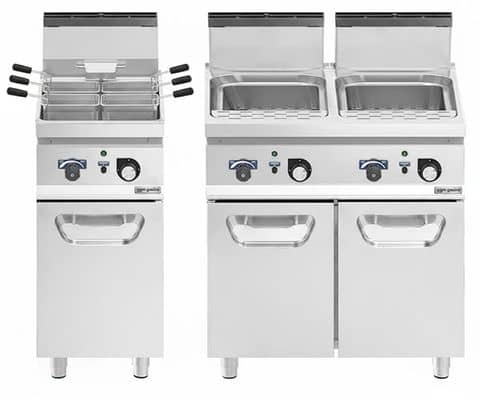
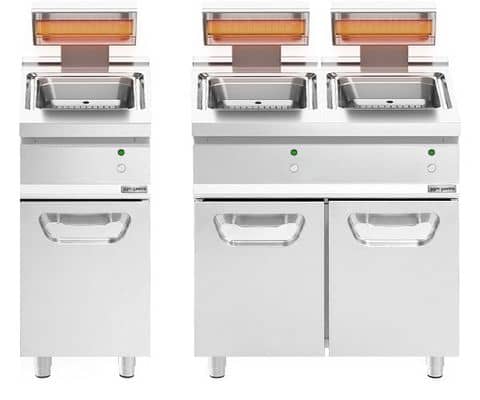
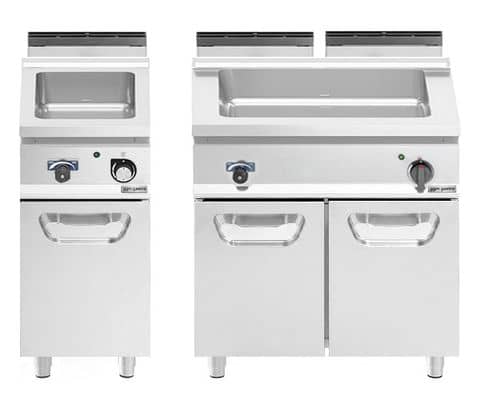
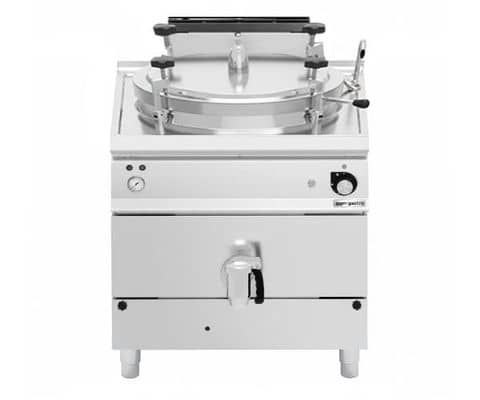
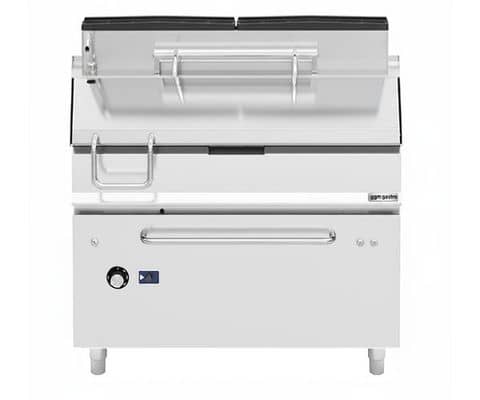
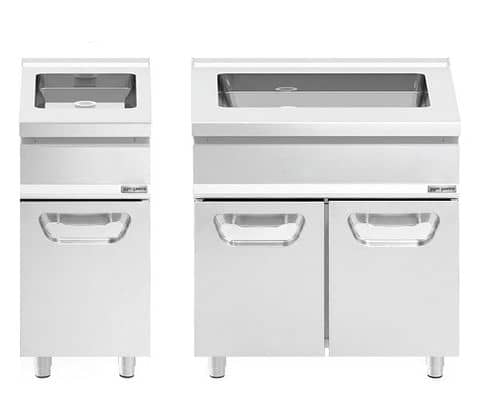
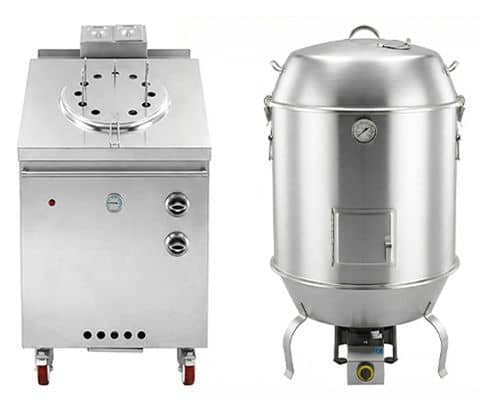
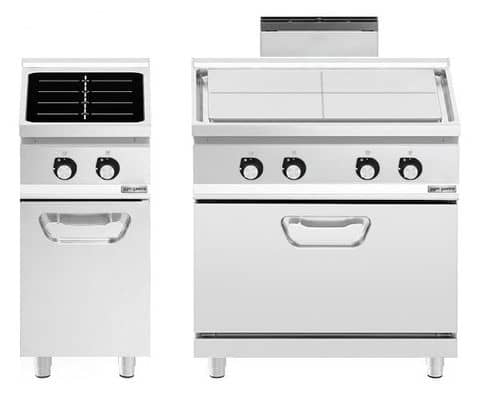
Cooking appliances as the core equipment of professional kitchens
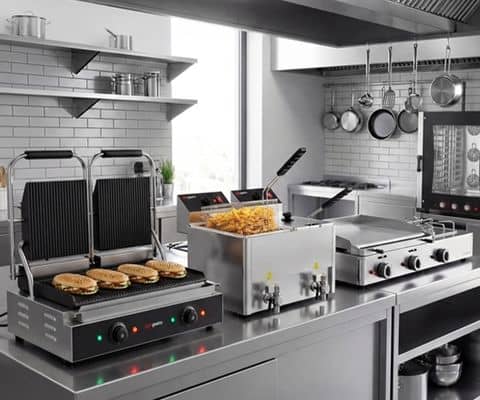
Cooking appliances are commercial units for the thermal preparation of food – for boiling, frying, deep-frying, grilling, simmering or hot holding as part of the production process. In many hospitality businesses, they form the technical backbone of the cookline and directly affect how quickly, safely and consistently food can be prepared.
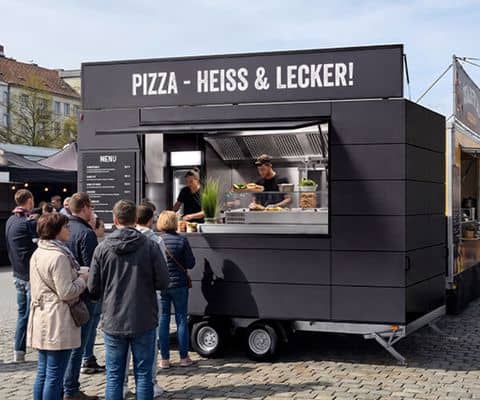
Whether takeaway, restaurant, hotel kitchen, staff canteen, catering business or contract catering: the right choice of cooking appliances always depends on your menu, volumes, available connections, space and workflow. A business with a high turnover of snacks has different requirements for fryers, griddles or chip scuttles than a production kitchen working with boiling pans, tilting bratt pans or larger freestanding units. What matters is not just the type of appliance, but how it fits into the overall workflow.
Which cooking appliances suit your business?
The right cooking equipment starts with a realistic analysis of the daily workload. How many portions need to be produced at peak times? Which dishes run in parallel? Which station is regularly overloaded? This results in specific selection criteria such as output in kW, connection type, tank or pan capacity, number of cooking zones, unit width, depth and operating logic.
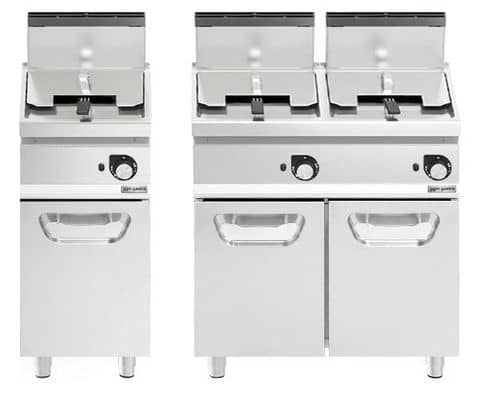
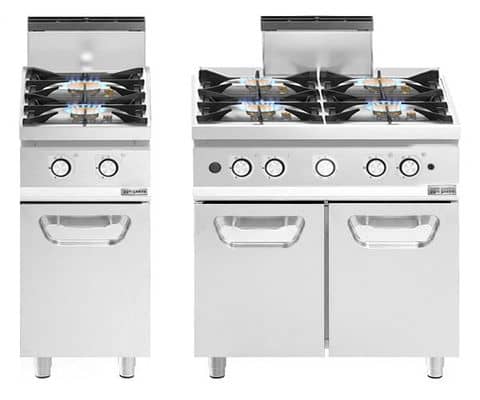
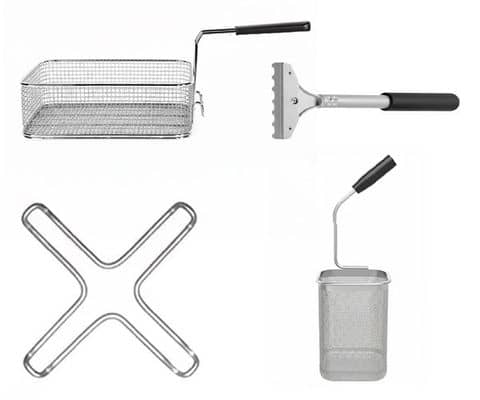
For small kitchens or mobile use, compact countertop units can make sense if they stand securely on existing worktops and match the available supply. In high-volume kitchens, freestanding units, modular cooking suites or units with bases offer more structure and capacity. If you sell a lot of fried food, look at tank capacity, basket size, drain tap and cleaning access when choosing fryers. With ranges, the number of burners, energy type and pot sizes are decisive.
A short quick check helps with pre-selection:
-
Does the connection type suit your electricity, gas and existing infrastructure?
-
Are output and capacity sufficient for your busiest peak?
-
Is there enough space for operation, cleaning and safe movement?
-
Does the unit support the workflow or create a new bottleneck?
-
Can the surface be cleaned quickly and hygienically in daily operation?
Planning, space requirements and routes along the cookline
Cooking appliances should be positioned where they support the production flow. In a takeaway kitchen, short routes between prep, griddle, fryer and service counter count. In a restaurant, coordination between range, worktop, pass and interim landing space is decisive. If hot equipment, cold prep and service are poorly arranged, the team loses time on every shift.
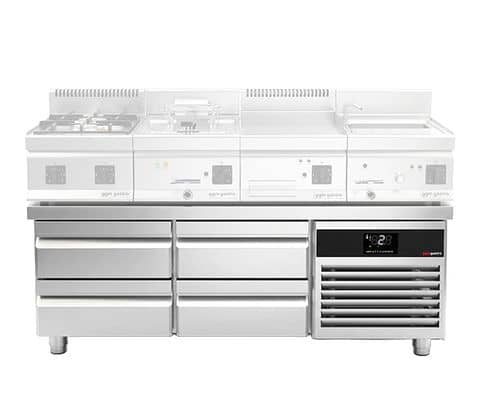
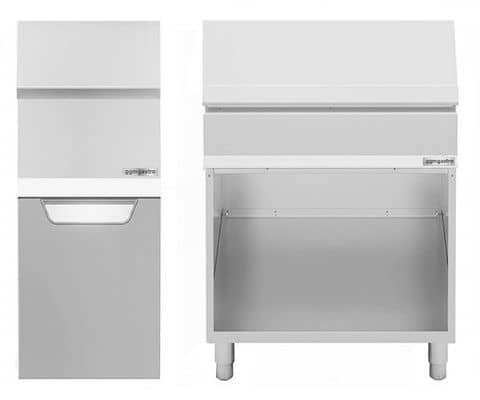
The design also plays an important role. Countertop units offer flexibility but need stable bases and sufficient distance from sensitive areas. Freestanding units or modular cooking suites create a clearer line, especially when several units work side by side. Neutral units, stands or stainless steel plinths help to plan heights, landing space and worktops consistently. For appliances that generate a lot of heat, ventilation, safety clearances and service access should be considered early on.
Materials, cleaning and durability in continuous use
Cooking appliances are put under heavy strain in everyday hospitality use: heat, grease, moisture, cleaning chemicals, heavy pots and frequent operation are all part of the daily load. That is why robust materials, sturdy controls, smooth surfaces and easily accessible cleaning areas are important buying criteria. Stainless steel makes sense in many kitchen areas because it is hygienic, durable and easy to clean.
With griddles, the design of the cooking surface also matters. Smooth plates are suitable for many standard applications, while ribbed plates create different cooking and contact surfaces. With pasta cookers or boiling pans, water supply, drainage, fill volume and operating height are relevant. With gas appliances, the connection, pressure regulator and professional installation should be planned in. With electric or induction appliances, the power rating and available power supply need to be checked.
Commercial benefits of the right cooking equipment
A well-chosen cooking appliance can stabilise workflows because it delivers the required output exactly where it is needed in the operation. This is particularly evident at peak times: when the fryer, range, griddle or boiling pan is adequately sized, the team works more calmly, orders can be processed more predictably and bottlenecks are less often pushed on to other stations.
Cooking equipment makes economic sense above all when it is used regularly, suits the menu and makes work easier. An oversized solution ties up space and capital; one that is too small creates waiting times, rework and stress. For many businesses, the deciding factor is therefore not the biggest unit, but the right combination of output, ease of use, cleaning effort and space requirements.
Combining cooking appliances effectively
Cooking appliances work best as part of a coordinated kitchen concept. Ranges, griddles, fryers, bain-maries and tilting bratt pans should be planned together with worktops, bases, prep, service and cleaning. Stainless steel furniture can also improve the workflow when it is integrated directly into the cookline as landing space, a base or a neutral intermediate surface.
If you are planning a new kitchen or modernising, start by looking at your daily production workflow: which dishes create the highest load? Where does the team have to walk? Which appliances run in parallel? Which station needs more capacity? This results in a cookline that is not only technically well equipped, but supports real day-to-day operations. GGM Gastro offers a wide selection of cooking appliances, accessories and planning solutions for different business sizes and kitchen concepts.