


Commercial Fryers for Professional Catering
Fryers allow fast, consistent cooking of chips, fish, breaded food, snacks and baked goods. Different tank capacities, connection types and designs offer the right solution for takeaways, restaurants, hotels, catering businesses and large-scale kitchens. Find out which fryer suits your output in our buying guide »
Standard fryers


Special fryers

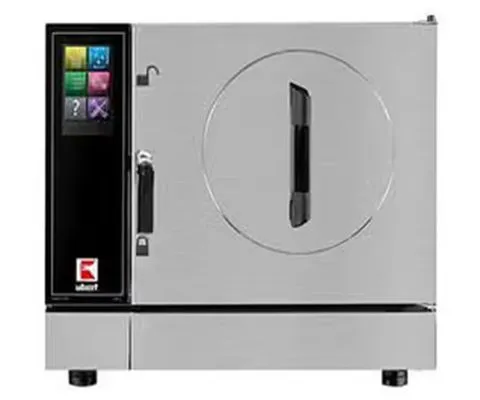
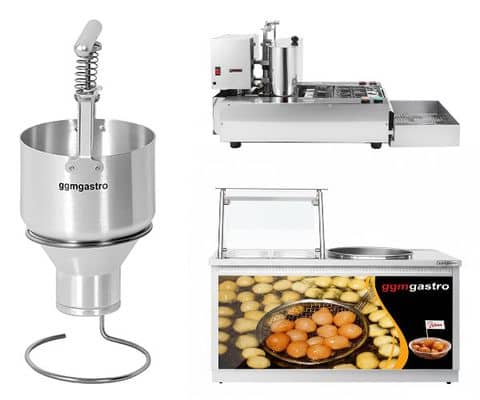
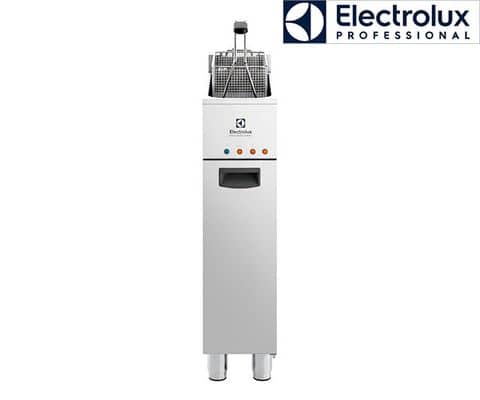
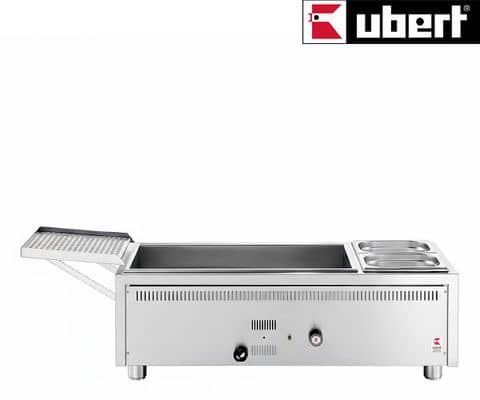




Fryers as a high-performance station in your business
Professional fryers are commercial cooking appliances in which food is cooked in hot oil or fat at a controlled temperature. They are used wherever consistent results, short cooking times and high throughput are needed.
In a takeaway, chips, schnitzel or snacks are often among the best-selling products. In restaurants, fryers are used for side dishes, breaded fish, vegetables or individual menu components, among other things. Hotels, staff canteens and catering businesses, on the other hand, often need larger capacities so that several batches can be produced within short time windows.
What matters is not just which foods are fried. Above all, it is about the volume that has to be handled reliably during the busiest period.
Choosing tank capacity and output to match throughput
Tank capacity indicates how much frying oil a unit can hold. For actual production output, however, heating power, heat-up time and temperature recovery also matter. If the oil temperature drops sharply after a batch goes in, the cooking time increases and the product can absorb more fat.
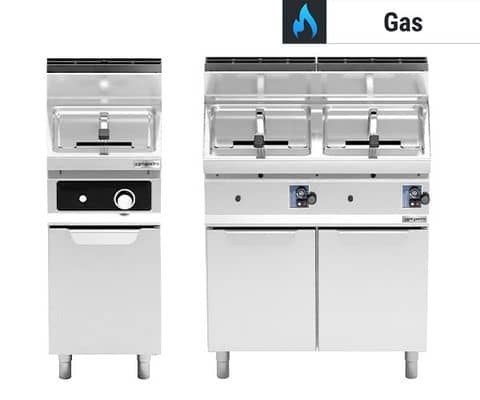
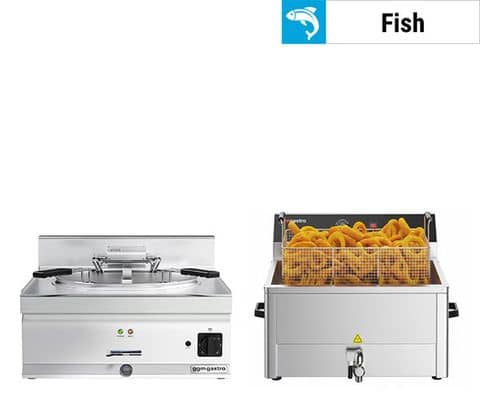
Compact countertop fryers are suitable for smaller volumes, back-up stations or businesses with limited space. Freestanding fryers and models with a base usually offer larger tanks, higher power ratings and more reserve for busy periods.
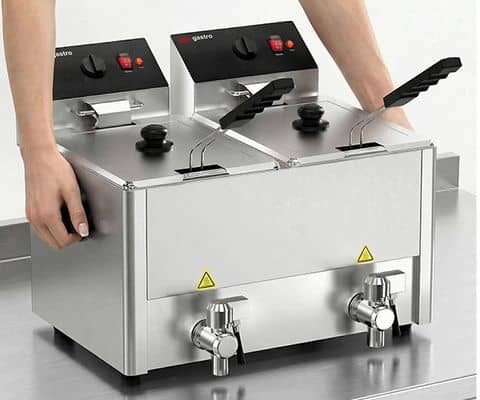
Twin-tank fryers let you cook different products separately. For example, chips and fish can be fried in parallel without mixing flavours or batter residue. At the same time, only one tank needs to be run when demand is low.
Planning for electric, gas or induction in your workflow
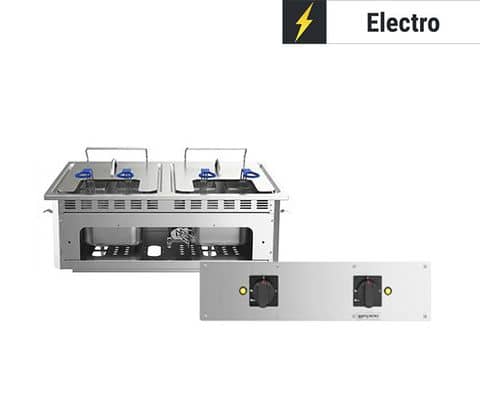
Electric fryers are available as 230 V or 400 V versions. Smaller 230 V units are comparatively flexible to use, but usually have lower heating power. For high, regularly recurring volumes, more powerful 400 V models are often better suited.
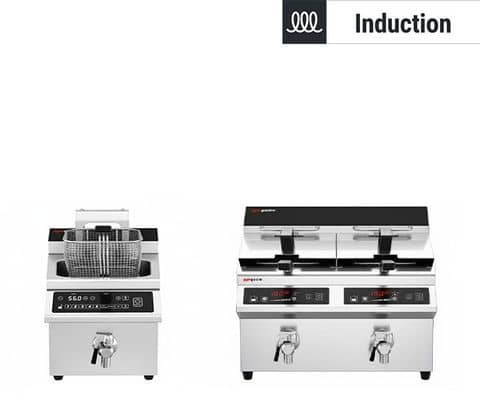
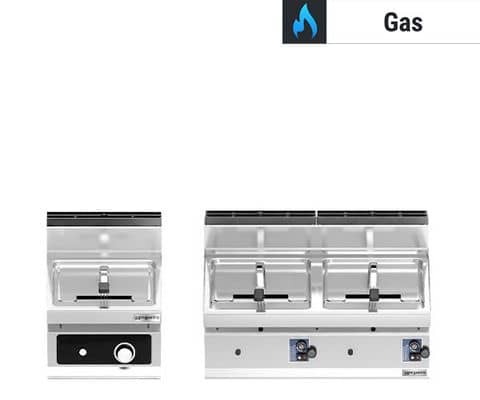
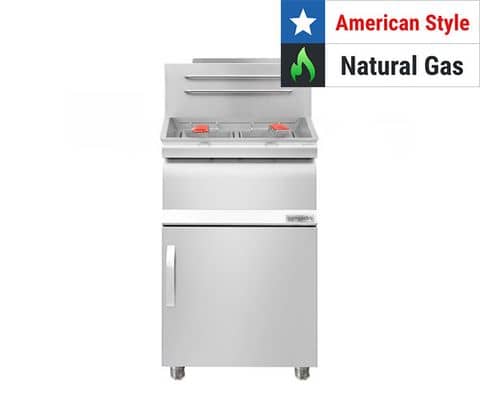
Gas fryers can be a sensible solution for production kitchens or cooklines where the infrastructure is in place. Induction fryers transfer energy particularly directly to the tank and allow precise temperature control.
Before choosing, the power rating, installation location and availability of adequate ventilation must be checked. Width, depth and working height should also suit the existing cookline and the team’s walking routes.
Features for oil care, cleaning and safe operation
Frying oil is an ongoing cost factor. A cold zone below the heating elements can prevent food particles that have sunk to the bottom from continuing to burn at high temperature. This supports more consistent oil quality and makes cleaning easier.
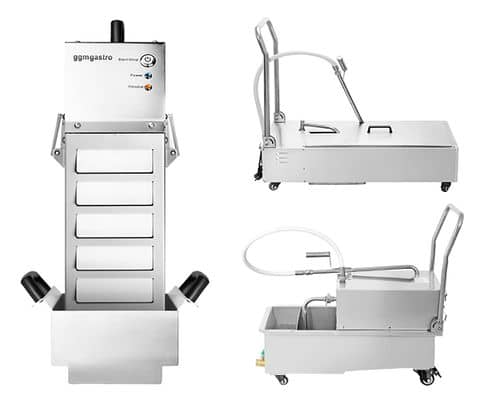
A drain tap allows oil to be drained from the tank in a controlled way. Removable or swing-up heating elements improve access to the inner surfaces. For high frying volumes, fryer oil filtration systems can make it easier to remove batter and residue regularly.
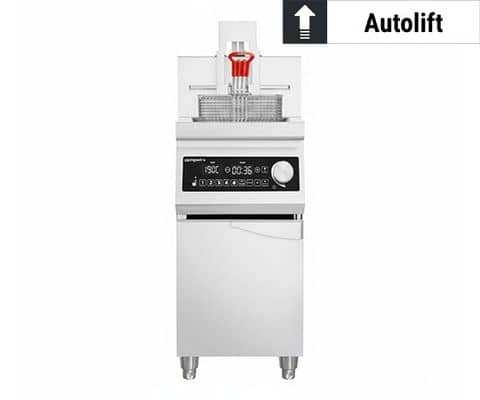
Stainless steel surfaces are durable, moisture-resistant and suitable for regular cleaning in everyday catering use. Smooth surfaces, easily accessible corners and sturdy basket hangers reduce the effort after service. Overheat protection, thermostats and a stable base also contribute to controlled workflows.
Quick check for the right commercial fryer
Five operational criteria help before you choose:
-
How much product needs to be fried in your busiest hour?
-
Do different foods need to be cooked in separate tanks?
-
Is a 230 V, 400 V or gas connection available?
-
How much space is available within the cookline?
-
How often do the oil, tank and heating elements need cleaning?
These points make it easier to decide between a compact countertop unit, a twin-tank fryer and a high-output freestanding model.
Integrating fryers sensibly into the production line
High heating power alone does not guarantee a fast workflow. The fryer must be positioned so that prepped food, baskets, draining areas and the service point can be reached without unnecessary routes. In small kitchens, combining it with suitable stainless steel furniture or a base makes sense to organise worktop and storage space clearly.
After frying, products need a defined place for draining, portioning or short-term holding. At the same time, the station must not block access to other cooking equipment. Cleaning also has to fit into the daily schedule: oil changes, filtering and cleaning the tank need sufficient space and safe routes.
In high-volume production kitchens, the return and cleaning of baskets should also be coordinated with the existing warewashing set-up.
Cost-effectiveness comes from correct sizing
A fryer that is too small leads to backlogs, frequent reloading and inconsistent results at peak times. A significantly oversized unit, on the other hand, ties up space, oil and electrical capacity without being fully used day to day.
A solution is cost-effective when the number of tanks, output and features match the actual menu and the business’s load profile. A well-integrated fryer supports short production times, consistent results and orderly cleaning routines. This makes it a dependable station that keeps operations under control even when demand is high.