


Catering Equipment for Professional Food Service
From preparation and temperature-controlled transport to the buffet and service: Well-designed catering equipment integrates production, logistics, hot and cold holding, and presentation into a reliable workflow. The choice of equipment depends primarily on the menu, number of guests, transportation route, type of event, and conditions at the venue. Catering Equipment Guide »







Setting Up a Catering Operation: Planning Production and Service Together
Professional catering equipment includes appliances and supplies for preparation, storage, transportation, keeping food hot and cold, presentation, serving, and cleaning of food. Unlike in a traditional restaurant, production and consumption are often separated in terms of both location and time. This is precisely where the central challenge lies. For example, food is prepared several hours before an event begins, then transported, and only finished, reheated, kept warm, or served at the buffet once it reaches the venue. A business lunch for 40 people requires different equipment than a wedding with several hundred guests or a caterer who regularly supplies corporate events and buffets. Therefore, it is not just the production volumes that are decisive, but the entire journey from the kitchen to the guest.
Organize pre-production based on the number of attendees
Catering often relies more heavily on predictable quantities and batches than traditional à la carte dining. How many guests will be served? Which dishes can be prepared in advance? Which components will be served cold, and which need to be reheated or kept warm at the destination? These questions already shape production planning. High cooking capacity alone is not enough. Prepared dishes require containers, temporary storage, refrigeration, and clear assignment to the respective event. Portioning is also becoming increasingly important. If components are already distributed in appropriate quantities into GN containers or transport containers, they can often be integrated into the serving process more quickly at the event venue. The less unnecessary transfer between production, transport, and the buffet is required, the smoother the workflow remains.
Thermal boxes as a link between the kitchen and the event venue
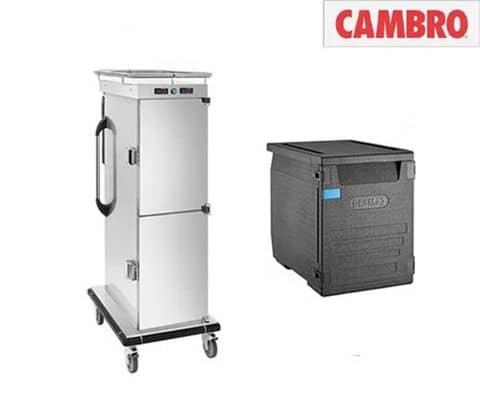
Insulated Containers & Carrying Bags are essential equipment for many catering businesses. They ensure the safe transport of prepared food between the production kitchen and the service location. Factors such as internal dimensions, volume, stackability, weight, and the planned transport route play a role in the selection process. It is particularly practical to coordinate these with existing GN sizes. Meals can then be prepared and transported in suitable containers without requiring new containers for each step of the process. The number of boxes should also be based more on the actual event volume than on average daily operations. Concurrent events can further increase demand. In addition, transport containers require space for cleaning, drying, and storage after use. This reverse logistics process is just as much a part of the catering operation as the initial transport to the event.
Quick Checklist for Choosing the Right Catering Equipment
Five points to consider when planning:
- Event size: How many guests and portions need to be accommodated on a regular basis?
- Catering concept: Which components are served cold, transported hot, or reheated at the destination?
- Transportation route: How long does it take and what is the distance food travels between the kitchen and the serving area?
- Serving format: Is the catering provided as a buffet, a set menu, self-service, or via individual service stations?
- On-site infrastructure: What electricity, water, refrigeration, and workspace facilities are available at the venue?
These factors determine what equipment is needed for transportation, temperature control, and service.
Choose the appropriate warming method based on the dish and how long it will be kept warm
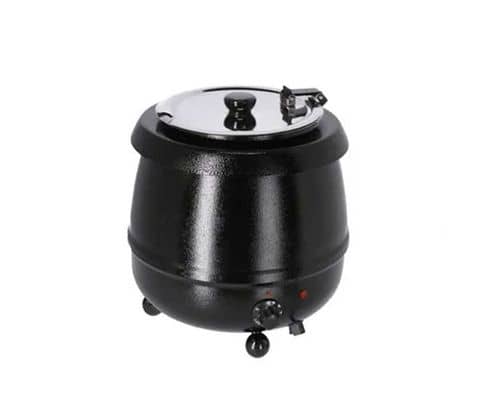
With catering, there is often more time between when food is prepared and when it is eaten than in a restaurant. Chafing dishes are therefore among the classic solutions for buffets and food service. They allow for the serving of appropriate hot dishes and combine temperature control with a presentation that’s easily accessible. In addition, hot plates, soup warmers, or other warming solutions can be used depending on the menu. However, it’s crucial not to view food warming as a substitute for coordinated production planning. Different foods react differently to extended holding times. While sauces, soups, or certain side dishes can be kept warm for a period of time relatively well, other products lose their texture or quality more quickly. Production time, transport time, holding time, and serving quantities must therefore be considered together.
Plan the buffet based on restocking rather than just the total amount
A professional buffet doesn’t have to display the entire quantity of food right from the start. Especially at longer events, a well-thought-out restocking strategy can help keep the presentation organized and ensure food is replenished in a controlled manner.
The key is coordinating the buffet with the reserve. What quantities are available directly at the serving station? Where are the supplies located? How quickly can empty containers be replaced? Containers that are too large can cause food to remain on the buffet for too long. Conversely, very small containers increase the effort required for restocking. The appropriate container size therefore depends on the number of guests, the rate of consumption, and the type of food. The routes between the reserve area and the buffet must also be planned. Whenever possible, staff carrying hot or heavy containers should not constantly walk through the same areas where guests are waiting or serving themselves.
Viewing presentation as part of the catering service
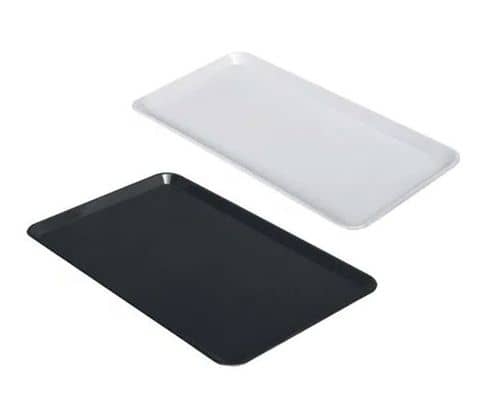
Catering involves more than just transporting food. Event organizers often expect the food to be presented appropriately as well. Buffet trays, serving bowls, glass domes, serving boards, baskets, and tiered stands can help arrange the food in an organized manner that fits the event’s theme. However, the presentation must remain functional. Overly elaborate setups require additional transport containers, more setup time, and often more space at the venue. Therefore, a corporate buffet with a short lunch break has different requirements than a longer evening event. A professional presentation is achieved above all when aesthetics, the ability to refill, and ease of access work together. The buffet remains well-organized and can be maintained by the team without unnecessary rearrangements.
Plan for Mobile Cooling for Larger Quantities
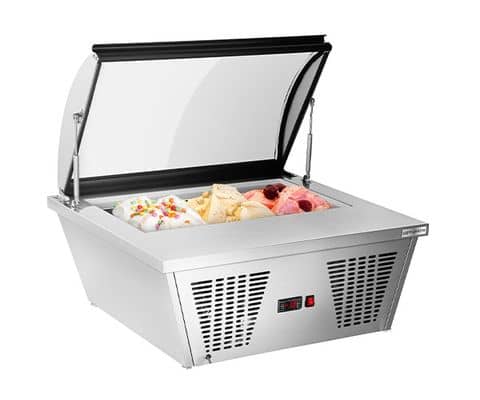
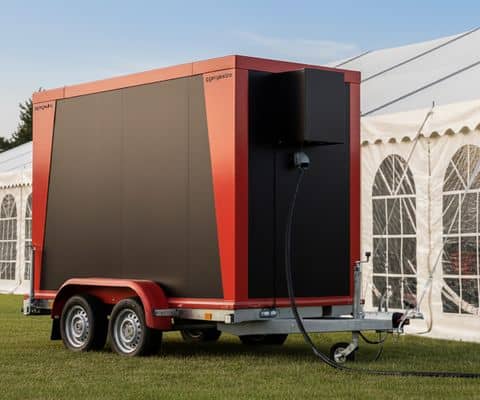
Catering requires more than just keeping food warm. Cold dishes, desserts, beverages, and prepared ingredients must also be stored reliably. For larger events or venues with limited infrastructure, refrigerated trailers & mobile cold storage units can provide additional storage capacity. This allows goods to be stored at the event venue without having to place all products directly at the buffet or serving station. Key factors here are capacity, accessibility, and distance from the actual serving area. A large cold storage reserve is of limited help if staff members have to walk long distances during the event for every small restock. It therefore makes sense to stagger the inventory: a larger reserve in the mobile refrigeration units and a manageable working stock closer to the serving station.
Using Small Cooking Appliances for Finishing and Flexible Production
Not every catered dish is prepared entirely in the production kitchen. Depending on the concept, small cooking appliances may be used at the event venue for finishing touches, reheating, or preparing individual, freshly made components. In this context, the existing infrastructure becomes increasingly important. Floor space, electrical outlets, and safe work areas must be compatible with the equipment being used. Total power capacity is particularly relevant when multiple appliances are in use. A venue may offer sufficient space, but it does not automatically have the technical infrastructure of a professional kitchen. Mobile cooking equipment therefore works best when its use is taken into account during menu planning. The goal is not to transport an entire restaurant kitchen to the venue. Only the equipment that provides clear added value in terms of presentation, quality, or serving speed is used on site.
Stainless steel furniture creates flexible workstations
Event venues often lack the standard work surfaces found in a permanent kitchen. Stainless steel furniture can be used to create areas for portioning, plating, temporary storage, or preparation, depending on the catering concept. It’s important not to focus solely on the table surface itself. Staff need room to move around, containers need a place to be set down, and both clean and used equipment must be organized in a way that’s easy to track. Mobile or flexible work surfaces make it easier to set up recurring stations in a similar way at different event locations. This also supports standardized processes. If serving, beverage, or refill stations are set up according to the same basic logic at every event, the team has to improvise less.
Sizing Buffets and Self-Service Areas for the Flow of Guests
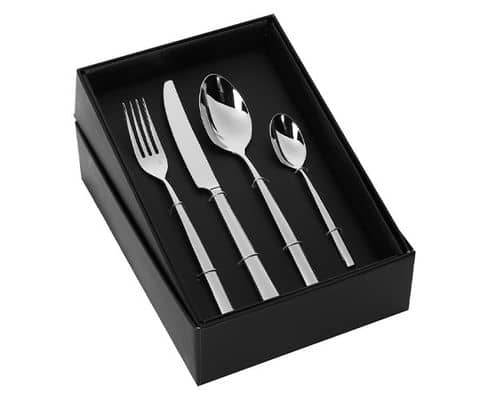
At larger events, it’s not just the amount of food that determines the buffet’s capacity. The number of guests that can be served at the same time is also a key factor. A single long buffet line can quickly become a bottleneck if guests pile up at one point. Depending on the event, dividing the line into several stations or placing certain food groups separately can help ease the flow. Cutlery, napkins, plates, and other necessary items must also be factored into the planning. If there are no plates at the beginning of the line or no cutlery at the serving station, even a well-stocked food station is of little help. Self-service solutions should therefore be designed with the guest’s path in mind: pick up a plate, select food, add drinks if desired, and leave the area without crossing paths with oncoming guests.
Consider portability right from the menu design stage
Not every dish is equally well-suited for catering. Food often needs to be prepared, packaged, transported, and served after a certain amount of time has passed. This changes the requirements compared to a dish that leaves the restaurant kitchen just a few seconds after being plated. Particularly delicate textures or very elaborate individual components can pose more problems during longer transport routes. A catering-friendly menu therefore takes into account—right from the development stage—how components can be transported, reheated, portioned, and finished at the event venue. This reduces the need for improvisation and makes results more consistent. Even for higher-end menus, professional catering quality does not necessarily mean producing everything fresh on-site from scratch. What matters is a production strategy in which preparation and finishing are sensibly divided.
Using GN systems across multiple process stages
Standardized container sizes make it easier to transfer food between different stages of the process, especially in catering. GN containers can be used for preparation, refrigeration, transport, keeping food warm, and serving, depending on the product and process. This reduces unnecessary transfer and makes it easier to plan quantities more accurately. When selecting equipment, it is therefore important to coordinate transport boxes, warming units, workstations, and existing containers. Lids, container depths, and the required quantities should also be tailored to the event’s scale. When multiple catering events are running simultaneously, clear labeling becomes even more important. This ensures that prepared components and quantities remain assigned to specific events or serving stations.
Plan realistically for setup time at the event venue
Catering begins on-site long before the first guest arrives. Vehicles must be unloaded, work areas set up, buffets assembled, equipment connected, and food distributed to the correct stations. The more different components and custom solutions a concept requires, the longer this setup takes. Equipment should therefore also be evaluated based on how easily it can be transported, positioned, and made ready for use. Stackable transport solutions, clearly labeled containers, and standardized setup plans can simplify the process. A well-organized catering setup is reproducible: The team knows which station belongs where, which equipment is needed first, and which components are set up just before the event begins.
Plan for return transport and cleaning from the very beginning
After the event, a large portion of the equipment is returned. GN containers, chafing dishes, serving utensils, trays, transport boxes, and other equipment must be collected, transported, cleaned, dried, and prepared for the next use. This return process is a separate procedure. Those who plan only for the outbound trip will quickly find themselves with a confusing mix of clean and used items after large events. Clear transport containers and defined return routes make separation easier. At the production facility, too, the equipment requires sufficient washing and cleaning capacity. When hosting multiple events on consecutive days, return capacity can become just as important as production capacity.
Sizing Catering Equipment for Major Events
The average number of guests isn’t always the best measure when it comes to catering equipment. A business may primarily cater events with 50 to 80 people, but regularly takes on larger events with several hundred guests. The question then becomes: What capacity can be maintained sensibly on a long-term basis, and where should modular additions be made? Transport containers, chafing dishes, serving supplies, and mobile workstations can often be expanded incrementally. This can be more cost-effective than designing every piece of equipment from the outset to accommodate the largest possible order. Coordinating the entire chain is particularly important: Sufficient production capacity is of little use if transport capacity or buffet supplies cannot keep up. Likewise, a large buffet setup is of little help if refrigeration and restocking capabilities are insufficient.
Prioritizing Catering Equipment Based on Cost-Effectiveness
When working with a limited budget, priority should first be given to the areas that are required for nearly every event. These often include transportation, secure food storage, keeping food hot or cold, sturdy work surfaces, and a functional serving area. Presentation or specialized equipment can then be expanded as needed to suit the event format and actual demand. Existing catering businesses also benefit from a bottleneck analysis. If setup regularly takes too long, the issue may not be a lack of kitchen equipment, but rather a need for a clearer transportation and station layout. If buffets come to a standstill, the cause may be too few serving stations or slow restocking. And if production for the next event is delayed after an event, the bottleneck may be in the return and cleaning process. The economically sound investment, therefore, addresses the areas where friction regularly arises between the kitchen, transportation, and the event itself.
Professional Catering Equipment from GGM Gastro
From small-scale business catering to weddings and corporate events, all the way to larger buffet and banquet orders, the quantities, transportation routes, and serving methods vary significantly. The right catering equipment is therefore determined by the number of guests, the menu concept, temperature requirements, venue conditions, and the desired level of mobility. GGM Gastro offers a range of equipment for these needs, from chafing dishes, thermal boxes, and transport solutions to food-warming technology and mobile refrigeration, as well as stainless steel furniture, buffet displays, and serving equipment. This allows both the basic equipment of a catering business and specific areas for larger orders or new event formats to be expanded as needed.