


Catering Equipment for Professional Events
From mobile cooking stations to refrigeration and food warming, all the way to beverage service, food service, and cleaning: Well-planned event catering equipment creates temporary workspaces that remain functional even during peak visitor traffic. The specific equipment required depends primarily on the type of event, the number of guests, the food and beverage offerings, the on-site conditions, and the available utility connections. Event Catering Guide »
Preparation





Food Warming



Bar


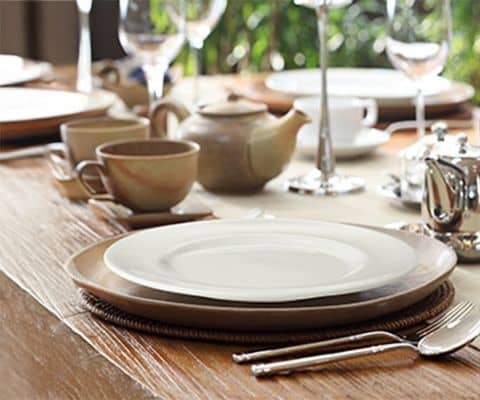
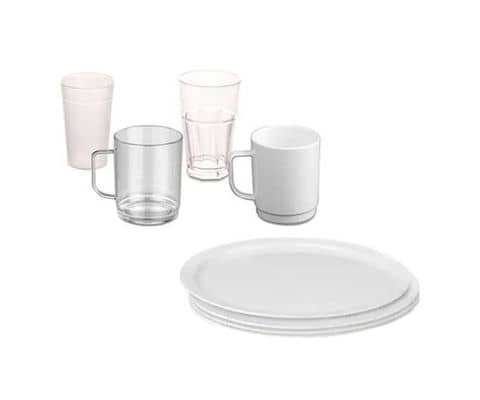






Small parts & miscellaneous





Planning Event Catering: From Attendance to Catering Concept
Professional event catering equipment includes mobile and versatile solutions for food preparation, refrigeration, keeping food warm, beverage service, food service, and cleaning at events. It is used, for example, in situations where catering work areas are needed only temporarily or must be repeatedly reconfigured for different event formats. The total number of guests is not the only decisive factor here. What matters most for the equipment is how concentrated the demand is within specific time windows. At a concert, for example, a large number of guests may order drinks and snacks simultaneously during a short intermission. At a company party, demand may be spread out over several hours. A city festival, on the other hand, often operates with multiple sales stations located in separate areas. Event catering is therefore planned based on the expected peak: How many orders must individual stations process per hour, and how can production, restocking, and service be coordinated accordingly?
Put together mobile cooking stations that match your offerings
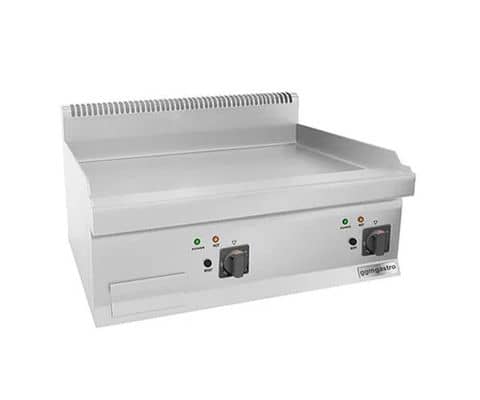
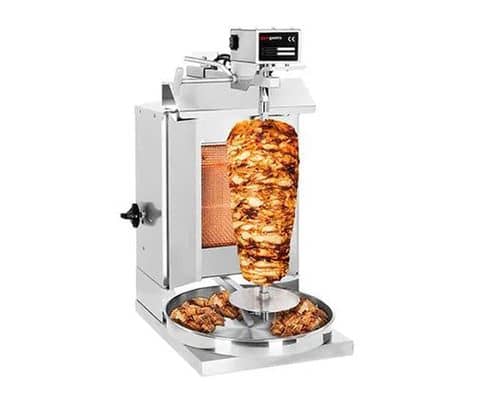
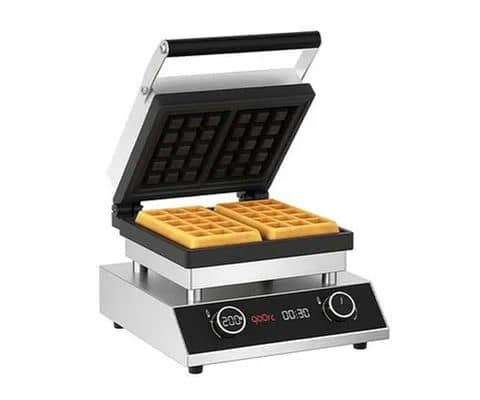
Depending on the event, different dishes can be prepared on-site. Mobile cooking stations provide flexible workstations that can be adapted to the specific food concept. Griddles, deep fryers, or other compact cooking appliances are suitable, for example, for frequently served snack items. Pizza ovens, grills, and kebab equipment, on the other hand, each form their own production lines. It’s crucial not to combine too many different cooking processes at a single station. A food stand that’s supposed to produce pizza, burgers, fried foods, and grilled dishes all at once requires correspondingly more equipment, ingredients, refrigeration space, and staff. In a confined space, this quickly leads to cross-traffic and bottlenecks. It is often more efficient to clearly focus individual stations on specific core products. Employees then repeat the same work steps, the required ingredients remain manageable, and production can be more easily scaled up to high volumes.
Mobile preparation tables create organized workspaces
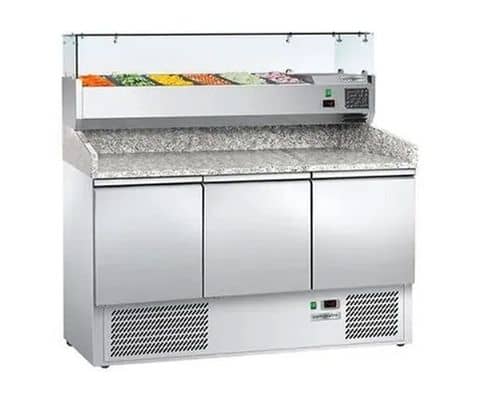
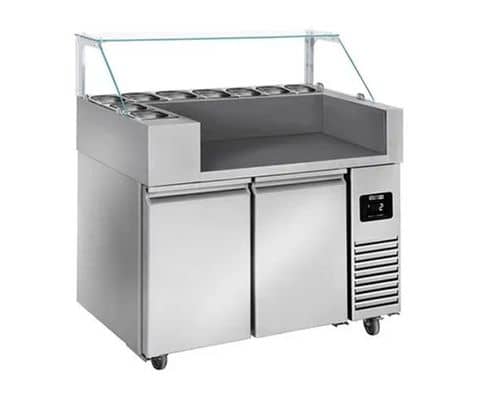
Even at events, professional production requires sufficient workspace. Mobile preparation tables can combine food preparation, refrigerated storage, and workspace all in one. Depending on the setup, ingredients for pizza, salads, sandwiches, or other dishes can be kept on hand close to the production area. This reduces the need to travel to the central refrigerated storage area. This separation is particularly useful when there are multiple sales stations: The large reserve remains centrally stored, while each station receives a working stock for ongoing production. Foldable work tables can create additional space for preparation, temporary storage, or serving. Their advantage is especially evident where the workstation must be regularly set up and taken down. The required space should not be completely filled with equipment. Production always requires free areas for containers, packaging, and temporary handoffs.
Quick Checklist for Choosing the Right Event Catering Equipment
Five factors can help narrow down your actual needs:
- Visitor traffic: How many orders are placed at individual stations during peak hours?
- Menu: Which food and beverage items are the top-selling core products?
- Location: What electricity, water, wastewater, and setup options are available on-site?
- Station structure: Is there a central dining area, or are there several physically separate sales and service points?
- Mobility: What equipment needs to be regularly transported, set up, and dismantled again after the event ends?
These factors determine whether the equipment should be stationary, mobile, or modular.
Plan Production Output per Sales Station
At large events, total production capacity says little about how quickly individual guests are actually served. What matters most is the performance of each station. For example, if there are three sales stands but one location directly on the main visitor route is significantly busier, a long line can form there despite sufficient overall capacity. Equipment should therefore not be distributed evenly across the board. High-traffic locations may require more cooking capacity, larger beverage reserves, or additional serving stations. The menu also influences throughput. Items with few, repetitive steps can usually be produced in large quantities more quickly than offerings with many variations and customizable combinations. An event-ready menu therefore always takes into account not only appeal but also the realistic capacity per sales station.
Using Warm Holding as a Buffer Between Production and Demand
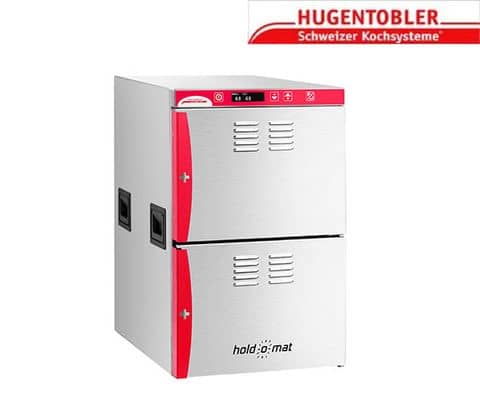
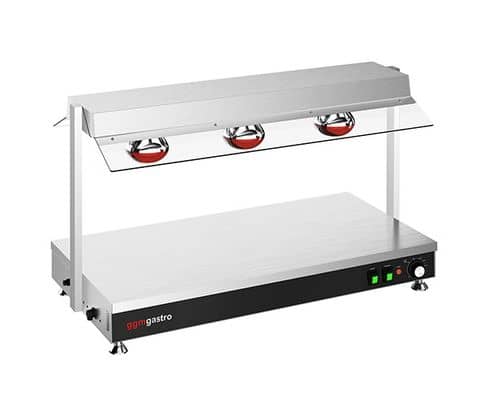
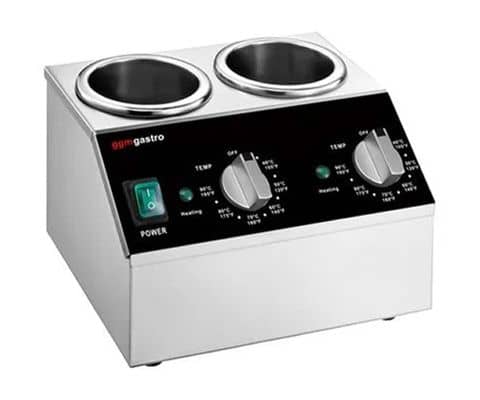
At events, it's not always possible to predict demand down to the second. Warming display cases and other food-warming solutions can therefore serve as a controlled buffer between production and service. Suitable dishes can be prepared in manageable quantities and served quickly during peak sales periods. Chafing dishes, hot plates, or soup warmers fulfill different functions depending on the menu. It’s important to ensure a holding time appropriate for the product. Not every dish is suitable for prolonged warming. Production volume should therefore be adjusted to the sales rate: enough reserve for short peaks, but no unnecessarily large quantities that must be kept on hand for extended periods. When visitor numbers are high, a well-planned on-demand production strategy can be more economical than very large-scale pre-production.
Using Mobile Buffet Counters for Various Event Formats
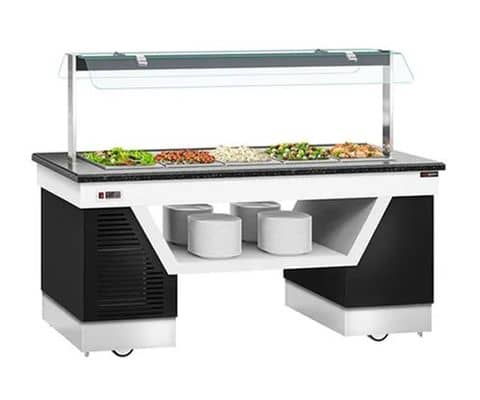
Not all event catering operations use traditional food stands. Corporate events, receptions, conferences, or large celebrations can utilize buffet or self-service concepts. Mobile buffet counters provide flexible serving areas that can be arranged depending on the event format. When planning, it’s not just the amount of food that matters, but also the flow of guests. A single long buffet can become a bottleneck if a large number of guests access it at the same time. Multiple smaller stations or separating food, beverages, and desserts can help manage the flow of guests. Plates, cutlery, napkins, and restocking supplies also require designated locations. An efficient buffet layout guides guests through the serving area as clearly as possible while allowing staff to refill empty containers without constantly having to work against the flow of guests.
Designing a Beverage Dispensing System for High Throughput
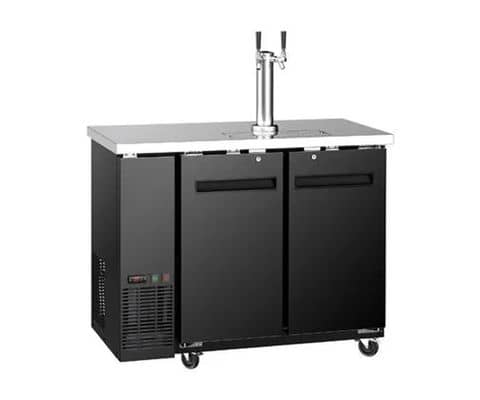
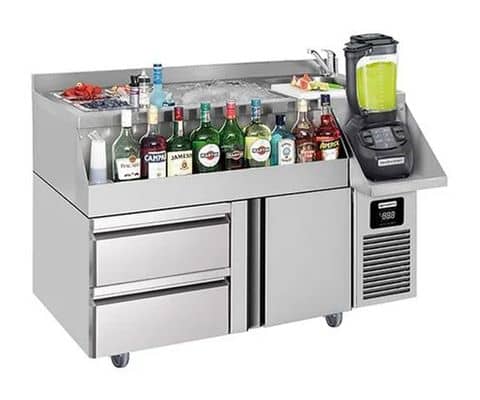
At many events, the highest volume isn’t generated in the kitchen but at the beverage bar. Beer Coolers & Dispensing Equipment can serve as dedicated dispensing stations for events with a high proportion of draft beer. Beverage refrigerators and mobile bar or beverage cooling tables keep bottles, cans, and other beverages readily available close to the service area. Here, too, storage refrigeration and workstation refrigeration serve different purposes. The central stock can hold larger quantities, while individual serving stations only need to stock what’s required for the next sales window. This keeps the workspace organized and allows beverages to be retrieved more quickly. If there are multiple serving stations, it should also be determined which products are available everywhere and which are offered only at specific stations. Offering too wide a selection at every station increases inventory levels and the effort required for restocking.
Using Mobile Cooling as a Key Backup Supply
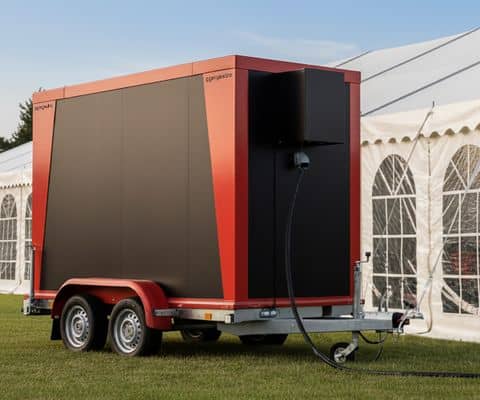
Large event venues often require more refrigerated inventory than can be stored in individual sales booths. Refrigerated trailers & mobile cold storage units can provide a central stock reserve for this purpose. Beverages, ingredients, or other products that require refrigeration can be stocked there and distributed to individual stations as needed. Location is key. A large mobile refrigeration unit is of little use if it is so far from the sales area that every restocking trip involves a long transport route. The routes to high-traffic stations should therefore be taken into account during the initial layout planning. The organization of restocking is also important. Ideally, sales points should not wait until products are completely out of stock before being restocked. Defined stock levels and restocking intervals help reduce interruptions during peak sales periods.
Organize Replenishment as a Separate Event Logistics Operation
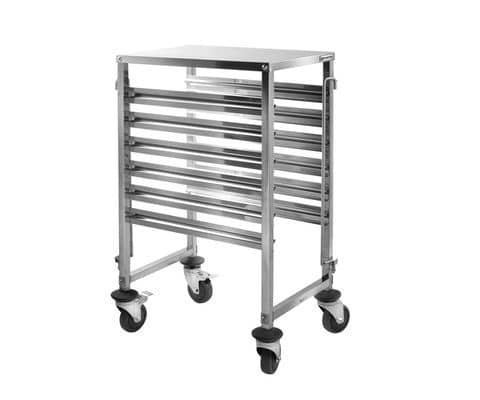
An event station can only sell as quickly as it is supplied with merchandise. Beverages, ingredients, packaging, ice, and consumables must therefore be continuously moved between the stock area and the sales stations. For larger events, it’s worth treating this restocking as a separate work process. Staff at a heavily frequented service station should, if possible, not have to leave their workstations regularly to fetch boxes or ingredients. Serving & Transport Carts can help move larger quantities in an organized manner between storage and work areas. Routes should also be clearly defined. Restocking staff, guests, and the return of used materials should interfere with one another as little as possible.
Plan for ice and cold beverages based on actual demand
Cocktails, long drinks, and many non-alcoholic beverages also require a steady supply of ice. Depending on the event concept, ice production and refrigerated storage may therefore constitute a separate capacity category. When planning, the busiest sales period is the key factor. If the daily average ice supply is sufficient but runs out during the evening peak, the entire beverage service can be disrupted. The same applies to chilled beverages. Reserve capacity should therefore be available where a shortage or restocking problem would affect a particularly large number of sales at the same time. Individual serving stations do not need to store the entire event supply. What is crucial is a reliable restocking system from the central reserve.
Strategically Integrate Coffee and Non-Alcoholic Concepts
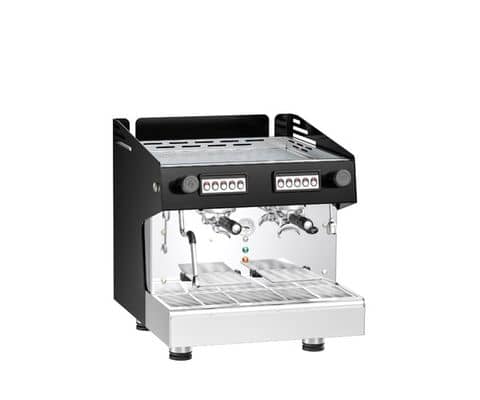
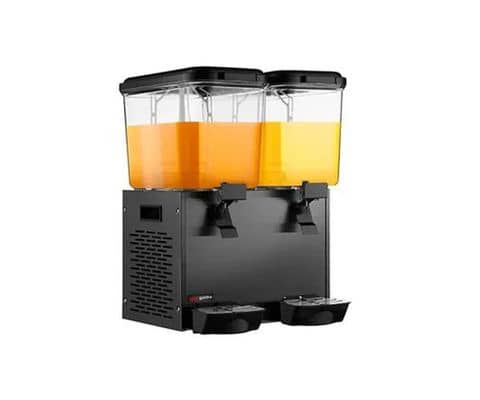
Eventgastronomie besteht nicht ausschließlich aus Bier, Softdrinks und warmen Snacks. Bei Tagungen, Firmenveranstaltungen, Messen oder Abendveranstaltungen können Kaffee, Slush, Säfte oder andere Getränke relevante Umsatzbereiche bilden. Siebträgermaschinen können beispielsweise für ein stärker auf Qualität ausgerichtetes Kaffeeangebot eingesetzt werden. Saft-, Slush- und andere Getränkemaschinen bilden wiederum kompakte Stationen für spezielle Veranstaltungskonzepte. Bei der Entscheidung zählt vor allem die Nachfrage. Eine umfangreiche Kaffeestation benötigt Maschine, Mühle, Milch, Tassen oder Becher, Wasser und ausreichend Personal. Sie lohnt sich vor allem dort, wo entsprechende Mengen tatsächlich erwartet werden. Auch Zusatzangebote sollten deshalb konsequent gegen Fläche, Infrastruktur und realistischen Umsatz geprüft werden.
Viewing To-Go and Packaging as Part of Production
At many events, food is served directly into the guest’s hands. To-Go & Packaging are therefore an integral part of the production workstation. Boxes, trays, cups, napkins, and cutlery should be located where the product is prepared. If employees have to fetch packaging materials from a different area for every order, the station loses speed unnecessarily. At the same time, it is not necessary to store the entire event supply right at the sales stand. A working inventory for the current sales phase and an organized restocking reserve help keep the station more organized. Different packaging options also increase complexity. A clear product range with as few compatible packaging types as possible can simplify service, especially during peak times.
Viewing To-Go and Packaging as Part of Production
At many events, food is served directly into the guest’s hands. To-Go & Packaging are therefore an integral part of the production workstation. Boxes, trays, cups, napkins, and cutlery should be located where the product is prepared. If employees have to fetch packaging materials from a different area for every order, the station loses speed unnecessarily. At the same time, it is not necessary to store the entire event supply right at the sales stand. A working stock for the current sales phase and an organized replenishment reserve help keep the station more organized. Different packaging options also increase complexity. A clear product range with as few compatible packaging types as possible can simplify service, especially during peak times.
Cash collection must not slow down production
At an event, payment processing is an integral part of a sales station’s throughput. Point-of-sale systems should therefore be positioned so that ordering, payment, and pickup follow each other in a clear sequence. Especially when visitor traffic is high, it can be helpful to separate the pickup area for finished products from the ordering station. A guest waiting for their meal should, if possible, not block the next order. The number of checkout stations must also match the production capacity. More registers do not generate additional throughput if the kitchen behind them cannot prepare enough food. Conversely, efficient production can be slowed down if orders are taken too slowly. Production and sales must therefore be coordinated to match the same capacity.
Consider portable hand-washing and dishwashing solutions early on
Temporary food service operations require organized hygiene and cleaning areas even outside of a permanently installed kitchen. Mobile hand-washing stations can be useful where suitable stationary facilities are lacking at the event site or where workstations are set up at a distance from one another. Mobile dishwashers or other dishwashing solutions can also be used, depending on the event concept. Especially with reusable dishes and glasses, a separate return process quickly becomes necessary. Dirty items must be collected, transported, cleaned, and then redistributed to the respective stations. This cycle should, if possible, not use the same routes as fresh food or clean supplies. The larger the event, the more important it is to maintain a clear separation between production, guest, and return routes.
Planning Reusable Tableware and Glasses Based on Circulation Speed
For events that use a reusable system, it’s not enough to simply consider the total number of guests. What matters is how quickly glasses, cups, or plates are returned to circulation. A high-traffic beverage stand can go through a large number of glasses in a short amount of time. If the cleaned items aren’t returned quickly enough, a bottleneck will occur, regardless of how well the service is organized. Glass & Tableware Baskets facilitate transport and return between the serving area and the dishwashing area. Depending on the event concept, polycarbonate tableware or corresponding glasses can also be a durable solution for certain applications. Inventory, return routes, and dishwashing capacity should therefore be planned together.
Check the infrastructure before selecting equipment
In event catering, the venue’s infrastructure directly determines what equipment can be used. Electrical outlets and available power capacity must be compatible with cooking appliances, refrigeration, beverage service, and other equipment. Water, wastewater, ventilation, and suitable setup conditions may also be relevant. Multiple high-powered appliances cannot be operated simultaneously simply because there is enough space available. Before every event—or when planning a recurring event concept—it is therefore important to clarify which connections are available at which locations. This, in turn, influences the layout of the individual service stations. Technology, production volume, and infrastructure must therefore be considered together from the very beginning.
Standardize setup and teardown as a fixed operational process
Event catering begins before the first guest arrives and ends long after the last order is placed. Equipment, tables, refrigeration, beverage dispensing systems, and supplies must be transported, set up, and connected. After the event ends, the same process takes place in reverse. For regular event operations, standardized setup planning is therefore worthwhile. Each station is assigned a defined setup; the necessary equipment and supplies are permanently allocated, and connection requirements are documented. Foldable or mobile equipment can simplify this process if it meets the required performance standards. A repeatable setup reduces the need for improvisation and helps the team become operational more quickly, even at changing event venues.
Prioritizing Event Catering Equipment Based on Cost-Effectiveness
When working with a limited budget, priority should initially be given to areas that can be utilized at as many events as possible. Mobile workstations, flexible cooking equipment, reliable refrigeration, food warming systems, beverage dispensing, and an efficient serving system often form the foundation. Specialized equipment for specific dishes or event types becomes worthwhile when such orders occur regularly. Existing event companies also benefit from a bottleneck analysis. Long lines, for example, can be caused by insufficient production capacity—but also by checkout delays, packaging issues, or a lack of restocking. Frequent interruptions at the beverage stand can result from insufficient refrigerated storage or long distances to the supply area. An economically sound investment therefore improves the part of the event chain that actually limits overall performance during periods of high demand.
Professional Event Catering Equipment from GGM Gastro
From corporate events and trade shows to concerts, festivals, or city-wide events, all the way to temporary buffet setups, visitor numbers, venue conditions, and operational requirements vary significantly. Appropriate event catering equipment is therefore selected based on peak attendance, the food and beverage offerings, available infrastructure, and the number and location of individual sales stations. GGM Gastro offers a full range of equipment for these needs, from mobile cooking appliances, grills, and preparation tables to food-warming and buffet solutions, as well as beverage refrigeration, dispensing equipment, mobile cold storage units, service equipment, and mobile hygiene and dishwashing solutions. This allows individual sales stations as well as larger catering areas to be configured as needed for recurring or varying event formats.