


Gyros/Döner Grills for Restaurants and Snack Bars
Gyros/döner grills are essential grilling appliances for döner shops, snack bars, restaurants, food trucks, and other commercial establishments that serve meat on skewers. At GGM Gastro, you’ll find gas- and electric-powered models in various sizes, power levels, and designs for professional use. Gyros/Döner Grill Guide »
Gyros / Doner Grills





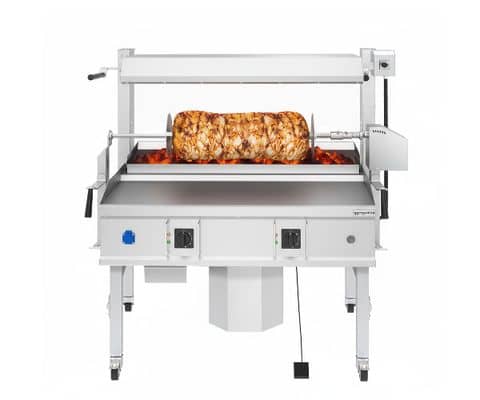
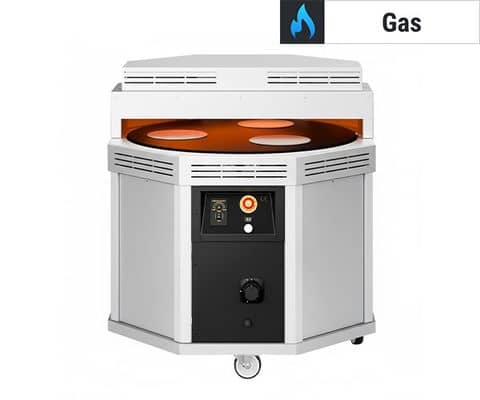




Gyros/Döner Grills as a Central Station for Quick Grilling Processes
Gyros/döner grills are vertical grilling devices used to cook meat skewers evenly and slice them portion by portion directly for sale, serving, or further processing. In the food service industry, they are primarily found in döner shops, snack bars, Middle Eastern grill restaurants, Greek restaurants, food trucks, and fast-food concepts.
In day-to-day operations, the right doner grill determines not only the quality of the grilled meat but also speed, workflow, and predictability. During peak hours, the skewer must be heated evenly while the team slices, portions, tops, and serves the food. A unit with the right skewer height, sufficient meat capacity, and easily adjustable heating zones supports these processes much better than a model that’s too small.
Gas or Electric: Which Option Is Right for Your Business?
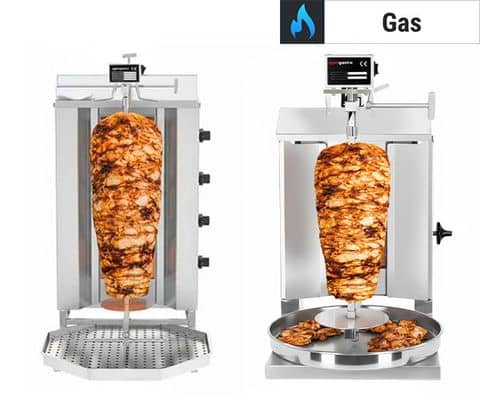
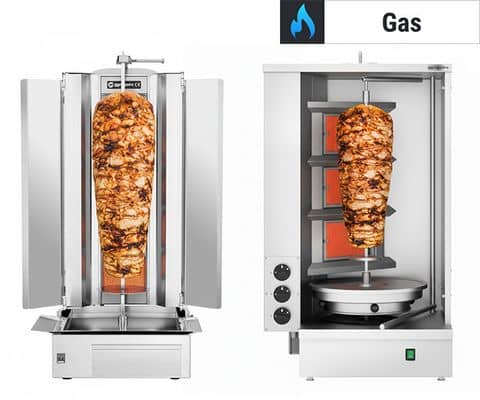
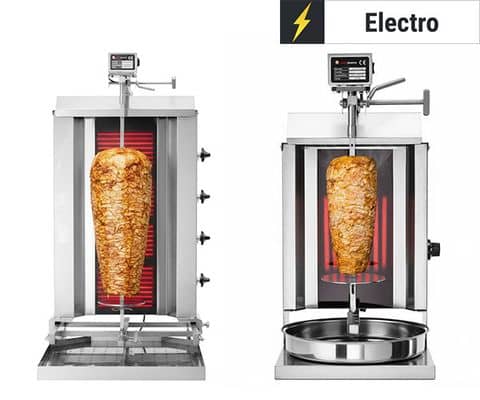
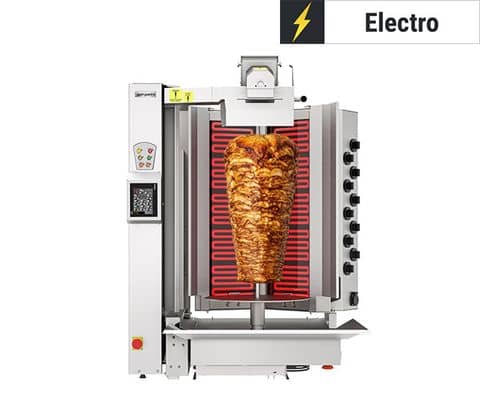
When it comes to gyros/döner grills, the type of power connection is one of the most important factors to consider. Gas döner grills are often used in busy snack bars and traditional döner restaurants because they provide direct heat and high grilling performance. Electric döner grills are a good option if the existing infrastructure is better suited to electrical connections or if a gas connection is not available.
It’s important to ensure the grill is suited to the location: power requirements, footprint, ventilation, heat generation, and workplace safety must all be appropriate for the operation. In addition to gas and electric power, details such as the number of burners, individually adjustable heating zones, motor position, and maximum meat capacity also play a key role. Compact models are suitable for small kitchens or mobile setups, while establishments with high throughput prioritize larger skewer capacities and power reserves.
Capacity, Engine Position, and Day-to-Day Operation
A kebab grill is only cost-effective when its capacity matches its usage. The most important factors are the weight and thickness of the meat, the skewer diameter, the number of heating zones, and the available space around the unit. A unit that’s too small can quickly become a bottleneck during the lunch or dinner rush. An oversized model, on the other hand, ties up space and energy without always providing a corresponding benefit in everyday use.
The motor’s position also affects operation and cleaning. Models with the motor at the top, bottom, or rear differ in terms of access to the skewer, grease tray, and work area. For establishments with rotating staff, an easy-to-understand control system is particularly valuable. Clear controls, easily accessible components, and a stable skewer guide make daily work easier.
Quick Checklist for Selection:
-
Choose gas or electric based on your existing infrastructure
-
Base meat weight and skewer height on actual sales volume
-
Evaluate motor position based on ease of use and cleaning access
-
Plan for footprint, heat clearance, and ventilation early on
-
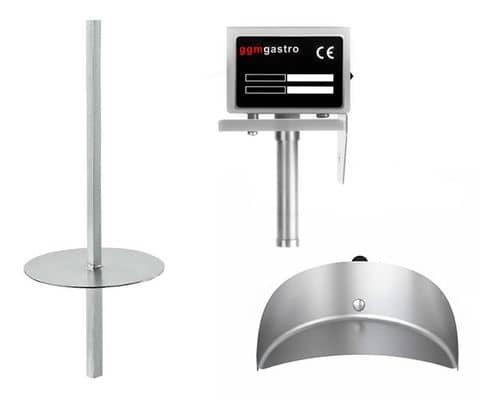
Consider accessories for slicing, portioning, and serving right from the start
Hygiene, Cleaning, and Durability of Doner Grills
Gyros/döner grills are exposed to heat, grease, meat juices, and daily mechanical stress. That’s why stainless steel surfaces, removable grease trays, easily accessible areas, and sturdy construction are particularly important in professional settings. The easier it is to clean grease-prone areas, the skewer holder, and exterior surfaces, the easier it is to maintain hygienic standards at the grill station, even with high usage.
Especially in establishments with long operating hours, cleaning has a direct impact on working hours and operational safety. While smooth surfaces, sturdy controls, and easily accessible components may not result in massive time savings, they do reduce daily friction. This is particularly relevant when the appliance is used intensively several times a week and operated by different employees.
Integrate gyros/döner grills seamlessly into the grilling station
A döner grill rarely operates on its own. To minimize movement and ensure clean service, the grill station needs adequate work surfaces, ingredients within easy reach, and organized storage areas for accessories. Kebab slicers and knives facilitate quick portioning, while [prep tables](https://www.ggmgastro.com/cooling/prep tables) and salad stations can help with side dishes, sauces, and prepped ingredients. In areas with high heat and grease exposure, proper ventilation is also an essential part of professional planning.
The workflow should always be considered as a whole: grilling skewers, slicing meat, assembling portions, serving dishes, and cleaning the work area. The more clearly these steps are organized, the more smoothly the team will work during peak hours.
Buy Gyros/Döner Grills at GGM Gastro
At GGM Gastro, food service establishments can find gyros/döner grills in a variety of models suited for different business sizes: from compact units for smaller retail locations to high-performance solutions for high-volume döner and grill concepts. The selection includes gas and electric models, units with different motor positions, various capacities, and matching accessories for professional daily use.
A sound purchasing decision is based on a combination of connection type, capacity, space requirements, cleaning effort, and planned utilization. This ensures that the döner grill is not viewed merely as a standalone unit, but as an integral part of a reliable, hygienic, and economically sound grilling process.