


:quality(70))
:quality(70))


Knives & Accessories for the Food Service Industry
Professional knives and matching accessories support precise, fast, and controlled workflows in restaurant kitchens, snack bars, hotels, catering businesses, and commercial kitchens. Choose the right types of knives, sets, and solutions for sharpening, storage, and hygienic organization. Knife Guide »
Knife
















Knives & Accessories: The Foundation of Efficient Kitchen Work
This category includes professional cutting tools as well as accessories for sharpening, protecting, transporting, and storing them. The category ranges from chef’s knives, utility knives, and meat knives to filleting knives, bread knives, and specialty knives, as well as knife sets, knife sharpeners, knife blocks, magnetic strips, knife bags, and knife sterilizers.
In the day-to-day operations of a commercial kitchen, the choice of knife influences more than just the cutting result. The right blade shape makes repetitive tasks easier, helps ensure consistent portions, and reduces unnecessary effort. This is just as important during mise en place as it is during a busy lunch or dinner shift.
Which culinary knife is best suited for each step?
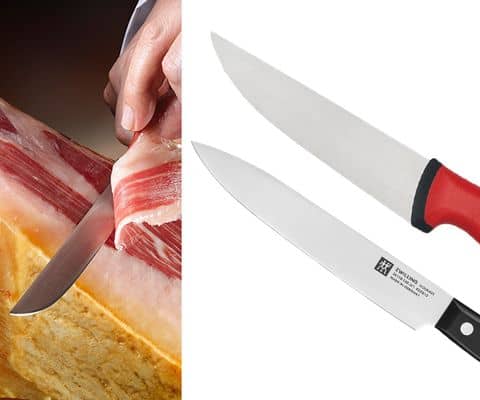
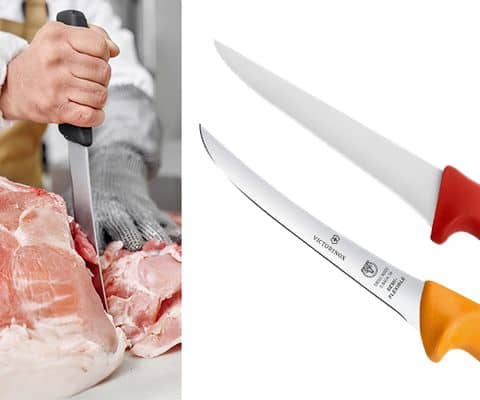
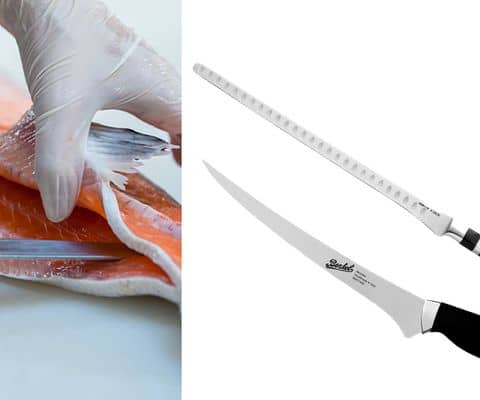
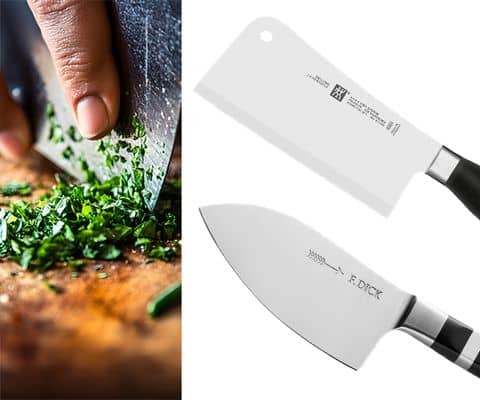
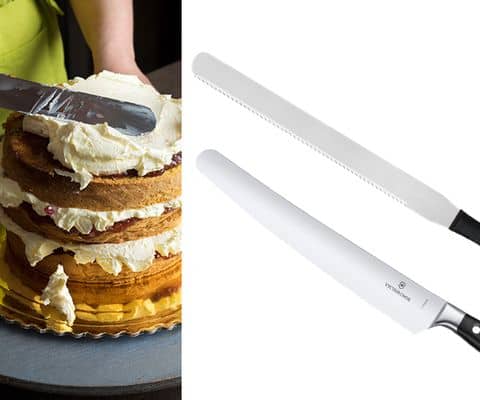
The choice should be based first on the type of food and the cutting task. Chef’s knives and utility knives are suitable for a wide range of food preparation tasks. Meat, butchering, and slaughter knives are designed for portioning and processing meat. Filleting knives often have a narrower, more flexible blade, while bread and pastry knives with serrated edges cut through hard crusts without compressing the interior too much.
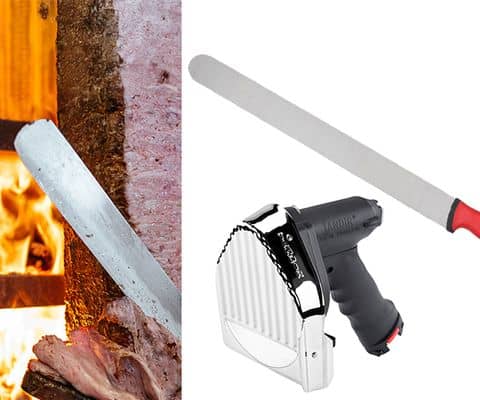
Additional models are available for specialized businesses. Kebab knives help ensure even cuts on the skewer, while pizza cutters make it easier to slice fully baked pizza , and cheese knives are designed for different textures. When opening a new location or equipping multiple workstations, knife sets can provide a well-organized foundation. A single knife, on the other hand, is often the more economical choice when specifically replacing a worn-out tool.
Key decision-making criteria include:
-
Knife type and intended use
-
Blade length, blade shape, and edge profile
-
Blade material and re-sharpenability
-
Handle shape, slip resistance, and balance
-
Single knife, series, or coordinated knife set
Compare blade length, edge profile, and handle carefully
The blade length must be appropriate for the size of the food item, the work surface, and the cutting motion. A long blade makes it easier to work with larger cuts of meat or baked goods, but requires sufficient space and controlled guidance. Shorter knives are often more manageable for delicate tasks, peeling, or when working in tight spaces.
Smooth cutting edges are suitable for clean, controlled cuts and, depending on the model, can be sharpened with a knife sharpener or a sharpening steel. A serrated edge is particularly helpful for bread, rolls, and foods with a firm outer crust. Ergonomically shaped and slip-resistant handles improve control during extended preparation times or when moisture is present in the workspace.
Colored handles can make it easier to assign knives to specific work areas. However, they do not replace workplace cleaning, storage, and hygiene regulations.
Plan for short distances and secure storage
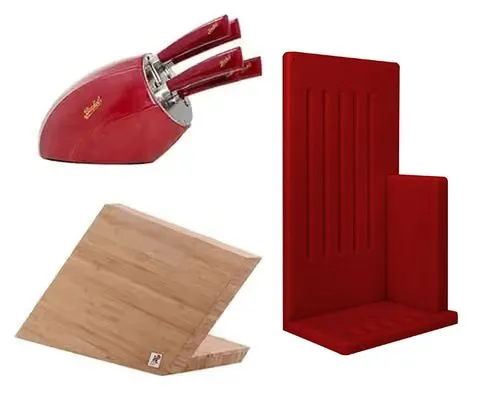
Knives should be kept where they are used regularly, rather than left lying around on countertops or among other tools. Knife blocks and magnetic strips provide a secure, easily accessible place to store them. Knife pouches, knife sleeves, and blade guards are ideal for catering teams, training sessions, or employees who transport their tools between work locations.
In small kitchens, knife placement is particularly important: When frequently used knives are located directly at the prep station, there’s no need to search for them during peak hours. In production kitchens or establishments with multiple shifts, a standardized layout supports training and facilitates handoffs between teams.
Quick Check for Hiring Decisions
-
What foods are processed daily, and in what quantities?
-
What blade length is appropriate for the work surface and the size of the food being prepared?
-
Are you replacing a single knife, or do you need a complete basic set?
-
How are the knives protected, sharpened, and stored after use?
-
Can the series and model be consistently added to a future reorder?
Care and Hygiene in Daily Use
A blade that remains dull over time requires more effort to use and makes it harder to make controlled cuts. Regular maintenance with appropriate sharpening tools therefore helps keep the knife in good working order and can extend its service life. The appropriate method depends on the type of blade and the manufacturer’s instructions.
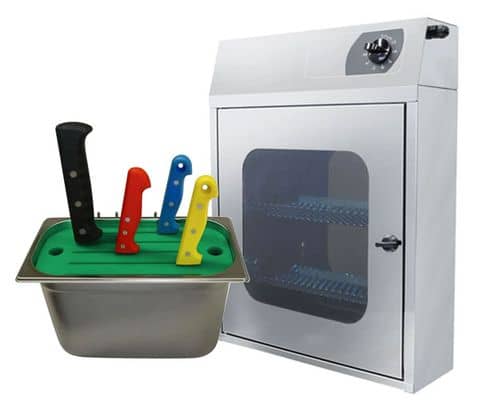
After use, knives should be cleaned promptly, dried thoroughly, and stored in a protected manner. Inappropriate cleaning methods, prolonged exposure to moisture, or unprotected contact with other metal parts can damage the handle and cutting edge. For businesses with specific organizational requirements, knife sterilizers can complement existing hygiene protocols.
Cost-effective procurement and long-term reordering
Cost-effective purchasing isn't based solely on the lowest unit price. Key factors include frequency of use, edge retention, ease of use, maintenance requirements, and the ability to reorder individual knives later. Tools used frequently should be durable and safe for the team to handle; specialty knives needed only rarely can be added as needed.
A well-coordinated selection of knives, sharpening accessories, and secure storage supports consistent workflows and clear organization. At GGM Gastro, businesses can find solutions for a variety of budgets, business sizes, and applications—from targeted replacement purchases to uniform equipment for multiple workstations.