


:quality(70))
:quality(70))


Cutting Boards for the Food Service Industry
Professional cutting boards support hygienic and organized food preparation in restaurants, snack bars, hotels, commercial kitchens, and catering businesses. A variety of sizes, materials, colors, and features allow you to choose the right option for each specific workstation. Cutting Board Guide »




Additional cutting boards




Cutting Boards as the Foundation for Clean Workflows
Cutting boards are work surfaces used for cutting, portioning, and preparing food in commercial kitchens. They protect the countertop, create clearly defined preparation areas, and help ensure hygienic separation of different food groups.
In the food service industry, cutting boards are subjected to heavy daily use. They are used during cold preparation, at the cooking station, in the pizzeria, in meat processing, and when plating. Especially during peak hours, every cutting board must be readily available, clearly assigned, and large enough. Without a clear system, unnecessary searching, frequent board changes, and additional cleaning interruptions occur.
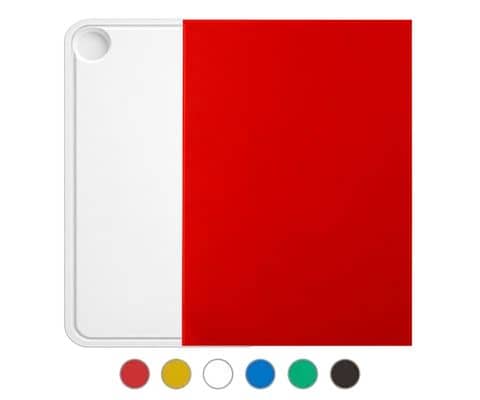
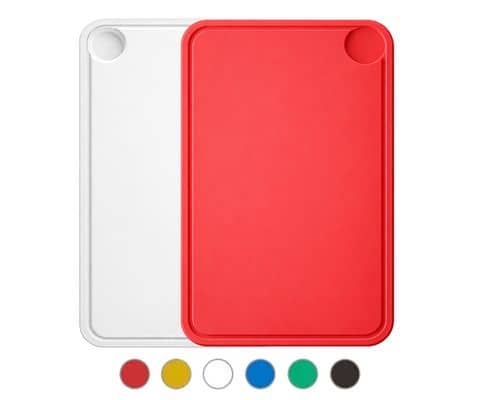
Colored cutting boards can help teams visually separate work areas from one another. For example, boards for vegetables, fish, meat, or poultry can be assigned to specific stations. It is not just the color that matters, but a hygiene concept that is consistently applied throughout the operation.
Choose the size and model that best suits your workspace
The appropriate size depends on the food being cut, the work surface, and the daily production volume. Compact sizes, such as 250 × 400 mm, are suitable for smaller prep tasks, garnishes, or limited workspaces. Larger versions measuring 300 × 500 mm, 325 × 530 mm, or the EN-standard 600 × 400 mm offer more space for vegetables, cuts of meat, or recurring production steps.
The board should rest completely and stably on the designated surface. For larger workstations, cutting boards designed to fit a worktable can be used. Before purchasing, therefore, check the length, width, material thickness, and available mounting points.
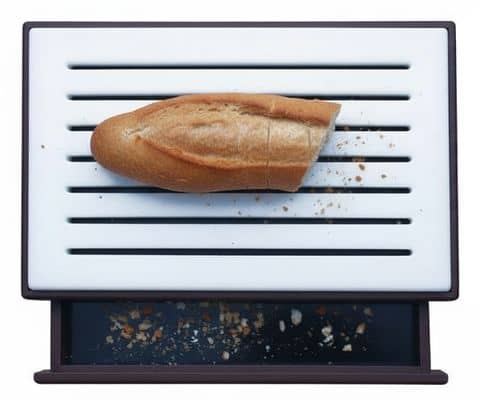
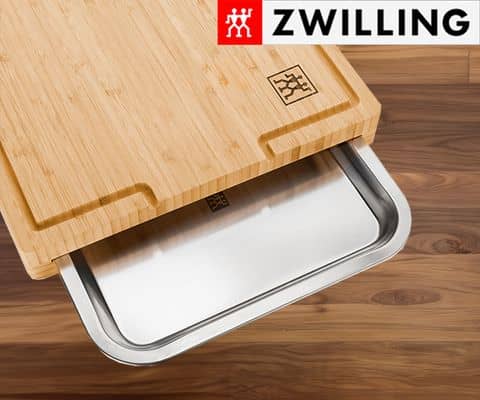
A juice groove is useful if you regularly prepare foods with high juice content. Models with a drip tray make it easier to sort or further process cut ingredients. Stoppers, feet, or non-slip pads can further ensure stability.
Materials, Hygiene, and Durability in Daily Use
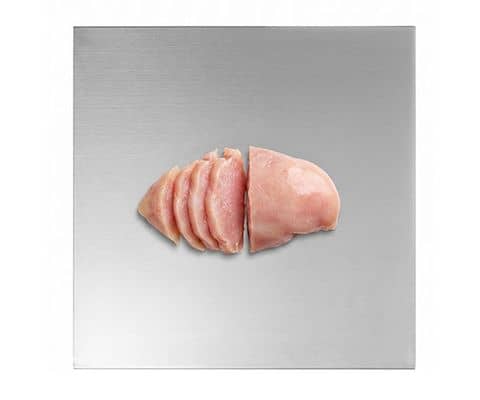
Plastic cutting boards are widely used in professional kitchens because they come in a variety of colors and sizes and can be easily integrated into structured cleaning routines. Polyethylene models have a durable surface and, depending on the product quality, are suitable for frequent cutting tasks.
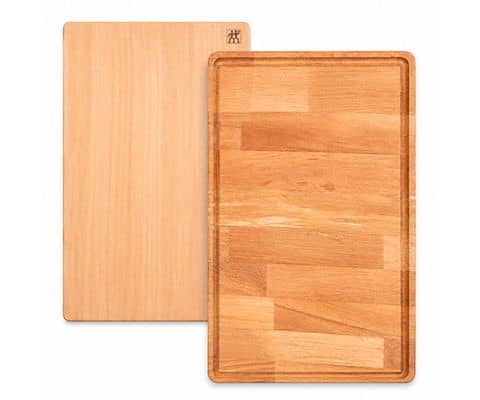
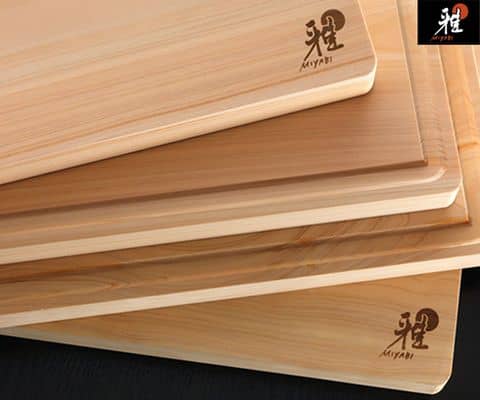
Wooden cutting boards are used for bread, pizza, or certain prep tasks, among other things. However, they have different requirements for drying and maintenance. The manufacturer’s specifications and the facility’s hygiene protocol are always decisive.
Cutting boards should be checked regularly for deep cuts, warping, and damaged edges. Heavily worn surfaces can be more difficult to clean and should be replaced in a timely manner. After cleaning, the boards must be allowed to dry completely. Neat, upright storage in suitable holders prevents moisture buildup and makes it easier to identify them.
Quick Checklist for Selection
-
What kinds of food will be prepared on the cutting board?
-
What dimensions will fit the available countertop space?
-
Do you need a single cutting board or a color-coded set?
-
Are juice grooves, stoppers, or drip pans useful for drainage?
-
How is the cutting board cleaned, dried, and stored?
These criteria help you make a decision based not only on price or color, but also on the board’s actual practicality in use.
Integrate cutting boards into your workspace in a practical way
A cutting board only truly comes into its own when used in conjunction with the workstation. A sturdy stainless steel work table creates a durable and easy-to-clean prep area. Refrigerated tables located near the production area shorten the distance to frequently used ingredients. To keep workstations organized, cutting board holders or shelves can be used to keep cutting boards separate while they dry and ensure they remain quickly accessible.
Cleaning must also fit into the workflow. If multiple cutting boards are used simultaneously, the capacity of the dishwashing equipment and the available drying space should be taken into account. In small kitchens, a compact, clearly defined selection of cutting boards often makes more sense than a large number of different sizes. In commercial kitchens, on the other hand, having several identical cutting boards per station can help better manage changeovers and cleaning phases.
Cost-Effectiveness Through Clear Standards
Cutting boards aren’t a major technical investment, but they do affect many recurring tasks. The right sizes reduce the need to rearrange items, a clear color-coding system makes training easier, and sturdy designs better withstand daily use.
Therefore, cost-effectiveness isn’t determined by the purchase price alone. Important factors include service life, cleaning effort, safe handling, and how well the board fits into the existing workflow. A well-organized basic set with appropriate sizes and clear designations supports stable workflows without introducing unnecessary variations into operations.
Putting Together a Set of Cutting Boards to Suit Your Needs
For small snack bars or cafés, a modest set covering the most important food groups may be sufficient. Restaurants and hotels often require multiple sizes for preparation, production, and service. In commercial kitchens or catering operations, standardized sizes and a clear allocation to individual workstations are particularly helpful.
By considering the intended use, dimensions, material, and cleaning requirements together, you can assemble a set of cutting boards that fits your actual workflow. This keeps workstations organized, allows for structured food preparation, and enables you to plan necessary replacement purchases in a targeted manner.