


Bakery Equipment for Professional Bakeries
From dough preparation through fermentation and the baking process to in-store presentation: Well-designed bakery equipment integrates baking technology, refrigeration, work surfaces, and the sales area into a coordinated production system. The equipment needed depends primarily on the product range, batch sizes, daily production volume, and the ratio of in-house production to pre-baked goods. Bakery Guide »
Special for bakery






Other equipment









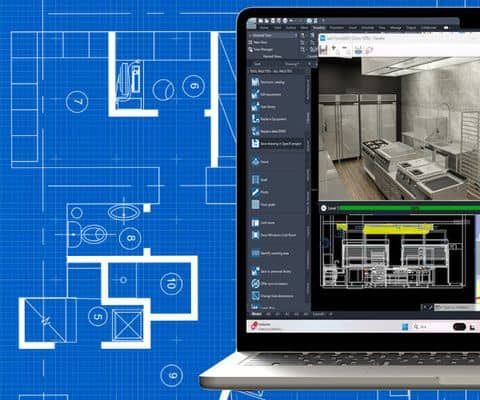

Setting Up a Bakery: From Production Processes to the Right Equipment
Professional bakery equipment includes machines and work areas for dough preparation, shaping, proofing, baking, temporary storage, display, and cleaning. Depending on the business, this may also include a pastry shop, snack production, a coffee bar, or a dedicated seating area. An artisanal bakery with extensive in-house production has different requirements for machinery and space than a small retail location that receives some of its baked goods via delivery and finishes baking them on site. Similarly, a bakery with a strong focus on bread operates differently from one that specializes in rolls, pastries, cakes, or snacks. Therefore, the production process is the first crucial factor in planning: Which products are produced and in what quantities? When do the individual batches begin? Which doughs require resting or proofing times? When must which products be ready for sale? This determines which equipment actually supports the daily process.
Dough Preparation as the Starting Point in the Bakery
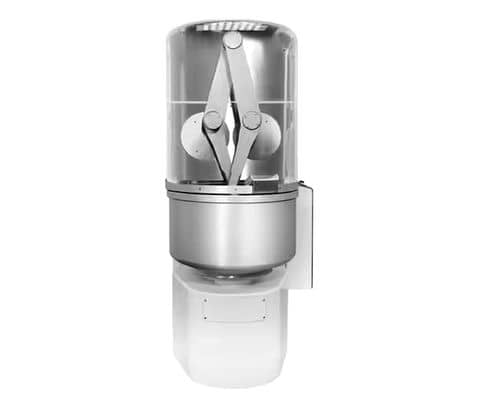
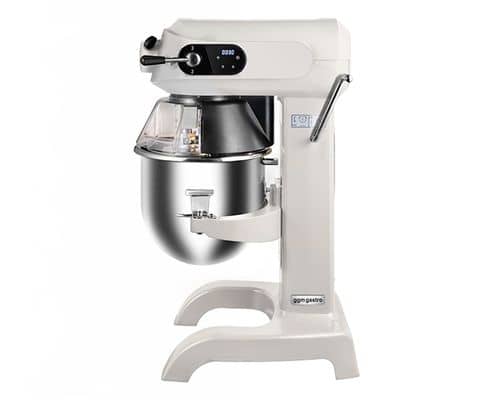
The production chain begins with flour, water, and other ingredients. The kneading capacity and dough volume must be suited to the product line and the desired batch size. Spiral dough mixers are suitable for many classic bread and baked goods doughs. Depending on the production concept, kneading machines with dipping arms can offer another solution for dough preparation. Planetary mixers, on the other hand, are often used for tasks involving creams, batters, fillings, or specific types of dough. It’s not just the maximum capacity that matters; a machine must fit the rhythm of the bakery. Producing many smaller batches presents different challenges than a few large production runs. Ingredient supply and workspace are also key factors. Flour carts, storage bins, water dispensing systems, and sufficient counter space can help ensure that frequently used ingredients are readily available without unnecessary trips.
Dividing, shaping, and rolling out dough: Determining the correct dimensions
After kneading, the dough is processed depending on the product. Dividing, weighing, rounding, or rolling out are labor-intensive steps that quickly become a significant time factor when dealing with larger quantities. Dough dividers and rounders can assist with recurring portioning steps. Dough sheeters and long-shape formers are used when the product line requires specific shaping. The actual production volume is the most important factor in selecting the right equipment. If large quantities of a similar product are produced daily, a more standardized processing workflow can significantly impact operations differently than with small, varying batches. Despite the use of machinery, sufficient workspace remains important. Dough pieces must be handled, further processed, placed on baking sheets, or transported to the next station. A high-performance machine is of little help if there is no space before or after it to allow for a smooth flow of materials.
Organizing Fermentation and Production Time in a Controlled Manner
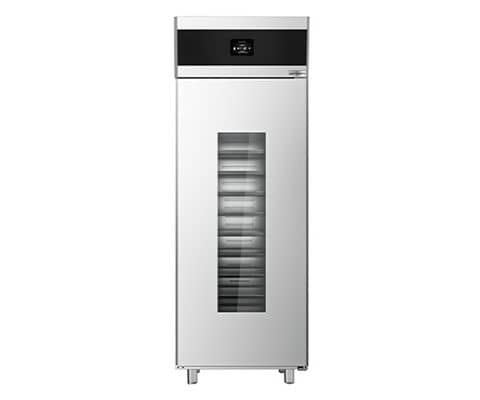
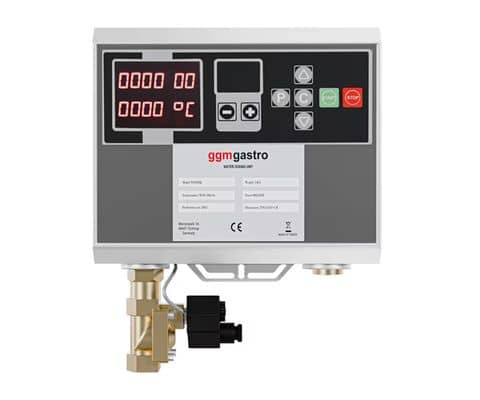
For many baked goods, it’s not just the actual baking time that determines the production cycle. Dough resting and fermentation also account for a significant portion of the production process. Automatic proofers & proofing interrupters can help integrate proofing processes into operational scheduling. For bakeries that open early or operate multiple production waves, controlled process management can be particularly important. A bottleneck in this area affects the entire bakery. If there is ample kneading and processing capacity but not enough space for the prepared dough pieces, production will back up in front of the oven. Therefore, kneading capacity, proofing capacity, and baking capacity must be considered together. The goal is not the largest possible individual machine, but rather a production line in which the individual stations are quantitatively matched.
Quick Checklist for Choosing the Right Bakery Equipment
Five points to consider when planning the main display areas:
- Product Assortment: Is the focus on bread, rolls, pastries, cakes, or a mixed selection?
- Production volume: What batches and quantities need to be processed within the relevant production windows?
- In-house production: Which products are produced entirely in-house, and which are merely stored, prepared, or finished baking?
- Baking schedule: Is production mainly concentrated in the morning, or are items baked throughout the entire sales day?
- Sales concept: Are snacks, coffee, cakes, or seating a regular part of the business?
These key points indicate which machines are part of the basic equipment and which technologies become relevant only for specific product ranges.
Select Ovens by Product Line and Baking Frequency
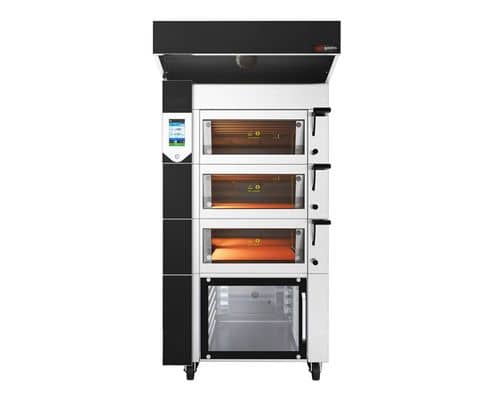
The oven is one of the key capacity factors in a bakery. However, the most suitable design depends on the production program. Multi-deck ovens offer multiple baking levels or chambers and, depending on the model, can handle varying production volumes. In addition, rack ovens or drawer ovens are available for other operational and production models. When determining the appropriate size, peak production is a key factor. How many baking sheets or baked goods need to be produced within a specific time frame? How often do products and baking programs change? Is production carried out in larger batches in the morning, or are additional batches baked regularly throughout the day? The baking sheet sizes used are also relevant for a well-coordinated workflow. The EN 600 x 400 mm format, which is widely used in bakeries, is found in ovens as well as in corresponding refrigeration and freezing solutions. Standardized formats can simplify transfers between preparation, cooling, proofing, and the baking process. Before purchasing equipment, factors such as floor space, power requirements, heat dissipation, and ventilation should also be included in the planning.
Understanding Cooling as Part of Bakery Production
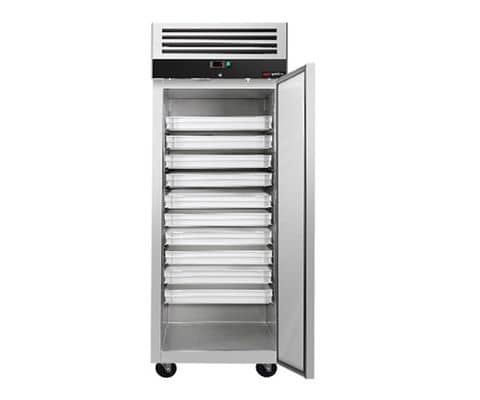
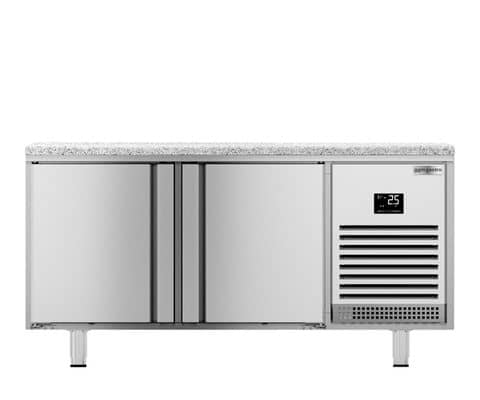
Refrigeration serves several purposes in a bakery. It can be used to store raw materials and perishable ingredients, temporarily store prepared products, and stagger certain production steps. Refrigerators & Freezers EN 600x400 are designed for typical bakery trays and corresponding workflows. Refrigerated and frozen work tables in the appropriate size can also combine storage and workspace. The location of the refrigeration unit is at least as important as its total capacity. Ingredients and prepared products that are regularly needed in production should be available as close as possible to the corresponding workstation. A large cooling capacity in the rear storage area therefore does not automatically replace cooling located near the production area. If baking sheets and ingredients have to be moved long distances during each production phase, this costs time every day and creates additional cross-traffic within the bakery.
Select work surfaces for flour, dough, and preparation
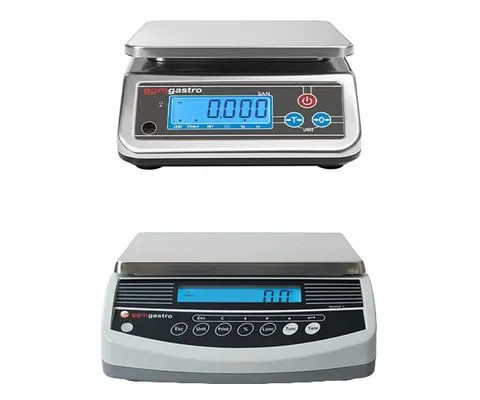
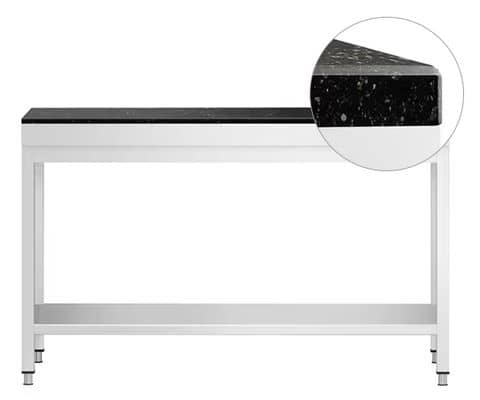
Work in the bakery isn’t limited to machines. A significant portion of production takes place on work surfaces. Bakery tables with different countertops can be adapted to the specific process. Plastic and granite work surfaces serve different purposes depending on the task and production concept. It’s important to have sufficiently large, easily accessible surfaces for weighing, shaping, portioning, and setting aside dough. Dough containers, scrapers, weighing scoops, and other tools need designated spots so that the work surface remains organized during larger batches. Ergonomic layout also plays a role. If a person has to walk back and forth between the kneading machine, work table, baking sheets, and proofing area for every step of the process, the additional distance traveled adds up significantly over the course of an entire production day.
Integrating Sheets and Carts into the Material Flow
In bakeries, a large portion of production is handled on baking sheets and in containers. This creates a distinct internal flow of goods. Baking sheets must be ready before use, transported further after processing, and—after baking—moved to a cooling area or to the sales floor as needed. Tray or baking sheet carts can facilitate this transport between the individual stations. When planning, it is therefore important to consider not only where machines are located. Carts also require space for parking and maneuvering. If aisles are too narrow or parking spots are poorly chosen, these mobile aids can quickly become obstacles themselves. A well-functioning bakery therefore allows sufficient space for handoffs between preparation, proofing, the oven, and post-baking processing.
From the Oven to the Shelf: Planning Restocks Effectively
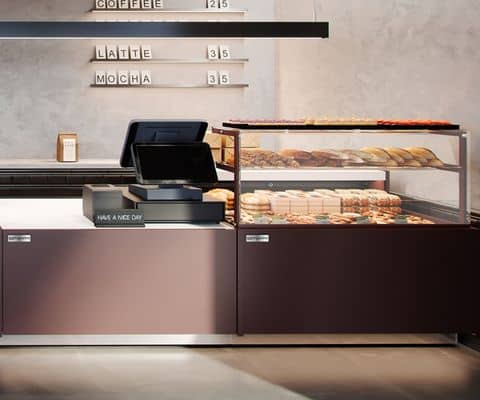
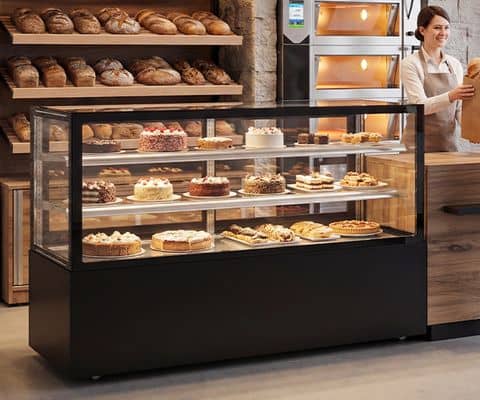
The operational process isn’t complete once baking is finished. Baked goods must cool, be sliced or further processed as needed, and then be moved to the sales area. Bread racks provide well-organized display and storage areas for these baked goods. For cakes, pies, or delicate products, suitable display and refrigerated counters can be added. Sales counters ultimately serve as the interface between production and the customer. It’s not just the visible product display that matters. Behind the counter, packaging, tongs, knives, and other frequently used tools must also be easily accessible. The flow of goods between the bakery and the sales area should also be taken into account. If fresh baked goods are regularly replenished throughout the morning, a clear handoff point is needed so that new items can be stocked without unnecessarily disrupting sales or customer traffic.
Organizing Bread Slicing and Packaging Efficiently
Depending on the product range, bread and other baked goods are either sliced upon request or offered pre-sliced. Baguette and bread slicing machines can assist with this step when sales volumes are high enough. The machine requires more than just its own floor space; there must also be room for unsliced goods, the finished product, and packaging materials. A clear sequence is especially helpful during peak sales periods: retrieve the product, slice it if necessary, package it, and hand it over. If these steps are spread far apart, it results in unnecessary walking behind the sales counter. Packaging materials for bread, rolls, cakes, or snacks should therefore also be organized according to their actual use and should not block valuable production or sales space.
Think of coffee, cake, and snacks as additional workspaces
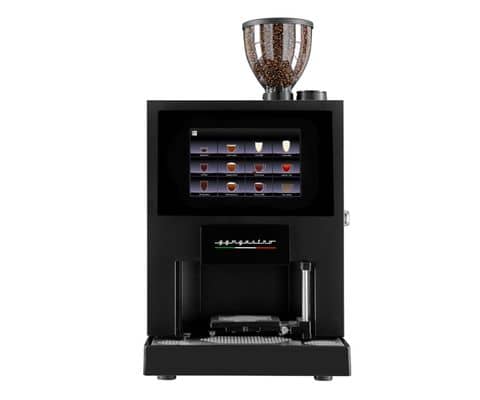
Today, many bakeries combine the traditional sale of baked goods with coffee, breakfast, sandwiches, or a small café area. This creates additional production processes. In addition to the actual equipment, a coffee machine requires space for cups, milk, beans, cleaning supplies, and, if applicable, other beverage items. Sandwiches and snacks, in turn, require refrigerated ingredients, preparation space, and a clearly organized serving area. Cake counters and refrigerated display areas also expand the sales layout. When planning the layout, it is therefore important not to simply fit these offerings into any available gaps. If coffee preparation, snack production, and bread sales constantly occupy the same work surfaces, the processes will slow each other down—especially during the morning rush. Additional offerings work best when they constitute a commercially significant part of the product range and have their own, logically arranged workstation.
Planning Hygiene and Cleaning for Flour and Dough Processing
Bakeries have specific requirements for organization and cleaning. Flour dust, dough residue, fats, creams, and various raw ingredients all come into contact within a single production area. Work surfaces and machines should therefore be easily accessible. Especially when it comes to kneading machines, dough processing, and workstations, it is crucial how easily areas that come into contact with products can be cleaned as part of daily operations. Baking sheets, containers, tools, and sales equipment must also be regularly incorporated into the cleaning cycle. Cleaning requires sufficient space and a clear schedule. If used containers and baking sheets are temporarily stored on work surfaces during production, valuable production space is lost. Hygiene is therefore not just a matter of cleaning itself. It begins with a work organization in which raw materials, production, finished goods, and returned items can be sensibly separated from one another.
Prioritizing Bakery Equipment Based on Cost-Effectiveness
Not every bakery needs the same level of technical sophistication from the start. Investments can be sensibly prioritized based on which production steps account for a significant portion of daily business. For bakeries with extensive in-house production, the focus is on kneading, dough preparation, proofing, baking capacity, and cooling. In contrast, for a retail location with a higher proportion of bake-off products, the in-store oven, storage, and sales area may be more important than extensive dough production. For businesses with their own café and snack shop, additional priorities come into play. Even when modernizing, it’s worth first identifying the actual bottleneck. If production regularly falls behind in the morning, a larger oven isn’t necessarily the solution. Perhaps the kneading capacity is insufficient, dough pieces are piling up outside the proofing area, or baking sheets and carts are blocking the transfer line. The economically sound investment starts where time, capacity, or labor are lost on a daily basis.
Equip Your Bakery Professionally with GGM Gastro
From small bakeries to artisanal bakeries to retail locations offering coffee and snacks, production volumes, product ranges, and workflows vary significantly. The right equipment is therefore determined by batch size, dough processing, proofing and baking cycles, cooling requirements, and the organization of sales. GGM Gastro offers equipment for these needs, ranging from kneading and dough-processing technology to proofing systems and ovens, as well as EN 600x400 refrigeration, bakery tables, bread racks, and retail equipment. This allows for the targeted configuration of both complete sections for a new opening and individual production and sales stations during modernization or expansion.