


Grain Mills
Professional grain mills process dry, non-oily raw materials in a controlled manner to produce flour of varying fineness. A range of performance levels ensures the right choice for bakeries, commercial kitchens, and industrial production facilities. Grain Mill Guide »
Price
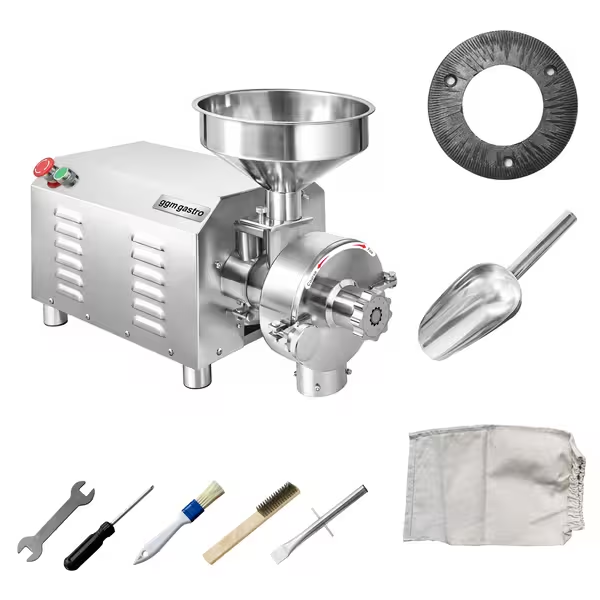
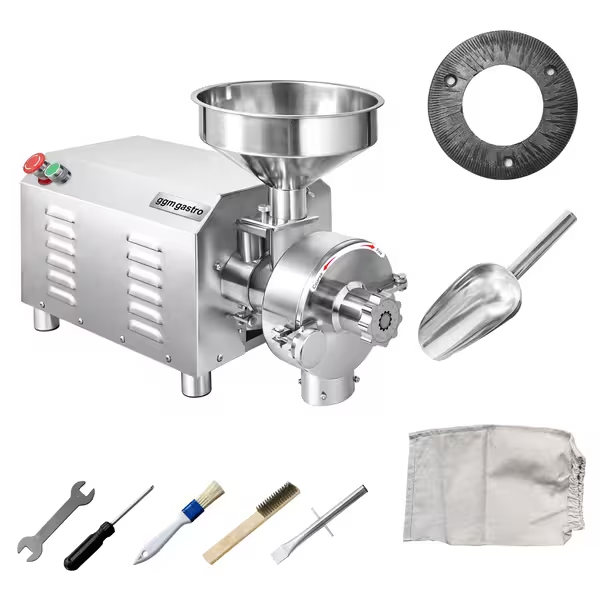
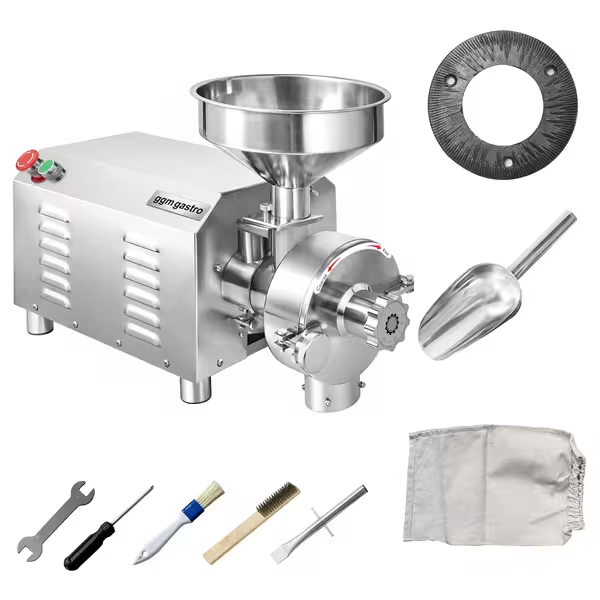
Grain Mills as Part of Professional Food Processing
Grain mills grind dry, non-oily raw materials into a specified fineness. In bakeries, restaurants, hotels, catering kitchens, and commercial production facilities, they facilitate the controlled processing of grains, legumes, seeds, and select dry spices.
The practical benefit lies in the ability to plan in-house processing. The grind size, batch size, and processing time can be adjusted to match recipes and production volumes. This facilitates consistent results and reduces dependence on pre-ground raw materials. For businesses with regular demand, it is crucial that the grain mill is suited to the actual daily volume and the peak production phase.
Choose a grinding capacity that meets your needs
The grain mills offered cover capacity ranges from approximately 40 to 80 kilograms per hour. Smaller models are suitable for recurring, manageable batches. Higher capacities provide flexibility when processing multiple recipes in succession or when preparation must be completed within short time frames.
Four criteria are particularly important when making a selection:
- Required output per hour
- Desired grind fineness of approximately 50 to 200 mesh
- motor power between 1.5 and 3.6 kW
- available floor space and equipment weight
- suitable 230-volt connection
The specified throughput must always be considered in relation to the raw material, feed rate, and the set grind size. Very fine grinding may take longer than a coarser result. A realistic capacity reserve prevents the mill from becoming a bottleneck during the preparation phase.
Workflow, Space Requirements, and Secure Integration
A grain mill works most reliably when placed in a stable, dry, and easily accessible location. The hopper requires sufficient headroom, while the outlet must have enough space for a suitable collection container. A sturdy base from the stainless steel furniture line ensures stability and creates a work environment that is easy to clean.
In a smaller bakery, the mill can prepare several defined batches before production begins. In a larger production kitchen, it can be integrated into a fixed workflow consisting of raw material storage, milling, temporary storage, and further processing. Combining it with flour carts and dough containers as a storage and transport solution reduces unnecessary movement and keeps the workspace organized.
Grind Size, Stainless Steel, and Cleaning in Day-to-Day Operations
The continuously adjustable grind setting accommodates varying requirements for fineness and texture. An adjustable feed mechanism helps maintain a consistent material flow. In the available models, 1,500 revolutions per minute and low-wear grinding discs ensure rapid processing of dry raw materials.
The housing and grinding chamber, made of AISI 304 stainless steel, are designed for hygienic work environments. Smooth, accessible surfaces make it easy to remove dry residues. Before cleaning, inspection, or changing materials, the unit must be turned off and unplugged. Moist, pasty, or highly oily raw materials are not suitable for this type of unit, as they can damage the grinding chamber and grinding discs.
An integrated overload protection system ensures operational safety during intensive use. Nevertheless, proper loading remains important: A consistent material flow is more beneficial for the motor, grinding results, and operational rhythm than an overfilled grinding chamber.
Quick Check for Hiring Decisions
- Is the kg/h capacity sufficient for the most intensive preparation phase?
- Does the grinding range match the required recipe?
- Are a 230-volt power connection, floor space, and load-bearing capacity available?
- Are only dry, non-oily raw materials processed?
- Can cleaning, collection containers, and material changes be easily integrated into the workflow?
Integrating Grain Mills Economically into the Operational Concept
A properly sized grain mill supports consistent operations because it ensures that the required batches are available in a more predictable manner. It can reduce the need for manual intermediate steps and allow the team to prepare more efficiently. The investment becomes economically viable, above all, when the equipment is used regularly and is neither too small nor unnecessarily large.
After grinding, the next processing step begins. Depending on the operational concept, equipment from the category Flour Sifting and Refining Machines may be relevant for further processing, or dough mixers for subsequent dough production. A clear separation of functions remains crucial: The grain mill grinds dry raw materials but does not perform either the sifting or the kneading process.
The Right Grain Mill for Consistent Batches
Capacity, grind fineness, suitability of raw materials, equipment, and available space form the basis for a sound selection. If the mill is properly integrated into the preparation, cleaning, and further processing stages, the result is a clear process that ensures consistent batches and a well-organized daily workflow.