


:quality(70))
:quality(70))


Panoramic display cases for the professional foodservice industry
Panoramic display cases showcase refrigerated foods and beverages in a highly visible manner, combining product presentation with reliable temperature control. A variety of tabletop and freestanding models allow for customization to suit sales areas, product assortments, and operational workflows. Panoramic Display Cases Guide »
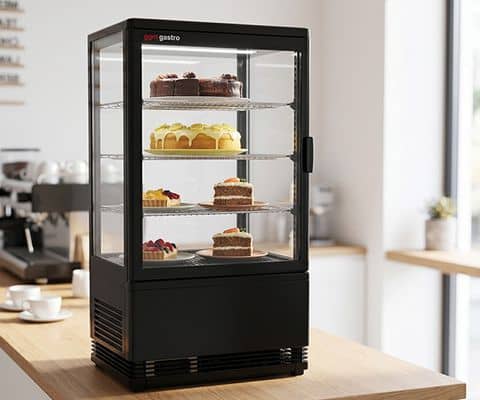

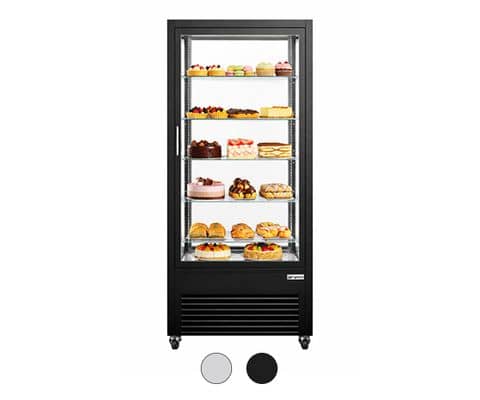
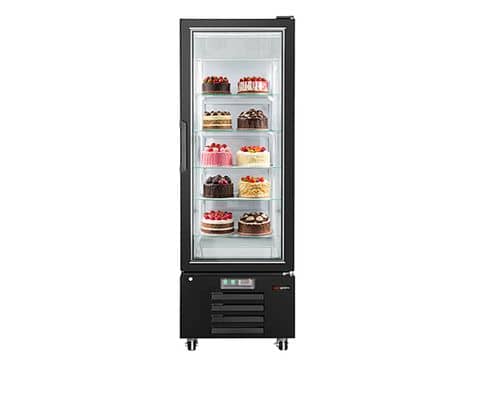


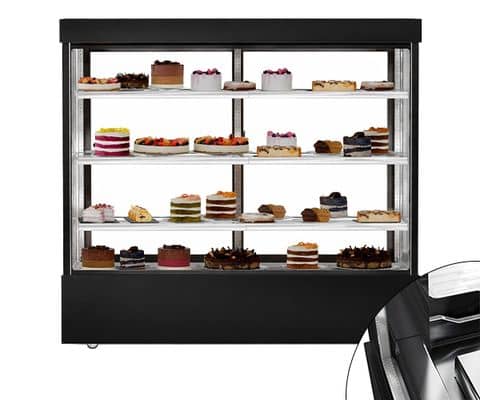

Panoramic display cases as refrigerated display areas in the sales area
Panoramic display cases are refrigerated display cases with large glass panels that allow food and beverages to be seen from multiple angles. They combine product display with controlled refrigeration and are particularly well-suited for cafés, bakeries, restaurants, hotels, bistros, and buffet areas.
In day-to-day operations, their advantage lies in the combination of visibility, accessibility, and efficient use of space. Cakes, desserts, snacks, sandwiches, or beverages can be clearly arranged across multiple levels without the need for a long sales counter. Especially in smaller sales areas, a slim freestanding display case can create a lot of vertical presentation space; tabletop models, on the other hand, make use of existing counter space.
Select the model, footprint, and capacity that best suit your operation
The right size depends not only on the available space, but also on the volume of merchandise and the restocking frequency. Width, depth, and height must fit the floor space, while volume, the number of glass shelves, and door configuration determine how easily the display case can be stocked on a daily basis. Round and rectangular designs have different visual effects in a room and also influence which sides of the merchandise are visible and accessible.
For high sales volume, easy staff access is important. In quieter café or hotel lounges, on the other hand, the presentation effect can take center stage. For products that are primarily displayed from the front, a refrigerated & cake display case may be the more suitable solution; Panoramic display cases really shine where a 360-degree view is required.
Keeping an Eye on Cooling and Temperature Control
For panoramic display cases, the temperature range, cooling type, and intended use are among the key decision-making criteria. Depending on the product assortment, models designed for standard refrigeration or deep-freeze conditions may be suitable. Recirculating air cooling ensures even temperature distribution inside the display case; well-insulated glass helps maintain stable cooling performance during operation.
Automatic defrosting, digital temperature control, and the refrigerant used can also be relevant factors for operation, maintenance, and energy consumption. It is crucial that the design is suited to the merchandise and the frequency of opening: A display case in a high-traffic self-service environment is subjected to different stresses than a model that is opened only by staff.
Quick Checklist for Choosing a Panoramic Display Case
Before making a purchase, these five points will help you narrow down your options:
- Floor space and desired design: tabletop or freestanding model, round or square
- Temperature requirements: standard refrigeration or freezing
- Quantity of goods: volume, number, and adjustability of shelves
- Access: Door configuration and how often the door is opened during daily operations
- Operation: Cleaning, lighting, temperature control, and availability
This approach results in a selection that not only meets the specifications on the data sheet but also performs reliably during peak hours, when restocking, and during daily cleaning.
Hygiene and practicality for everyday use without unnecessary friction
Before making a purchase, these five points will help you narrow down your options:
- Floor space and desired design: tabletop or freestanding model, round or square
- Temperature requirements: standard refrigeration or freezing
- Quantity of goods: volume, number, and adjustability of shelves
- Access: Door configuration and how often the door is opened during daily operations
- Operation: Cleaning, lighting, temperature control, and availability
This approach results in a selection that not only meets the specifications on the data sheet but also performs reliably during peak hours, when restocking, and during daily cleaning.
Plan with an eye toward cost-effectiveness rather than basing decisions solely on purchase price
A properly sized panoramic display case supports smooth operations when its capacity, cooling capacity, and accessibility are tailored to actual usage. Models that are too small result in frequent restocking; unnecessarily large units tie up floor space, capital, and ongoing cooling capacity. It therefore makes economic sense to choose a size that covers the usual inventory plus a realistic reserve.
When replacing equipment, availability also becomes a key consideration. In contrast, when planning new installations or modernizing existing ones, long-term considerations such as cleaning requirements, ease of use, spare parts, and integration into the sales process are key. Consulting services, various payment options, or leasing can be particularly helpful for larger investments, allowing the purchase to be seamlessly integrated into the business plan.
Panoramic display cases as part of a cohesive sales concept
A panoramic display case works best when stocking, restocking, and customer flow work in harmony. Short distances from the refrigerated storage area, sufficient space to open the doors, and a clearly visible location reduce unnecessary steps and support a smooth workflow.
This makes the display case not just a presentation area, but a functional part of the sales process. By selecting the design, temperature, capacity, access, and cleaning requirements to suit your operation, you can create a solution that keeps merchandise visible, supports your team in their daily work, and makes economical use of the available space.