


:quality(70))
:quality(70))


Smokers for the Food Service Industry
Smoking ovens are designed for businesses that want to smoke fish, meat, ham, or other products under controlled conditions and enhance their flavor. They support reproducible processes, consistent product quality, and predictable integration into the daily operations of commercial kitchens or production facilities. Smoking Ovens Guide »
Product type
Design/Equipment
Operation type
Operation
Power
Power Connection
Temperature to:
Width
Depth
Height
Price
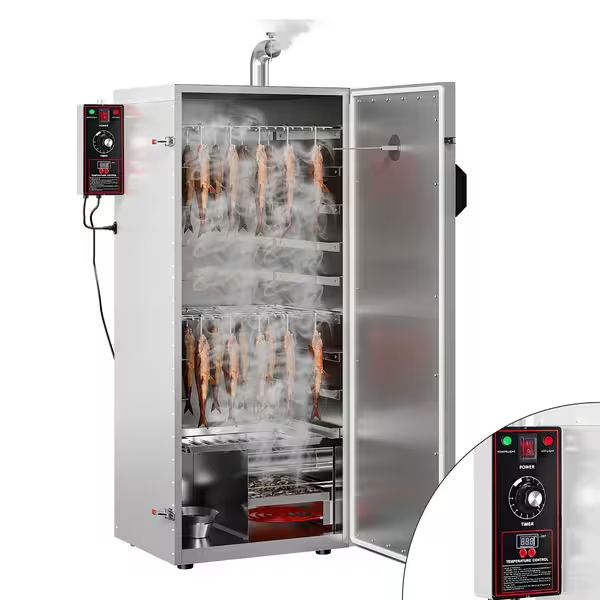
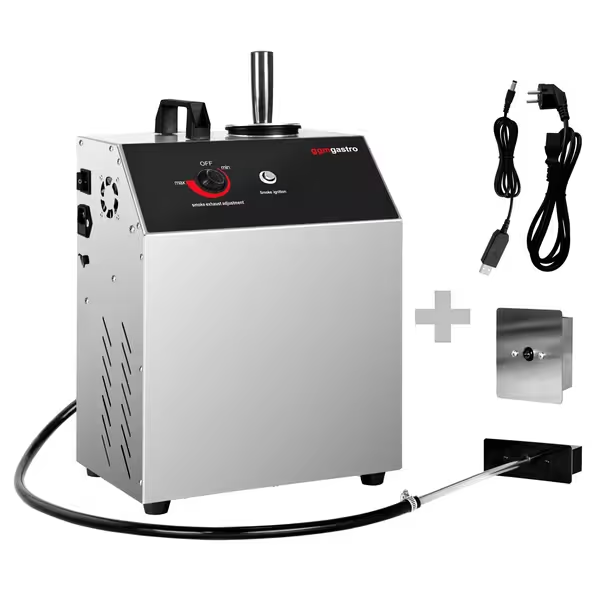
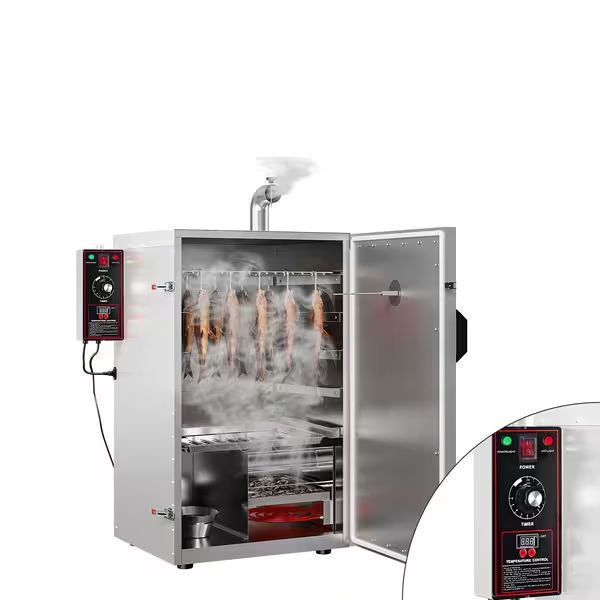
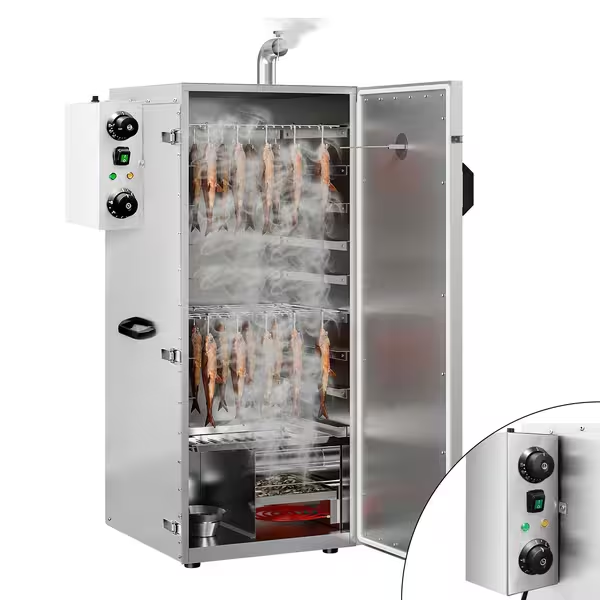
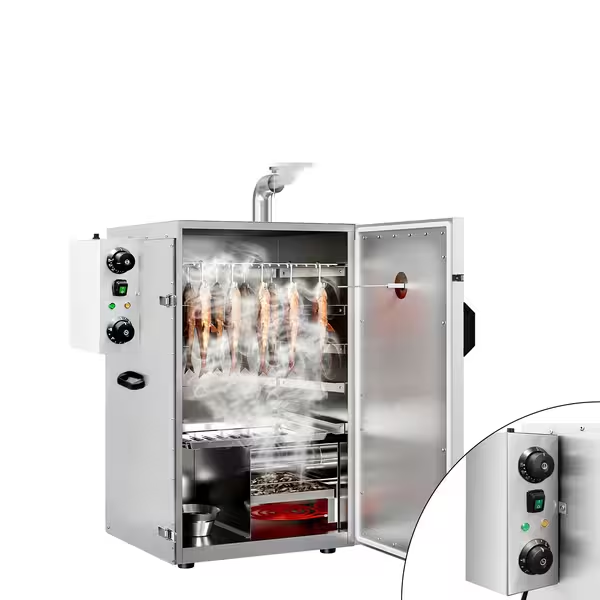
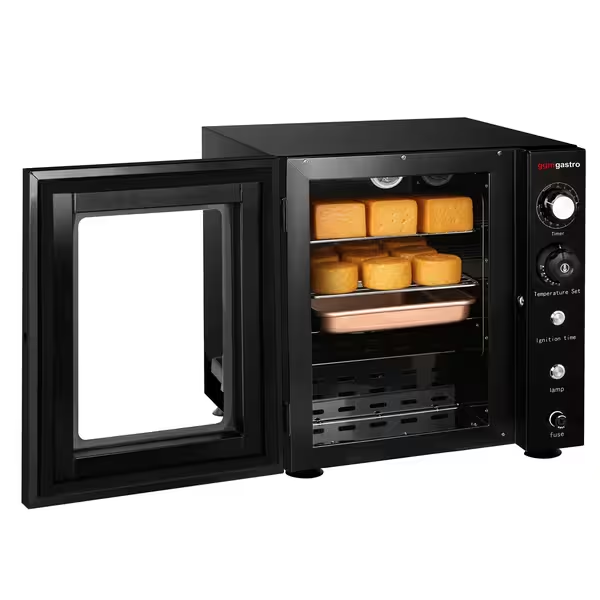
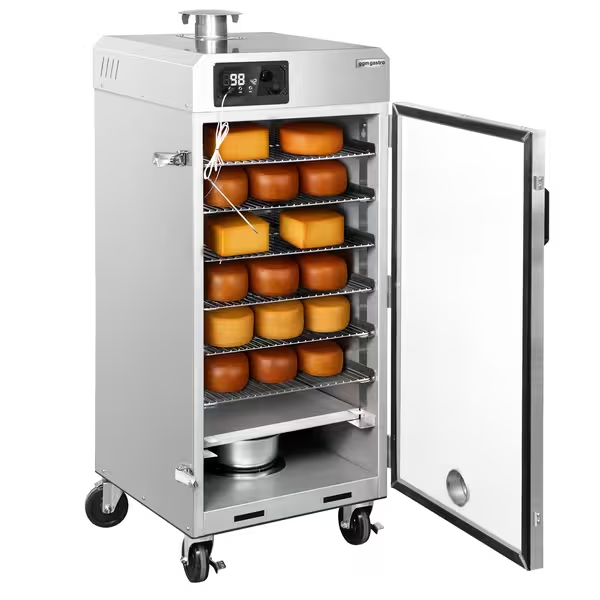
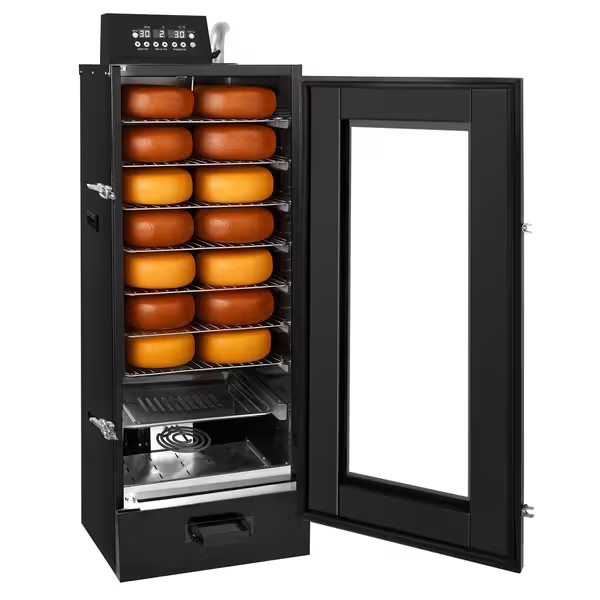
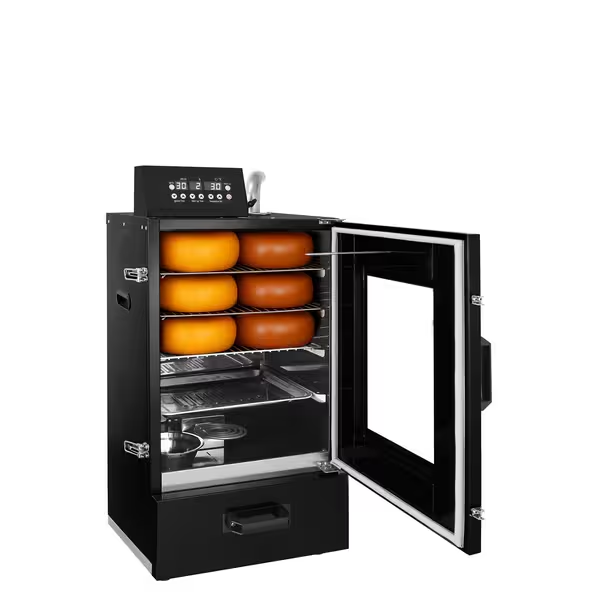
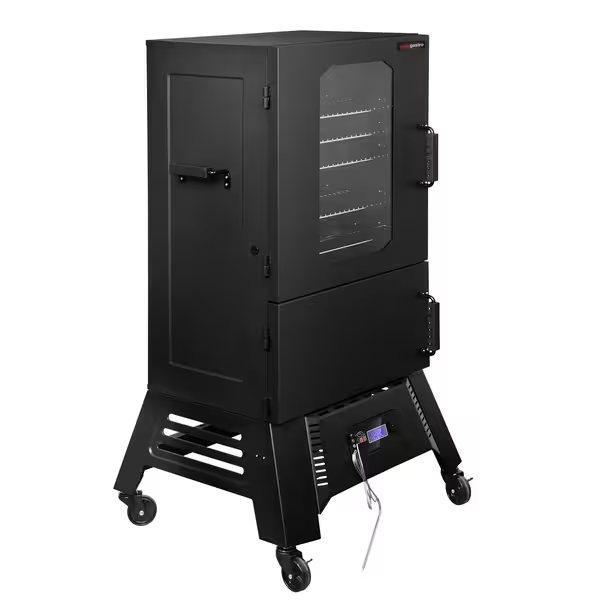
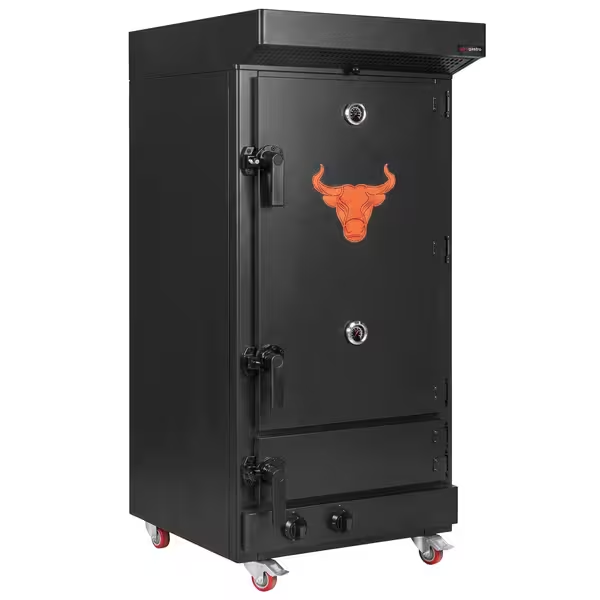
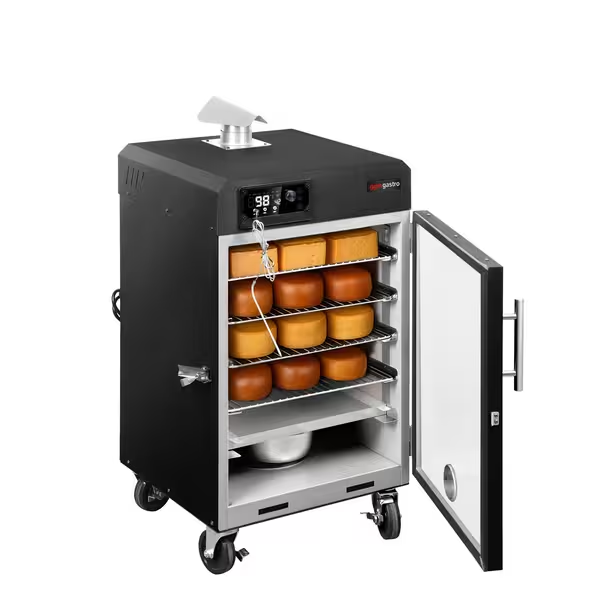
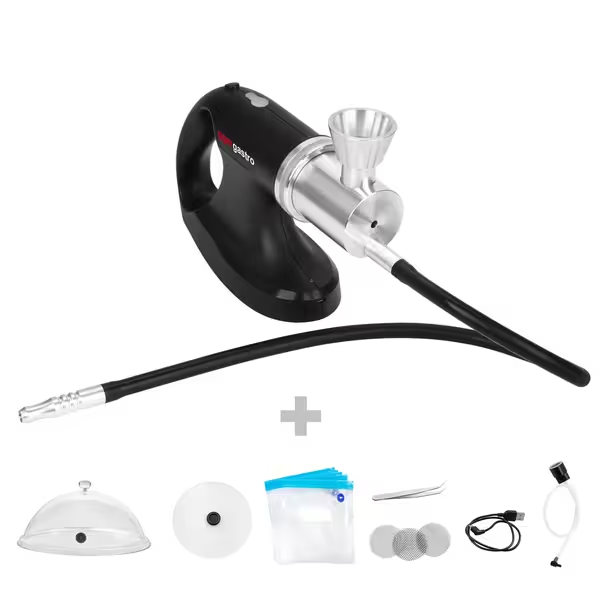
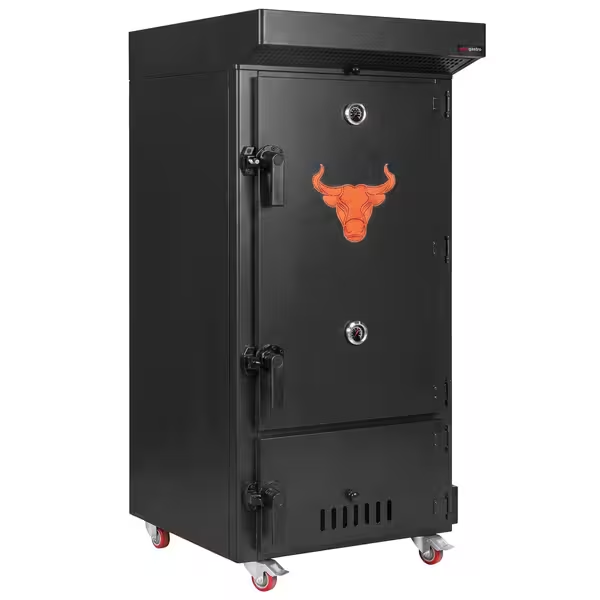
What Smoking Ovens Are Used For in Everyday Commercial Operations
Smoking ovens are enclosed, commercial-grade appliances designed for the controlled hot, warm, or cold smoking of food. They are used when products are not only to be cooked but also specifically flavored, refined, and prepared or served to a consistent standard of quality.
For restaurants, hotels, catering businesses, delicatessens, or businesses with their own product refinement processes, smoking ovens are particularly valuable when smoked products are produced regularly and under controlled conditions. Unlike improvised, one-off solutions, these systems offer predictable temperatures, clean interiors, reproducible processes, and equipment that can be integrated into professional operations. This is particularly important for fish, meat, or ham, as flavor, hygiene, and process reliability are closely interrelated.
Which Smokers Are Right for Your Business?
The key consideration is not just the size of the unit, but how well it fits into your product mix. Those who prepare smaller batches or use smoking as a supplementary production step can often get by with compact models or mini units. Those who process multiple products simultaneously or in recurring quantities should pay closer attention to capacity, the number of shelves, and the interior layout. In this category, models with 3, 4, 6, 7, or 8 shelves are particularly relevant, which makes a significant difference in batch planning and post-production workflow.
Other decision-making criteria include the control method, temperature range, and features. A manual smoker may be sufficient for simple, clearly defined applications. Digital models are useful when temperatures need to be controlled more precisely, processes need to be standardized, or different products need to be processed repeatedly using the same settings. The temperature range is also relevant in practice: units that operate from, say, 27 to 150 °C cover different processes than solutions designed solely for hot smoking. Equally important are the materials used, the door design, and mobility—for example, in models with glass doors or casters.
Quick Checklist for Selection:
-
Does the capacity match your typical batches and peak times?
-
Do you need hot, warm, or cold smoking processes in the same facility?
-
Is manual control sufficient, or would digital operation be more practical?
-
Is the unit practical in terms of dimensions, door opening, and footprint?
-
Are cleaning, interior layout, and daily maintenance manageable for your team?
Integrating Smoking Ovens into Workflows, Floor Space, and Production in a Practical Way
Smoking ovens affect not only the cooking process but also workflows, preparation logic, and space utilization. In smaller kitchens, it is crucial that the appliance be located where loading, unloading, temporary storage, and cleaning can be performed without unnecessary movement. In environments closer to production, what matters more is how well batches can be prepared, documented, and scheduled throughout the day.
A typical example is preparation before service: products are prepared, finished in the smoker, and then chilled or set aside for further use. In this case, short distances to refrigerated base units or refrigeration points close to production are helpful. Another example is the targeted production of in-house smoked products for a deli or hotel concept. Here, it’s important that loading and unloading remain ergonomic and that the production line isn’t slowed down by long detours or unsuitable storage areas.
Materials, Hygiene, and Durability in Smokers
In commercial use, smoking ovens must withstand moisture, heat, grease, salt, smoke residue, and frequent cleaning. Stainless steel is therefore a key consideration for the exterior and interior because it is durable, hygienic, and easy to maintain in everyday use. Cleanly finished surfaces, easily accessible interiors, and a practical shelf layout make cleaning significantly easier, especially when the unit is used regularly.
It’s also important to plan the installation early on. An electric smoker with a 230-volt connection can often be easier to integrate into many businesses than more complex custom solutions. Nevertheless, you should consider dimensions, door movement, access for cleaning, and how it interacts with stainless steel cabinets and sink units be considered in advance. Proper planning of smoking ovens helps avoid future difficulties with cleaning, maintenance, and daily operation.
Smoking ovens as a cost-effective addition
Smoking ovens become economically viable when they align with the business’s product strategy and are reliably integrated into daily operations. They can help standardize processes, maintain consistent quality in the company’s products, and reduce the workload on the team for repetitive tasks. What matters is not the function itself, but whether the capacity, temperature control, operation, and cleaning align with actual operations.
Smoking ovens are best combined where preparation, finishing, and post-processing are considered as a unified process. In many operations, a cohesive solution is achieved only in combination with stainless steel furniture for clean work surfaces and with refrigeration for safe temporary storage. Those who evaluate this category in this way make decisions not only based on equipment specifications, but on what works reliably in day-to-day operations.