


:quality(70))
:quality(70))


Bone Saws for Professional Meat Processing
Bone saws are ideal for businesses that need to process meat-on-the-bone in a clean, controlled, and cost-effective manner. They facilitate precise cuts in daily operations and streamline the preparation process in butcher shops, commercial kitchens, and food service operations. Bone Saw Guide »

Product type
Power Connection
Diameter
Width
Depth
Price
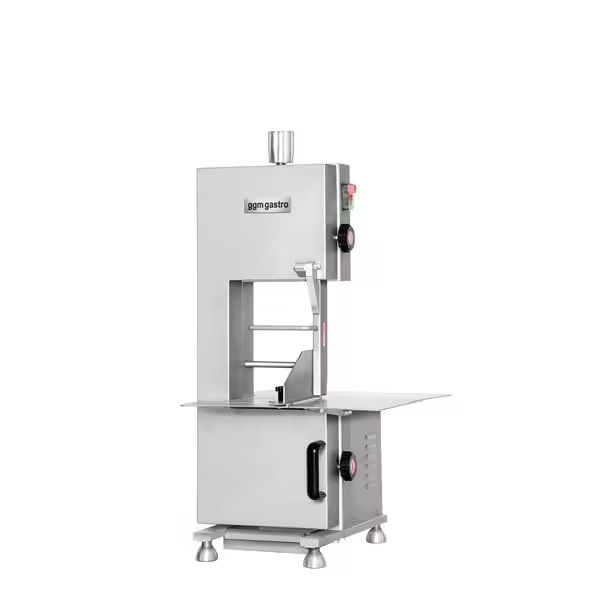
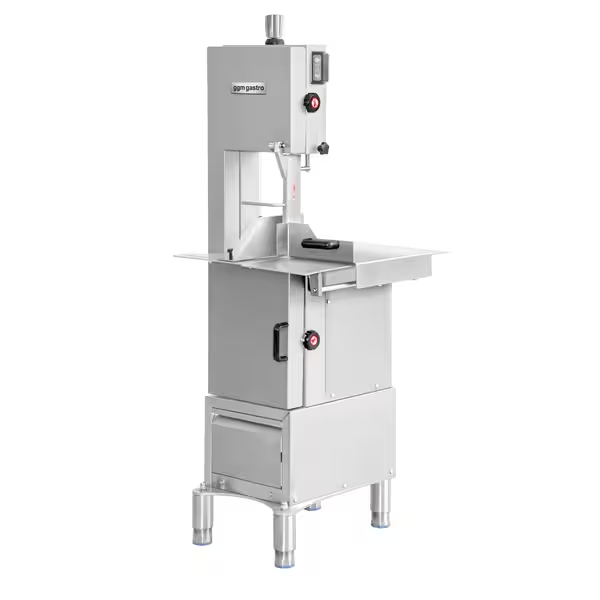
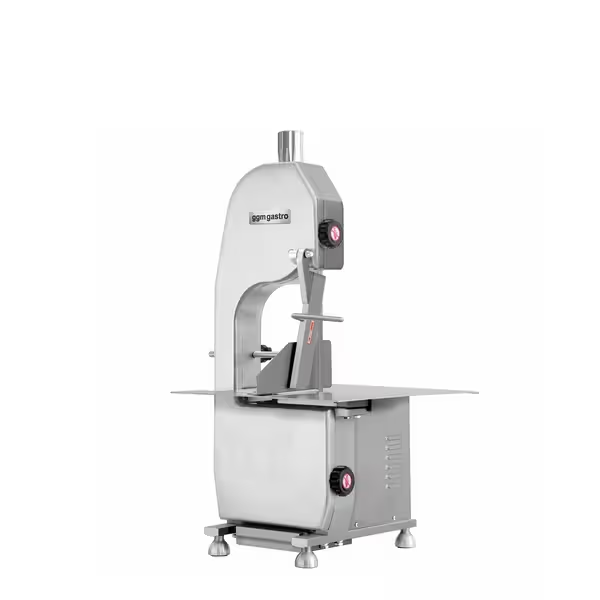
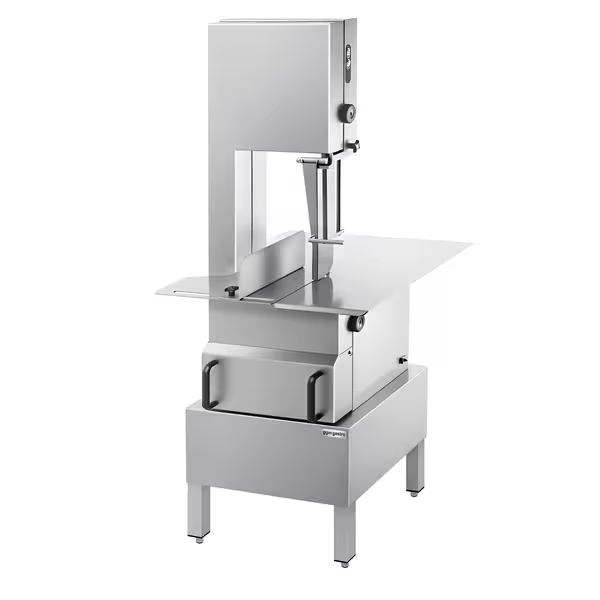
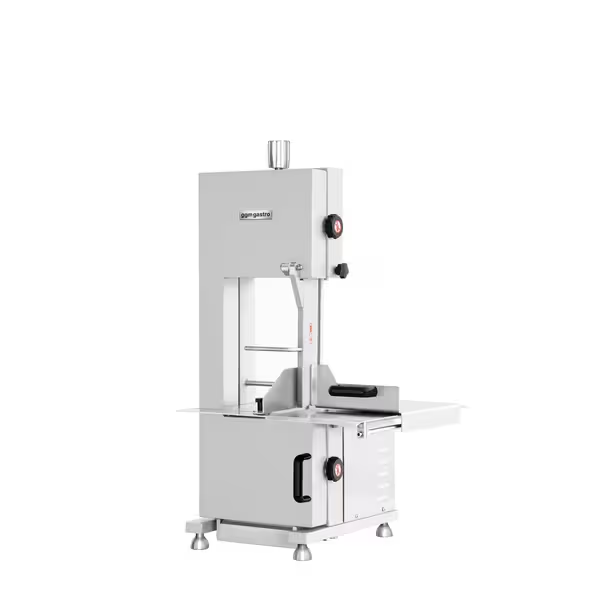
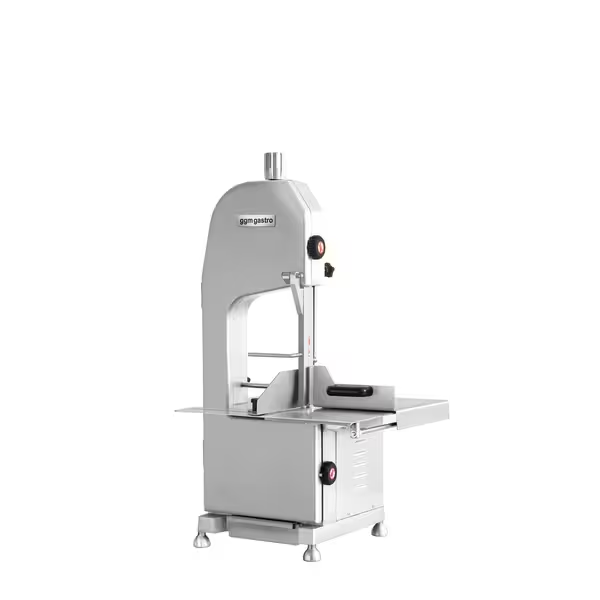
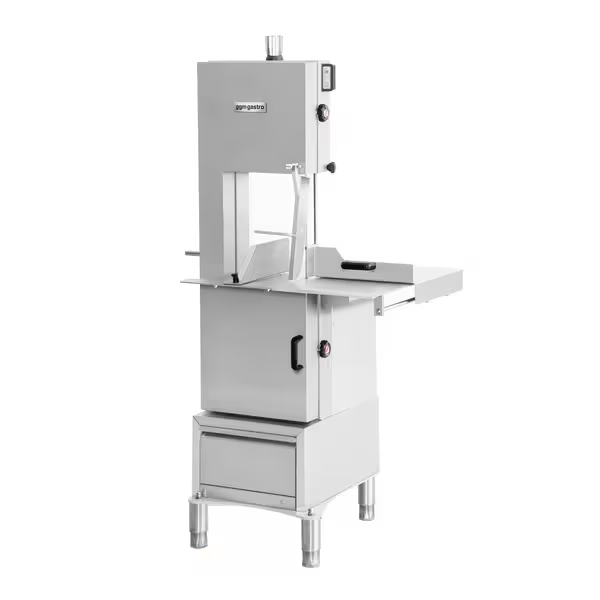
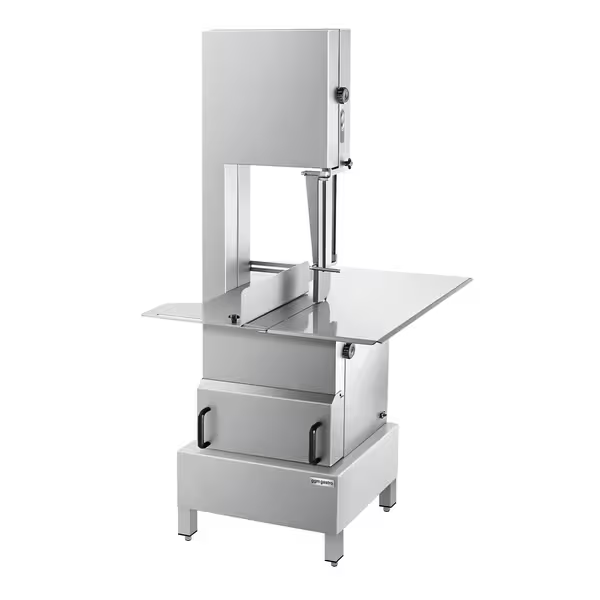
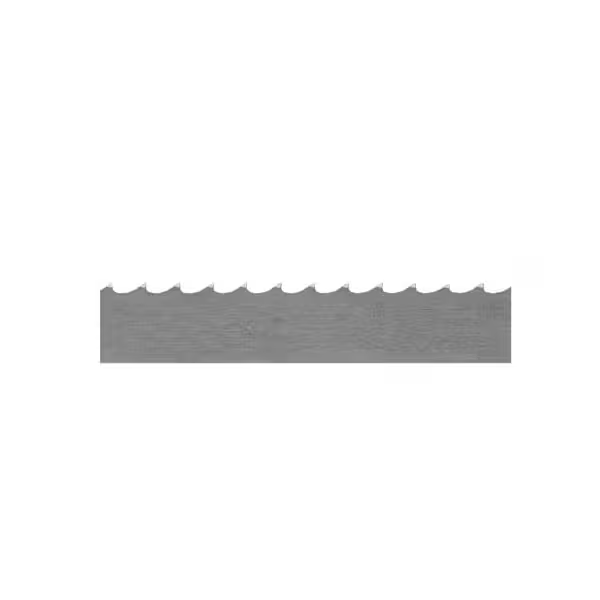
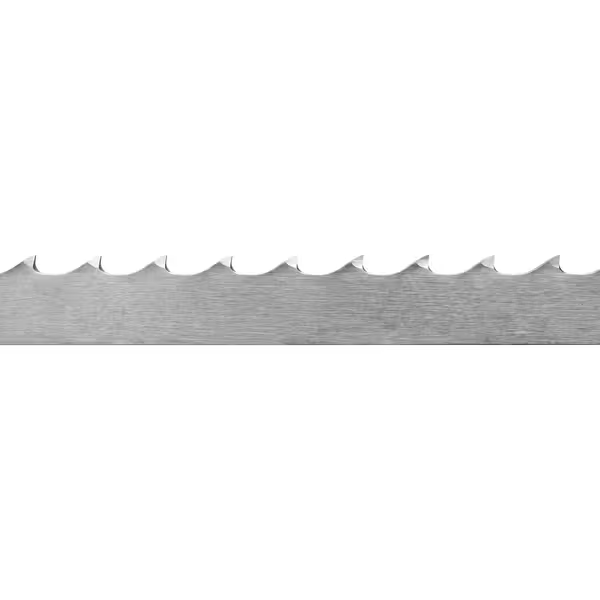
Properly Classifying Bone Saws for Commercial Use
Bone saws are electric band saws designed for the professional cutting of meat on the bone. They are used wherever portions, cuts, or prep work must be performed regularly, hygienically, and with consistent cutting quality.
For many businesses, bone saws are not specialized equipment for rare, one-off cases, but rather an integral part of the preparation process. This applies to butcher shops, commercial kitchens, catering facilities, and restaurants with in-house meat processing. In day-to-day operations, they offer a clear advantage: Cuts can be made in a more controlled manner, faster, and with less effort than with manual methods. This is especially important during morning prep or before busy production days, because smooth workflows ensure a calmer atmosphere later during service.
Which bone saw is right for your business?
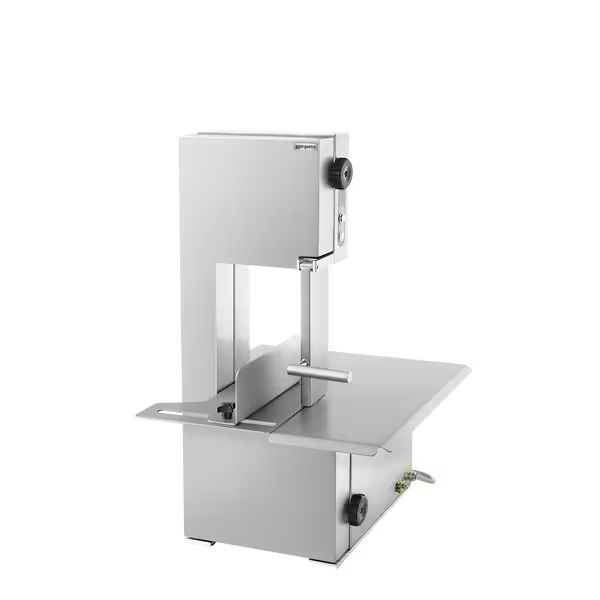
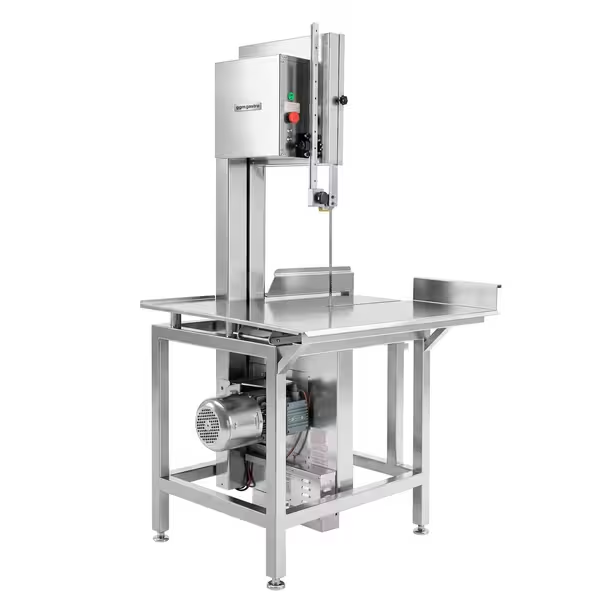
Your choice should be based not only on price, but also on the actual cutting tasks in your operation. A key decision-making criterion is the maximum cutting height. In this category, you’ll find models with cutting heights ranging from approximately 220 to 355 mm. For smaller cuts and limited production volumes, the compact segment may be sufficient. Those processing larger pieces, higher volumes of goods, or thicker bones should not plan for a cutting height that is too small.
Equally important is the band saw blade length. In the product range, it extends from 1,650 through 1,900 and 2,020 up to 2,400 mm. These dimensions affect not only the machine class but also the work pace, stability, and future spare parts requirements. Another consideration is the footprint: compact models measuring approximately 468 x 465 x 876 mm are better suited for smaller preparation areas, while larger machines measuring up to 830 x 870 x 1,860 mm offer more space as well as greater capacity for continuous operation.
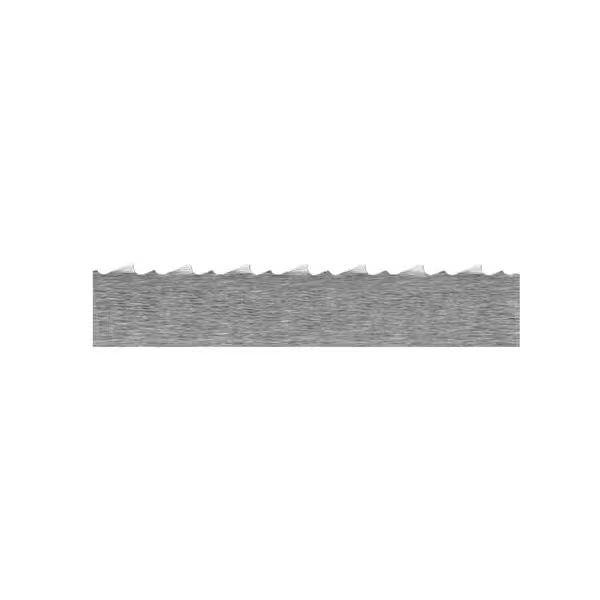
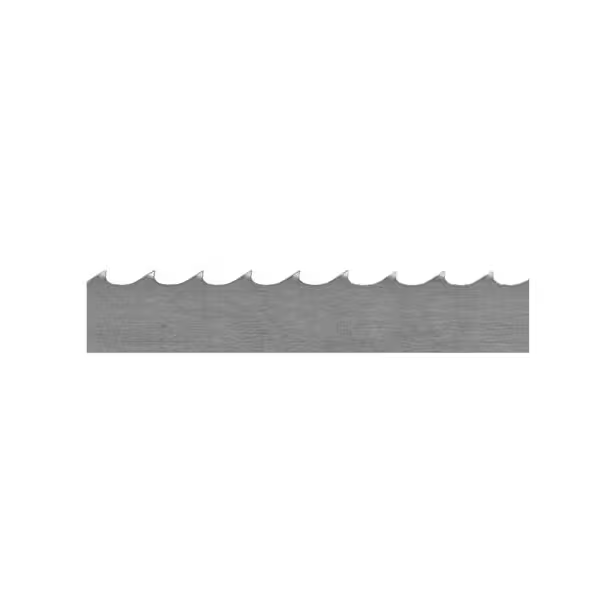
The fourth criterion is the material. Stainless steel is particularly suitable for intensive, continuous use when durability and a resilient, hygienically cleanable surface are top priorities. Anodized aluminum can be a good choice if the machine is designed to be more compact and weight is a factor. The fifth point is blade selection: For saw blades measuring 1.65 m, 2.02 m, or 2.4 m, suitable band saw blades with different tooth pitches—such as 6, 8, or 10 mm—are available.
Planning, Space Requirements, and Day-to-Day Operations in Production
Bone saws affect more than just the cut. They influence workflow, ergonomics, and process reliability during preparation. In a compact kitchen, the machine should be integrated in such a way that raw ingredients, the work surface, and temporary storage follow each other in a logical sequence. In a larger production kitchen, the focus is more on clearly separating the cutting process from the downstream steps of portioning, packaging, or storage.
In day-to-day operations, the difference becomes apparent quickly: When meat-on-the-bone is processed right at the start of a shift, a properly sized bone saw eliminates unnecessary interruptions. During peak hours, the team benefits from the fact that prep work has already been completed efficiently, allowing subsequent stations to operate more smoothly. For a well-coordinated setup, adjacent stainless steel furniture serves as durable work and storage surfaces, just as important as short distances to refrigeration when goods need to be returned to temperature control quickly.
Hygiene, Cleaning, and Durability in Daily Use
For bone saws, suitability for everyday use is a major factor in determining their long-term usefulness. Moisture, organic residues, cleaning chemicals, and mechanical stress are all part of normal wear and tear. Therefore, surfaces, housings, and areas in contact with materials should be selected so that they can be cleaned regularly and without unnecessary effort. Smooth, durable materials and an easily accessible design facilitate maintenance during operation.
One practical consideration is accessory compatibility: Band saw blades must match the band length of the specific model exactly. Taking this into account at the time of purchase helps avoid downtime and ensures the machine remains reliably operational even with intensive use. For seamless integration into operations, equipment from the Rinsing & Cleaning category, as well as chopping blocks are useful additions when work zones need to be clearly separated from one another.
Quick Checklist for Selecting Bone Saws
- Does the cutting height match the size of your typical cuts of meat and bone pieces?
- Is the installation space sufficient for safe operation, cleaning, and material flow?
- Is stainless steel or anodized aluminum more suitable for your application?
- Have you considered the appropriate saw blade length and future replacement blades?
- Will the machine be integrated into a quiet preparation area or a high-volume production line?
Incorporating Bone Saws into Operations in a Cost-Effective Manner
The right bone saw doesn’t make processes more spectacular, but it does make them more reliable. It facilitates consistent prep work, reduces the workload on employees during repetitive cutting tasks, and helps make the production flow more predictable. This makes economic sense especially when meat processing takes place regularly and workarounds create too much time, effort, or disruption in day-to-day operations.
By selecting bone saws based on cutting tasks, space requirements, materials, and accessories, you create a solid foundation for daily meat processing. What matters isn’t the largest machine, but the model that fits seamlessly into your operation and performs reliably under real-world conditions.