


:quality(70))
:quality(70))


Cutting blocks for the food service industry and meat processing
Chopping blocks provide a stable work surface for cutting, butchering, portioning, and mincing meat in everyday commercial kitchen operations. They are suitable for restaurants, butcher shops, catering services, institutional kitchens, and any establishment that requires sturdy, hygienic, and durable food preparation surfaces. Guide to Chopping Blocks »
Product type
Width
Product material
Price
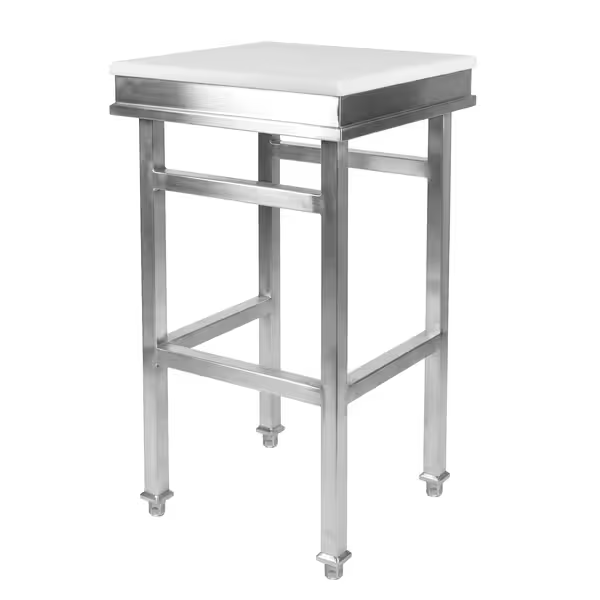
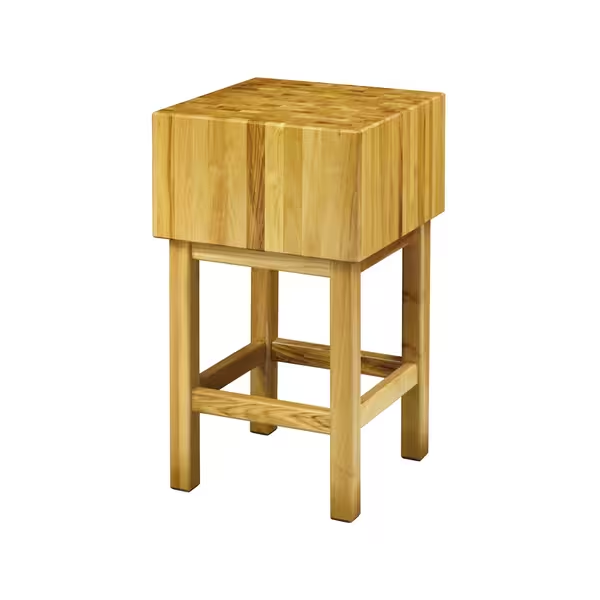
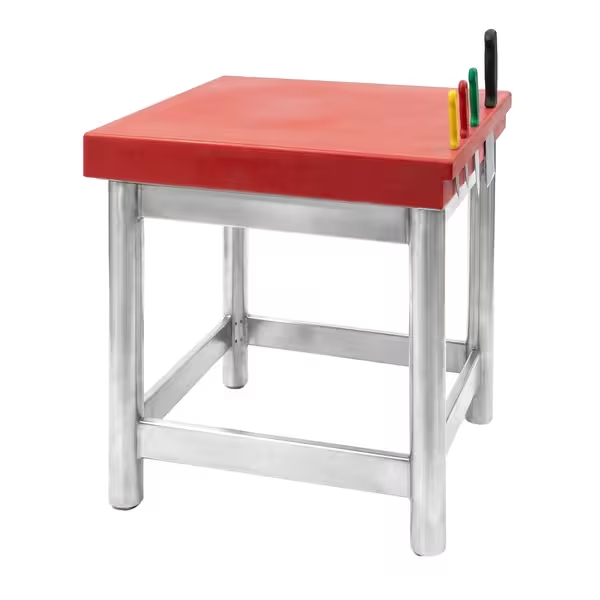
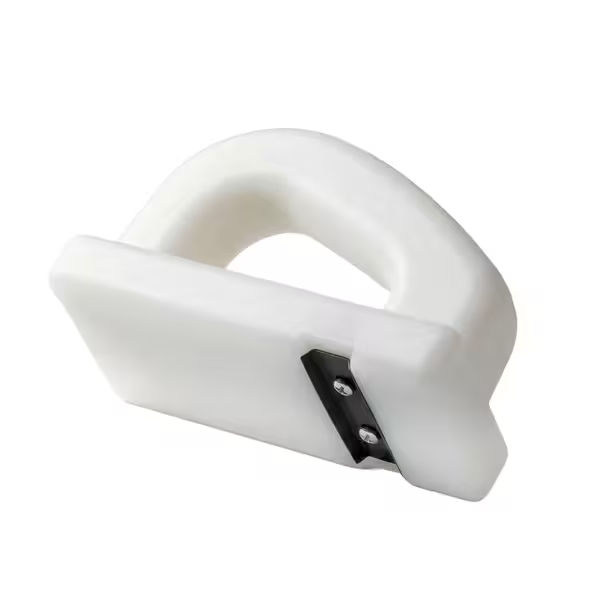
Cutting blocks as a fixed workstation for professional meat preparation
Chopping blocks are sturdy cutting and chopping surfaces designed for the manual preparation of meat, poultry, and ingredients that require extensive preparation in commercial settings. They differ from simple cutting boards in that they are made of sturdier materials, offer greater stability, and are designed to withstand repeated mechanical stress.
In restaurants, snack bars, butcher shops, steakhouse concepts, hotel kitchens, or commercial kitchens, cutting blocks are particularly useful wherever meat is regularly cut, portioned, or prepared for further processing. The solid surface withstands vigorous cutting motions better than standard work surfaces while also protecting knives, base units, and adjacent kitchen furniture from unnecessary wear and tear. For establishments with high throughput, this creates a durable workspace that makes recurring preparation steps safer, cleaner, and more consistent—from cutting larger cuts of meat to preparing precise portions for service, the counter, or production.
What Matters Most When It Comes to Chopping Blocks in Everyday Operations
The right model depends largely on how often and for what purposes the cutting block is used. In small kitchens, a compact footprint is often important so that the block can be placed close to the prep area, refrigerator, and sink. In butcher shops or production kitchens, the focus is on larger work surfaces, thicker cutting boards, and particularly sturdy bases.
Key decision-making criteria include material, dimensions, working height, stability, and ease of cleaning. A work surface that’s too small can quickly lead to awkward working conditions when preparing multiple cuts of meat or portioning batches for service. An inappropriate work height strains the team during repetitive cutting motions. A stable base reduces movement while chopping and supports controlled work.
Quick Checklist for Selection:
- Is the work surface sufficient for the typical volume of meat per prep shift?
- Is the work height suitable for extended cutting and chopping tasks?
- Can the surface be cleaned quickly and thoroughly?
- Is the chopping block stable enough for forceful cuts and chopping tasks?
- Is there enough space for ingredients, knives, and short distances to the sink?
Materials, Hygiene, and Care for Chopping Blocks
Chopping blocks are typically made of wood, with plastic cutting surfaces and stainless steel bases. Wood is solid, gentle on knives, and well-suited for establishments that prefer a heavy, traditional work surface. Regular maintenance, thorough drying, and regular inspection of the surface are crucial to ensure that deep cuts do not become a permanent hygiene risk.
Plastic or polyethylene surfaces are particularly easy to maintain and are well-suited for establishments with clear cleaning routines. They can be quickly cleaned and easily inspected visually after cutting meat, poultry, or prepared ingredients. Stainless steel bases further support hygiene because they are moisture-resistant, sturdy, and easy to wipe down. When combined with matching stainless steel furniture, they create a work area that integrates seamlessly into professional kitchen workflows.
When placing the work surface, proximity to refrigeration, preparation, and cleaning areas is key. A cutting block is ideally placed where meat can be removed from refrigeration, processed, and then passed on or cleaned without having to travel long distances. This keeps the workflow clear, even when larger quantities are being cut during preparation for lunch service, buffet production, or evening service.
Efficient Workflows Thanks to the Right Chopping Blocks
A well-integrated cutting board does not automatically improve the entire process, but it does provide an important foundation for controlled work. When meat preparation, portioning, and cleaning take place in a clearly defined area, the number of makeshift storage spots decreases. This facilitates teamwork, reduces the time spent searching for items, and supports hygienic separation between raw ingredients, tools, and cleaned surfaces.
This equipment becomes economically significant primarily through its daily use. A durable cutting block better withstands mechanical stress, ensures safe working conditions, and can help make workflows more consistent. For operations that regularly cut meat, this is not a secondary area but an integral part of the production process.
For businesses with a stronger focus on meat processing, the cutting block can be effectively integrated with adjacent functional areas. Meat grinders handle the further processing of prepared cuts of meat, while bone saws assist with larger cuts, while the Rinsing & Cleaning area remains essential for the necessary hygiene routine after processing. The Chopping Blocks category remains clearly focused on manual preparation: cutting, chopping, portioning, and preparing.
Buy chopping blocks at GGM Gastro
GGM Gastro offers cutting blocks for professional establishments looking for sturdy work surfaces designed for everyday kitchen use. The selection is suitable for businesses of various sizes—from compact prep stations in snack bars to heavy-duty meat-prep stations in commercial kitchens, butcher shops, or catering operations.
When making a decision, it’s not just the material that matters, but how well it fits into the overall workflow: available floor space, daily meat volume, cleaning routine, desired work height, and compatibility with existing kitchen furniture. By considering these factors early on, you can create a workstation that supports day-to-day operations and integrates seamlessly into existing kitchen processes.