


:quality(70))
:quality(70))


Shelves
Shelving systems provide structured storage space for supplies, equipment, containers, and accessories in restaurants, hotels, catering businesses, and commercial kitchens. They help minimize walking distances, ensure hygienic organization, and make better use of existing kitchen and storage areas. Shelving Guide »
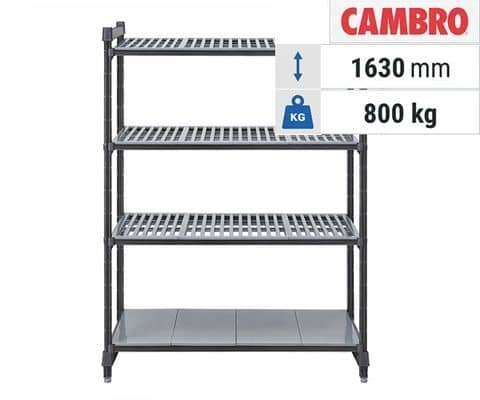
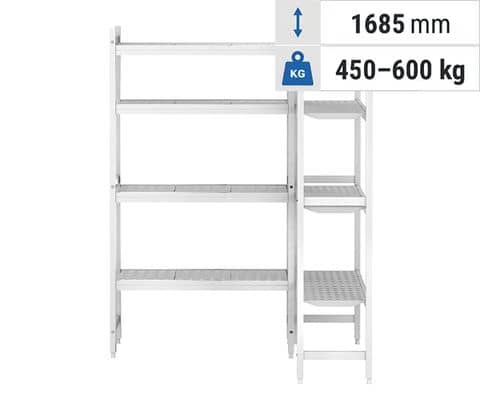
Commercial Kitchen Shelving & Racking - Height from 1800mm


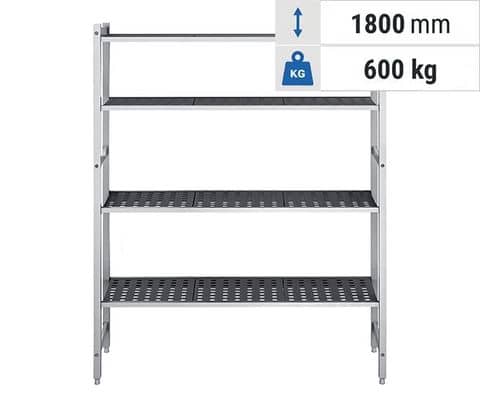
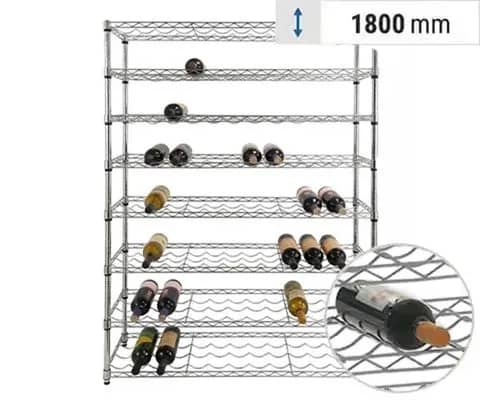
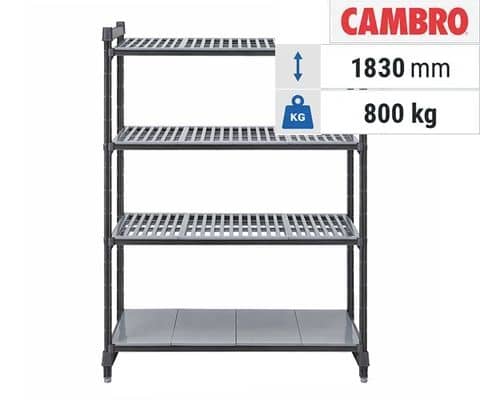
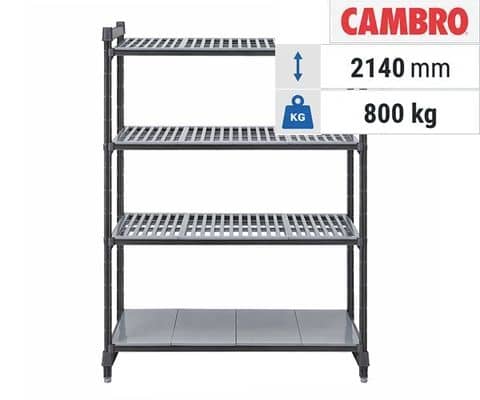
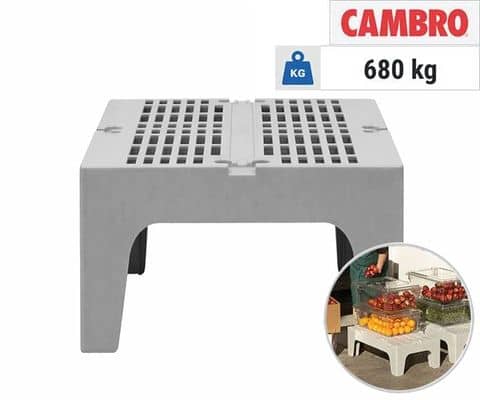
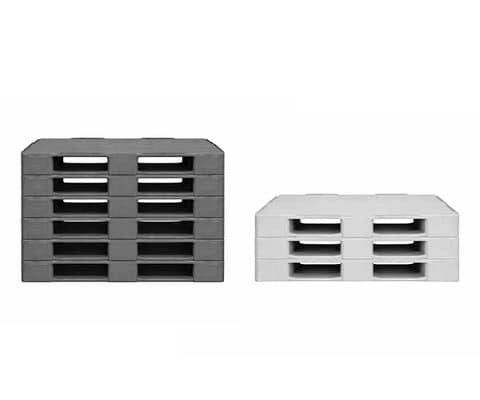
Shelves as the Foundation for Organization in Food Service Operations
Shelves are among the fundamental building blocks of professional kitchen and storage organization. They are used to store food, GN containers, pots, packaging, cleaning supplies, dishes, and work equipment in a way that keeps everything organized and within easy reach. In restaurants, snack bars, hotels, bakeries, butcher shops, cafeterias, and catering companies, they ensure that goods aren’t haphazardly placed on work surfaces, in walkways, or in unsuitable side areas.
In everyday commercial operations, a shelf is more than just a storage surface. It influences how quickly employees can access supplies, how clearly product groups are separated, and how efficiently limited space is utilized. A clear storage structure is especially noticeable during peak hours: ingredients, containers, or packaging are available right where they’re needed, without requiring unnecessary trips.
Which shelves are best suited for the warehouse, kitchen, and cold storage room?
The choice depends heavily on the intended use. For dry storage and pantries, height, width, depth, and load capacity are the most important factors. In kitchens and dishwashing areas, the focus shifts more toward material, ease of cleaning, and moisture resistance. For cold storage rooms, open, well-ventilated shelving systems are recommended to maintain temperature control and visibility.
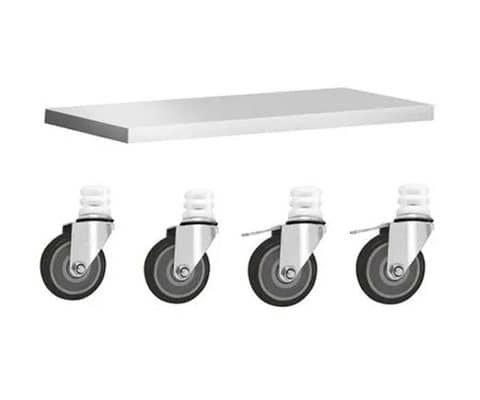
Typical options include stainless steel shelving, plastic shelving, aluminum-plastic shelving systems, wire shelving, and shelving with legs or casters. Fixed shelving units are suitable for permanently designated storage zones. Mobile shelving offers greater flexibility when storage areas need to be regularly cleaned, rearranged, or used for varying quantities of goods. Height is also an important factor in planning: Shelving units starting at 1,600 mm, 1,800 mm, or 2,000 mm utilize space differently and must be suited to reach height, ceiling height, and the stored goods.
Correctly classify materials, load capacities, and dimensions
When it comes to shelving for professional use, specific criteria determine its suitability for everyday use. Stainless steel is sturdy, hygienic, and easy to clean. Plastic or aluminum-plastic shelving can be a practical solution in damp areas or cold storage rooms when corrosion resistance and ease of handling are important. Wire-shelf racks have an open design, allow air to circulate, and provide a clear view of stored goods.
Key decision criteria include:
- Height, width, and depth suited to the available space
- Load capacity per shelf appropriate for goods, pots, containers, or boxes
- Number and adjustability of shelves for flexible storage heights
- Material suitable for dry storage, the kitchen, the dishwashing area, or the cold storage room
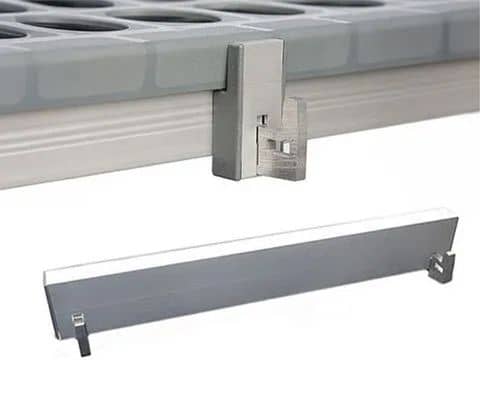
- Legs, casters, insert shelves, or shelf connectors as useful accessories
A specific planning consideration: Heavy supplies and beverage crates should be placed on sturdy lower shelves, while frequently used items should be stored on easily accessible middle shelves. This not only keeps the shelving unit more organized but also makes daily access more ergonomic.
Shelving improves workflows when it is properly integrated
Shelves are particularly useful when they are integrated into the workflow. In the prep area, they can keep containers, spices, dry goods, or packaging readily available near the workstations. In the warehouse, they help keep product groups neatly separated and make it easier to check inventory levels quickly. In the dishwashing area, suitable shelves can hold clean containers or work equipment without blocking the return flow.
In small kitchens, every meter counts. Here, narrow or tall shelves help make better use of available wall and adjacent space. In larger production kitchens, the focus is more on clearly defined zones: dry storage, refrigeration, prep, and serving each require their own designated storage areas. When combined with stainless steel cabinets, refrigerated tables, or sink units, this creates a layout that shortens walking distances and clearly separates work areas from one another.
Hygiene, Cleaning, and Durability in Daily Use
In food service operations, shelves are frequently loaded, touched, cleaned, and rearranged. Moisture, grease, flour dust, packaging debris, cleaning agents, and mechanical stress are part of everyday life. That’s why smooth surfaces, sturdy shelves, secure legs, and easily accessible spaces between shelves are important. The easier a shelf is to clean, the easier it is to keep the storage area tidy over the long term.
Proper placement also plays a role. Shelves need sufficient space for cleaning, access, and safe movement within the work area. In tight spaces, a shelf with casters can be useful if cleaning is required regularly under or behind the shelf. Accessories such as additional shelves, shelf connectors, or storage bases help ensure a precise fit tailored to the volume of goods and the layout of the space.
Quick Checklist for Choosing Shelving
Before making a purchase, it helps to take a quick look at how the shelving will actually be used:
- What items will be stored: light, heavy, dry, refrigerated, or moisture-sensitive?
- What dimensions work best for the room, reach height, doors, and walkways?
- What load capacity is required per shelf?
- Are fixed legs or casters more practical for cleaning and flexibility?
- Are accessories such as additional shelves, connectors, or storage bases needed?
This quick check helps ensure that decisions aren’t based solely on size or price. The key factor is whether the shelving unit is suitable for daily use and truly makes better use of the available space.
Shelving from GGM Gastro for Efficient Business Operations
With the right shelving, supplies, containers, equipment, and accessories can be organized so that employees can access them more quickly and keep storage areas tidier. This supports consistent workflows, reduces search times, and creates a clearer overview in areas that are often heavily used in day-to-day operations.
GGM Gastro offers shelving in various heights, materials, and designs for professional kitchens, storage areas, cold storage rooms, and auxiliary areas. In addition, shelving can be combined with other accessories for stainless steel furniture to expand existing storage structures or set up new operational areas in an organized manner. The result is a solution that not only creates storage space but also makes day-to-day operations in food service establishments noticeably more organized.