


:quality(70))
:quality(70))


Rice Portioners for the Food Service Industry
Rice portioners help restaurants serve cooked rice quickly and evenly. Different diameters allow for proper portioning for various menu concepts and serving styles. Rice Portioner Guide »
Width
Depth
Price
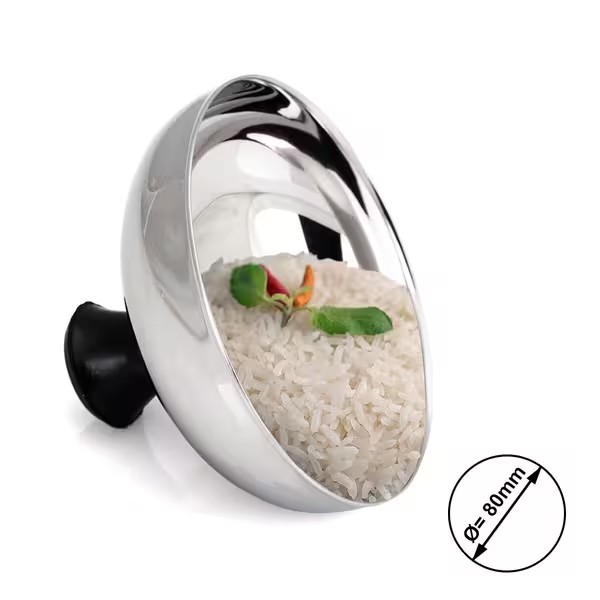
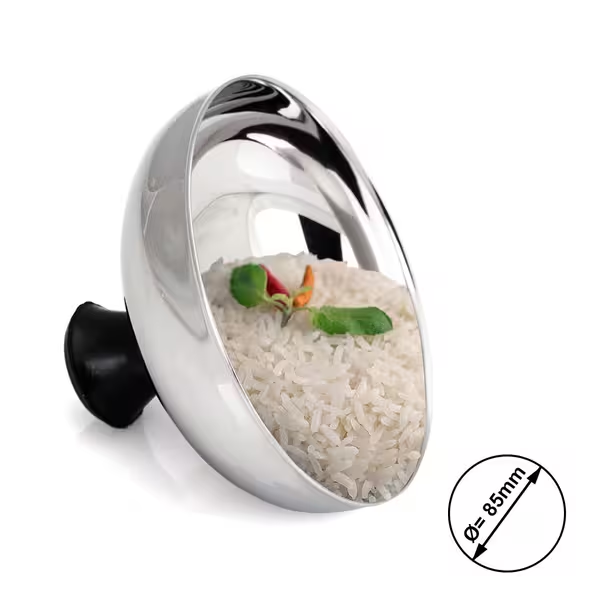
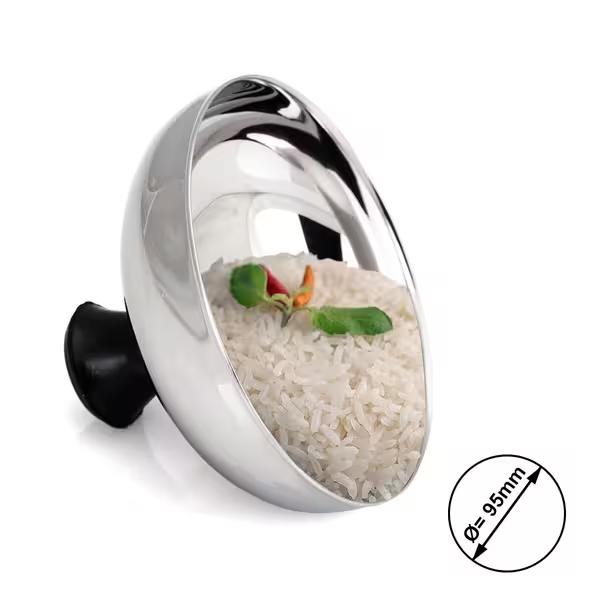
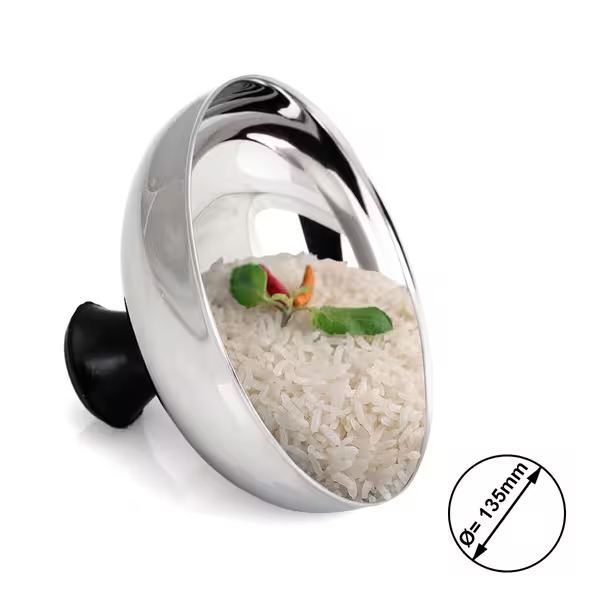
Rice Portioner for Standardized Workflows in the Food Service Industry
A rice scoop is a kitchen tool used to shape and serve uniform portions of rice. In professional settings, it helps ensure consistent portion sizes and a uniform appearance when serving food.
This is particularly important in restaurants that serve a lot of rice, Asian dining concepts, fast-food outlets, cafeterias, catering companies, and other kitchens that serve many repeat portions. Instead of portioning rice by eye for each order, the team follows a clear workflow. This streamlines serving, especially during peak hours, and reduces variations among individual staff members.
Rice portioners do not replace the cooking process or the need for weight checks accurate to the gram. In the workflow, they are typically used after preparation in the rice cooker. If exact weights are required or defined internally, scales can be used for additional verification.
Choose the right size rice scoop
Diameter is a key selection criterion. The GGM Gastro product line offers stainless steel rice scoops in sets of four with diameters of 80, 85, 95, 105, and 135 mm. The appropriate size depends primarily on the desired presentation of the portion, the intended rice side dish, and the tableware used.
Smaller diameters are suitable, for example, for more compact side dish portions or plates on which multiple components are arranged clearly separated from one another. Larger models offer more surface area when rice makes up a larger portion of the dish. A general estimate in grams cannot be reliably determined based solely on the diameter, as the type of rice, moisture content, fill level, and compaction all influence the actual quantity.
Before purchasing, operators should therefore compare four factors: desired portion size, plate or bowl format, number of portions served daily, and existing operational portion standards.
Quick Check for Selection in the Kitchen
-
Choose a diameter that matches the desired plate presentation.
-
Check whether 80 to 135 mm aligns with the standard portion size.
-
Establish uniform sizes for all workstations and shifts.
-
Ensure the unit is made of easy-to-clean stainless steel and has a robust design.
-
Verify that the portioner, tableware, and rice containers used fit together ergonomically.
Stainless Steel and Cleaning in Daily Restaurant Operations
Rice scoops are frequently used with warm, moist foods and are handled repeatedly during a shift. The material must therefore, above all, be easy to maintain and suitable for regular cleaning. The models offered are made of stainless steel and feature a sturdy rim.
In daily use, the scoop should be cleared of rice residue after each use and cleaned according to the care instructions. Especially when serving frequently, a simple cleaning routine is more important than elaborate additional features. Cleaning agents should be compatible with the material and used according to the manufacturer’s instructions.
Storage is also part of the workflow: Portioners should be kept dry and within easy reach at the station after cleaning. This ensures that employees do not have to move between different work areas during serving.
Integrate a rice scoop effectively into your workflow
The practical benefit stems primarily from having a fixed position in the process. In a busy Asian restaurant, for example, the rice can be prepared and kept ready near the production area. The employee then always uses the same portioner, scoops out the rice, and passes the plate directly to the next station.
In a cafeteria or catering operation, the focus is more on serving many repetitive portions. Multiple identical portioning spoons from a set of four can support parallel workstations in this setting. Depending on the concept, the station can be supplemented with suitable serving utensils for further service.
It’s important to have a short reach between the rice container, the portioner, and the plate. A well-organized workstation prevents unnecessary searching and ensures a smooth workflow even during peak hours.
Consistent Portions as an Economic Factor
Variations in portion sizes don’t just affect the presentation on the plate. If side dishes are regularly served in different sizes, it also becomes more difficult to plan food costs. A standardized rice portioner can therefore be part of a restaurant’s portioning standards.
The economic benefit does not come from the tool alone, but from its consistent use: uniform portion sizes, a clear workflow, and consistent guidelines for the team. This helps reduce portion variations and makes it easier to train new employees in existing routines.
For establishments with a high volume of repeat orders, the largest rice portioner is therefore not automatically the best choice. The key factor is selecting a size that matches the menu concept, the tableware, and the calculated portion.
Choose a rice scoop that's right for your business
Professional rice portioning begins with a clearly defined portion size. With a range of diameters from 80 to 135 mm and available in sets of four stainless steel units, operators can tailor their workstations to meet various serving requirements.
By considering size, tableware, daily serving volume, and cleaning routines together, operators choose the rice portioner not as an isolated kitchen tool, but as a practical component of a standardized and well-organized workflow.