


:quality(70))
:quality(70))


Mixing Bowls & Measuring Cups for the Food Service Industry
Mixing bowls and measuring cups help with measuring, portioning, mixing, and preparing ingredients in everyday professional kitchen work. The right sizes and materials facilitate organized workflows and consistent preparation. Guide to Mixing Bowls & Measuring Cups »


Product type
Width
Depth
Height
Price
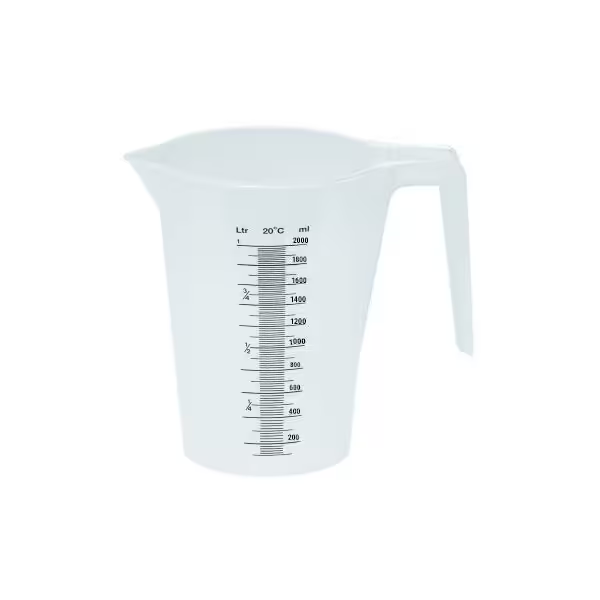
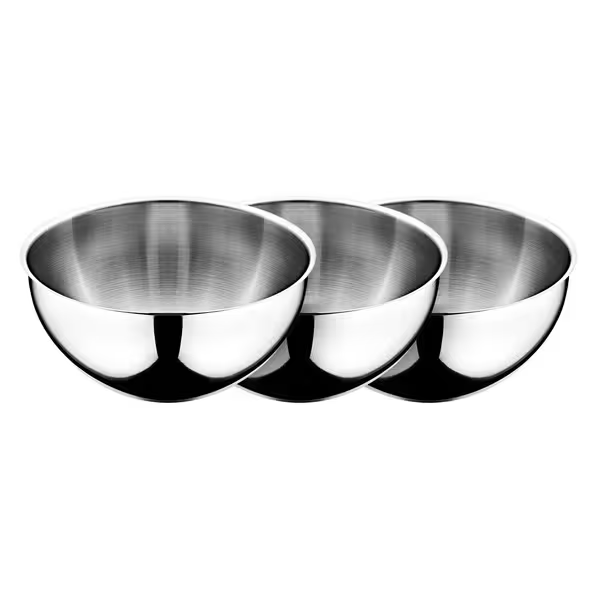
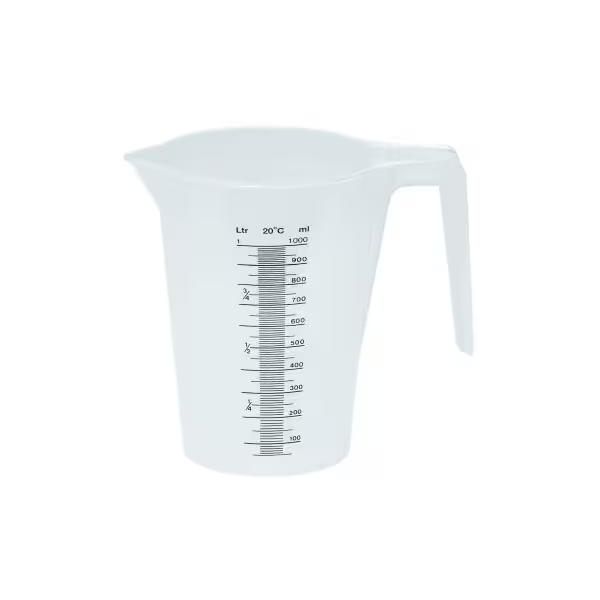
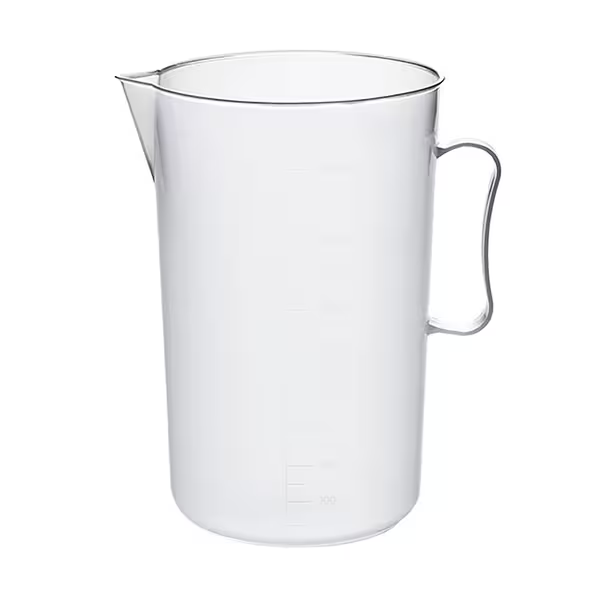
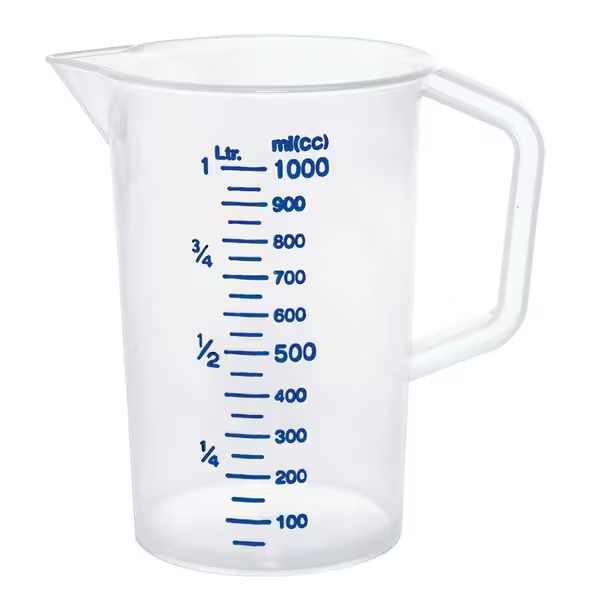
Mixing bowls and measuring cups as the foundation for clean food preparation
Mixing bowls and measuring cups are essential items in professional kitchens. They are used for measuring, portioning, mixing, marinating, and dividing food into portions, and they support standardized processes in restaurants, snack bars, hotels, catering companies, and commercial kitchens.
In everyday use, they are especially important wherever recipes need to be replicated consistently. A measuring cup helps measure liquids precisely by volume; a mixing bowl provides the ideal work surface for sauces, marinades, batters, or prepared ingredients. For recipes that change very frequently, a clearly visible scale can make the work easier because quantities can be checked directly in the cup. In this way, both types of products directly contribute to organization, speed, and accuracy in mise en place.
Choose the appropriate size, material, and scale
The choice should first be based on the typical batch size. The current product line includes, among other items, measuring cups with capacities of 1 or 2 liters, as well as models with 100-ml graduations. For small batches, a more compact volume is often more convenient, while larger quantities require fewer transfer operations.
The material also influences how the items are used. Polypropylene measuring cups are lightweight and practical for frequent measuring and transferring. Stainless steel mixing bowls are particularly suitable when a sturdy, dimensionally stable work surface is needed. A three-piece set can accommodate various batch sizes and, if the shapes are compatible, can be stored in a space-saving manner. Open handles can make it easier to grab and pour quickly.
If kitchen space is limited, width, depth, and height should also be considered. What matters is not only the volume, but also whether the bowl or measuring cup remains easy to handle on the countertop, on a shelf, or in the sink area. Measuring cups complement [kitchen scales], but do not replace them when a recipe is explicitly defined by weight.
Integrate mixing bowls and measuring cups effectively into your workflow
First and foremost, the choice should be suited to the typical batch size. The current product line includes, among other items, measuring cups with capacities of 1 or 2 liters, as well as models with 100-ml graduations. For small batches, a more compact volume is often more convenient, while larger quantities require fewer transfers.
The material also influences how the measuring cups are used. Polypropylene measuring cups are lightweight and practical for frequent measuring and transferring. Stainless steel mixing bowls are particularly suitable when a sturdy, dimensionally stable work surface is needed. A three-piece set can accommodate various batch sizes and, if the shapes are compatible, can be stored in a space-saving manner. Open handles can make it easier to grab and pour quickly.
If kitchen space is limited, you should also check the width, depth, and height. It’s not just the volume that matters, but also whether the bowl or measuring cup remains easy to handle on the countertop, on a shelf, or in the sink area. Measuring cups complement [kitchen scales], but do not replace them when a recipe is explicitly defined by weight.
Integrating mixing bowls & measuring cups sensibly into the workflow
During prep, it’s especially important that frequently used tools are within easy reach. If dressings, marinades, or liquid ingredients are prepared multiple times per shift, assigning specific sizes and quantities to each item reduces unnecessary searching and transferring. During peak hours, a clear system for managing quantities also helps ensure that recipes can be reproduced consistently, even with a changing staff.
For small kitchens, space-saving storage is important; in larger production kitchens, the focus is more on clear organization by batch or workstation. In combination with stainless steel furniture, an organized prep area can be created. Complementary Gastronorm containers then handle the structured temporary storage of prepared components without replacing the actual function of mixing bowls and measuring cups.
Quick Checklist for Selection
- Adjust capacity to typical quantities and batch sizes.
- Choose a scale that makes relevant recipe quantities easy to read.
- Select material based on frequency of use, weight, and cleaning routine.
- Match external dimensions to the work surface and storage space.
- Evaluate the handle, pouring spout, and stackability based on daily handling.
Hygiene, Cleaning, and Durability in Everyday Restaurant Operations
When used frequently, surfaces must be easy to clean and simple to inspect during daily work. Plastic measuring cups should be checked regularly for deep scratches or damage, as heavily worn surfaces can make cleaning more difficult. Stainless steel mixing bowls are particularly useful when heavy-duty use, frequent washing, and mechanical stress are part of daily operations.
A clear cleaning routine is also important. Residues of sauces, grease, flour, or marinades should not be allowed to dry on the utensils if they are used multiple times a day. For high-volume operations, proximity to the [dishwashing equipment] is therefore just as important as a well-organized return process to the workstation.
Precise dosing supports stable processes
Mixing bowls and measuring cups are simple tools, but they have a direct impact on process quality. Defined quantities facilitate consistent recipes, simplify training, and can reduce variations in portioning and ingredient usage. At the same time, the number of improvised work steps decreases when the right sizes are consistently available.
Therefore, the largest or cheapest model is not necessarily the most cost-effective choice. What matters is whether the volume, handling, material, and ease of cleaning align with actual usage. In this way, basic equipment supports a smoother workflow without unnecessarily tying up space or budget.
Choosing the Right Mixing Bowls and Measuring Cups
For professional use, measuring cups and mixing bowls should be selected based on actual work volumes, frequency of use, and available space. By considering capacity, graduations, material, and storage together, you can create a simple, reliable foundation for structured preparation and reproducible workflows.