


:quality(70))
:quality(70))


Gastronorm / Food / Ice Cream & Dough Containers
Professional Gastronorm, food, ice cream, and dough containers support streamlined processes for preparation, storage, refrigeration, and serving. Choose the right sizes, materials, and designs for restaurants, hotels, catering services, institutional food service, ice cream shops, pizzerias, or bakeries. Guide to Gastronorm, Food, Ice Cream, and Dough Containers »
GN container



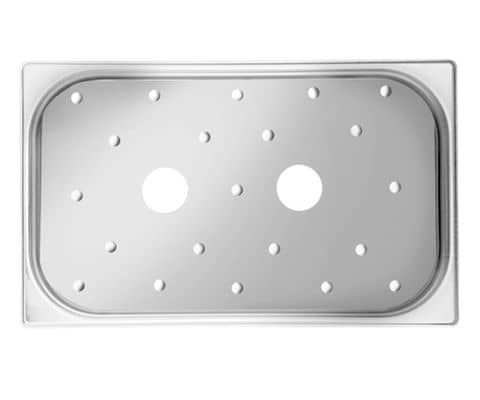


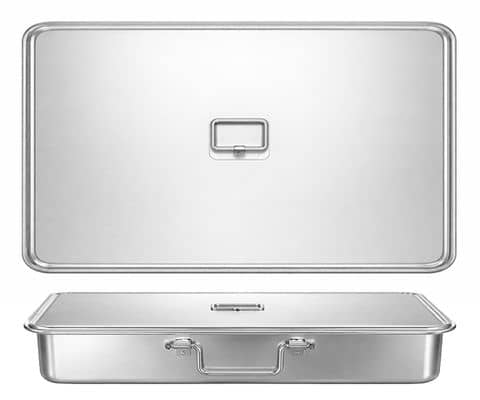
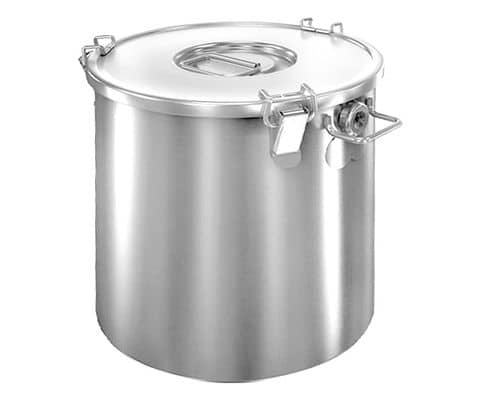

Gastronorm, Food, Ice Cream, and Dough Containers for Professional Use
Gastronorm, food, ice cream, and dough containers are commercial containers designed for the organized preparation, storage, refrigeration, serving, and portioning of food. They are used in restaurants, hotels, snack bars, catering companies, commercial kitchens, ice cream shops, pizza restaurants, and bakeries.
In day-to-day operations, they form the foundation of an organized mise en place. Ingredients are prepared in defined quantities, can be clearly identified, and can be quickly retrieved at the respective workstation. During peak hours, a coordinated container system reduces unnecessary searching, transferring, and refilling. In the prep area, it facilitates the separation of different components and ensures clear handoffs between storage, production, and service.
Adjust the format and depth to suit the process
For GN containers, the base dimensions, depth, and design determine compatibility. Common sizes such as GN 1/1, GN 1/2, GN 1/3, or GN 1/6 can be arranged in a modular fashion in suitable refrigerated counters, display cases, bain-maries, and serving systems. Depths of, for example, 65, 100, 150, or 200 mm affect volume, accessibility, and refill frequency. Shallow containers are often suitable for ingredients with high turnover; deeper versions hold larger quantities but require correspondingly more space.
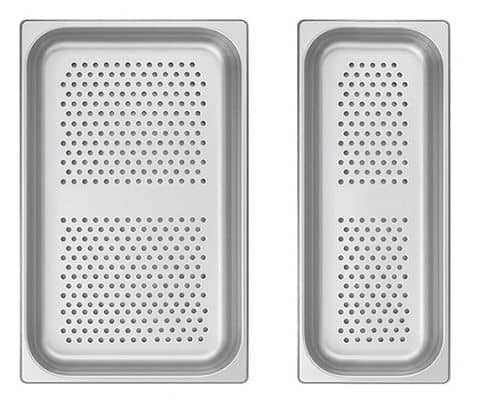
Closed containers are primarily used for storage, holding, and portioning. Perforated versions support applications such as draining or steaming, provided the product in question and the equipment used are designed for these purposes. Before purchasing, check the internal dimensions, capacity, and available installation height. For dough containers, it is also important not to confuse GN sizes with the EN standard 600 × 400 mm, which is commonly used in bakeries and pizzerias.
General-purpose food containers are typically selected based on capacity in liters, exterior dimensions, lid closure, and stackability. For ice cream containers, the nominal volume alone is not sufficient: the rim shape, length, width, and depth must fit the existing ice cream counter.
Select the material based on the load and temperature range
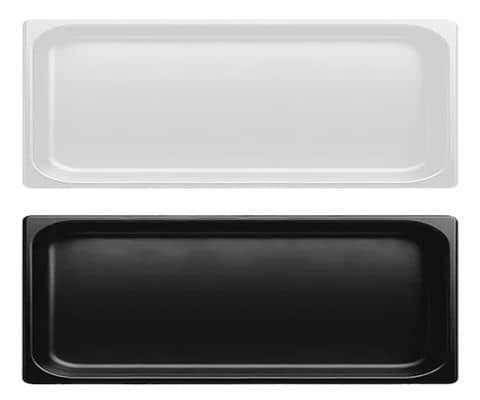
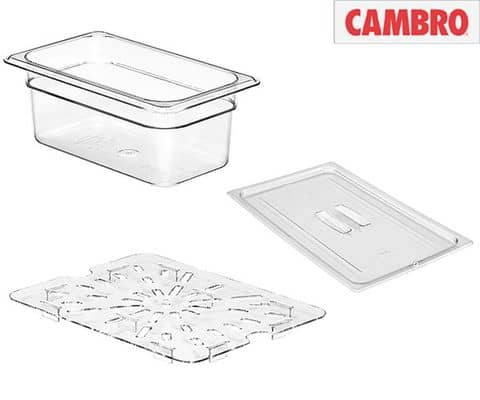
Stainless Steel GN Containers are designed for frequent use, mechanical stress, and regular cleaning. Polypropylene is lightweight and cost-effective for many storage and refrigeration applications. Transparent GN containers made of polycarbonate make it easier to visually check the contents and fill level. Melamine is primarily used for the neat presentation of cold dishes.
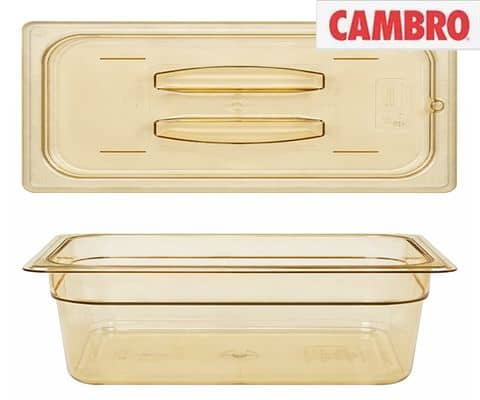
The specific product specifications are always decisive. Dishwasher, freezer, microwave, or heat resistance must not be assumed based solely on the material name. In operation, it is also important to have smooth, easily accessible surfaces, dimensionally stable rims, and a design that withstands frequent stacking, transport, and cleaning. It is advisable to maintain a sufficient supply of containers in the dishwashing cycle: while one set is being washed and dried, the station remains operational. Damaged rims, severe warping, or deep scratches should prompt replacement, as they can make handling and cleaning more difficult.
Quick Checklist for Choosing the Right Container
-
Determine the application: preparation, storage, cooling, serving, draining, or dough handling
-
Match the size and depth to the equipment, counter, shelf, or production volume
-
Select materials based on temperature, cleaning frequency, and wear and tear
-
Plan for suitable lids, dividers, draining racks, and cooling plates from the outset
-
Determine the required quantity based on peak times, refill cycles, and dishwashing turnover
Integrate containers into the workspace in a practical way
The right system supports short reach distances and better use of space. In a small prep kitchen, multiple GN sizes can form a compact ingredient station. In a production kitchen, standardized formats facilitate the transfer of items between refrigeration, prep, and serving. Ice containers, on the other hand, must fit the existing ice counter; for dough boxes, stacking height, lids, and daily production volume are crucial.
Lids and accessories for GN containers expand their functionality in specific ways. Lids protect the contents during storage and transport, drainage grids separate food from leaking liquids, and dividers appropriately partition suitable display cases or stations. Accessories should be selected based on format, series, and material, as not every combination is automatically compatible.
Plan economically instead of buying items one by one
Standardized container sizes simplify ordering, warehouse organization, training, and replacement. Durable, well-integrated containers can reduce work interruptions, make cleaning easier, and make restocking during peak times more predictable. It’s not just the unit price that matters: service life, cleaning effort, availability for replacement, and available accessories also influence cost-effectiveness.
When setting up a new operation, it is recommended to start with a basic inventory based on the workstation and production volume. When replacements are needed, first check the existing dimensions, material, and lid system. This results in equipment that fits the actual workflow and can be expanded in a targeted manner as volumes change or additional workstations are added.
Gastronorm, food, ice cream, and dough containers are most effective when their size, material, and accessories are tailored to the specific operation. A clear container system promotes hygiene, organization, and speed without unnecessarily cluttering the workspace.