


:quality(70))
:quality(70))


Heated display cabinets & dumpling steamers
Heated display cabinets and dumpling steamers keep prepared food at the right temperature until it is served and support organised, quick product presentation. The range extends from compact countertop display cabinets for snacks to steamers for dumplings, bao and dim sum. Find out which model suits your business in our buying guide »
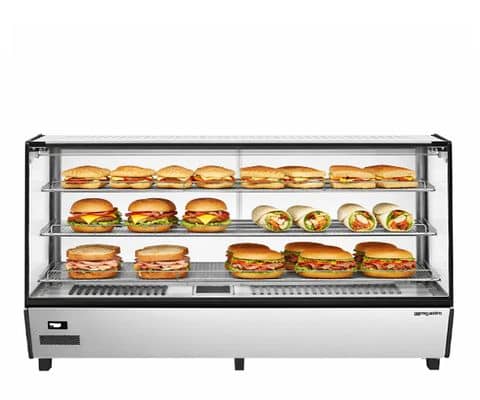
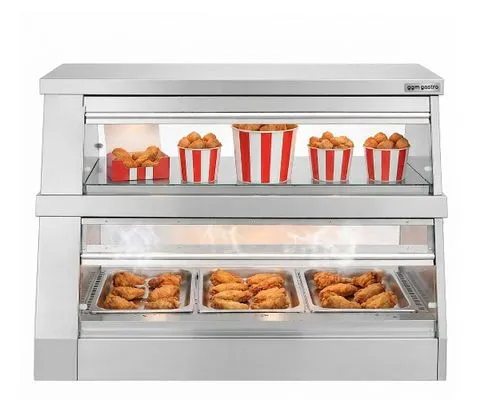
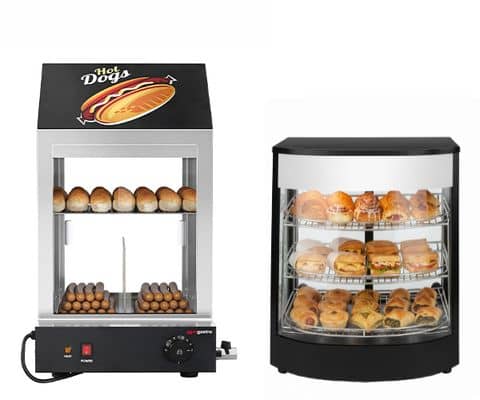

Product type
Capacity liters
Number of trays
Number of Drawers
Width
Depth
Height
Price
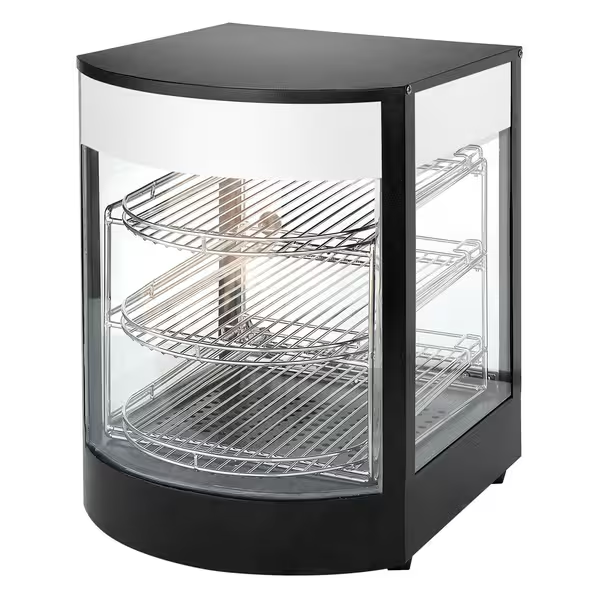
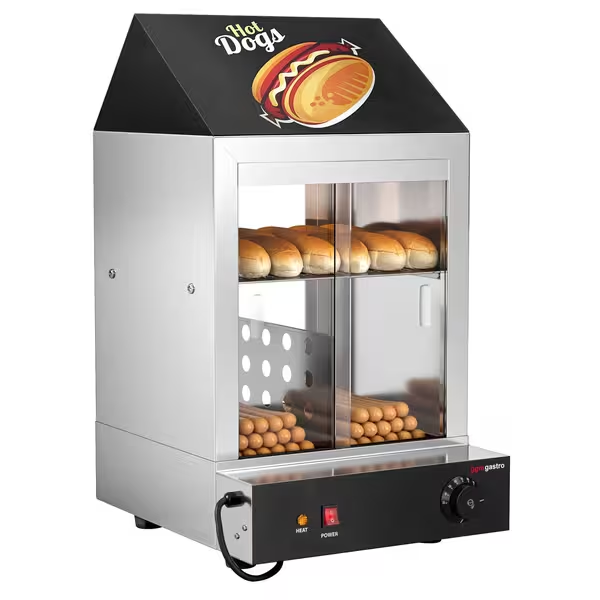
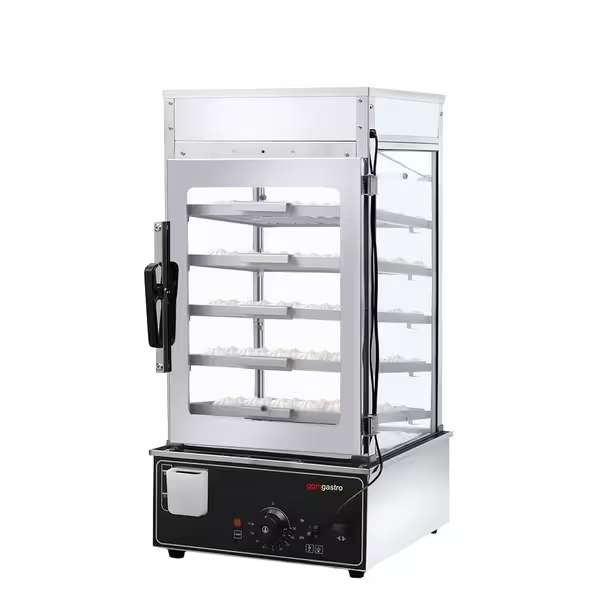
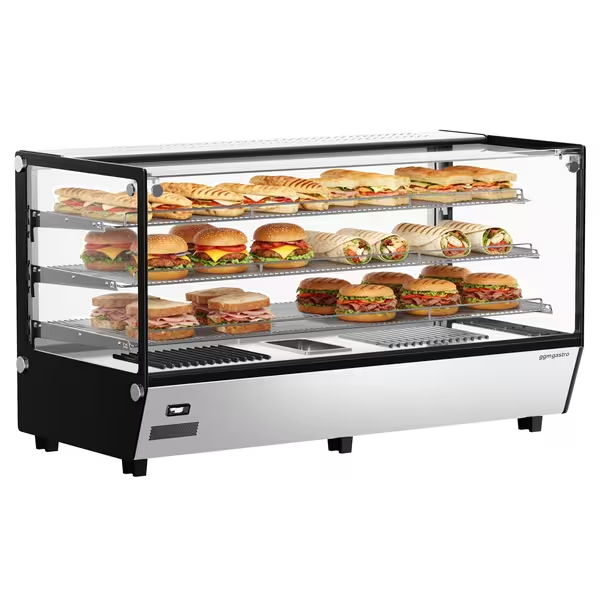
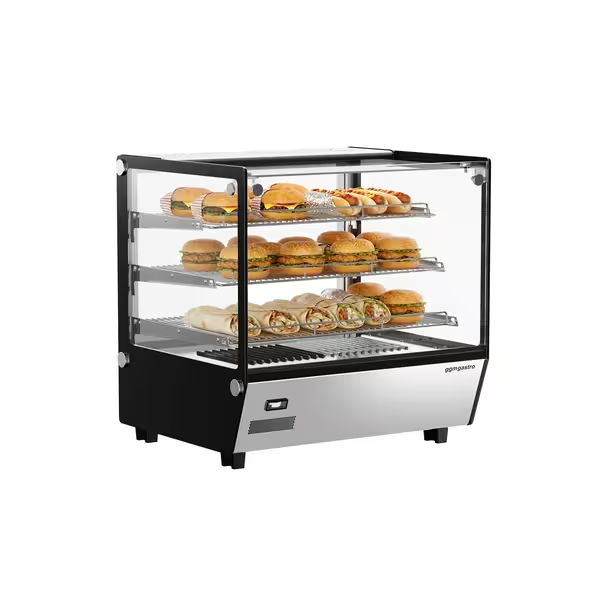
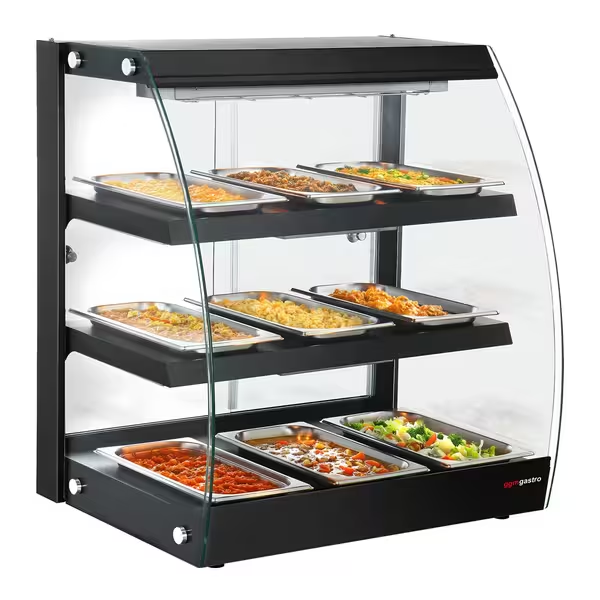
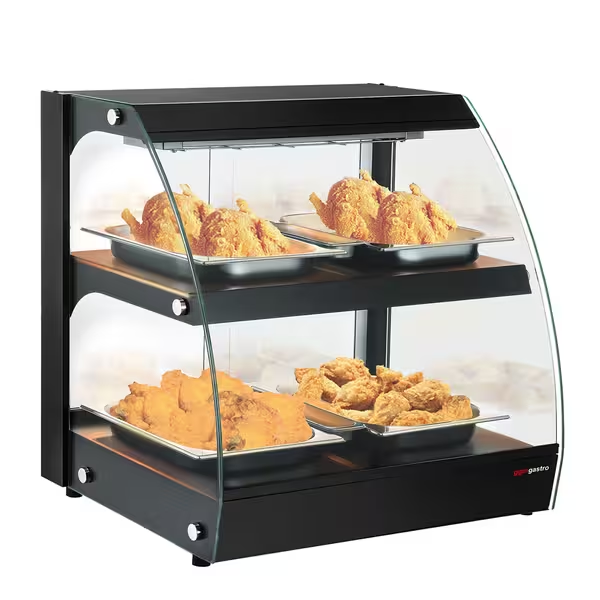
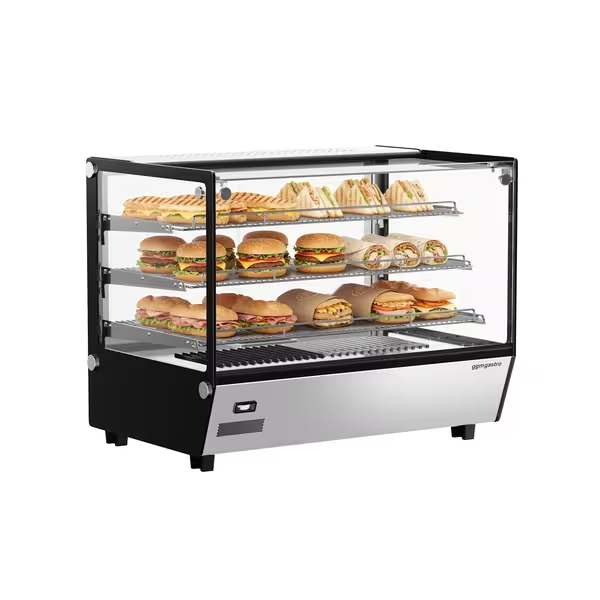
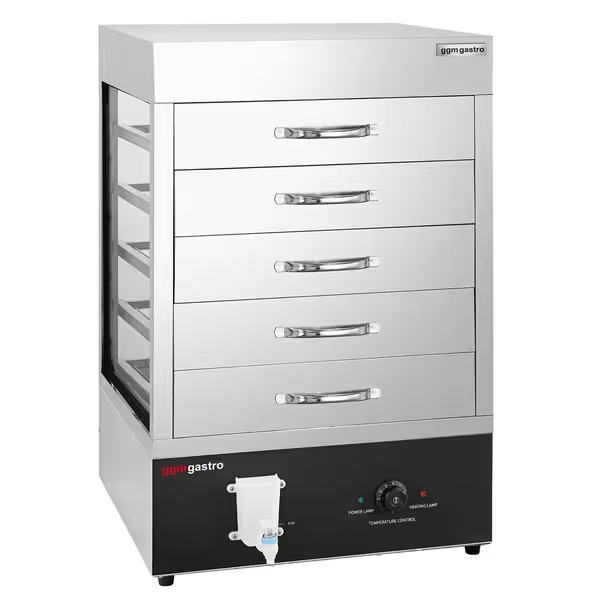
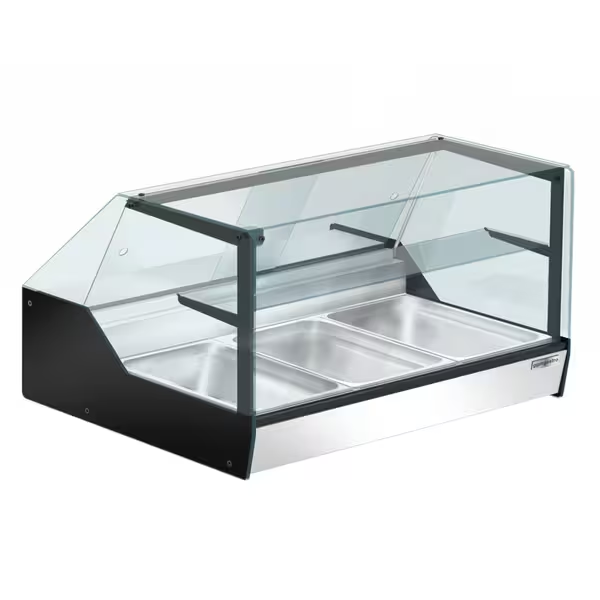
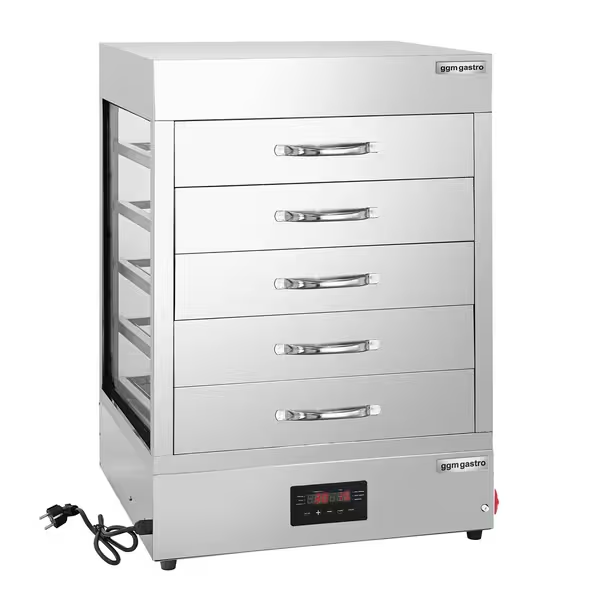
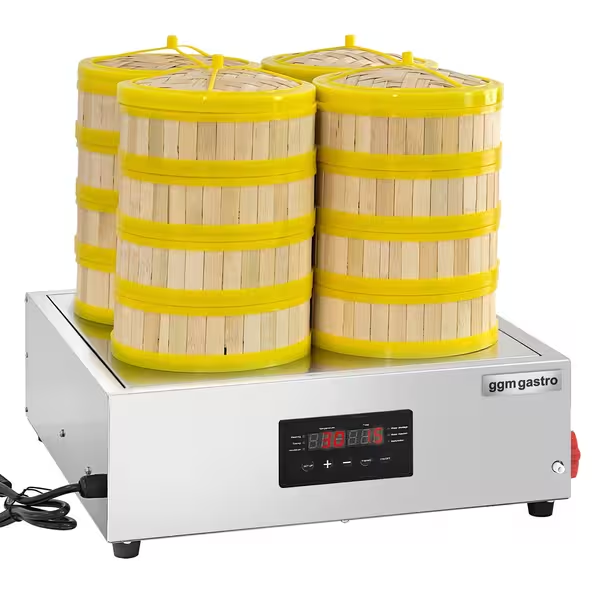
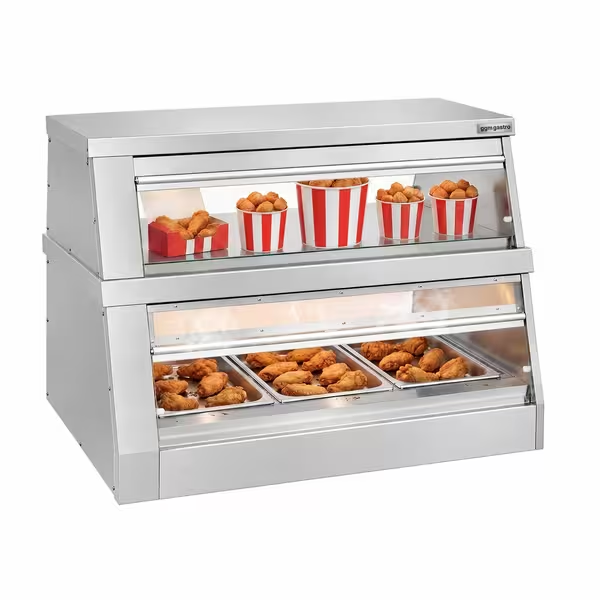
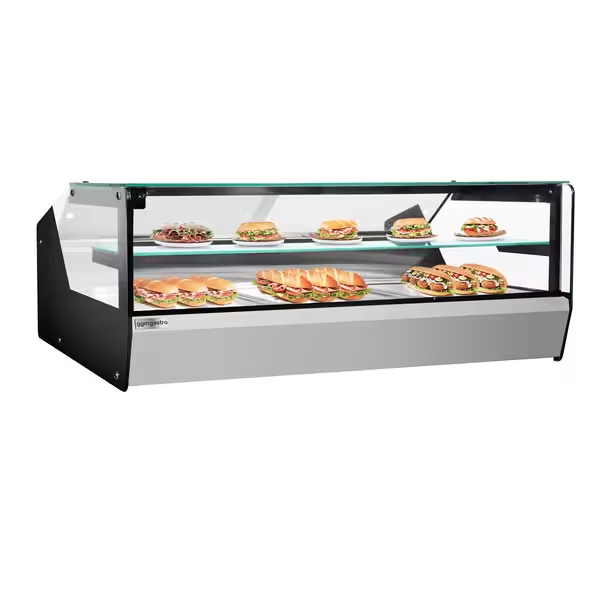
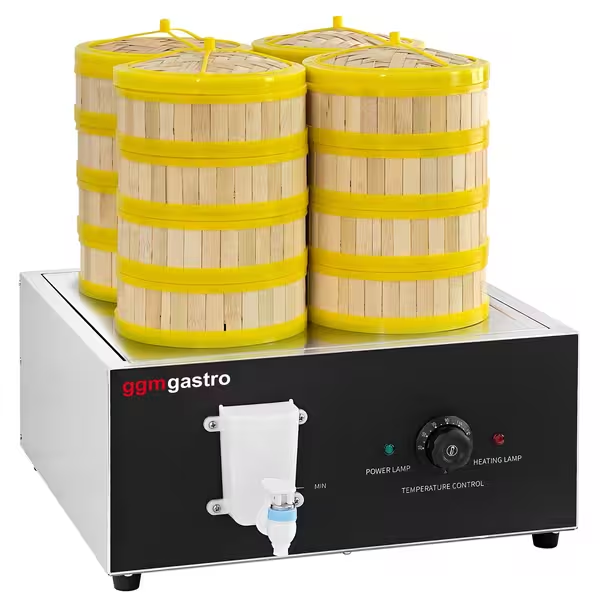
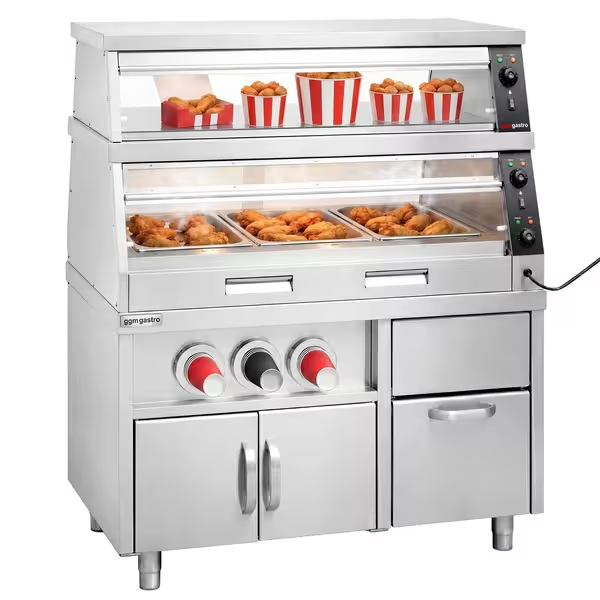
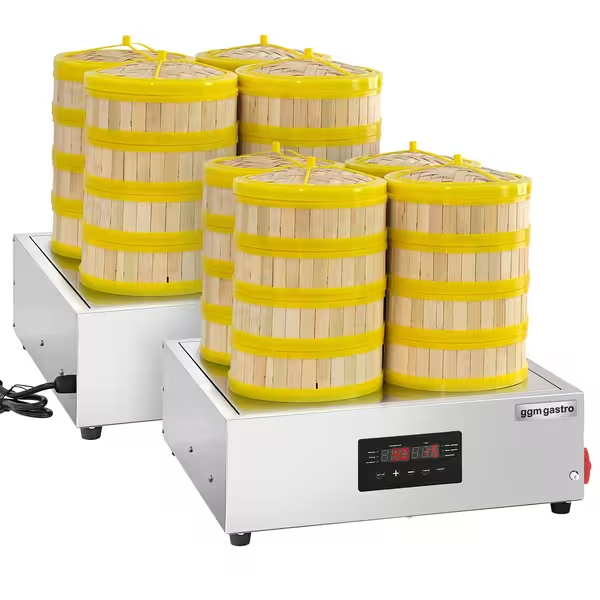
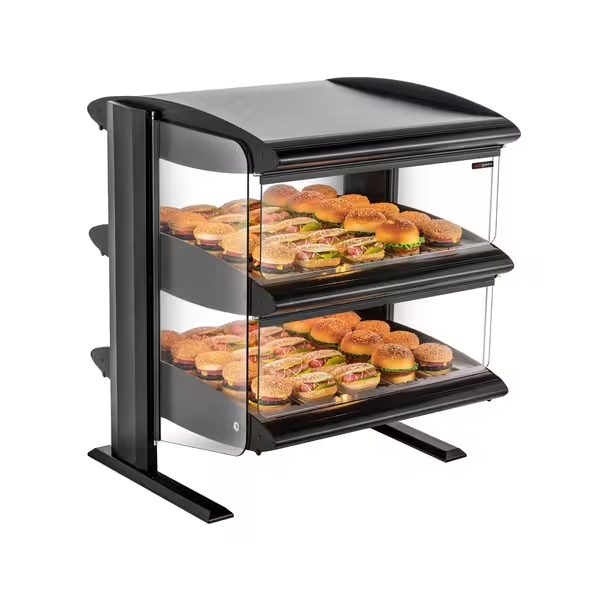
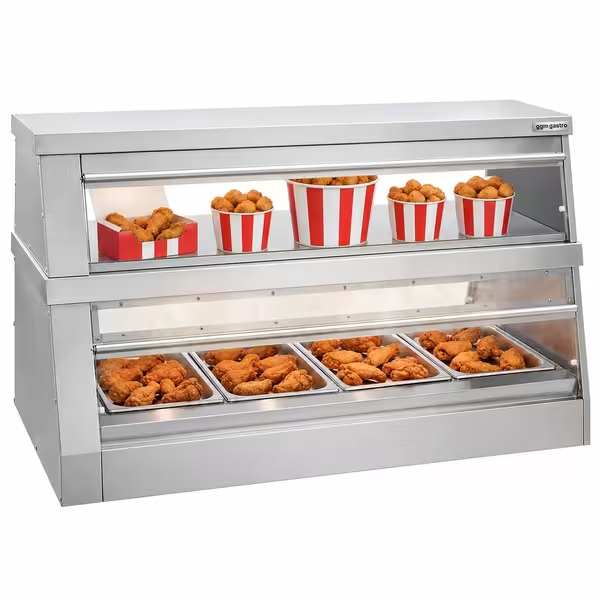
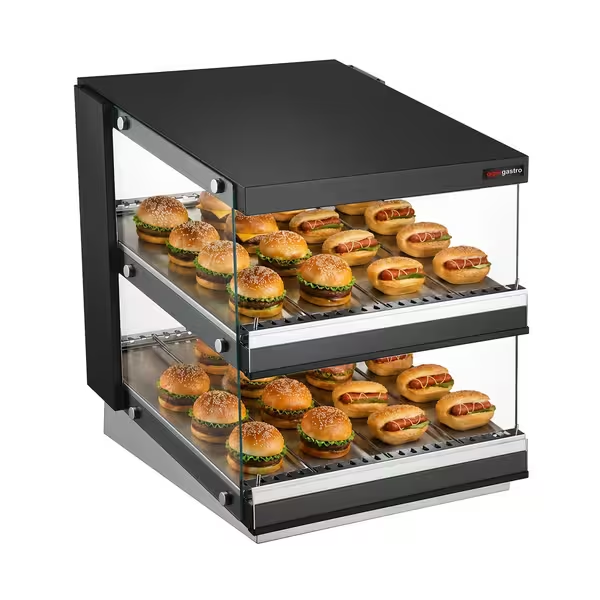
Heated display cabinets and dumpling steamers in professional use
Heated display cabinets are heated merchandisers that keep ready-to-eat food visible, protected and within reach. Dumpling steamers, by contrast, work with steam or increased humidity and are suitable for products that should not dry out while being kept warm.
In snack bars, bakeries, staff canteens, hotels, petrol stations, buffet areas and contract catering, these units shorten the route between preparation and service. Pizza, baked goods, hot dogs or chicken are clearly presented in a heated display cabinet. Dumplings, bao buns or dim sum stay moister in a steamer and can be taken out portion by portion.
Choosing between dry heat and steam
The most important selection criterion is the type of food. Dry or gentle heat suits snacks, pastries and products whose surface should not be changed by additional moisture. For dough-based products, dumplings and delicate filled products, a dumpling steamer is usually the better solution.
After that, capacity, temperature control, footprint and operation count. Heated display cabinets are available with several shelves, GN compatibility or individually controlled levels. Dumpling steamers come, for example, with several drawers, bamboo baskets and manual or digital controls. A 230 V connection makes integration easier for many countertop units, but the connected load and available power must still be checked before buying.
Quick check for choosing the right model:
-
Does the heating principle suit how sensitive the food is to moisture?
-
Are there enough shelves, GN containers or drawers for peak times?
-
Do the external dimensions and door opening fit the planned space?
-
Is the temperature control simple enough for daily use?
-
Can the interior, glass surfaces and inserts be cleaned quickly?
Positioning and workflow at the servery
The position of the unit affects walking distances and speed. In small retail kitchens, a countertop display cabinet should be close to the serving point, packaging and till, without blocking the replenishment route. In larger production kitchens or buffet areas, enough space must also be planned for prepared GN containers, back-up batches and safe removal.
The lunchtime rush is a typical example: if the display cabinet or steamer is too small, the team has to keep producing or topping up. If the unit is too large, it takes up worktop space unnecessarily and ties up capital. The right capacity covers real peak demand while still allowing regular stock turnover.
Material, hygiene and daily use
Stainless steel housings, glass surfaces and removable inserts support clean, robust use. Every day, heat, moisture, grease, crumbs and cleaning agents affect the unit. That's why easily accessible interiors, smooth transitions and easy-to-remove shelves or drawers matter more than purely visual details.
With steamers, water tanks, drains and damp interior surfaces must be cleaned thoroughly. With heated display cabinets, the focus is on glass, shelves and door runners. The surrounding area should be planned with suitable stainless steel kitchen furniture so that topping up, cleaning and setting down can be done without unnecessary crossovers. Reliable commercial refrigeration in the prep area also supports orderly replenishment, but does not replace correct hot holding.
Matching operation and features to your team
In daily operation, the unit should remain easy to understand even when staff change. Simple manual control can be enough for a consistent range. Digital displays or separately controlled levels make sense when different foods are held at the same time. LED lighting improves the visibility of the range, but does not replace regular checks of temperature and product condition.
Details such as sliding doors, non-slip feet, a base unit or the layout of the controls also affect the workflow. Before ordering, it also makes sense to check the unit's width, depth, height and opening direction against the counter, work surface and space to move.
Cost-efficiency through the right sizing
A well-matched hot holding solution can stabilise service, reduce rework and take pressure off the team at peak times. The investment pays off above all when power, capacity and operation match the actual workflow. Insufficient power, awkward cleaning or a lack of spare parts, on the other hand, can increase follow-up costs and downtime.
Integration with warewashing and cleaning routines should also be considered. Removable GN containers, shelves or baskets must fit your existing washing process. For banqueting or catering operations, combining with banqueting and food transport trolleys can make sense when food is moved between production, interim storage and service.
Choosing heated display cabinets & dumpling steamers to suit your needs
What matters is the type of food, moisture requirements, capacity, space, connection and cleaning effort. If you base these points on your real peak times, you get a solution that fits better into daily operation and makes service more predictable.