


:quality(70))
:quality(70))


Salad Spinners for Restaurants and Commercial Kitchens
After washing, salad spinners remove excess water from leafy greens and other suitable vegetables. Both manual and electric models allow you to process small batches or large, regular volumes, depending on your needs. Salad Spinner Guide »
Capacity
Product material
Width
Depth
Height
Price
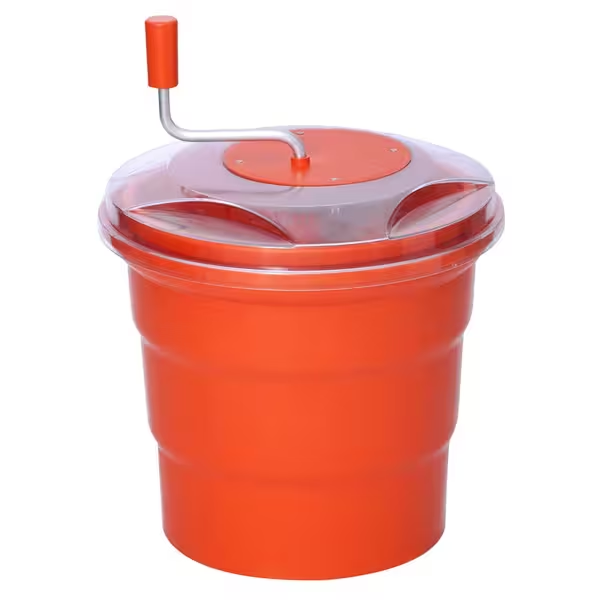
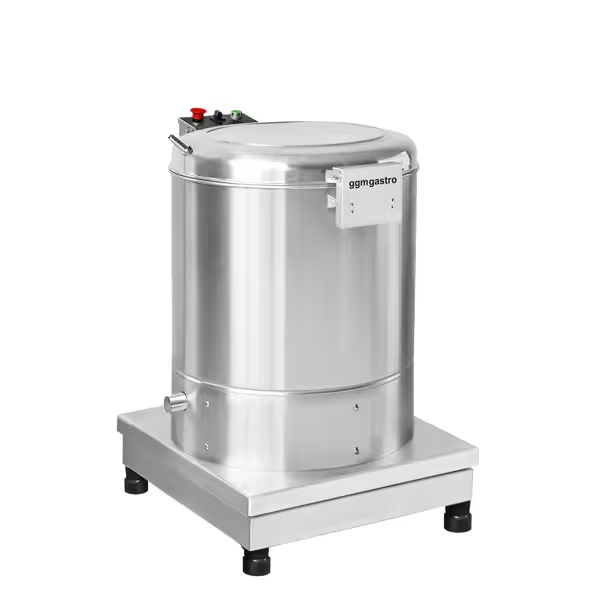
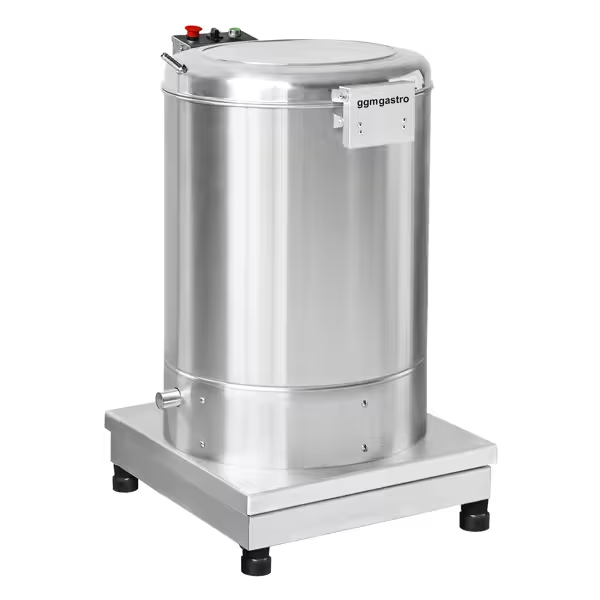
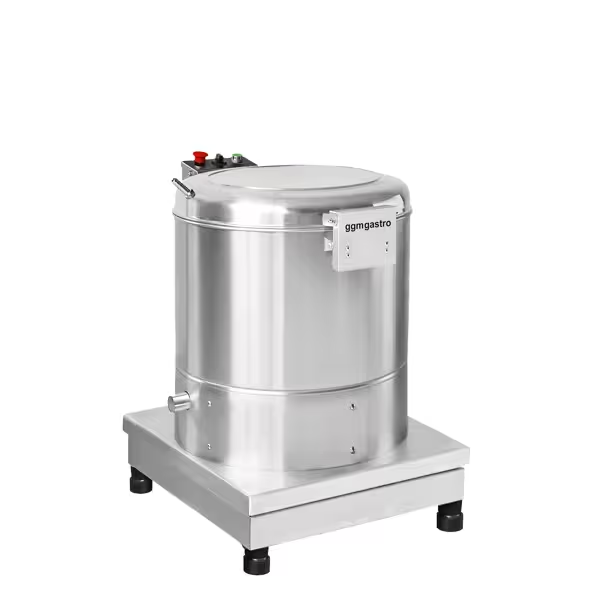
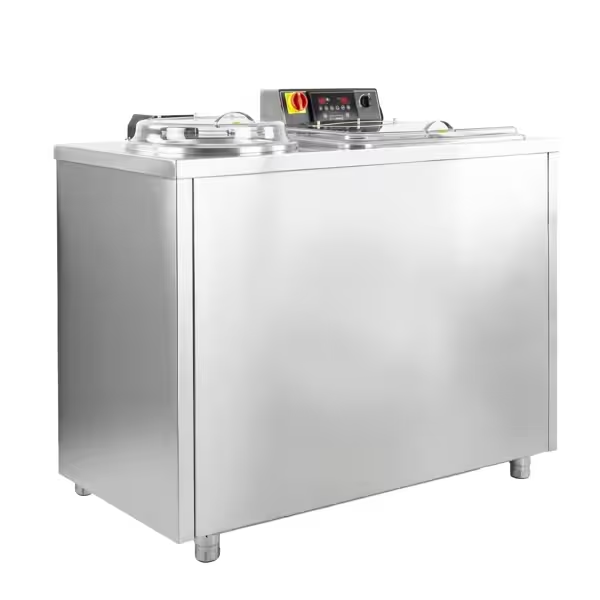
Salad spinners as an integral part of cold food preparation
Salad spinners remove excess water from leafy greens and other suitable vegetables after washing. In restaurants, hotels, cafeterias, catering kitchens, and institutional food service, they help ensure consistent preparation so that salads remain fluffy and dressings cling better.
In everyday commercial operations, the volume per preparation shift is the key factor. A manual 20-liter salad spinner is suitable for manageable batches and establishments that only occasionally process larger quantities of salad. Electric models with capacities of 20, 35, or 70 liters take the strain off the team during recurring batches and, depending on the model, can process approximately 35, 70, or 140 kilograms per hour. This allows you to base your selection on actual workload rather than solely on the container’s capacity.
Select the appropriate capacity, operating mode, and footprint
Five criteria are particularly relevant to the purchasing decision:
- Batch size,
- Number of cycles,
- Manual or electric operation,
- Available floor space, and
- Existing connections.
A spin dryer that’s too small leads to a lot of repetition during the morning mise en place. An oversized model, on the other hand, ties up space and capital without being utilized to its full capacity in day-to-day operations.
In a small restaurant kitchen, a compact manual model placed directly next to the sink may be sufficient. In a production kitchen with buffet, catering, or cafeteria operations, an electric model makes more sense if multiple batches are processed one after another. Before ordering, be sure to factor external dimensions, working height, and unobstructed access to the lid and inner basket into your planning. Depending on the model, electric units operate on 230 or 400 volts. Combined wash-and-dry machines also require a suitable water supply and drain. For larger stainless steel appliances, the transport route to the installation site is also important: door widths, turning areas, and future accessibility for cleaning or maintenance should all be factored into the space planning.
Quick Checklist for Selection:
- How much salad is prepared per shift?
- How many batches are realistic during peak hours?
- Is manual operation sufficient, or would an electric assist be beneficial?
- Do the dimensions and working height fit the intended space?
- Are power, water, and drain connections available?
Materials and Cleaning in Daily Use
Plastic models made of food-safe polypropylene and polycarbonate are lightweight, easy to move, and cost-effective for small to medium-sized batches. Stainless steel models are designed for frequent use and higher mechanical stress. They are particularly well-suited for establishments where the spin dryer runs several times a day and regularly comes into contact with moisture and cleaning chemicals.
For hygiene purposes, removable spin baskets, easily accessible interior surfaces, and controlled water drainage are more important than a wide range of functions. Transparent lids facilitate visual inspection. Timers and emergency-stop buttons on electric models help ensure a clear, repeatable process. After each use, leaf debris and water can be completely removed without leaving any hard-to-reach areas inside the machine.
Improving Workflows and Process Reliability
The best location is between the washing station and the refrigerated processing area. This way, the lettuce goes directly from the washing station to the spin dryer and then into containers or a Saladetten solution for further mise en place. A sturdy work surface on suitable stainless steel furniture makes it easier to load and unload the baskets.
During lunch preparation, it’s not just the spin speed that saves time. What matters most is whether the baskets, collection containers, and refrigerated storage are within easy reach. Short distances reduce interruptions and prevent wet ingredients from being left out unnecessarily long. In larger establishments, preparation can also be coordinated with dishwashing equipment and clearly separated, clean work zones.
Think in economic terms rather than just comparing volumes
The right salad spinner ensures consistent batches, reduces manual labor, and makes preparation times easier to plan. This can help maintain a stable workflow, especially when staff is limited and peak periods occur regularly. The investment becomes cost-effective when the capacity, operating mode, and cleaning requirements align with actual usage.
For small quantities, a manual 20-liter model is often the simplest solution. For regular use, electric stainless-steel models with higher hourly throughput become increasingly important. Establishments with an integrated washing process can incorporate a combined washing and drying machine, without equating this category with machines designed solely for washing vegetables. The key is to choose equipment that fits your production volume, available space, and the team’s work rhythm.