


:quality(70))
:quality(70))


Combi-Ovens for Professional Food Service
Combi ovens combine hot air, steam, and combined cooking methods in a single appliance. They are ideal for restaurants, hotels, catering businesses, and commercial kitchens that need to prepare a variety of dishes in a predictable, consistent manner and in large quantities. Combi Oven Guide »
Accessories for combi steamers



Combi Ovens: A Versatile Solution for Professional Cooking Processes
A combi-steamer is a commercial cooking appliance that uses hot air, steam, and a combination of both in a single cooking cycle. This allows food to be baked, roasted, steamed, reheated, or gently cooked without having to use a separate appliance for each step.
In restaurants, hotels, cafeterias, catering companies, and institutional food service facilities, combi steamers support structured production. Meat, vegetables, baked goods, side dishes, or prepared meals can be cooked at defined temperatures, humidity levels, and cooking times. This facilitates consistent results and creates a better foundation for standardized processes.
Versatility plays a particularly important role when dealing with changing menus or multiple production phases. A single unit can be used in the morning for baked goods, at noon for batch production, and later for regenerating prepared meals.
Choose the Right Capacity, Shelves, and Cooking Chamber
The appropriate appliance size depends less on the total number of guests than on the production volume during peak hours. For smaller kitchens or limited quantities, compact models with four to six trays are a good option. Establishments with high throughput often use ten or more trays as well as larger GN sizes.
Key decision criteria include:
- Number and spacing of trays
- GN or EN tray dimensions
- Countertop or freestanding unit
- Required power rating
- Planned batch size during peak operations
GN 1/1 is the most common size in many commercial kitchens. Compact GN 2/3 units require less floor space, while GN 2/1 can accommodate larger production volumes. Models in the EN format (600 × 400 mm) are particularly relevant when baking sheets are used regularly.
Manual, digital, or touch controls in day-to-day operations
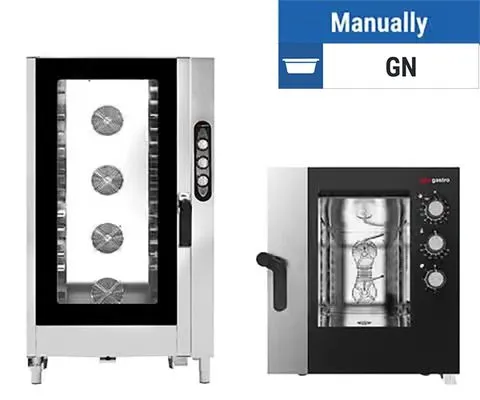
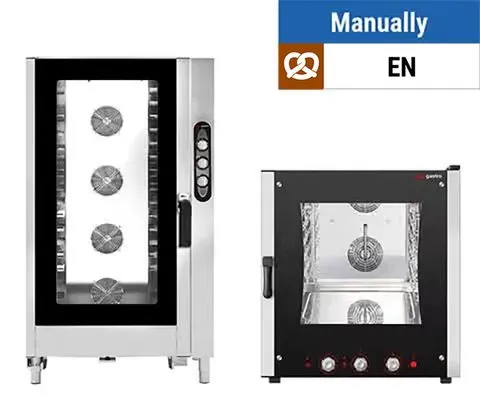
Manually operated combi-steamers focus on basic settings such as temperature, cooking time, and humidity. They are suitable for clearly defined applications and teams that prefer to work directly at the unit.
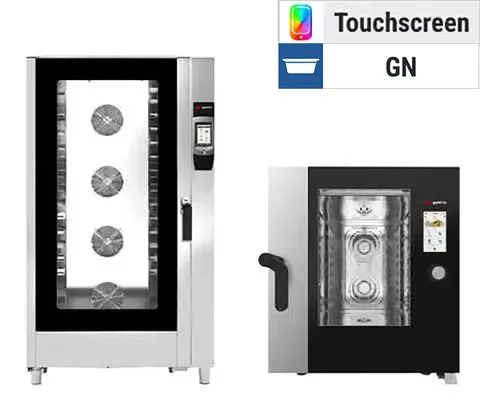
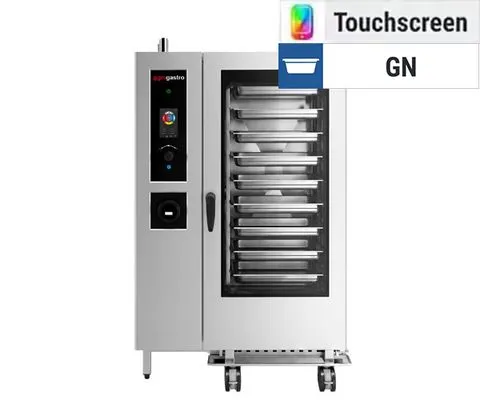
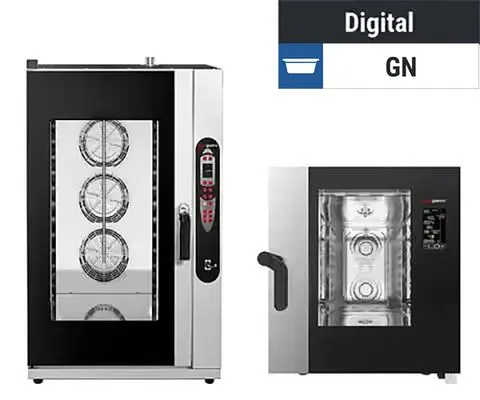
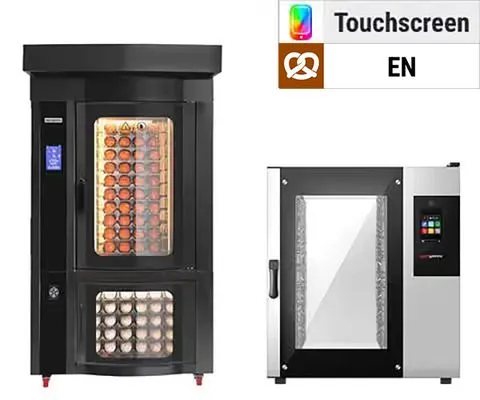
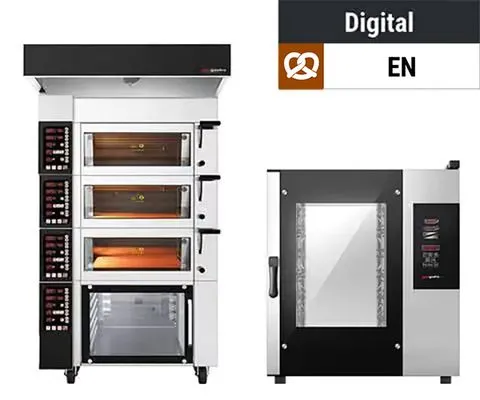
Digital controls allow for more precise adjustment of cooking parameters. Touchscreen models can also manage saved programs, multi-step cooking sequences, or recurring recipes. This is particularly helpful when multiple employees need to produce the same results or when frequently changing batches are being prepared.
A core temperature probe helps monitor larger cuts of meat and delicate cooking processes. Automatic programs, on the other hand, are only economically viable if they are used regularly in day-to-day operations.
Steam Output, Cleaning, and Technical Integration
Combi steamers generate steam either through direct injection or via a boiler. Units with direct injection are often more compact and cover many traditional applications. Boiler-based units deliver large volumes of steam particularly quickly and are suitable for intensive steam processes or high-volume operations.
When planning, consider not only the footprint but also the electrical connection, water supply, and drain. Depending on their power rating, the units operate on 230 or 400 volts. Ensuring sufficient clearance for opening the door, maintenance, and loading prevents future bottlenecks in the work area.
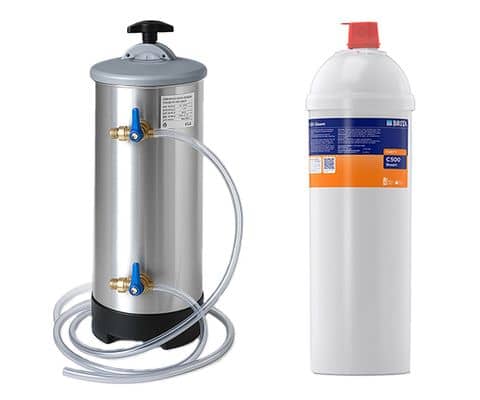
Water quality affects limescale buildup and, consequently, cleaning and operation. Appropriate water treatment can reduce deposits. Automatic cleaning systems simplify regular maintenance but do not replace the need to inspect the cooking chamber, seals, drain, and door area.
Quick Checklist for Choosing a Combi Oven
Before making a decision, consider these five points to help you evaluate your options:
- What volume needs to be cooked during peak operating hours?
- Which GN or EN containers are already in use at your facility?
- Is manual control sufficient, or are programmable settings required?
- Are the electrical and water connections, drain, and installation space properly prepared?
- How often will steam, automatic cleaning, and core temperature measurement be used?
These questions help ensure that the appliance isn’t selected based solely on purchase price or maximum functionality.
Integrate the combi-steamer seamlessly into the kitchen layout
A combi-steamer operates more efficiently when loading, unloading, and temporary storage are clearly organized. A sturdy base frame provides an ergonomic working height and offers space for baking sheets or GN containers. Work surfaces from the stainless steel furniture line make it easier to prepare and set up batches.
For pre-prepared or time-delayed dishes, coordinated refrigeration is essential. It supports safe temporary storage and structured reheating processes. For the daily return of baking sheets, containers, and work equipment, the existing dishwashing equipment must also be capable of handling the production volume.
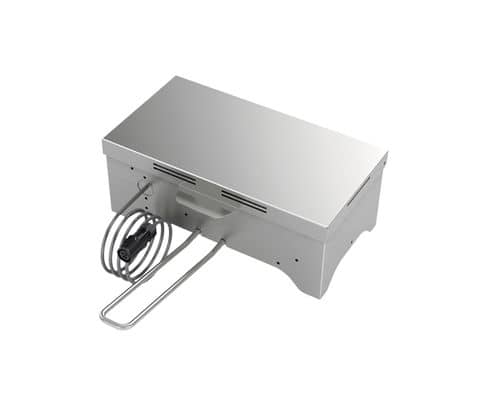
Suitable combi-steamer accessories—such as base frames, trays, racks, cleaning components, or condensation hoods—complement the unit wherever they are needed for the specific application.
Cost-effectiveness results from proper design
A well-chosen combi-steamer can combine multiple cooking methods, simplify processes, and ensure consistent quality across repeated batches. It is crucial that capacity, operation, cleaning, and connections align with actual operations.
By taking a holistic view of peak demand, available space, and the team’s workflow, you can lay a solid foundation for a cost-effective investment and reliable kitchen operations.