


:quality(70))
:quality(70))


Convection Ovens for the Food Service Industry
Speed ovens are designed for establishments that need to serve snacks, small dishes, and reheated meals in a very short amount of time. They facilitate fast operations in a small space and are particularly useful where speed, consistent results, and a compact design are all essential. Speed Oven Guide »
Product type
Design/Equipment
Operation
Power
Power Connection
Number of baking chambers
Total number of pizzas
Pizza Diameter
Temperature to:
Width
Depth
Height
Price
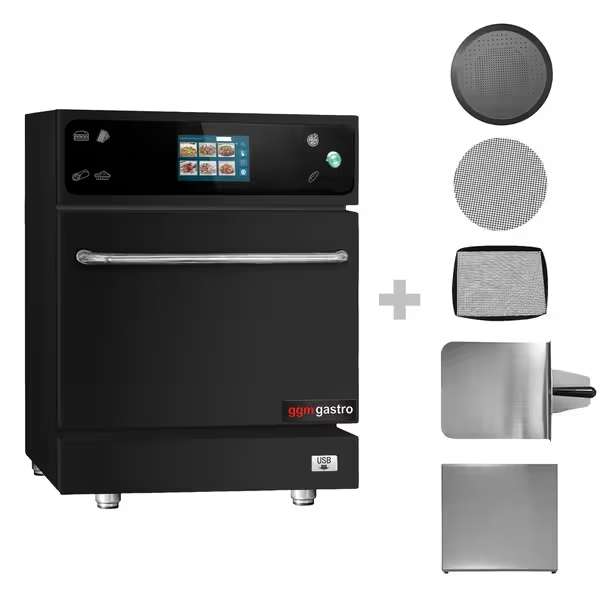
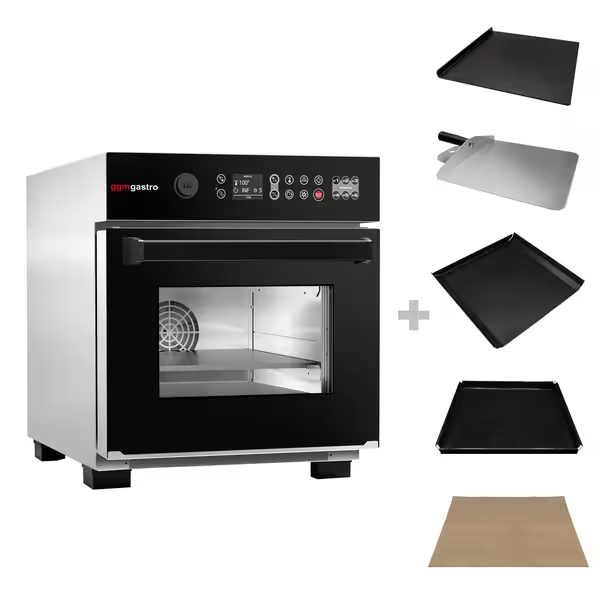
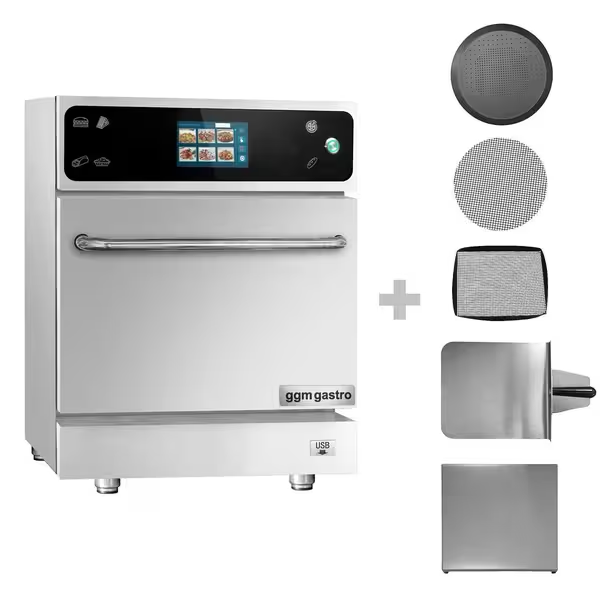
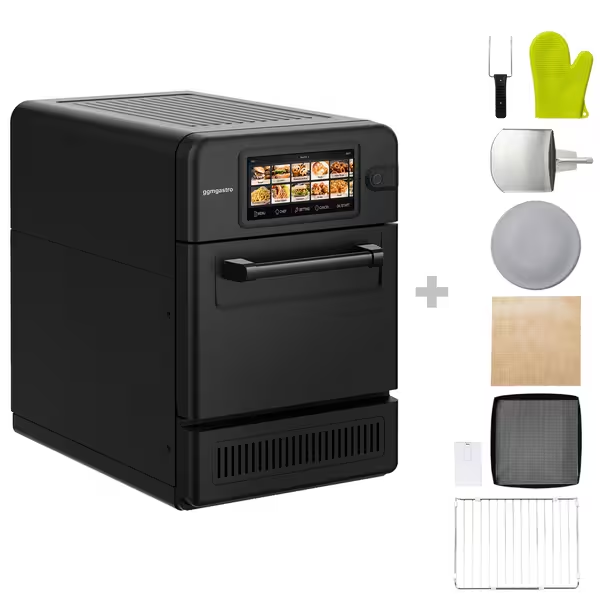
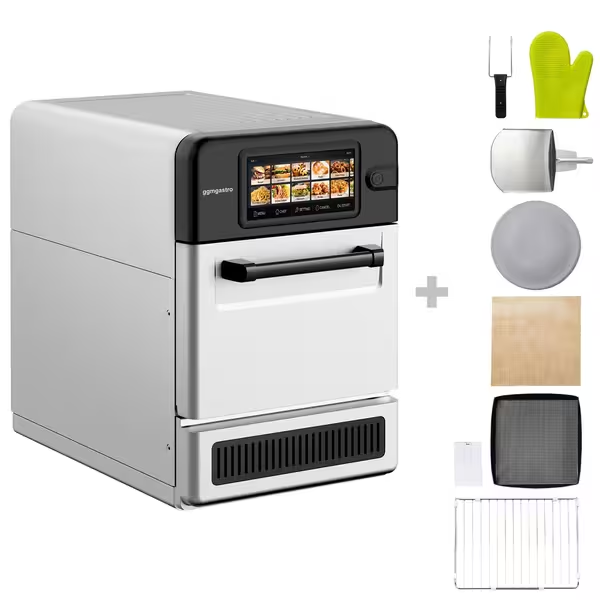
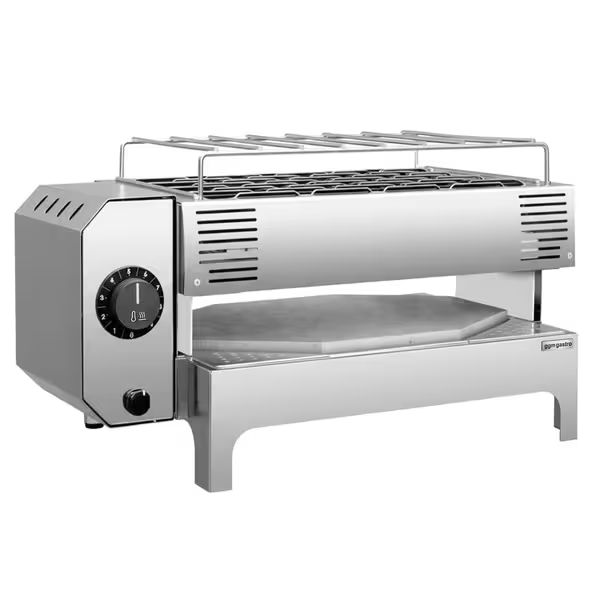
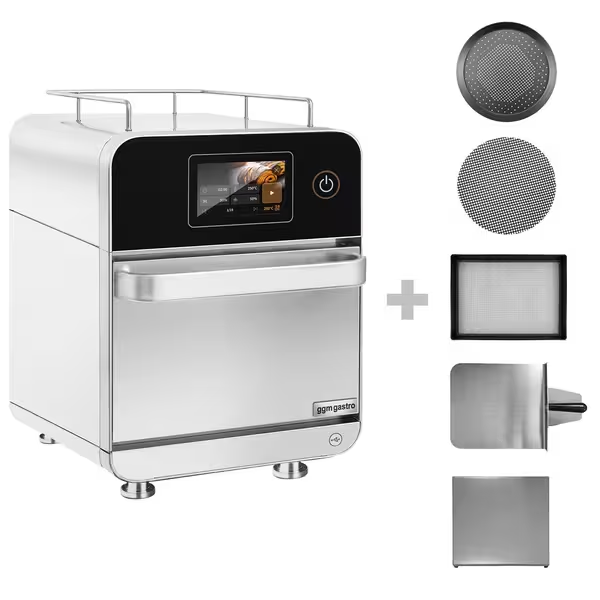
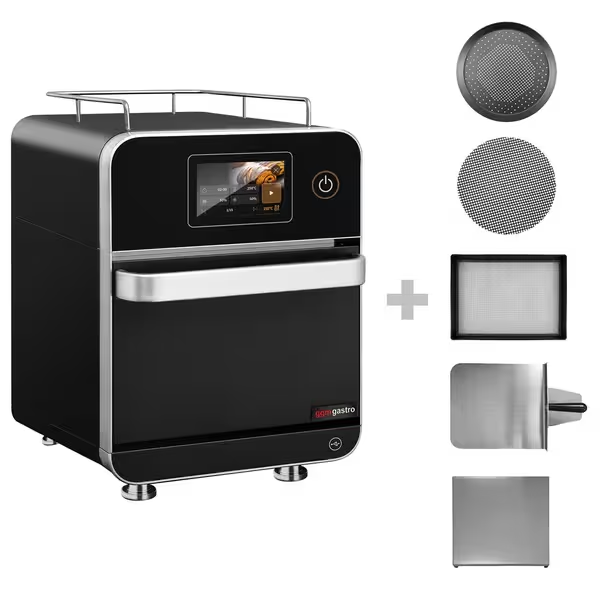
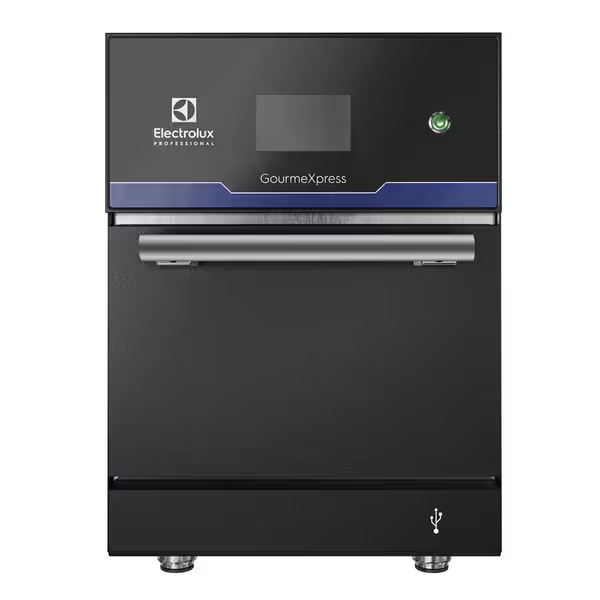
Properly Classifying Speed Ovens in Professional Settings
Speed ovens are compact, high-speed ovens designed for commercial use. Depending on the model, they combine hot air, microwave technology, and short cooking or reheating times, allowing food to be served faster than with traditional oven methods.
In everyday operations, speed ovens are particularly useful in settings where hot snacks, filled baked goods, pizza bites, sandwiches, or pre-prepared items are sold quickly. This includes, for example, cafés, bistros, gas station concepts, snack bars, hotel bars, or establishments with open-kitchen operations and a takeout component. The practical benefit lies not only in speed but also in consistent service delivery in spaces with limited floor area and recurring order patterns.
Which Speed Ovens Are Right for Your Business
When making a selection, it’s not about having as many features as possible, but rather how well the appliance fits into your day-to-day operations. The most important factors are the cooking chamber and capacity, actual performance during peak hours, the operating logic, and the available space at the installation site. A unit for preparing individual snacks at the counter has different requirements than a speed oven that runs continuously for extended periods during lunchtime.
Decision criteria that are particularly relevant for speed ovens should therefore be identified early on: the combination of convection and microwave, the number of programmable settings, the temperature range, the power source, and the external dimensions. Depending on the model, a 230-V connection, temperatures up to 280 °C, touchscreen controls, a keep-warm function, or an integrated catalytic converter can make all the difference. Especially with a rotating staff, clearly selectable programs and a simple interface help ensure that results remain consistent.
Quick Checklist for Selection:
-
Is the cooking chamber large enough for your typical products and peak times?
-
Does the power connection type match your location and existing infrastructure?
-
Do you need preset programs for recurring snacks and standardized processes?
-
Is the unit easy to clean and designed for frequent use in daily operations?
-
Are the dimensions, door opening, and footprint practical for your production line?
How High-Speed Ovens Affect Processes, Surface Area, and Output
Speed ovens really shine when distances need to be kept short and service is tightly timed. In small kitchens or compact retail spaces, they can be positioned directly at a snack station, in the counter area, or near the serving line. This reduces walking distances and helps ensure a smooth workflow when products need to be ready in just a few minutes.
A typical example is the lunch rush in a bistro: Prepared snacks or components are within easy reach, the speed oven handles the quick finishing touches, and service remains efficient without a large oven taking up valuable space. The same applies to front-of-house cooking: When a unit is operating in plain view of guests, compact dimensions, clean operation, and a controllable process are particularly important. At the same time, it should be clear that speed ovens are designed for quick single-item or small-batch processes and cannot take on the role of high-volume production ovens.
Practicality for Everyday Use, Hygiene, and Technical Details
In commercial settings, what matters most are durable materials, easily accessible interiors, and surfaces that can withstand regular cleaning with heat, grease, and cleaning chemicals. Stainless steel housings, cleanly finished edges, and logically designed cooking chambers make daily maintenance easier. This is especially important for appliances that are used multiple times per shift and come into close contact with snacks, crumbs, cheese, sauces, or grease.
Also pay attention to technical details that are often checked too late in everyday use: external dimensions, door hinge direction, internal dimensions, energy consumption, and any requirements for exhaust air or installation. An integrated catalytic converter can be helpful in certain setups, but it does not automatically replace an assessment of the specific installation site. Proper planning of speed ovens prevents future bottlenecks related to cleaning, ergonomics, and installation logic.
Using Speed Ovens Cost-Effectively and Combining Them Appropriately
Speed ovens become economically viable when they streamline processes, reduce wait times, and make service more reliable. While this doesn’t replace proper production planning, it can be a useful tool in snack-oriented concepts, during peak hours, or in small spaces. It is crucial that the equipment, product mix, and team structure are well-aligned.
To ensure a cohesive operational concept, speed ovens are often paired with stainless steel furniture, refrigerated base units, and sink units. This minimizes the distance between preparation, cooling, finishing, and cleaning. If the Speedoven is integrated into a fixed production line, it may also be wise to consider ventilation systems to ensure that the technology, space requirements, and work environment remain compatible in the long term.
Anyone evaluating Speed Ovens for their own operation should therefore look beyond just the price. More important is whether the unit fits the production cycle, the floor space available, the product range, and daily usage demands. Only then will it support a production process that remains smooth, clean, and traceable under real-world conditions.