


:quality(70))
:quality(70))


Order rails and order skewers for the Food Service Industry and Professional Kitchens
Order rails and order skewers keep order slips organized and within easy reach in the kitchen, at the pass, at the bar, or at the serving counter. A variety of lengths and materials ensure a suitable solution for both compact workstations and high-traffic production areas. Guide to Order Slip Rails & Order Slip Holders »
Product material
Width
Depth
Height
Price
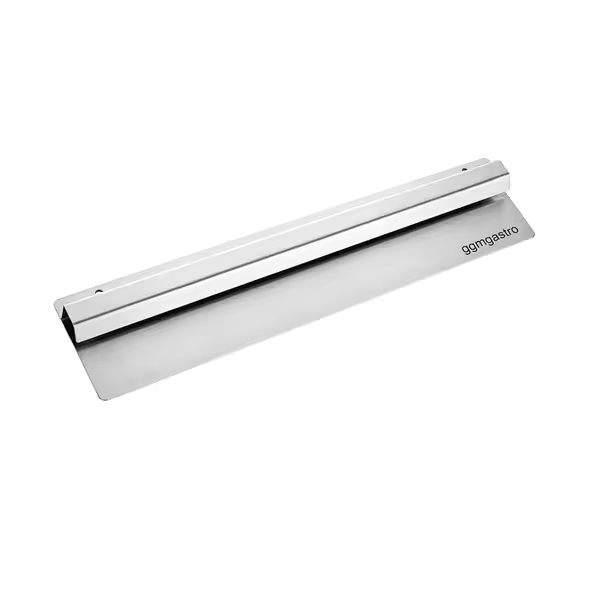
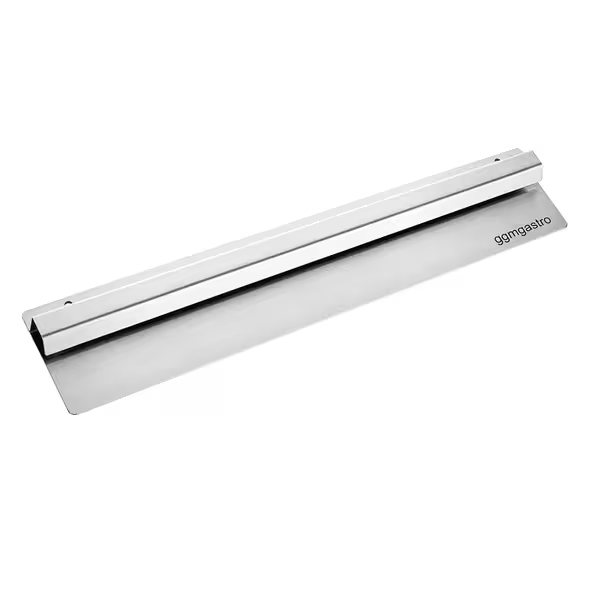
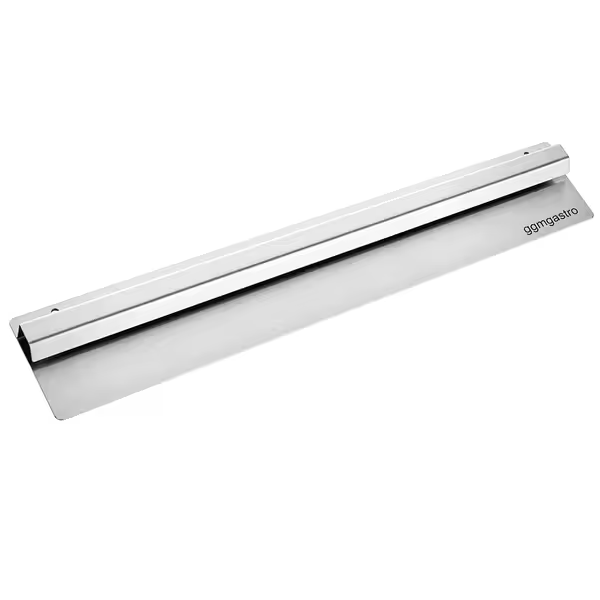
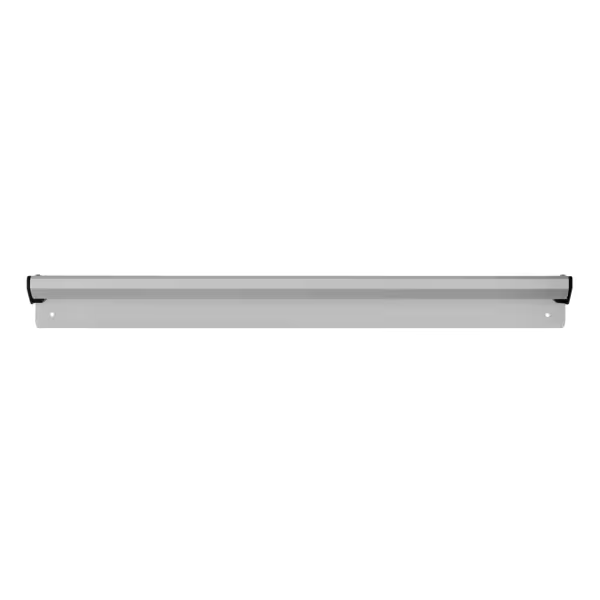
Order Slides & Order Sticks for Streamlined Ordering Processes
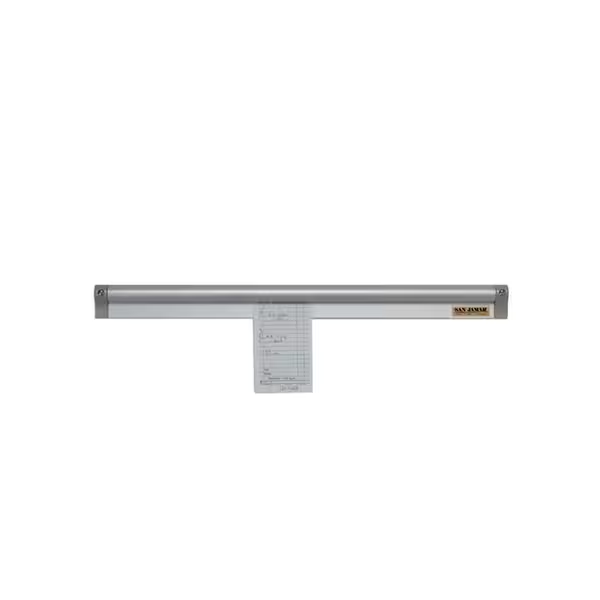
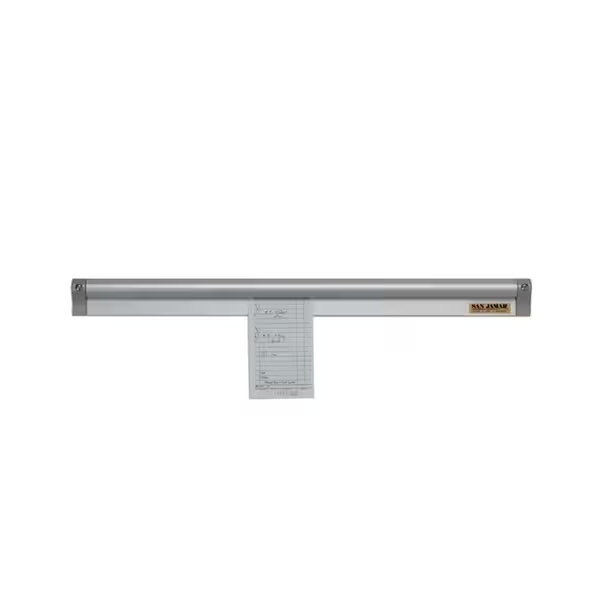
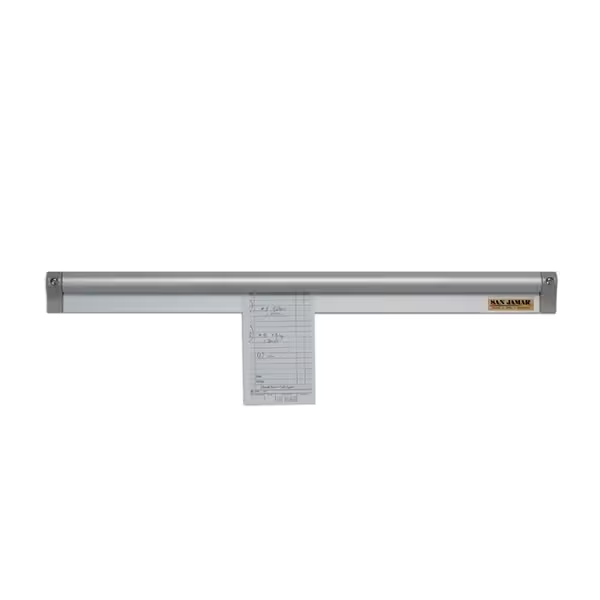
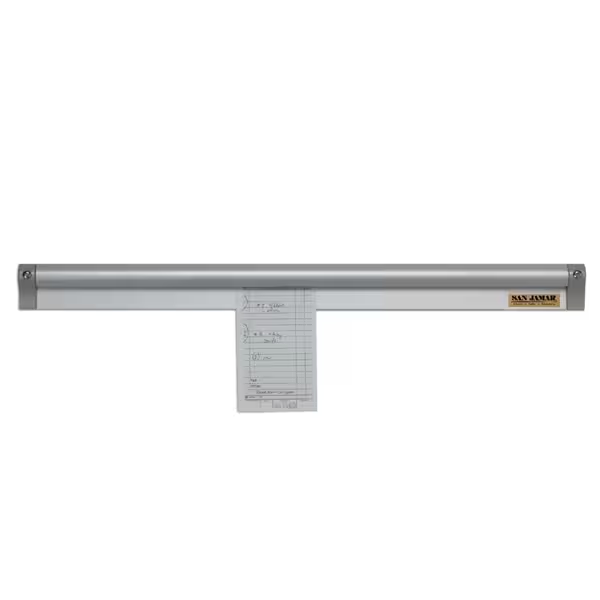
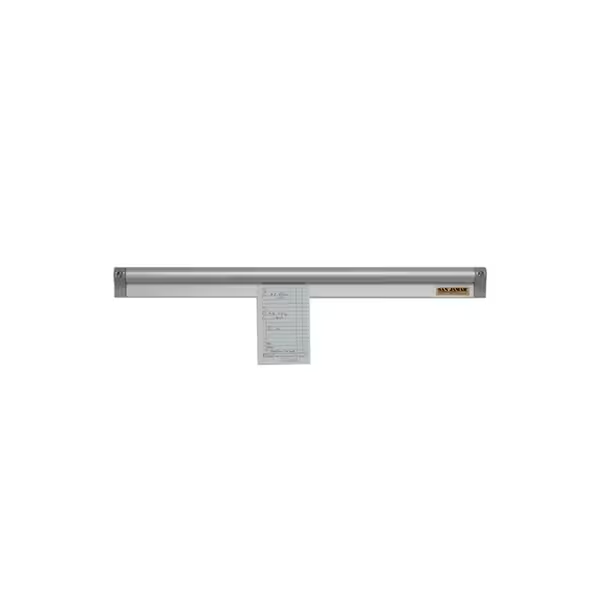
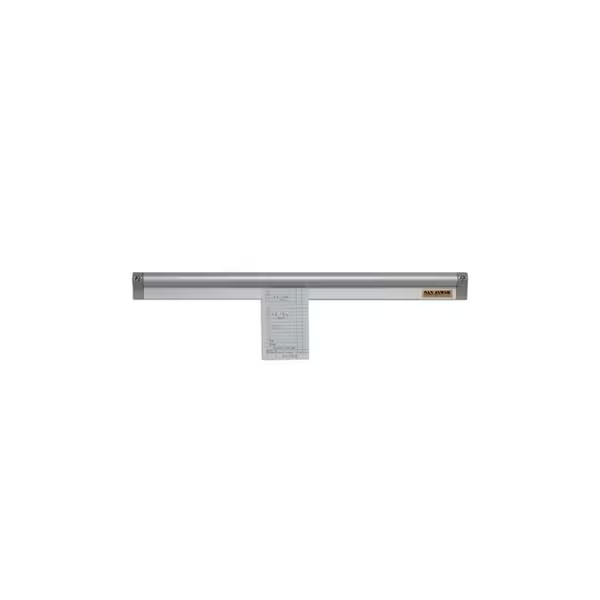
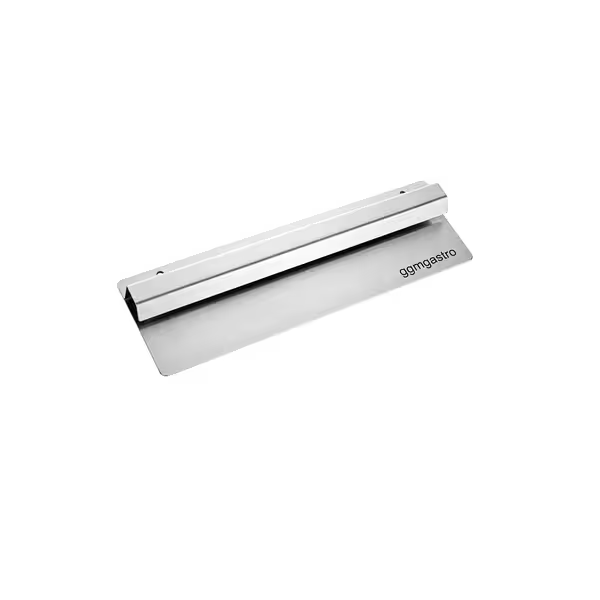
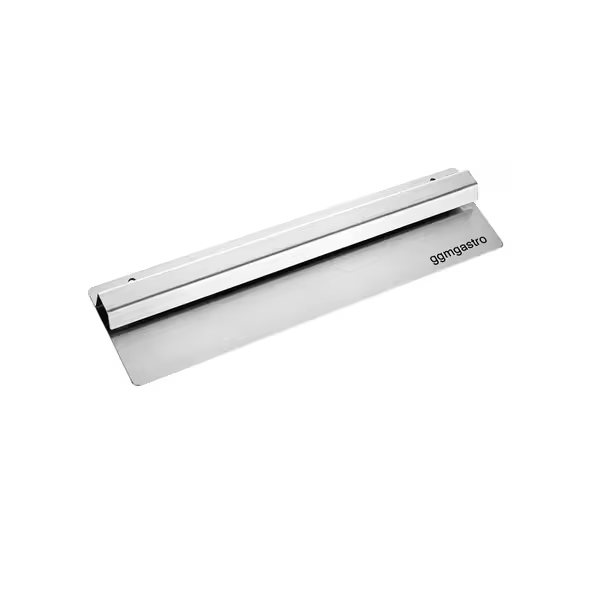
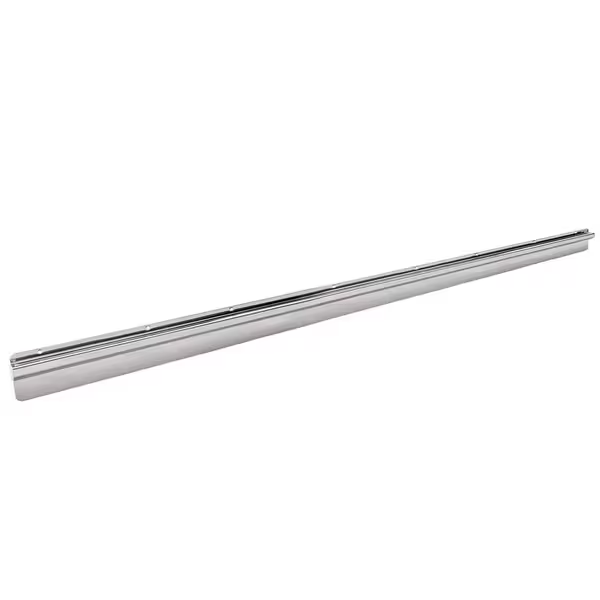
Receipt rails and receipt skewers are organizational tools for order slips, kitchen receipts, and internal work documents in professional food service establishments. Receipt rails keep current orders visible in a row, while receipt skewers are primarily used to save space by collecting receipts that have already been processed or temporarily set aside.
These solutions are relevant in places such as restaurants, snack bars, pizza places, hotel kitchens, Bars, catering companies, and institutional food service facilities. Especially during the lunch or dinner rush, a dedicated receipt tray helps ensure that pending orders are processed in a clear, traceable order. Loose slips of paper on work surfaces, on the other hand, can slip out of place, get dirty, or be overlooked among dishes and work supplies.
Select the appropriate boning rail or boning skewer for the process
The product selection process begins with the question of how receipts are handled in the workplace. A receipt rail is particularly well-suited for ongoing orders that need to remain visible to multiple employees. New receipts can be inserted one after another and removed once they have been processed.
A receipt holder takes up little space and is suitable for checkout counters, service counters, or individual workstations. It can be used, for example, to store completed receipts in one place. However, the top of the holder must be placed in a fixed, easily accessible location away from busy traffic and walking paths.
Key decision-making criteria include:
- Number of open orders at any given time
- Available wall, shelf, or counter space
- Required rail length
- Material and cleaning requirements
- Fixed mounting or flexible placement
Short receipt rails, approximately 305 or 458 mm in length, are suitable for individual workstations and smaller kitchens. Models ranging from approximately 610 to 915 mm offer more space for orders coming in simultaneously. For larger production areas, models ranging from over 1,000 mm to approximately 1,524 mm in length are available.
Placement at the pass and on the production line
A receipt rail is most useful where receipts are clearly legible and can be accessed without having to walk any extra distance. At the pass, it facilitates communication between the kitchen and the service staff. In a pizzeria, it can be mounted above the order-taking or serving station so that the order sequence and special requests remain visible during preparation.
The length should not only match the available wall space; the typical order volume during peak hours is also a key factor. A rail that is too short quickly leads to overlapping receipts. Conversely, an unnecessarily long rail takes up space without noticeably improving workflow.
During installation, take into account mounting points, the substrate, and the opening paths of adjacent cabinets. The rail should not be installed directly above open heat sources, deep fryers, or work areas with heavy splashing. When combined with well-arranged stainless steel furniture, this creates a well-organized workstation with short reach distances.
Material, Cleaning, and Durability in Daily Use
Many receipt rails are made of aluminum. The material is lightweight, dimensionally stable, and suitable for rails of various lengths. Stainless steel versions blend in particularly well with professional kitchens featuring stainless steel surfaces and provide a durable surface for high-traffic work areas.
Grease, steam, dust, and splashes can also accumulate on receipt holders. Smooth surfaces make regular cleaning easier. It’s important to ensure that the internal clamping or ball mechanism isn’t blocked by heavy buildup. Damp receipts can also tear or slide less smoothly, which is why it’s advisable to place them away from dishwater and areas with direct steam.
Receipt holders with stands can be positioned flexibly. The base must rest stably and must not tip over or slip on the work surface. To ensure hygienic workstations, receipt organization can be coordinated with matching dishwashing cabinets and clearly separated clean and dirty areas.
Quick Check for the Right Receipt Organization
- If many open receipts remain visible at the same time, a longer receipt rail provides a better overview.
- For individual cash registers or counter stations, a compact receipt holder may suffice.
- Aluminum reduces the weight, while stainless steel is particularly well-suited for rugged kitchen workstations.
- The installation location must be easily accessible without blocking passageways, delivery routes, or walkways.
- An easily accessible surface simplifies regular cleaning.
Small Equipment with a Big Impact on Operations
Food runners and serving skewers do not affect a kitchen’s production capacity, but they can help streamline daily order organization. A clear sequence facilitates handoffs, reduces the need to search for items, and helps the team work in an organized manner even when workload fluctuates.
It is particularly helpful to coordinate this with the entire workstation. In addition to sufficient space for plating, this includes well-positioned refrigerated base units, packaging within easy reach, and a clearly defined serving process. For preparatory work, appropriately equipped prep tables can further reduce walking distances.
Choose Order rails and order skewers Based on Your Needs
The right solution depends on the workstation, order volume, and how it will be used. A properly sized receipt rail provides visibility for current orders, while a receipt holder offers compact storage for processed receipts. Material, length, placement, and ease of cleaning are the most important factors to consider when making a decision that will stand the test of time in everyday use.