


:quality(70))
:quality(70))


Serving utensils for the food service industry and professional food service
Serving utensils facilitate the controlled portioning, scooping, and serving of food in the kitchen, at the buffet, and during service. A variety of shapes, materials, and sizes allow you to choose the right utensils for the dish, container, and workflow. Serving Utensils Guide »
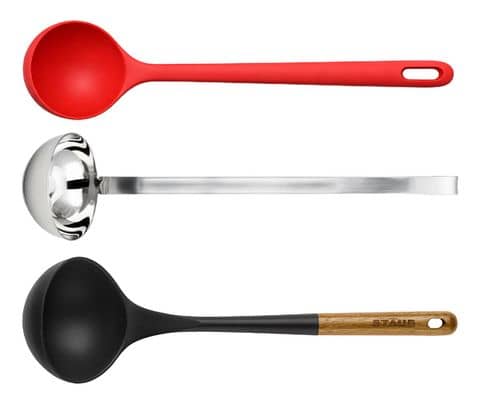


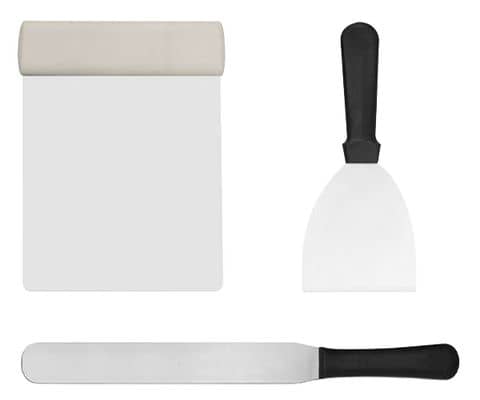
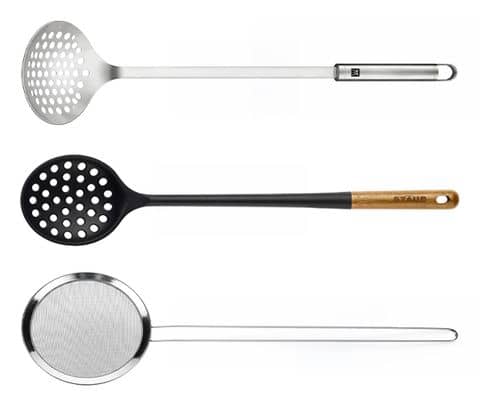
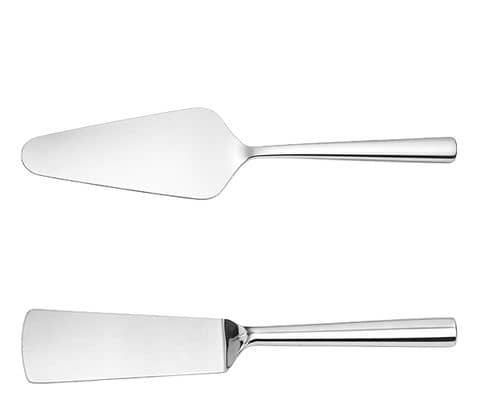
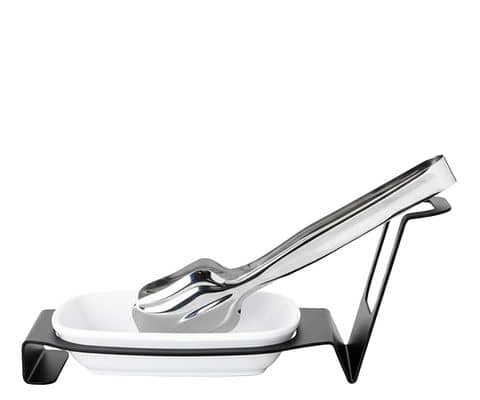
How to Properly Organize Serving Utensils in a Professional Setting
Serving utensils include tools for scooping, picking up, portioning, draining, and arranging food. In restaurants, hotels, buffets, catering companies, and institutional food service, it facilitates clean, consistent serving and efficient service procedures.
The right design depends on the specific task. Ladles are suitable for soups, sauces, and other liquid dishes, while serving spoons and rice spoons are used for side dishes or prepared components. Tongs make it easier to precisely pick up salads, pastries, pasta, or individual portions. Carving and meat forks provide more control when picking up and positioning larger pieces. Slotted spoons are useful for draining liquid or fat.
Adapt Dimensions and Shape to Workflows
With frequently used serving utensils, even small differences can directly affect ergonomics and speed. The most important factors are length, diameter, capacity, and head shape. A longer handle can provide more distance from hot food when using deep containers or large pots; for shallow serving dishes, a more compact design may be easier to handle. For ladles, the capacity should match the desired portion size so that staff do not have to scoop multiple times unnecessarily or constantly make adjustments.
Perforated and solid designs also serve distinct purposes. A slotted spoon allows liquid to drain, while a solid serving spoon retains sauce or broth. With meat forks, the number of tines—two or three—as well as straight or angled shapes can affect how easily the food is handled. Such features should be chosen not based on appearance, but on the container, the food, and the sequence of movements.
Materials, Cleaning, and Durability in Day-to-Day Operations
Our product range includes serving utensils made of stainless steel, 18/10 stainless steel, melamine, and silicone. Stainless steel is a practical choice for many high-traffic work areas because its smooth surfaces are durable and easy to integrate into regular cleaning routines. However, the specific product approval for cleaning and temperature exposure always remains the decisive factor.
Melamine or silicone may be good options where weight, surface protection, or a more comfortable grip are important. When dealing with hot food, grease, moisture, and frequent cleaning, you should verify whether the material and design are suitable for the intended use. Cutlery should also be stored in such a way that it remains clean, dry, and easily accessible. Cutlery trays help keep work surfaces organized and prevent used serving utensils from being set aside haphazardly.
Quick Checklist for Selection
-
Is the type of cutlery appropriate for the dish and the step in the preparation process?
-
Do the length, diameter, or volume match the container and portion size?
-
Is a perforated, closed, deep, straight, or angled design functionally appropriate?
-
Is the material suitable for the intended use, cleaning, and thermal stress?
-
Does it meet individual needs, or are multipacks for multiple stations more cost-effective?
Organizing Serving Utensils Effectively During Peak Hours
During lunch service or at the buffet, it’s not just the quality of each individual utensil that matters, but also its placement in the workflow. If the same pair of tongs is needed at multiple containers, or if a serving spoon has to constantly move between stations, this results in unnecessary trips and interruptions. It makes more sense to keep frequently used items readily available directly at the respective serving station or production station.
Multi-packs can therefore be practical for recurring workstations. They also facilitate maintaining a small replacement stock when cutlery is sent to the dishwasher during service. A well-coordinated basic set reduces search times and makes workflows less dependent on individual utensils. The quantity should not be maximized across the board, but rather planned according to the number of stations, peak load, and cleaning frequency.
Make smart purchasing decisions instead of just buying the cheapest items
Compared to large appliances, serving utensils represent a small investment, yet they influence many repetitive tasks performed daily. A suitable, durable design can simplify portioning, reduce unnecessary movements, and facilitate clean food service. The economic benefit therefore does not come from the utensils alone, but from how well they fit the process, the staff, and the frequency of use.
To ensure a cohesive setup, serving utensils, container sizes, serving stations, and cleaning procedures should be considered together. Those who select serving spoons, ladles, forks, and trays based on the actual dishes and stations creates a robust foundation for the kitchen, buffet, and service.
Choosing Serving Utensils for Professional Use
Good serving utensils should complement the dish, the portioning logic, and the workstation. By evaluating the material, dimensions, shape, cleaning requirements, and the number of pieces needed together, you can make a much more sound decision than one based solely on the unit price.