


:quality(70))
:quality(70))


Serving Carts & Transport Carts
Serving carts and transport carts help professional food service establishments safely transport food, dishes, trays, GN containers, and work supplies. They shorten the distance between the kitchen, dining area, buffet, storage area, and dishwashing area, and bring more order to daily operations. Guide to Serving Carts & Transport Carts »
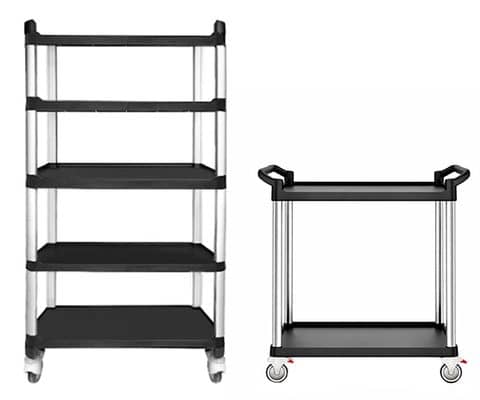
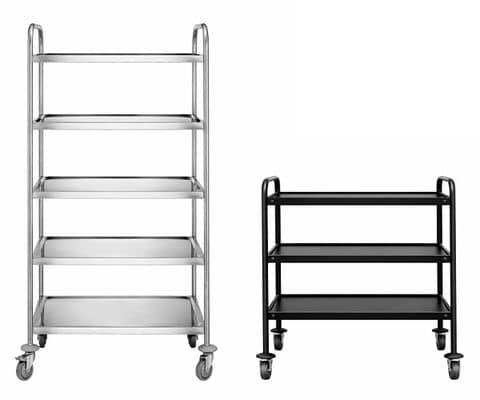

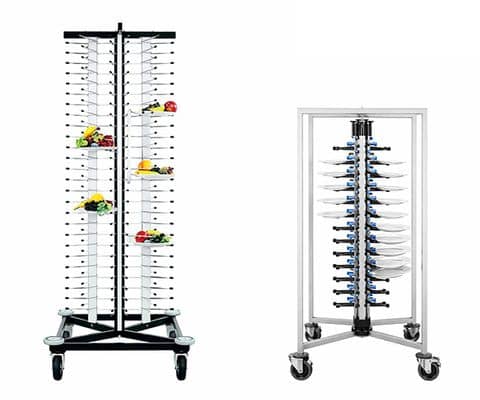
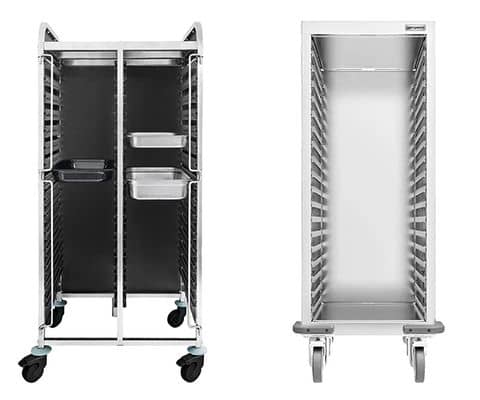


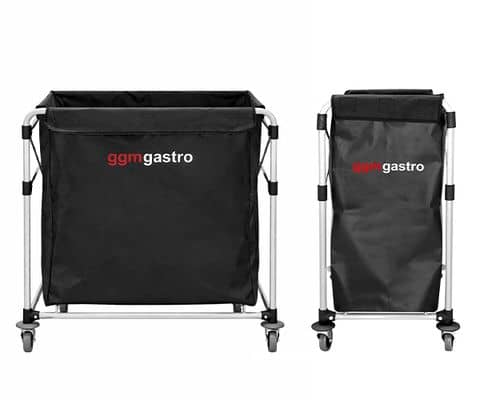
Serving Carts & Transport Carts as Mobile Work Aids in Everyday Restaurant Operations
Serving carts and transport carts are mobile equipment used for internal transport in the restaurant, hotel, and catering industries, as well as in cafeterias, student dining halls, and commercial kitchens. They are used to move food, tableware, trays, GN containers, cutlery, work supplies, or cleared items safely and efficiently from one area to the next.
During daily operations, it’s not just about transporting goods or tableware. What matters most is how quickly, hygienically, and without unnecessary walking distances this transport is carried out. A well-chosen serving cart lightens the workload for staff when setting tables, refilling items, or clearing away dishes. A transport cart supports the kitchen, storage area, and dishwashing area when large quantities need to be moved or when multiple workstations need to be seamlessly connected.
Its benefits are particularly evident during peak hours: When plates, trays, or GN containers are carried individually, it results in many short trips. With the right cart, multiple work steps can be combined. This ensures smoother operations, fewer interruptions, and better use of space between stainless steel furniture, the serving area, the storage area, and the dishwashing area.
Which Serving Carts and Transport Carts Are Right for Your Business
The choice depends heavily on what is transported on a daily basis. For the service area, compact serving carts with two or three shelves are ideal for moving plates, glasses, cutlery, or small portions of food. For the kitchen, prep areas, and storage, sturdy transport carts with high load capacity, ample shelf spacing, and robust casters are more important.
Key decision-making criteria include:
- Number of shelves and usable storage space
- Load capacity per shelf and total load capacity
- External dimensions that fit through doors, elevators, and narrow passageways
- Casters with brakes for stability while loading
- Material and finish suitable for cleaning, hygiene, and continuous use
In small kitchens or tight service areas, a maneuverable cart with compact dimensions is essential. In production kitchens, cafeterias, or catering settings, larger models with greater capacity are often more cost-effective because they reduce the number of trips required. Those transporting GN containers, trays, or dish racks should also ensure the cart has appropriate holders, shelf sizes, and sturdy guide rails.
Supplies, Rollers, and Hygiene in Daily Use
Serving carts and transport carts are frequently moved, loaded, cleaned, and used in various areas. Stainless steel is particularly important in the food service industry because its surface is durable, hygienic, and easy to clean. This is important when dealing with moisture, food residue, grease, cleaning agents, and regular contact with dishes or containers.
The casters also play a key role in the cart’s suitability for everyday use. Smooth-rolling swivel casters make it easier to maneuver in tight spaces, while locking casters ensure safety when loading, unloading, or working on the cart. In hotels, buffets, or front-of-house areas, quiet operation is also important to ensure that transport remains professional and unobtrusive.
For heavy-duty use, it’s worth paying attention to build quality, edge protection, shelf stability, and push handles. A cart that shuttles daily between dishwashing stations, the kitchen, and the dining area must withstand different stresses than an occasional-use side cart in the dining room.
Quick Check to Help You Make the Right Choice
Before making a purchase, it’s helpful to briefly assess your actual workflow:
- What items are regularly transported: plates, trays, GN containers, dish racks, or supplies?
- How heavy is the typical load on a daily basis?
- What pathways, door widths, elevators, or thresholds need to be taken into account?
- Will the cart be used primarily in the dining area, the kitchen, the storage area, or the dishwashing area?
- How often does the cart need to be cleaned, and what type of surface is best suited for this?
This quick check helps prevent mispurchases—situations where a cart may seem inexpensive but is too small, too loud, has an insufficient load capacity, or is impractical for the workflow.
Greater Efficiency Through Seamless Integration into the Kitchen and Service Areas
Serving carts and transport carts are particularly useful when they fit into the operational concept. During prep, they can be used to transport ingredients, containers, or work supplies between refrigeration and the production area. During service, they assist with setting tables, refilling dishes, and clearing tables. In the dishwashing area, they help ensure the orderly return of dishes, cutlery, and trays.
For buffets, banquets, and catering, carts are also a vital part of logistics. They connect the kitchen, storage, serving area, and event space without requiring each item to be carried individually. In combination with dishwashing equipment, stainless steel furniture, and matching storage solutions, this creates a clear flow of materials: cleanly prepared, safely transported, orderly served, and efficiently returned.
Think economically: fewer trips, more stable processes
A serving cart or transport cart isn’t a major investment compared to kitchen equipment, but it has a direct impact on daily operations. When routes are consolidated, more time is left for productive work. When heavy or bulky loads are moved safely, it takes the strain off the team. When returns, distribution, and restocking are clearly organized, there are fewer disruptions during peak hours.
The right choice, therefore, doesn’t depend solely on price. What matters most is whether the cart is suited to the frequency of use, the load capacity, the available space, and the cleaning routine. For professional establishments, what ultimately counts is equipment that performs reliably in everyday use, supports work processes, and integrates seamlessly into the kitchen, service area, storage, and dishwashing area.