


:quality(70))
:quality(70))


Meat Mixers for the Food Service Industry
Meat mixers are used in professional settings to blend meat, ground meat mixtures, and spices evenly, hygienically, and in predictable batches. They are particularly useful in situations where consistent quantities need to be prepared cleanly, workflows need to be streamlined, and mixing quality must be reliably maintained. Meat Mixer Guide »

Product type
Power Connection
Capacity
Operation
Diameter
Width
Depth
Price
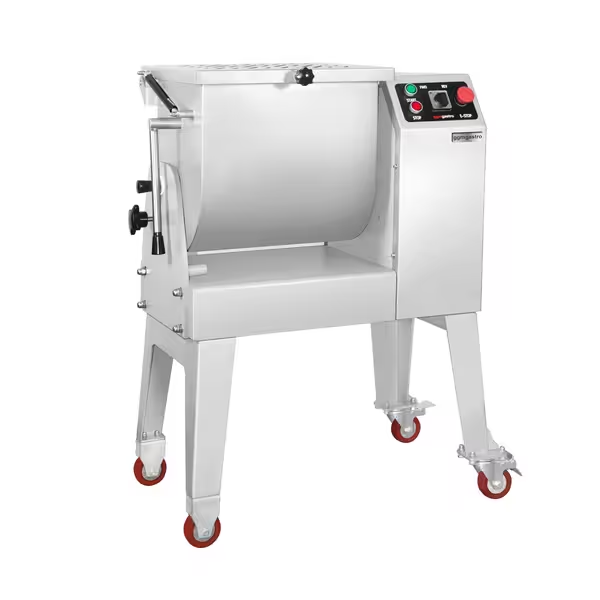
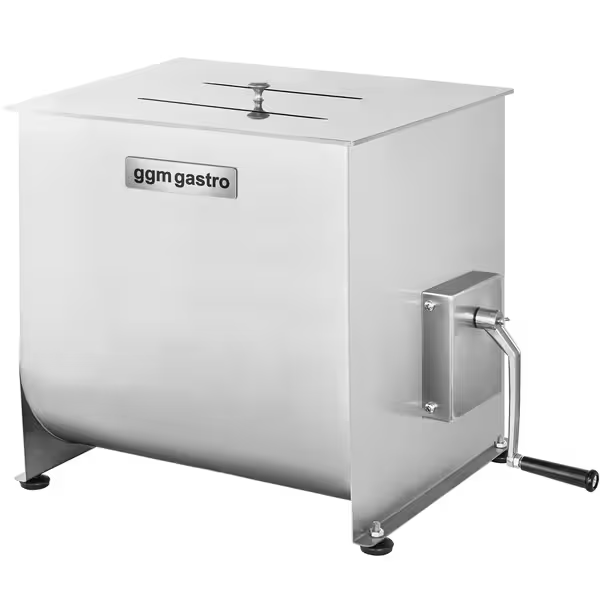
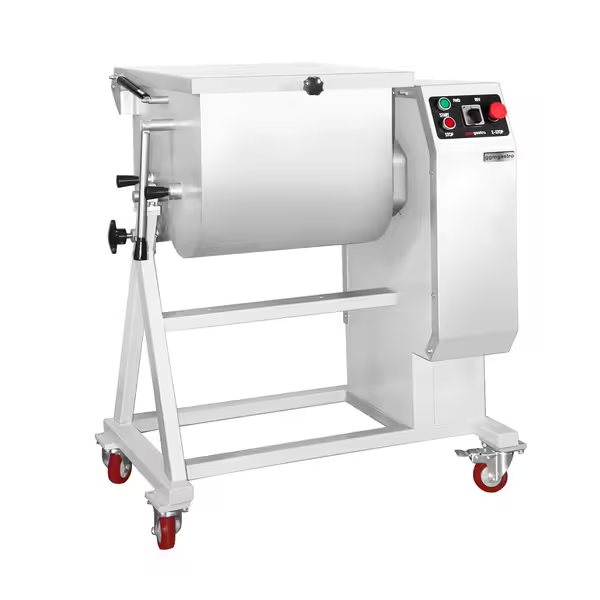
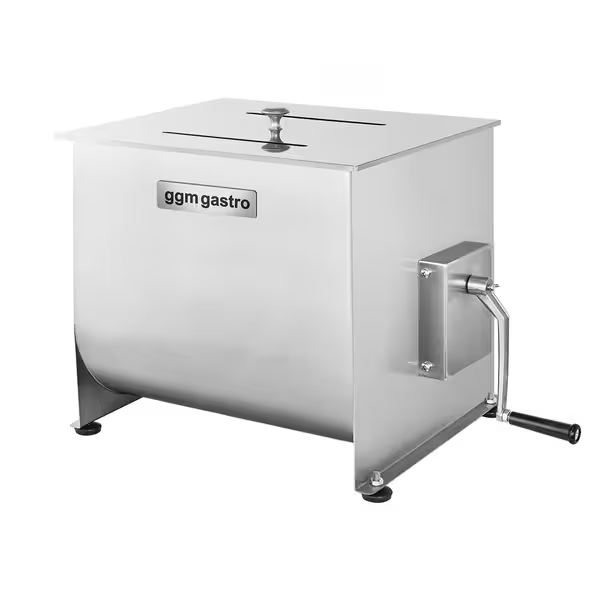
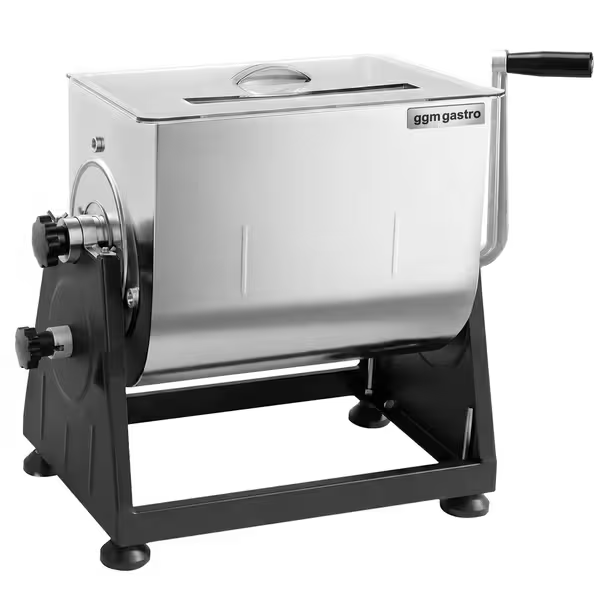
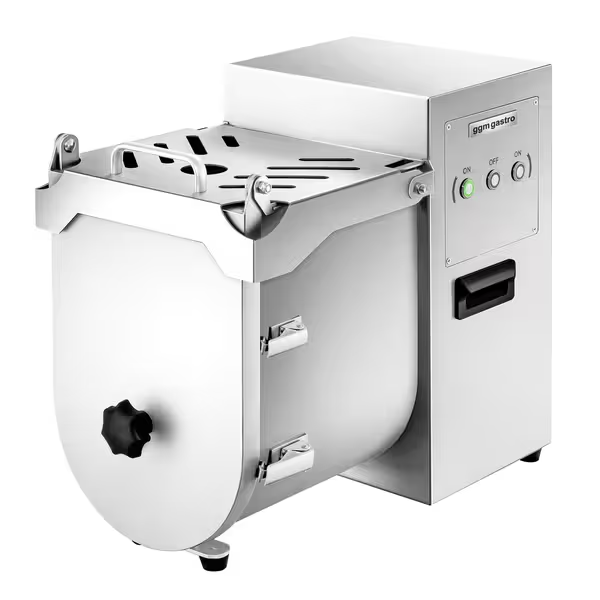
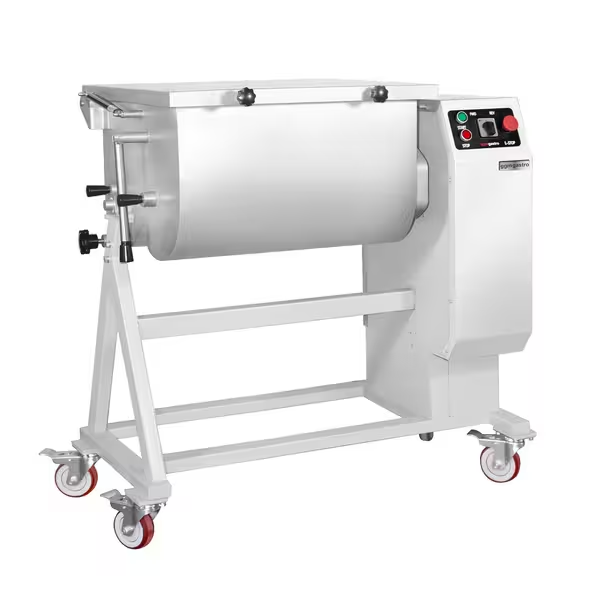
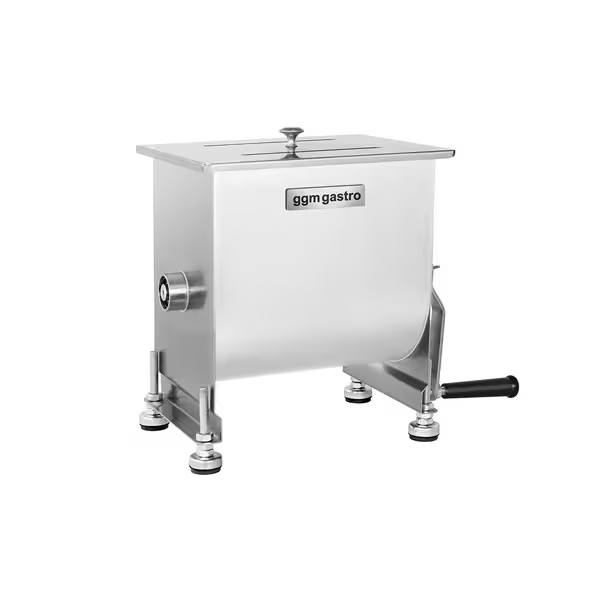
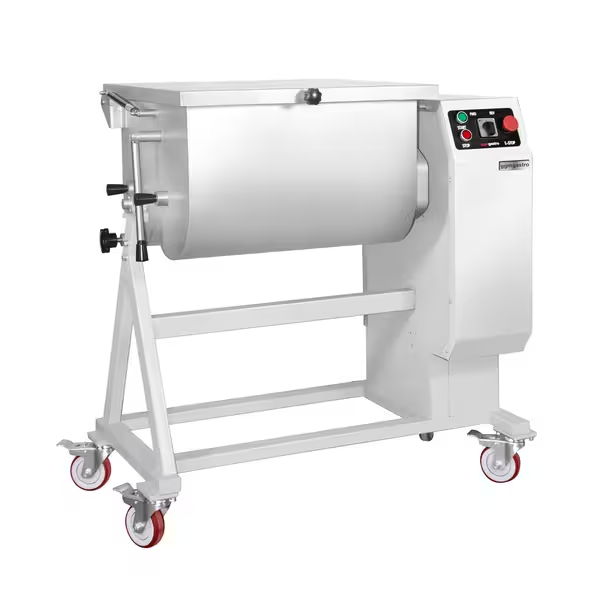
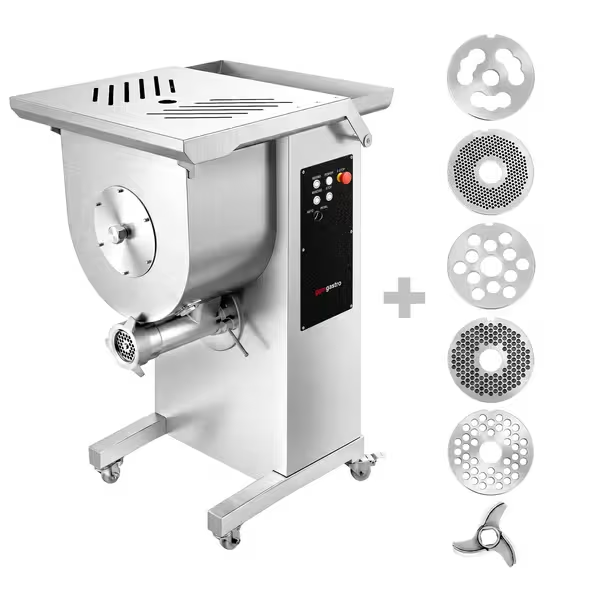
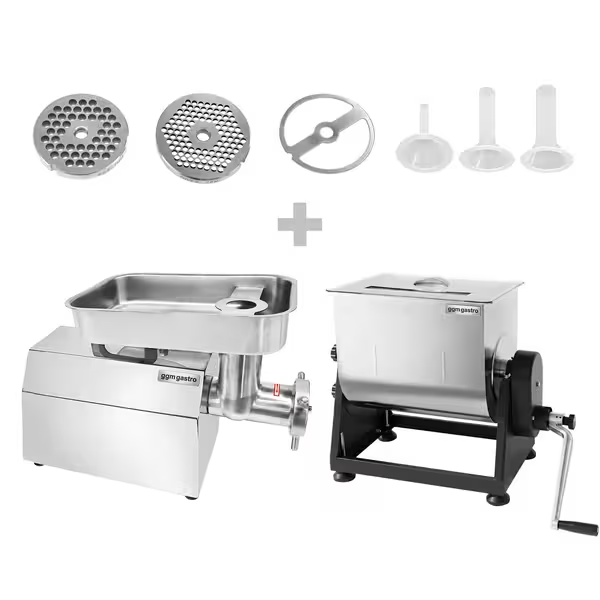
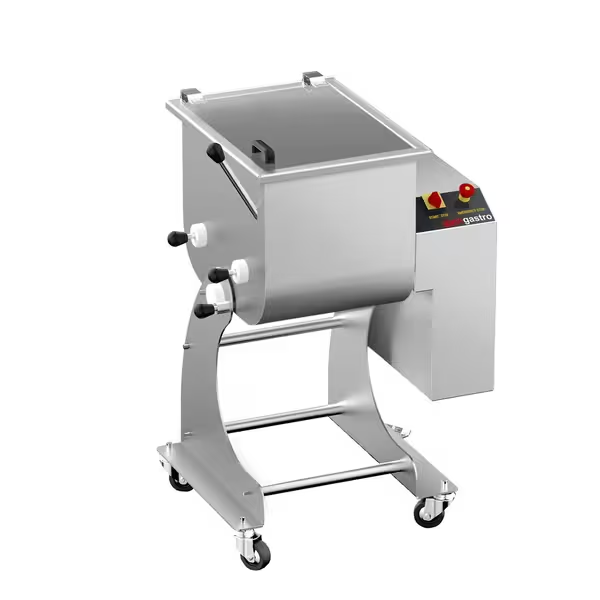
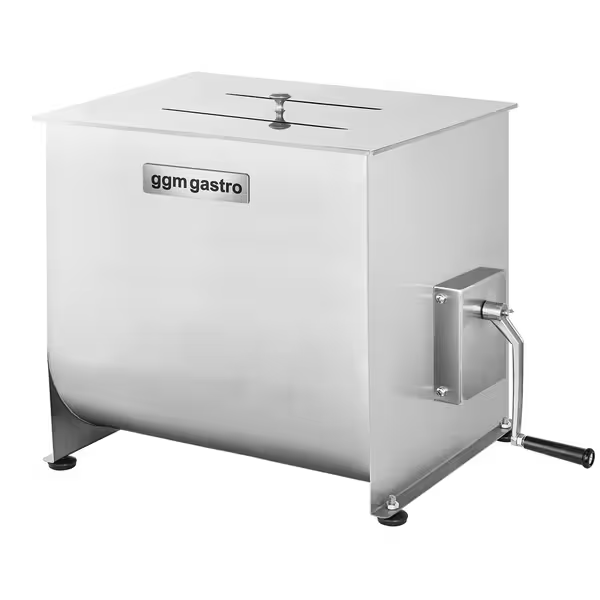
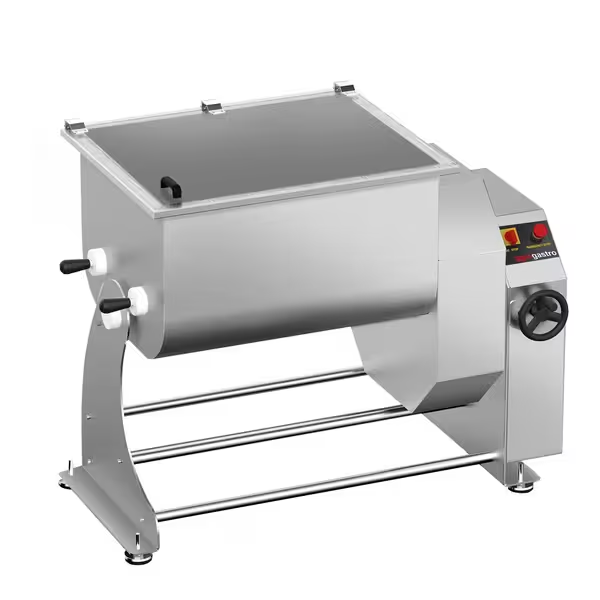
Properly Classifying Meat Mixers in Professional Settings
A meat mixer is a commercial appliance designed to homogenously blend meat, ground meat, and other ingredients, such as spices, marinades, or binders. Unlike grinding machines, the focus is clearly on uniform mixing and consistent batch quality.
Meat mixers are particularly useful for snack bars that serve burgers or köfte, for restaurants with their own in-house preparation, for catering companies, institutional food service, and anywhere else where meat mixtures should not be prepared by hand. In day-to-day operations, this primarily ensures greater consistency: mixing ratios remain more easily controllable, processing larger quantities becomes more predictable, and the physical strain on the team is reduced. This is a practical advantage, especially for recurring recipes, because preparation and further processing build neatly upon one another.
Properly Classifying Meat Mixers in Professional Settings
A meat mixer is a commercial appliance designed to homogenously blend meat, ground meat, and other ingredients, such as spices, marinades, or binders. Unlike grinding machines, the focus is clearly on uniform mixing and consistent batch quality.
Meat mixers are essential for snack bars offering burgers or köfte, for restaurants with in-house prep kitchens, for catering companies, institutional food service, and anywhere else where meat mixtures are not to be prepared by hand. In day-to-day operations, this primarily ensures greater consistency: mixing ratios remain more controllable, processing larger quantities becomes more predictable, and the physical strain on the team is reduced. This is a practical advantage, especially for recurring recipes, because preparation and further processing build neatly upon one another.
Which meat mixers are right for your business?
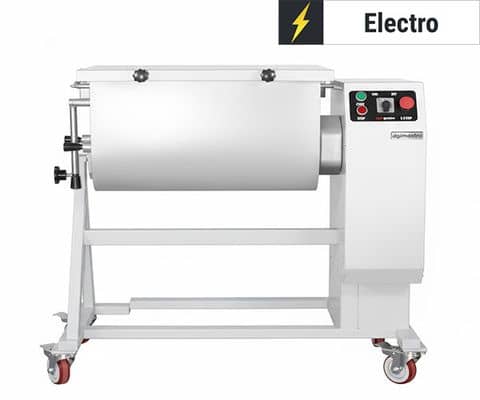
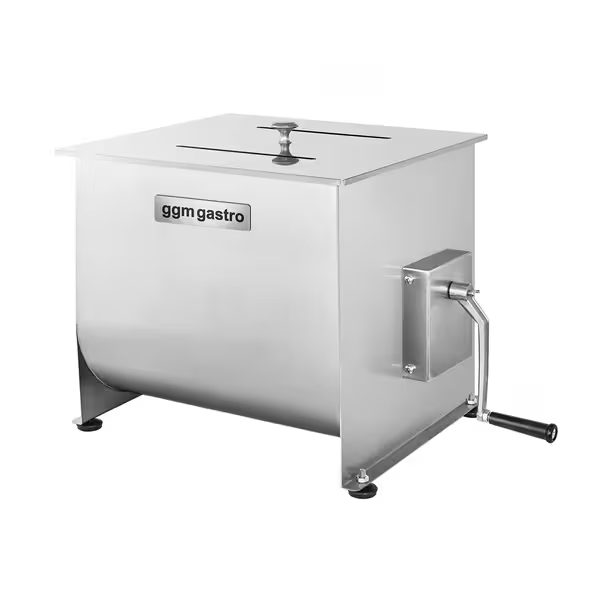
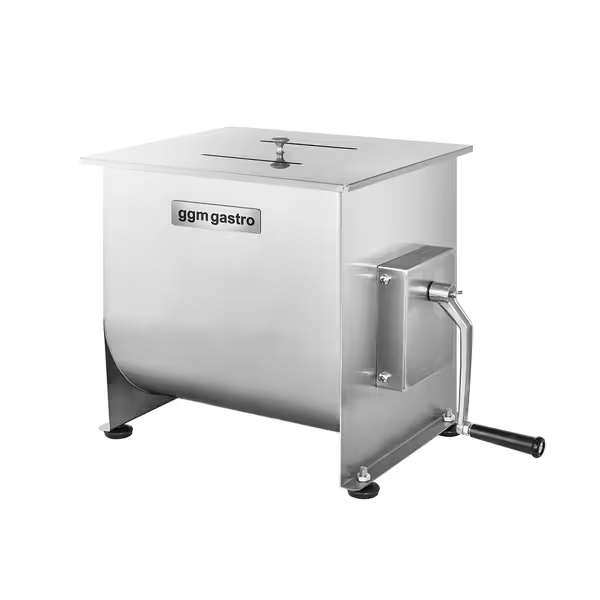
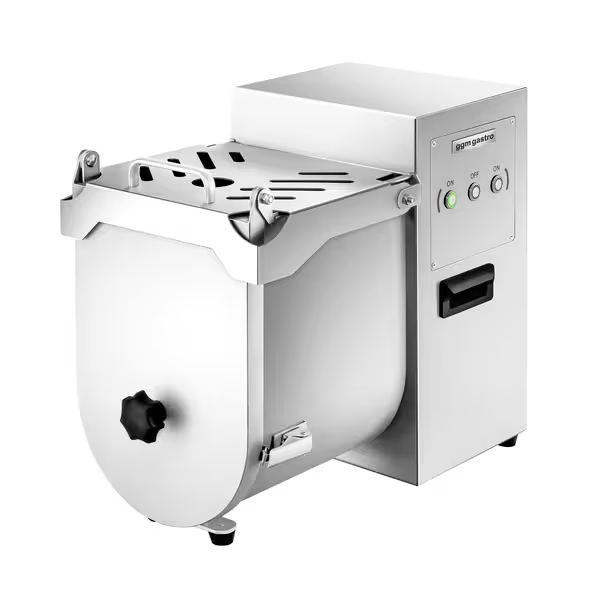
When selecting a meat mixer, four criteria are particularly important: operating mode, capacity, design, and ease of cleaning. For smaller quantities or simpler production processes, a manual meat mixer may be a good choice. However, once multiple batches are processed regularly each day or mixing times need to be kept short, an electric meat mixer is often the better choice.
The container volume should also not be considered in isolation. The key factors are how many kilograms per batch are actually produced during operation and how tightly scheduled the preparation process is. A unit with a capacity of 20 to 30 liters is not the same as a model with 60 liters or more. In compact kitchens, floor space is also a factor: external dimensions, tilting range, and access paths must fit within the production area. Depending on the application, practical features include tiltable containers, dual-axis mixing for even blending, mobile models with casters, or a reverse function. The power supply must also be factored into the planning, as some models require 230 volts while others require 400 volts.
How Meat Mixers Affect Pace, Hygiene, and Work Flow
A meat mixer only realizes its full potential when it is effectively integrated into the workflow. During the morning preparation phase, it helps produce batches for the day’s needs in an organized manner. In establishments with peak hours, it lightens the team’s workload because mixtures for burgers, meatballs, or fillings can be prepared in advance and then processed without any loss of time.
The location of the machine is important. If the meat mixer is too far from the work surface, refrigeration, or portioning stations, it results in unnecessary trips with trays, GN containers, or semi-finished products. It makes sense to combine it with stainless steel furniture so that ingredients can be prepared, batches transferred, and containers stored neatly. For sensitive raw ingredients, a close connection to the refrigeration system is also important to ensure that temperature control and preparation are synchronized. Smooth stainless steel surfaces, easily accessible mixing tools, and clean discharge facilitate hygienic processing and daily cleaning.
Quick Checklist for Choosing a Meat Mixer
Before making a purchase, it’s worth doing a quick practical comparison. These points will help you make your decision:
-
Does the batch size match your daily volume, or is the machine too small during peak times—or unnecessarily large?
-
Is a manual model sufficient, or do you need an electric meat mixer for multiple batches per day?
-
Do the bowl capacity, external dimensions, and tilt range match your existing workspace?
-
Are the stainless steel, mixing tools, and interior constructed in a way that allows for daily use with water, degreasers, cleaning chemicals, and frequent operation?
-
Are the features practical for everyday use, such as casters, a tilt function, a dual-axle design, or a compatible power connection?
These criteria in particular determine whether a meat mixer truly makes your daily work easier. A machine that’s too small slows you down by requiring additional batches, while a model that’s hard to access wastes time during cleaning and changeovers.
Integrating Meat Mixers into the Operational Concept in a Cost-Effective Manner
A suitable meat mixer is not a standalone piece of equipment, but rather part of a functioning preparation line. The better it fits the recipe, mixing volume, available space, and work rhythm, the more smoothly pre-production, handoff, and further processing will run. This can stabilize operations because mixing quality, time requirements, and cleaning efforts become easier to estimate.
For a cohesive setup, meat mixers should be designed in conjunction with robust rinsing stations or clear cleaning pathways, suitable work surfaces, and efficient raw material logistics. This allows containers to be cleaned more quickly, batches to be handled in an orderly manner, and production steps to be better separated. Ultimately, what matters is not just the size of the equipment, but whether the model fits your operation: in terms of volume, floor space, workload, and the desired workflow. Those who carefully evaluate these points will make a sound and economically sound decision when selecting meat mixers.