


Dishwashing and Polishing Machines for the Food Service Industry
Dishwashing and polishing machines help commercial establishments return dishes, glasses, silverware, and other items to service efficiently, hygienically, and ready for use. This category includes suitable solutions for restaurants, hotels, bars, cafeterias, catering companies, and other professional settings. Guide to Dishwashing and Polishing Machines »
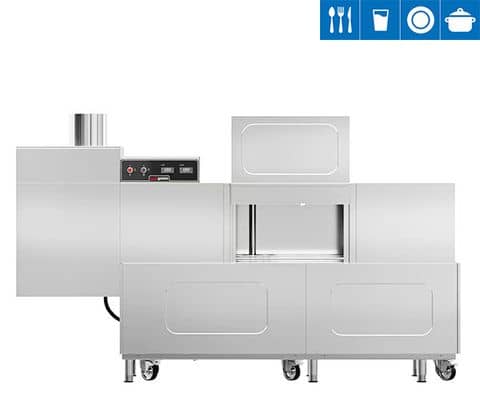
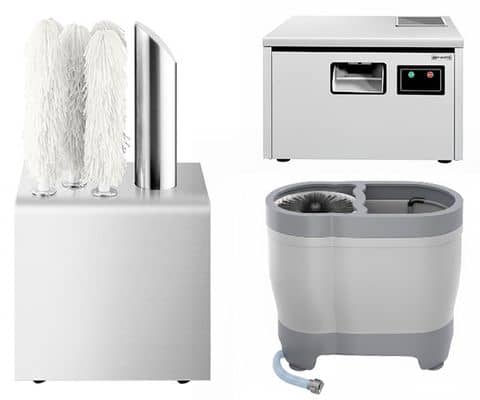
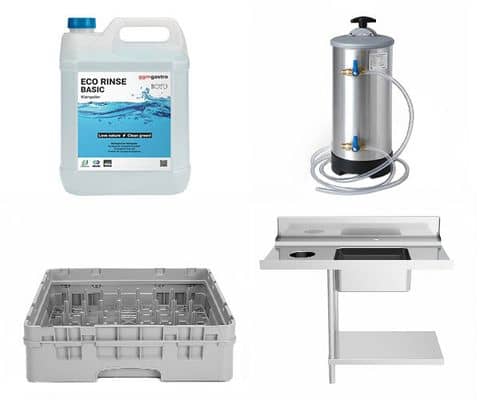
Dishwashing and Polishing Machines as an Integral Part of Clean Foodservice Operations
Dishwashing and polishing machines are among the pieces of equipment that often go unnoticed in a facility until there aren’t enough of them. In practice, dishwashing technology plays a key role in determining whether clean glasses, plates, cutlery, GN containers, or work equipment are available again in a timely manner. This category includes commercial dishwashers for various types of items, as well as polishing machines that ensure dry, streak-free, and ready-to-serve results after the wash cycle.
For restaurants, hotels, cafés, bars, snack bars, Cafeterias, and Catering Services, the dishwashing area is not just a secondary space. It connects the return, cleaning, drying, polishing, and restocking processes. When this cycle runs smoothly, there are fewer wait times at the serving line, less manual rework, and greater clarity within the team. Especially during peak guest volumes or short turnaround times between service periods, the right dishwashing technology becomes a key factor in maintaining stability.
Which dishwashing/polishing machine is right for which business?
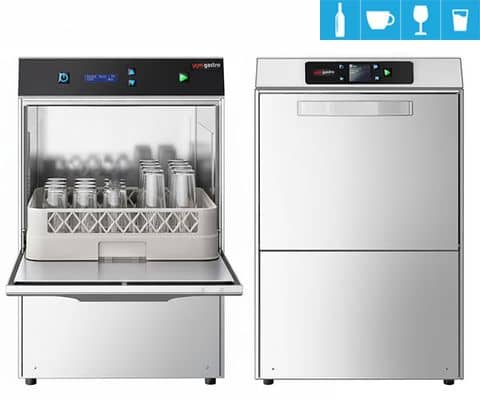
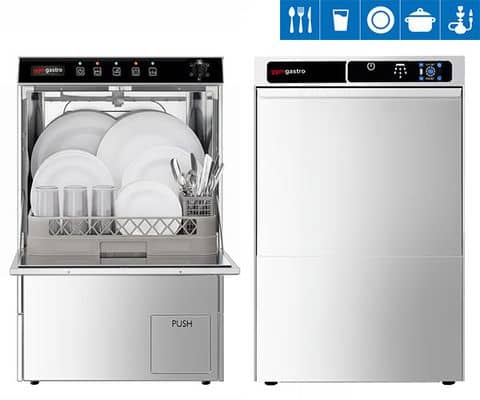
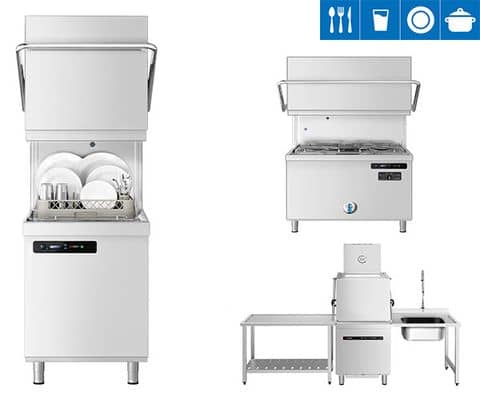
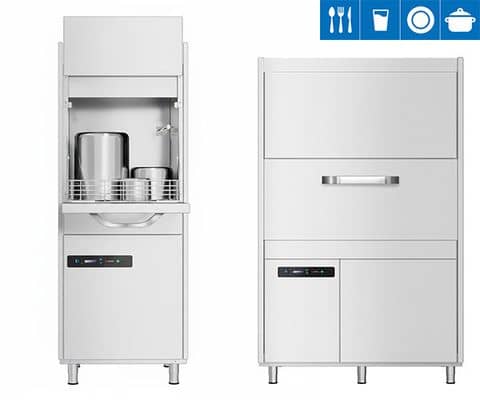
The selection process begins with the items to be washed and the demands of everyday use. A bar primarily needs reliable glassware cleaning performance; a restaurant also handles plates, cutlery, and cookware; while hotel kitchens, cafeterias, and catering businesses process large volumes within short time frames. Accordingly, glasswashers, dishwashers, hood-type dishwashers, pot washers, basket-conveyor dishwashers, and polishing machines differ significantly in capacity, design, and operating logic.
Key decision-making criteria include basket size, cycle time, hourly throughput, available space, connection type, and the desired integration into the dishwashing area. Compact under-counter units are suitable for smaller kitchens, counter areas, or cafés with limited space. Hood-type dishwashers and basket-conveyor solutions excel when larger volumes need to be processed continuously. Polishing machines complement the process where cutlery or glasses must be quickly and uniformly prepared for the dining area after washing.
Quick Checklist for Selecting Washing and Polishing Equipment
A few specific points can help you narrow down your options:
-
Items to be washed: Glasses, plates, silverware, pots, GN containers, or mixed load
-
Capacity: Volume per hour and workload during peak times
-
Space requirements: Under-counter unit, hood-type unit, transport solution, or separate polishing unit
-
Connections: Electricity, water, wastewater, and on-site requirements
-
Operating costs: Water consumption, energy consumption, detergents, rinse aid, and maintenance
This quick check ensures that decisions aren’t based solely on the machine’s price or external dimensions. The most important factor is whether the machine fits the actual workflow.
Planning, Space Requirements, and Integration into the Dishwashing Zone
A dishwashing and polishing machine is only efficient if it is properly integrated into the workflow. Dirty dishes need a clear return path, clean dishes need a hygienic place to be set aside, and frequently used baskets, detergents, or polishing agents must be within easy reach. In small kitchens, every meter counts; in commercial kitchens, the separation of dirty and clean areas is especially important.
During a busy lunchtime rush, a machine that’s too small can slow down the entire service because plates or cutlery aren’t returning quickly enough. In hotels, the need often becomes apparent at breakfast or during banquets: large numbers of glasses, cups, plates, and cutlery items accumulate in a short period of time. Here, capacity, basket organization, and ergonomic workflow are crucial. Suitable dishwashing units support the flow of dishes in and out, while stainless steel cabinets provide sturdy storage and work surfaces.
Efficiency comes from smooth processes
Dishwashing and polishing machines don’t generate economic benefits through the equipment alone, but through the process behind it. When cutlery is ready for service faster, glasses return to the bar with fewer streaks, and dishes get back into service without a backlog, the team can work more calmly and with greater predictability. Less manual re-polishing can reduce the workload on staff, especially during preparation phases or between service periods.
For many establishments, therefore, it’s not the largest machine that matters, but the right balance of capacity, space, ease of use, and operating costs. Supplementary dishwashing equipment—such as baskets, detergents, and rinse aids—as well as compatible dishwasher accessories] make the process more complete and help ensure the selected machine integrates seamlessly into operations.
Buy Dishwashing and Polishing Machines at GGM Gastro
GGM Gastro offers dishwashing and polishing machines for a variety of business sizes and applications—from compact solutions for cafes, bars, and snack bars to high-performance dishwashing equipment for restaurants, hotels, cafeterias, and catering services. This selection helps businesses clean dishes efficiently, professionally prepare cutlery and glassware, and maintain a steady flow of clean items during service.
The key is a solution that fits the volume, floor space, workflow, and workload of the establishment. Integrating dishwashing and polishing technology into the overall workflow enhances hygiene, speed, and operational reliability in day-to-day operations.