


Coffee Grinders for Restaurants, Cafés, and Bars
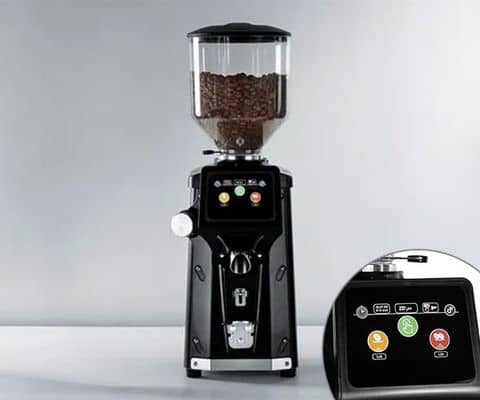
Coffee grinders grind coffee beans right before brewing, helping to ensure consistent coffee quality in professional settings. At GGM Gastro, you’ll find coffee grinders with and without dosers, automatic models, and low-noise versions for cafes, restaurants, hotels, bars, and breakfast areas. Coffee Grinder Guide »



Coffee Grinders as the Foundation for Consistent Coffee Quality
Coffee grinders are professional appliances designed to grind whole coffee beans to the desired fineness. In the foodservice industry, they directly influence how consistently espresso, coffee beverages, and specialty drinks can be prepared—from small cafés to busy hotel breakfast areas.
In everyday commercial use, it’s not just about taste. What matters most is that the coffee grinder delivers consistent results, even when multiple employees are using it or when many orders come in quickly. A precisely adjusted grind setting, proper dosing, and a sufficiently large bean hopper help make operations at the coffee station run more smoothly and predictably. Especially with espresso, quality depends heavily on how finely, freshly, and consistently the coffee is ground.
Which coffee grinder is right for which type of business?
The right coffee grinder depends on the type of operation, daily volume, and coffee offerings. In cafés and bars with high espresso volume, the focus is on fast grinding performance, precise dosing, and short distances to the machine. In restaurants or hotels, the grinder is often used throughout the day—in the morning at breakfast, at lunchtime after a meal, or in the evening in the bar area. Here, ease of use, quiet operation, and reliable portioning become more important.
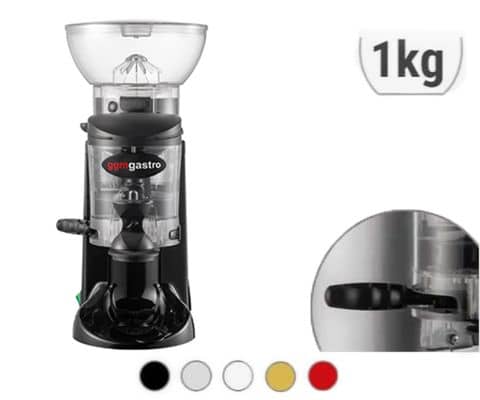
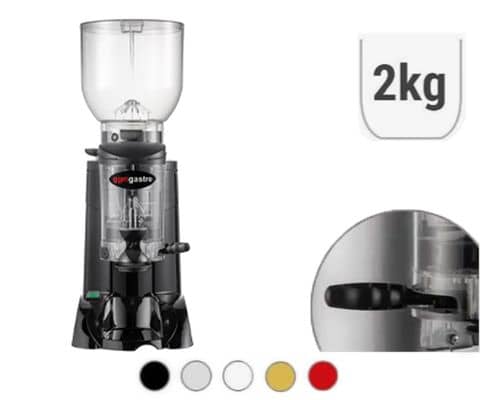
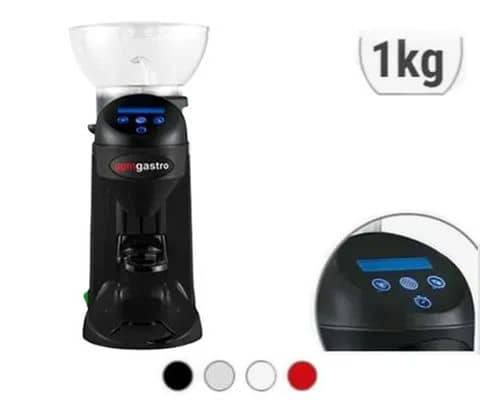
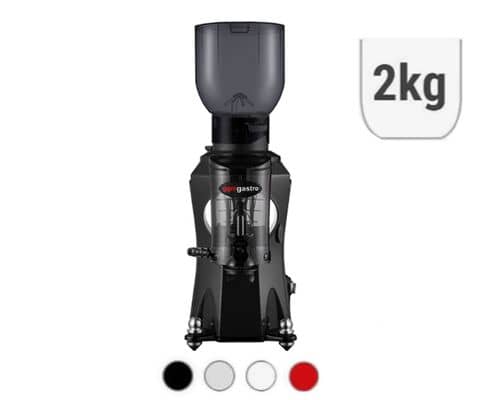
Models with a 1-kg bean hopper are suitable for compact counters, smaller cafés, or establishments with manageable coffee sales. Variants with a 2-kg bean hopper offer more capacity when many drinks are prepared regularly or to avoid refilling during service. A coffee grinder with a doser can dispense pre-measured quantities in an organized manner. A model without a doser grinds closer to demand and is well-suited for establishments that prioritize freshness and immediate processing. Automatic coffee grinders ensure consistent portion sizes and simplify operations when staff rotates.
Planning the Coffee Station: Space, Layout, and Service
A coffee grinder is most useful when it’s thoughtfully integrated into the workspace. The space next to the portafilter machine, the direction in which you reach for the portafilter, the height of the counter, and the proximity to accessories all play a role in determining how quickly and cleanly you can work. During peak hours, small details often make all the difference: short distances, an easily accessible bean hopper, precise dosing, and a surface that’s quick to clean.
For establishments with an open counter area, noise levels also play a role. Quiet coffee grinders can be more pleasant in cafés, hotel lobbies, or bars because the grinding process takes place closer to the guest. At the same time, the grinder remains a work tool: it must be stable, withstand frequent use, and be positioned so that ground coffee, beans, and cleaning supplies do not block the rest of the service area.
Quick Guide to Choosing Professional Coffee Grinders
-
Check daily volume: Is a 1-kg bean container sufficient, or would a 2-kg container be more practical?
-
Determine operating mode: with a doser, without a doser, or automatically?
-
Consider the location: open counter, bar, breakfast area, or back office?
-
Consider grind size and dosing: especially important for espresso and specialty coffees.
-
Plan for cleaning: easily accessible surfaces and simple maintenance make it easier to wrap up at the end of a shift.
Hygiene, Maintenance, and Durability in Daily Use
Coffee grinders come into daily contact with oily coffee beans, fine coffee grounds, and varying operating procedures. That’s why easily accessible areas, a sturdy bean hopper, and a clean discharge zone are important. Regularly removing coffee residue helps ensure consistent grinding results and reduces buildup in the grinding chamber.
In a professional setting, many stresses occur simultaneously: frequent power cycling, extended operating times, cleaning after service, and mechanical stress at the counter or bar. Robust construction, a stable housing, and intuitive settings make daily use easier for the team. Choosing a coffee grinder that matches actual workload helps avoid unnecessary bottlenecks and creates a more reliable foundation for coffee service.
Integrating coffee grinders effectively into the operational concept
Coffee grinders are part of the coffee station, but they shouldn’t be considered in isolation. What matters most is the interplay between the grinder, the machine, the accessories, and the work surface. An espresso grinder is most effective when it is chosen to match the portafilter machine and there is sufficient space for the portafilter, tamper, and tapping area. For establishments with a wider range of coffee offerings, coordination with [fully automatic coffee machines & coffee makers] may also be important to ensure that workflows remain clearly separated.
In the counter area, sturdy stainless steel furniture and well-planned storage surfaces support efficient organization. In addition, the right bar supplies and cleaning accessories help efficiently structure coffee preparation, serving, and end-of-shift procedures. This way, the coffee grinder becomes part of a well-thought-out workspace, rather than simply sitting on the counter as a standalone appliance.
Buy Coffee Grinders at GGM Gastro
GGM Gastro offers coffee grinders for a variety of commercial needs—from compact models for smaller establishments to automatic and low-noise models for high-volume coffee stations. Operators benefit from a wide selection, professional advice, quick availability, and tailored solutions for the food service industry, hospitality, catering, and institutional food service.
A well-chosen coffee grinder ensures consistent quality, streamlined processes, and professional coffee service. By considering container size, dosage, location, cleaning, and daily usage together, you can find a solution that fits your business and makes your daily workflow noticeably more organized.