


Pizzeria Equipment for Professional Restaurants
From dough preparation to the refrigerated topping station to the pizza oven: Well-coordinated pizzeria equipment helps minimize movement, ensure consistent workflows, and speed up service. At GGM Gastro, pizzerias can find professional commercial kitchen equipment tailored to various business models, production volumes, and space constraints. Pizzeria Guide »









Other Equipment









Setting Up a Pizzeria: Planning the Equipment as a Continuous Process
Professional pizzeria equipment includes all the appliances and workstations needed for dough preparation, storage, topping, baking, serving, and cleaning. What matters most is not so much the individual appliance as the seamless coordination of the entire production chain. In a pizzeria in particular, many orders follow the same sequence. Dough rounds are prepared, ingredients are retrieved, pizzas are topped, baked, sliced, and then served at the table, picked up, or packaged for delivery. The more frequently this process is repeated within a short period of time, the greater the impact of unnecessary trips or poorly coordinated capacities. A high-performance pizza oven alone, therefore, does not solve a bottleneck. If the topping station doesn’t offer enough counter space, ingredients are too far away, or prepared dough rounds aren’t easily accessible, the backlog simply shifts to the area in front of the oven.
From Dough to Oven: Choosing the Right Equipment for Your Pizzeria
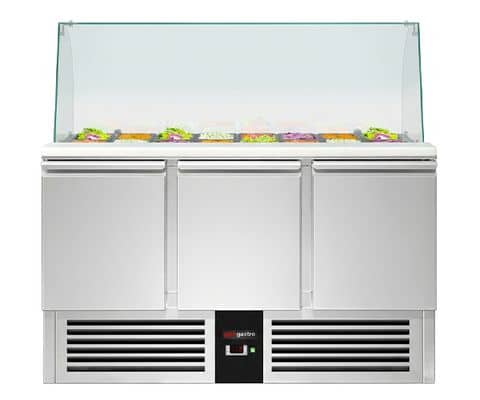
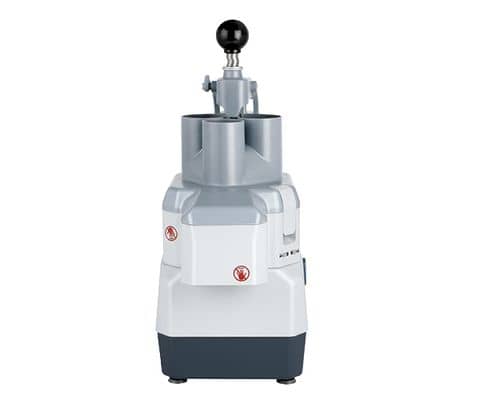
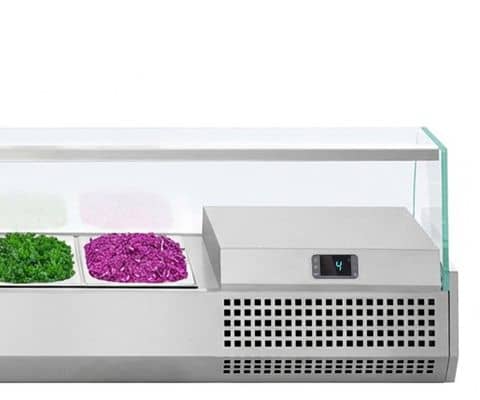
The production process begins long before baking. The type and quantity of dough determine which equipment is most suitable for the operation. Dough mixers are particularly helpful in situations where large quantities of dough are processed regularly with procedures that need to be as consistent as possible. Depending on the concept, dough sheeters, pizza presses, dough portioners, or dough rounders can simplify further steps in the process. In a artisanal pizzeria, on the other hand, more manual dough handling may be intentionally incorporated. Next, the organization of the topping station is key. Pizza refrigerated counters combine a work surface with refrigeration close to the production area. Ingredients such as cheese, vegetables, sauces, or prepared components remain readily available right where the pizza is assembled. Models with a refrigerated top and GN containers can further streamline access. This proximity is especially noticeable during the evening rush: Instead of having to go back and forth between the workstation and the storage freezer multiple times for each order, frequently used ingredients remain within easy reach.
The pizza oven must be suited to the actual throughput
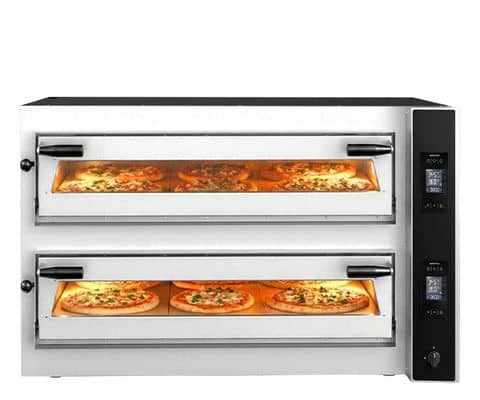
When choosing a pizza oven, it’s not just the maximum output that matters. What’s important is how many pizzas actually need to be produced during peak hours. A smaller pizzeria that primarily serves dine-in customers has different requirements than an establishment that handles restaurant orders, takeout, and delivery all at the same time. Oven size, the number of baking chambers, pizza size, and the service concept must therefore be tailored to the actual peak demand. Equally important are the on-site conditions. Available space, power requirements, ventilation, and the clearance area in front of the oven must all be considered during the planning phase. Pizza peels, baking sheets, or screens also require dedicated and easily accessible storage spaces to ensure the oven area remains organized even during peak hours.
Quick Checklist for Choosing the Right Pizzeria Equipment
Before putting together your equipment, here are five key operational factors to help guide you:
- Production volume: How many pizzas are produced during the busiest half-hour or full hour?
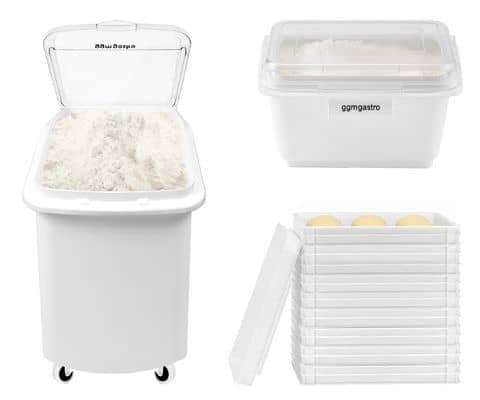
- Dough concept: What quantities of dough are prepared, and how are the dough pieces stored and processed?
- Pizza size: What diameters and varieties determine the oven, baking sheets, pizza peels, and work surfaces?
- Topping station: How many ingredients need to be refrigerated and immediately accessible at the same time?
- Distribution channels: Are pizzas mainly served, picked up, or delivered?
This allows you to select equipment more specifically based on actual operations rather than solely on individual technical specifications.
Short distances between cooling, loading, and baking
In a well-organized pizzeria, the most common work steps are located as close together as possible. Dough, flour, ingredients, the work surface, and the oven ideally form a clear production line. The available space also plays a role here. In small kitchens, compact solutions can combine multiple functions. For higher volumes, however, it’s worth separating dough preparation, the topping station, the baking area, and the serving area more clearly so that employees get in each other’s way less during peak hours. Sturdy stainless steel furniture provides additional work and storage surfaces and can be integrated into the preparation area. Sufficient space to move around, as well as surfaces and transitions that are easy to clean during daily operations, are crucial.
Plan for Takeout and Delivery Right from the Start
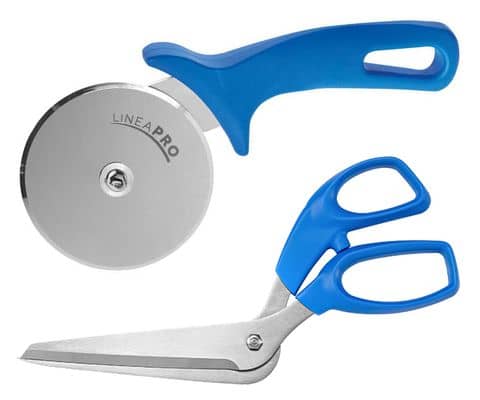
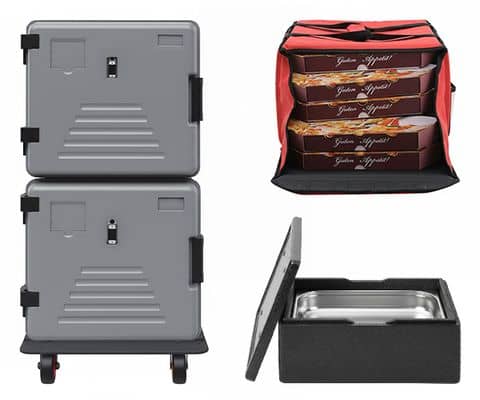
For many pizzerias today, the process doesn’t end at the counter serving the dining room. Takeout and delivery operations involve additional steps: cutting pizzas, checking them, packaging them, sorting orders, and preparing them for pickup. A dedicated packing area prevents boxes and ready-to-go orders from blocking the oven or preparation area. For delivery operations, thermal boxes & bags help keep the delivery route organizationally separate from the actual production area. The higher the percentage of takeout orders, the more important this pickup zone becomes. An additional sales channel can only function efficiently if packaging and pickup do not slow down production for restaurant guests.
Hygiene and cleaning are part of operational planning
Flour dust, dough residue, cheese, sauces, and frequently used work surfaces make regular cleaning an integral part of everyday life in a pizzeria. Easily accessible surfaces, organized containers, and clear work areas make daily routines easier. Washing capacity is also a key factor. Pizza plates, GN containers, utensils, and prep equipment must reliably return to circulation. Properly planned dishwashing technology helps ensure that cleaning doesn’t become a bottleneck between two peak service times.
Putting Together a Cost-Effective Pizza Restaurant Setup
Cost-effective equipment doesn’t have to be as extensive as possible. It must be tailored to the menu, order volume, floor space, and staffing structure. With a limited budget, priority is therefore usually given to the areas that support the core daily operations: dough preparation, production-related refrigeration, topping area, and sufficient oven capacity. Additional equipment can then be added as actual needs arise. The same applies to modernization. If orders are regularly piling up in front of the oven, the problem isn’t necessarily the pizza oven itself. Perhaps there isn’t enough refrigeration space at the topping station, the countertop is too small, or the prepared ingredients are stored in an inconvenient location. The most sensible investment is the one that reduces the actual bottleneck in operations.
Equip Your Pizzeria Professionally with GGM Gastro
Whether it’s a small pizzeria, an Italian restaurant that serves pizza, or an establishment with a high volume of takeout and delivery orders: The right equipment depends on production volume, workflows, and available space. GGM Gastro offers catering equipment ranging from pizza ovens and pizza refrigerated counters to dough processing and refrigeration, as well as work surfaces, accessories, and cleaning equipment. This allows you to select individual appliances or coordinated solutions for opening a new pizzeria, modernizing an existing one, or expanding an existing pizzeria.