


Kiosk and Gas Station Equipment for Professional Businesses
From chilled beverages to coffee and hot snacks to quick-service options: Well-designed kiosk and gas station equipment combines product display, refrigeration, and compact food service technology within a limited sales area. The choice of equipment depends primarily on the product range, customer traffic, available space, and the proportion of fresh or hot items offered. Guide to Kiosk & Gas Station Equipment »
Especially for kiosk & gas station












Setting Up a Kiosk or Gas Station: The Product Selection Determines the Equipment
Professional kiosk and gas station equipment includes appliances and sales areas for beverage refrigeration, product display, coffee preparation, hot and cold snacks, serving, and checkout. Depending on the location, the concept ranges from the classic kiosk with beverages and confectionery to a gas station store offering coffee, sandwiches, and hot meals. The main challenge often lies in combining different revenue streams within a compact space. Customers want to grab a drink from the cooler, order coffee, choose a hot snack, and then pay as quickly as possible. The equipment therefore works best when these pathways are logically connected. Self-service, staffed service, and the checkout should interfere with each other as little as possible, even during peak hours.
Place beverage coolers where they are sold
Chilled beverages are a core part of the product lineup for many kiosks and gas station stores. Beverage refrigerators keep bottles and cans visible and easily accessible. When planning, in addition to the refrigeration capacity, the product mix is particularly important. Water, soft drinks, energy drinks, and other beverages require sufficient display space without having to rearrange large sections of the sales area every time they are restocked. A large number of different items does not automatically result in a better sales area. What matters most is that high-demand beverages are clearly visible and readily available, and that stock can be replenished quickly. The layout also influences the customer flow. Self-service refrigerated displays can be arranged so that customers select products and then proceed toward the checkout, rather than crossing paths with oncoming customers.
Wall-mounted refrigeration for a visible selection of fresh and convenience items
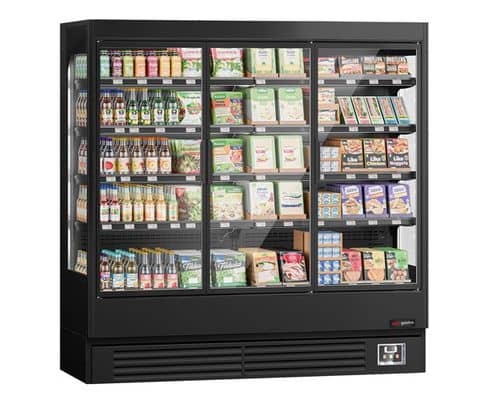
In addition to traditional beverage refrigerators, wall-mounted refrigeration can create larger refrigerated sales areas. Depending on the product assortment, these areas can be used to display beverages, prepared snacks, or other chilled products, for example. The advantage lies in the combination of a clear product overview and direct customer access. The required space depends on the product assortment and turnover. A large refrigerated display is particularly worthwhile where a correspondingly large number of products are regularly sold and restocked. Restocking must also be taken into account. Employees need the simplest possible route between the stockroom and the sales floor without constantly blocking the main customer aisle while restocking. The display area and stockroom should therefore be planned together.
Organize coffee as a separate revenue stream
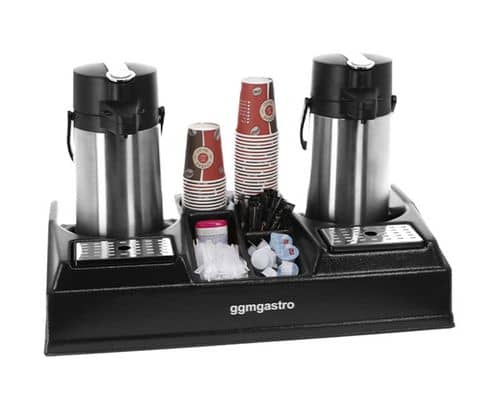
Coffee is an integral part of daily operations at many kiosks and gas stations. Fully automatic coffee machines can serve as a compact brewing station and provide a variety of coffee beverages through a relatively standardized process. However, a coffee station involves more than just the machine and beans. To-go cups or mugs, lids, sugar, milk or milk alternatives, stir sticks, and napkins all require clearly defined storage spaces. Water connections, water treatment, and cleaning are also part of the technical planning. This aspect is particularly important when there is a high volume of coffee-to-go orders. A customer who only wants a cup of coffee should, if possible, not block the entire snack or checkout area. A well-organized coffee station therefore combines short service paths with a clear handoff and sufficient space for consumables.
Quick Check for the Right Kiosk and Gas Station Equipment
Five points can help narrow down your actual needs:
- Product assortment: How important are beverages, coffee, hot snacks, and refrigerated convenience products?
- Customer traffic: How many sales occur during peak hours?
- Fresh food offerings: Which products are heated, prepared, or kept warm on-site?
- Sales area: How can self-service, food pickup, and checkout be arranged to minimize walking distances?
- Restocking: Where are refrigerated and non-refrigerated stock located, and how quickly can they be brought to the sales area?
These factors highlight which equipment plays a key role in daily operations and which technology is needed only for specific product categories.
Compact Production of Hot Dogs and Hot Snacks
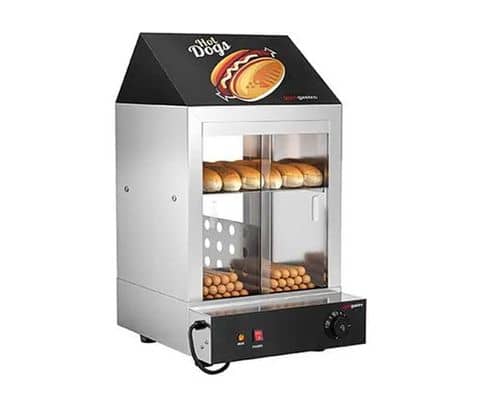
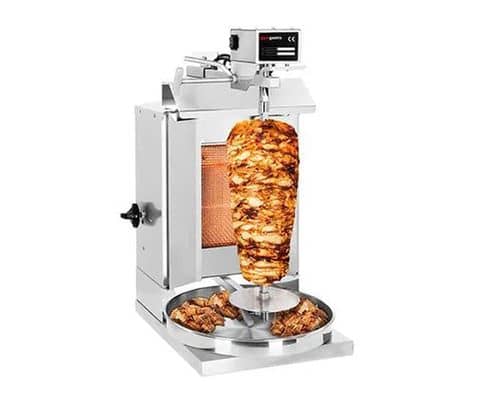
Hot snacks can expand the classic product lineup to include items served right on the spot. Hot dog machines, for example, consolidate the preparation of typical hot dog ingredients into a relatively compact space. Depending on the concept, contact grills for sandwiches or other suitable snacks can also be used. A simple production workflow is key here. Ingredients, packaging, and equipment should be available at the same station whenever possible. Whenever expanding the snack menu, it’s worth asking how many additional steps are required. A product that can be prepared quickly using existing ingredients places less strain on the workflow than a menu that requires several separate production stations. Compact equipment therefore remains a key factor, especially for kiosks and gas stations.
Integrate high-speed ovens to expand the snack menu
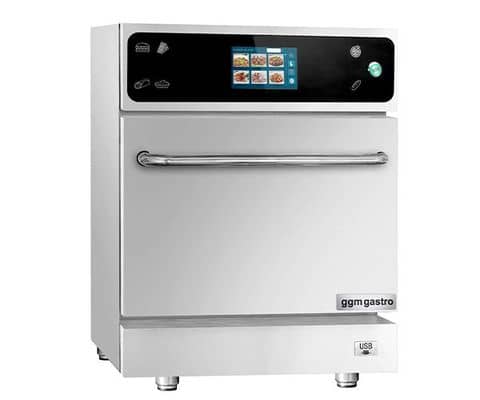
Speed ovens can, depending on the operation, facilitate the quick preparation or completion of various suitable snack items. This allows businesses to offer additional food items without having to set up a full restaurant kitchen. The product lineup, required capacity, and the number of concurrent orders are key factors in making this selection. A location with heavy breakfast or lunch traffic has different requirements than a small kiosk that only occasionally sells hot snacks. The workspace around the oven must also be factored into the planning. Products must be removed, prepared if necessary, heated, and then packaged or served. If there is no free counter space available for this, the bottleneck shifts from the appliance’s speed to the workstation.
Use heated display cases for quick-service takeout items
Some snack products can be prepared for short sales periods and displayed directly for customers to choose from. Heated display cases combine visible product presentation with temperature-controlled storage of suitable foods. The main advantage lies in quick service: Customers see the selection immediately, and the product does not have to be completely remade for every order. However, balancing production volume with actual sales remains crucial. Preparing too large a quantity can result in unnecessary downtime, while too small a stock requires frequent replenishment. Especially when there are clear patterns of customer traffic—for example, in the morning, at lunchtime, or in the early evening—restocking can be adjusted to match expected sales.
Display Chilled Snacks in Plain View
Sandwiches, desserts, or other chilled takeout items can be displayed compactly in the immediate sales area using countertop refrigerated display cases in a compact manner right in the sales area. Especially at the register or in the snack pickup area, visibility can encourage additional impulse purchases. The display case should match the actual product assortment. A solution that is too large takes up valuable space and must be stocked accordingly. A display area that is too small, on the other hand, leads to frequent restocking. The operating logic also plays a role. In a self-service setting, customers need a different access method than they would with a display case from which employees retrieve the merchandise. The decision regarding the specific design therefore depends on the product, location, and desired sales process.
Using Self-Service Refrigerated and Frozen Food Aisles
For larger retail spaces, refrigerated and frozen food islands can provide additional self-service space. They are particularly well-suited for areas where customers are guided through the sales floor and select products on their own. Depending on the product range, they can complement other refrigerated display units. Their placement within the space is crucial. Large islands significantly affect customer flow and must not block the checkout area, the entrance, or heavily trafficked shelves. Restocking procedures should also be taken into account during the planning phase. If product cartons block the entire customer aisle during restocking, sales space can quickly turn into a logistical bottleneck. Effective space planning therefore combines product visibility with sufficient room for customers and staff to move around.
Plan to offer slushies and seasonal drinks as a side business
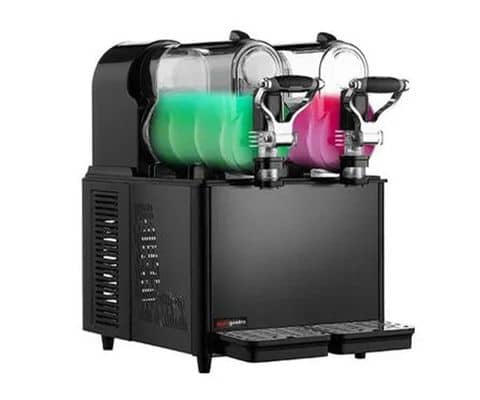
Slush machines can create an additional, visible beverage offering, especially at locations with sufficient demand. These machines operate directly in the sales area and, in addition to their footprint, require cups, lids, straws, and other consumables. Cleaning and regular restocking are also necessary. Seasonal add-ons therefore work best when they are assigned a dedicated station rather than being placed on already heavily used work surfaces. The capacity should also match expected sales volume. A machine that is barely used for much of the year takes up space permanently. Conversely, a solution that is too small can cause frequent restocking or production interruptions during seasonal peaks.
Present feature articles in a clear, uncluttered way
Kiosks and gas stations don’t rely solely on food and beverage products. Candy and other impulse-purchase items are often part of the immediate sales environment. Stackable candy boxes and other compact display solutions can help organize products so they’re visible and within easy reach. However, it’s wise to exercise restraint, especially in the checkout area. Too many displays, boxes, and additional items can clutter the space and hinder the actual checkout process. A well-designed sales area allows customers to quickly spot products without obstructing the path to the register. Employees also need access to work supplies, receipts, packaging, and, if necessary, the snack station. Product presentation and operational functionality must therefore be in harmony.
Viewing the Cash Register as the Pacing Force of the Sales Floor
At kiosks and gas stations, many processes converge at a single point: Customers need to pay for self-service beverages, coffee and snack orders, and other store items. The point-of-sale system thus quickly becomes the central hub. Point-of-Sale Systems should be integrated into the sales counter in such a way that employees have to make as few unnecessary trips as possible between the register, the coffee station, and the snack area. During peak hours, it’s also important to consider where customers who have already paid can pick up their products. If someone is waiting for a hot snack right in front of the register, it can block the next customer from checking out. A small, separate pickup area can therefore significantly streamline the flow of sales in businesses with significant snack sales.
Combining self-service and staffed service in a practical way
Many kiosk and gas station concepts combine self-service with individual staffed areas. Customers select their own beverages and packaged goods, while coffee or hot snacks may be prepared by staff. This mix works particularly well when the customer flow remains clear. Customers take the products they’ve selected to the register, while ordered food items are routed, whenever possible, through a clear preparation and pickup point. Problems arise when waiting customers stand in front of refrigerators, the checkout, or the entrance, thereby blocking other customers. Space planning is therefore not just a matter of product presentation; it directly influences how many customers can be served at the same time.
Organize Restocking Based on Sales Frequency
A well-stocked store needs a constant supply of new merchandise. Beverage refrigerators, display cases, candy, coffee ingredients, and snack stations are depleted at varying rates throughout the day. High-demand items require reserves that are easily accessible. When it comes to refrigeration, it’s worth separating sales stock from inventory. In the customer area, only the quantity that needs to be visible and immediately available is displayed; additional merchandise remains neatly organized in reserve. The same applies to cups, packaging, and consumables. Stacking all supplies directly at the workstation wastes valuable sales and traffic space. An organized restocking supply, on the other hand, provides clarity and makes inventory control easier.
Ensure Cleaning Can Be Performed Despite High Customer Traffic
Coffee, beverages, and hot snacks each have different cleaning requirements. Coffee grounds, spilled drinks, crumbs, and food scraps must be able to be removed even while the business is open. Equipment should therefore be positioned so that surfaces requiring frequent cleaning remain accessible. Consumables and cleaning supplies need designated storage areas where they won’t get mixed up with food or clean dishes. Coffee stations, heated display cases, and snack areas, in particular, require regular cleaning routines. The sales floor itself should also be easy to keep clean as quickly as possible. When customer traffic is high, a workstation that must be completely cleared out all the time is impractical. Good organization therefore integrates sales and cleaning, rather than combining the two only after closing time.
Prioritizing Kiosk and Gas Station Equipment Based on Cost-Effectiveness
Not every location requires the same level of technical sophistication. For a traditional kiosk, beverage refrigeration, product display, and the register may be the most important areas. A gas station store with a strong coffee-to-go business also relies on a high-performance coffee station. Where there is regular demand for hot snacks, hot dog equipment, contact grills, rapid-cook ovens, or heated display cases become increasingly important. Investments can therefore be sensibly prioritized based on the revenue share of the respective product groups. When modernizing, it also helps to focus on the actual bottleneck. Long lines do not automatically mean that a second checkout system is needed. Perhaps a large portion of customers is simply waiting for coffee, packaging is missing in the snack area, or the path between food preparation and pickup crosses the checkout zone. A suitable investment addresses precisely where daily friction occurs.
Professionally Equip Your Kiosk & Gas Station with GGM Gastro
From compact kiosks to convenience stores to gas stations with an extensive selection of coffee and snacks, the product assortment, sales area, and customer traffic vary significantly. The appropriate equipment is therefore based on the beverage and fresh food offerings, peak traffic, the proportion of self-service, and the existing workflow. GGM Gastro offers a range of equipment for these needs, from beverage refrigerators and wall-mounted coolers to fully automatic coffee machines, hot dog equipment, and speed ovens, as well as heated and refrigerated display cases, slush machines, sales counters, and point-of-sale systems. This allows both new sales areas and individual stations to be configured as needed during modernization or product line expansion.