


Pastry and Chocolate Shop Supplies for Professional Businesses
From mixing equipment and chocolate processing to glazing, finishing, and refrigerated display: Professional pastry and chocolate shop supplies combine precise processing, controlled workflows, and an appealing product presentation. The choice of equipment depends primarily on the product range, production volume, level of craftsmanship, and the balance between production and sales. Guide to Pastry & Chocolaterie Supplies »
Especially for confectionery & chocolaterie












Setting Up a Pastry Shop and Chocolaterie: The Product Line Determines the Workspace
Professional pastry and chocolate shop supplies include machines, work surfaces, and equipment for the production, processing, refrigeration, finishing, and presentation of cakes, pralines, chocolate products, creams, and other fine baked goods and pastries. The requirements vary significantly. A traditional pastry shop specializing in cakes, tarts, and fine pastries has different production priorities than a chocolate shop specializing in pralines, chocolate bars, and coated specialties. Businesses that combine both areas, in turn, need a flexible workflow.
The starting point for planning is therefore the product range: Which products are made daily? Which processes are repeated particularly frequently? Where are precise quantities and reproducible work steps important? And which products require refrigeration or special presentation after production? These answers form the basis for selecting equipment that fits the actual production model.
Stirring, whipping, and mixing as the basis for many products
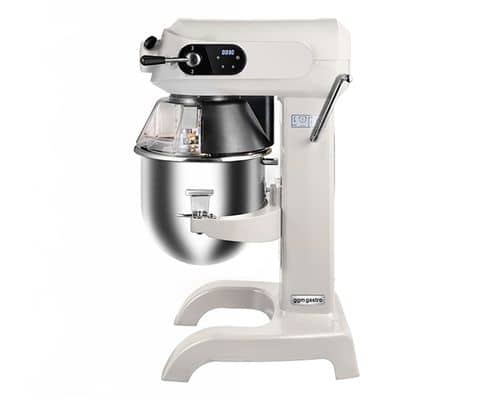
Creams, batters, fillings, doughs, and other basic products are part of the daily workflow at many pastry shops. Planetary mixers can assist with various stirring, mixing, and whipping processes. When selecting a machine, in addition to bowl size, the quantities processed on a regular basis and the type of products play a key role. A machine designed for small batches offers different advantages than a larger solution for regularly recurring production volumes, especially when recipes change frequently. The organization around the machine is also important. Raw ingredients, mixing bowls, tools, and the work surfaces needed afterward should be located as close together as possible. If finished mixtures have to be transported over long distances after each step or if work surfaces must first be cleared, this creates unnecessary friction right from the start of production.
Melt the chocolate and continue processing it carefully
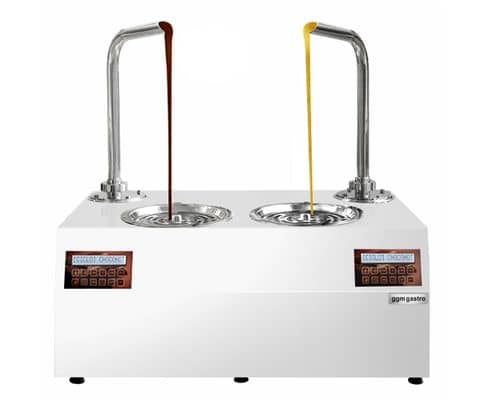
In a chocolate shop and in many pastry shops, chocolate production is handled in a separate area. Chocolate melting machines make it possible to keep chocolate in liquid form for further processing steps. Depending on the product range, it can then be used, for example, for coatings, fillings, decorations, or other chocolate products. The required capacity is closely linked to batch sizes. A small business with frequently changing varieties processes different quantities than a chocolate shop that regularly produces specific products in larger batches. Having multiple chocolate varieties can also change the workflow. If different varieties are processed simultaneously, containers, tools, and work surfaces must be clearly assigned. A well-organized chocolate production area reduces changeovers, search times, and unnecessary transfer between individual production steps.
Schedule tempering as a separate production step
Chocolate Tempering Machines go beyond simply melting chocolate and support a controlled processing method for chocolate. Tempering can be a crucial step, particularly when making pralines, coatings, chocolate bars, or decorative chocolate elements. This technique should therefore not be viewed in isolation. Tempering is preceded by preparation and followed by steps such as molding, coating, portioning, or other processing steps. The workspace must therefore have sufficient room for raw materials, finished chocolate, molds, and further processing. The higher the production volume, the more important continuous process control becomes. Models with an outlet or integrated processing elements may be more suitable for certain production volumes than compact tempering solutions. The appropriate technology therefore depends on the actual product range and the number of batches processed regularly.
Quick Check for the Right Pastry and Chocolate Shop Supplies
Here are five points to help narrow down the equipment you need:
- Product Line: Is the focus on cakes, pastries, pralines, chocolate products, or a mixed selection?
- Production volume: What batches and quantities are produced daily or during peak times?
- Processing: Which steps—such as mixing, tempering, cutting, glazing, or smoothing—are repeated particularly frequently?
- Refrigeration requirements: Which raw materials, intermediate products, and finished goods must be stored or displayed at controlled temperatures?
- Sales model: Is production primarily made-to-order, or is there a permanently stocked sales and cake counter?
These factors indicate which machines form the core of production and where specialized equipment supports a regularly recurring work process.
Aligning Chocolate Production with Consistent Workflows
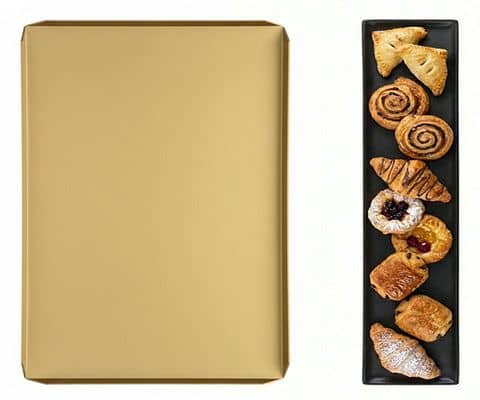
Making pralines involves several precise steps: preparing fillings, working with chocolate, shaping or cutting, coating, and finally decorating or finishing. Praline cutters and cutting frames can be used whenever products or batches need to be divided in a reproducible manner. The benefits are particularly evident with recurring products and larger production runs. If each batch must be measured and cut individually by hand, the workload increases significantly as production volume rises. In addition to the actual cutting process, the workstation requires sufficient counter space for raw materials, cut pieces, and subsequent processing. Trays, plates, or containers should also be organized so that products can be moved directly to the next station after cutting. A continuous production line prevents delicate products from having to be constantly moved between individual work steps.
Design Glazing and Coating as a Separate Finishing Area
In pastry and chocolate products, the finish directly affects the visible quality of the product. Glazing Equipment can support a structured coating or glazing process for specific product lines. Especially for products that are produced on a regular basis, this can create a dedicated work area for finishing and decoration. However, the station requires more than just the actual equipment. Products must be prepared, processed, then set aside, and, if necessary, further decorated or cooled. Excess glaze and the cleaning of components that come into contact with the products are also part of the process. A work surface that is too small can quickly become a bottleneck here: finished products wait for free trays while the next batch is already ready to be processed. That is why processing capacity and available storage space always go hand in hand.
Smoothing and Decorating Cakes with Ample Workspace
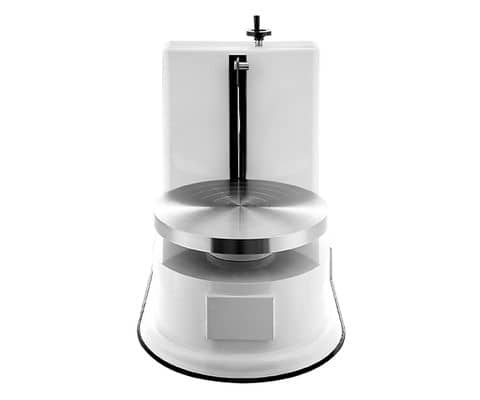
Cakes and elaborately decorated pastries often require more manual workspace than traditional mass-produced items. Cake levelers can assist with certain repetitive finishing steps. In addition, turntables, spatulas, piping bags, tools, frostings, and decorations remain part of the workspace. A good decorating station therefore offers sufficient free space while also providing quick access to the necessary ingredients and tools. This is precisely where the difference from traditional bakery production becomes apparent: The economic factor lies not only in high production volumes but also in the ability to perform complex manual work in an organized manner and without unnecessary interruptions. If decoration, temporary storage, and packaging are all organized within the same small space, you’ll constantly have to rearrange things. Separate functional areas create a calmer environment for each individual step of the process.
Produce creams and fillings tailored to your own production
Creams, nut pastes, fillings, and spreadable products can make up a significant portion of the product line. Creaming machines and oil mills expand production capacity in facilities where such products are regularly made in-house. This can be particularly relevant, for example, for businesses that produce a higher proportion of their fillings or nut products in-house. The investment depends largely on the actual volume. A specialized machine that is used only occasionally takes up floor space and strains the budget. With regular use, however, the same equipment can handle a key production step. The question, therefore, is not how many different products can theoretically be produced, but which processes in one’s own product line occur frequently enough to justify a dedicated workstation.
Tailoring Baking Techniques to High-Quality Production
In addition to creams and chocolate, pastry shops often produce cake bases, tarts, fine pastries, or other baked goods. Combi-Ovens for Bakeries can handle various baking and cooking processes depending on the production concept. The specific product range, the sizes used, and the required capacity are decisive factors. Here, too, the oven should not be sized in isolation. If mixing and preparation areas can produce significantly larger batches than the baking equipment can accommodate, a backlog will form in front of the oven. If, on the other hand, the oven is significantly larger than the quantity regularly prepared, capacity and floor space remain unused. Preparation, baking capacity, and subsequent cooling or cooling area should therefore be coordinated with the same production rhythm.
Distinguish between cooling of raw materials, intermediate products, and finished goods
Refrigeration serves several different purposes in pastry shops and chocolate shops. Perishable ingredients, creams, and other components require storage space. Semi-finished products may need to be refrigerated between individual production steps. Finished cakes, desserts, and other goods, in turn, require space until they are sold or picked up. This often results in the need for more than one refrigeration zone. Large storage reserves do not need to be located directly next to the decoration workstation. Current production needs, on the other hand, should be accessible with the shortest possible distances. A well-designed refrigeration layout reduces unnecessary opening, searching, and rearranging. At the same time, finished products remain organizationally separate from raw materials and ongoing production. Even with limited space, it is therefore worthwhile to consider refrigeration capacity not only in terms of liters but also in terms of its function within the production process.
Cake display cases combine protection, refrigeration, and presentation
The sales area is where artisanal production and product presentation come together. Cake Counters can be used to display cakes, pastries, desserts, and other suitable items in a visible and refrigerated manner. Factors to consider when selecting a display case include available floor space, product range, and projected sales volume. More display space does not automatically mean better sales. An oversized display case requires a correspondingly larger quantity of merchandise, ties up floor space, and increases the daily effort required for stocking and maintenance. A display case that is too small, on the other hand, must be restocked frequently or fails to adequately showcase the product range. The appropriate size is therefore based on the quantity that is actually to be displayed. Access from the service side is also important. Employees should be able to retrieve products and then package them without having to cross multiple work areas for every order.
Organize sales and contract manufacturing separately
Many pastry shops and chocolate shops combine walk-in counter sales with custom orders. Birthday cakes, wedding cakes, boxes of chocolates, and other custom orders often follow a different production process than the standard assortment available daily. When it comes to store layout, this means taking both areas into account. The standard assortment must be restocked regularly and made available at the sales counter. Custom-made products, on the other hand, sometimes require longer lead times, additional refrigeration space, or separate areas for elaborate finishing touches. If both types of production are constantly competing for the same space, particularly labor-intensive orders can disrupt normal daily operations. Clear organization of time and space helps to integrate custom production with ongoing sales.
Precise Weighing and Portioning as Part of Production Quality
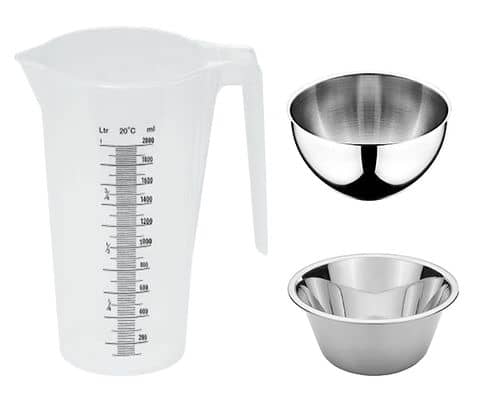
When it comes to fine pastries and chocolate products, precise measurements play a crucial role in many steps of the production process. Digital kitchen scales facilitate the consistent portioning of raw materials, mixtures, or individual product components. Here, too, the scale’s location in the workspace is crucial. A scale that must constantly be moved between different stations quickly becomes a shared bottleneck. When there are multiple parallel production areas, clearly designated weighing stations can be more efficient. Mixing bowls, measuring cups, and other tools should also be distributed according to their intended use. This creates a production environment where recurring recipes and portions can be prepared with as little time spent searching for or setting up equipment as possible.
Use stainless steel furniture to create uncluttered production areas
Stainless steel furniture can provide work surfaces, shelving, and storage space in various production areas. However, not every workstation is the same. Mixing and preparation areas require space for containers and raw materials. Chocolate processing requires suitable shelving for molds and products. When decorating, having as much uncluttered workspace as possible is particularly valuable. Instead of consolidating all work steps onto one large shared surface, clearly defined workstations can simplify organization. It remains important to ensure sufficient space to move around. More tables do not automatically mean more usable workspace if employees get in each other’s way between tightly spaced furniture and machines. Good space planning therefore keeps frequently used processes close together while also creating enough room for cleaning and handoffs.
Plan for Hygiene and Cleaning When Working with Sugar, Fat, and Chocolate
Pastry and chocolate production comes with its own cleaning requirements. Creams, chocolate, glazes, dough, nuts, and sugar leave various types of residue on machines, tools, and work surfaces. Areas that come into contact with products must therefore be easily accessible. Daily cleaning plays a particularly important role in reducing the workload when it comes to mixers, chocolate-making equipment, and glazing machines. Rinsing & Cleaning should therefore not be left until the end of the planning process but integrated into the ongoing production process. Bowls, tools, molds, and containers must be made available again between batches. Without a clear return process, used equipment accumulates on the production floors. A defined path from use through cleaning and drying back to the workstation keeps the actual production process more organized.
Size equipment based on production peaks rather than just daily output
Pastry shops also experience peak demand periods. Production volumes can rise significantly before holidays, weddings, seasonal promotions, or large orders. In such cases, bottlenecks often occur not just at a single machine. High mixing capacity is of little use if the subsequent processing or cooling cannot keep up. A high-performance tempering machine is of limited help if there is insufficient space for molds and finished products. That is why capacity is viewed as the entire process chain. For regularly recurring peaks, maintaining a certain reserve can be sensible. On the other hand, designing equipment and floor space exclusively for rare peak volumes can tie up unnecessary capital and space. The goal is to have equipment that efficiently supports normal day-to-day production and can handle typical peaks in a controlled manner.
Prioritizing Pastry and Chocolate Shop Supplies Based on Cost-Effectiveness
When opening a new shop, the initial focus is on the work processes required for the core product line on a daily basis. For a traditional pastry shop, mixing equipment, baking equipment, refrigeration, work surfaces, and product display can be key investments. A chocolate shop may prioritize melting and tempering equipment, praline processing, and suitable finishing and work areas from the outset. Specialized equipment such as glazing machines, cream machines, or automated processing becomes increasingly important where a particular production step regularly consumes a significant amount of time. Therefore, when modernizing, the first step is to identify the actual bottleneck. If production takes too long, it doesn’t necessarily mean a larger main machine is missing. Perhaps portioning requires too much manual labor, finished batches are waiting for cooling space, or the finishing area is too small. The economically sound investment reduces precisely these recurring bottlenecks.
Professional Equipment for Pastry Shops & Chocolateries from GGM Gastro
From a traditional pastry shop offering cakes and fine pastries to a chocolaterie specializing in pralines and in-house chocolate production, the product range, production volume, and work processes differ significantly. The right equipment is therefore determined by the actual level of processing, daily batch sizes, cooling requirements, and the organization of finishing and sales. GGM Gastro offers professional pastry and chocolate shop supplies for this purpose, ranging from planetary mixers and bakery combi-steamers to chocolate melting and tempering machines, as well as praline cutters, glazing machines, cake levelers, and cake display counters. This allows for the targeted configuration of both central production areas for a new opening and individual workstations during modernization, product line expansion, or increases in production volumes.