


Insect Exterminators for the Food Service and Commercial Sectors
Insect killers help food service establishments control and reduce flying insects in kitchens, sales areas, storage areas, and production areas. Depending on the size of the room and the location, there are various coverage areas, designs, and trapping systems to choose from. Insect Killer Guide »
Product material
Width
Depth
Height
Price
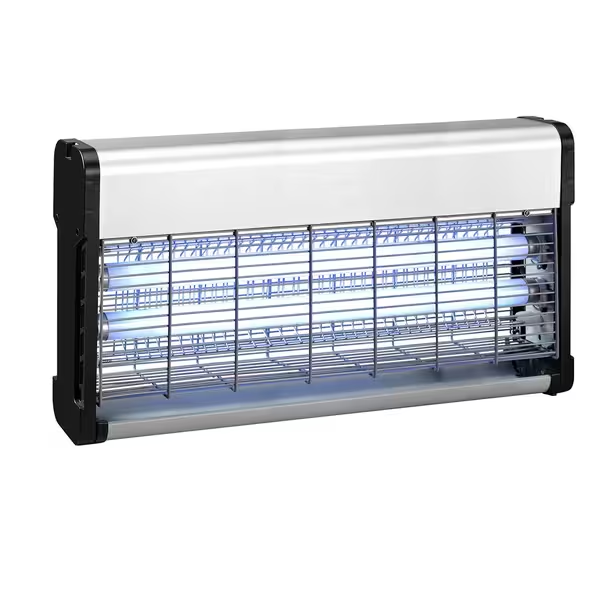
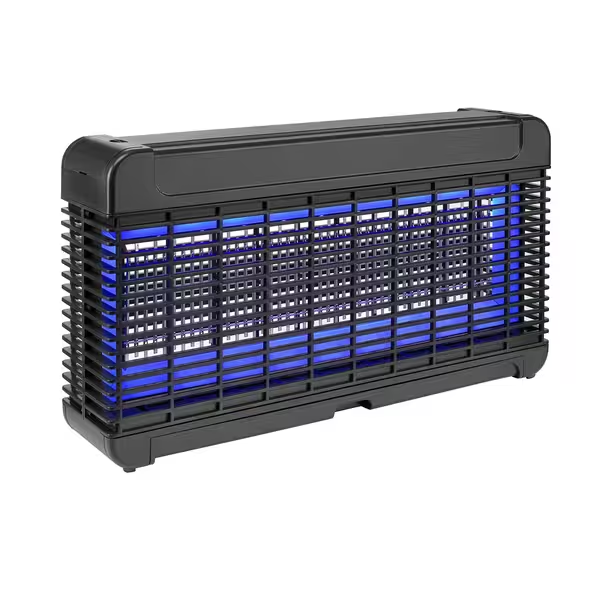
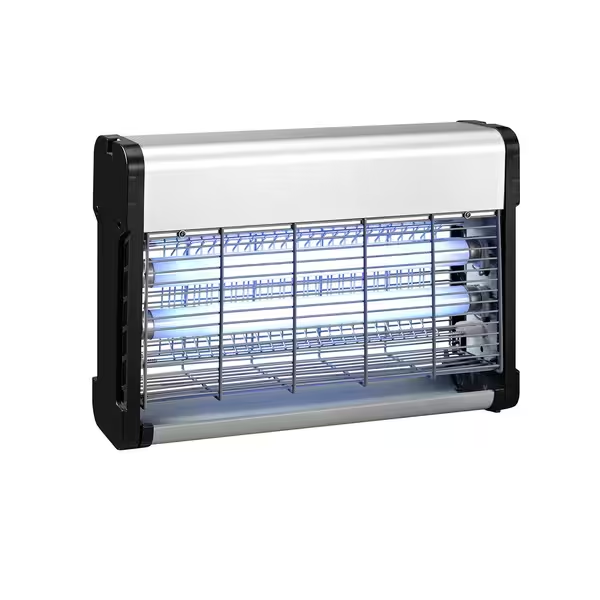
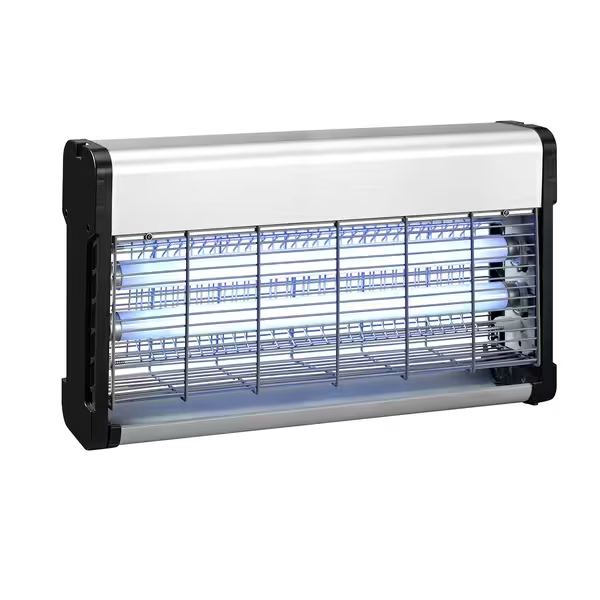
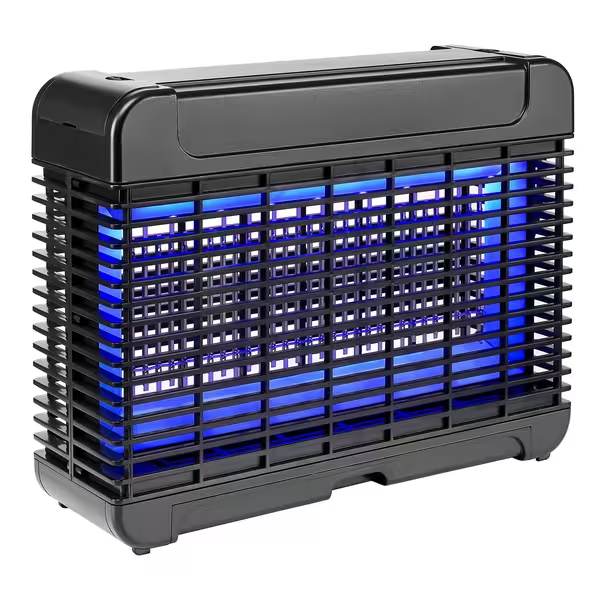
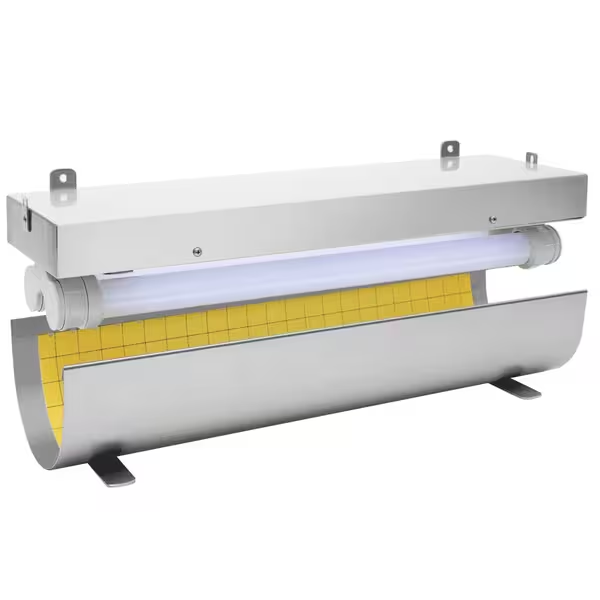
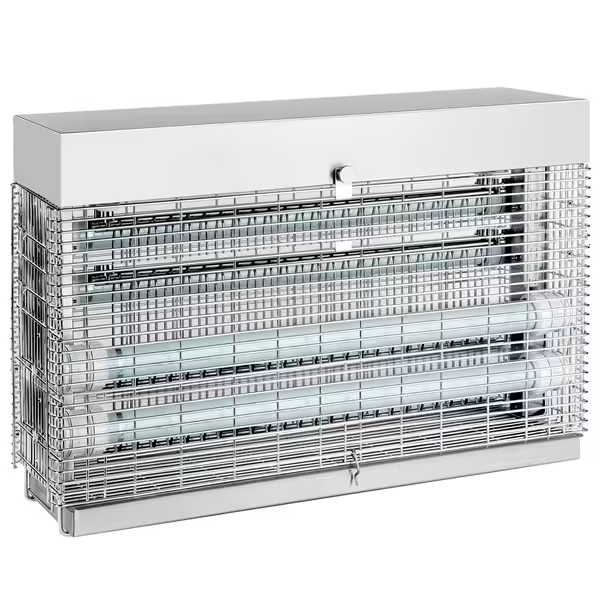
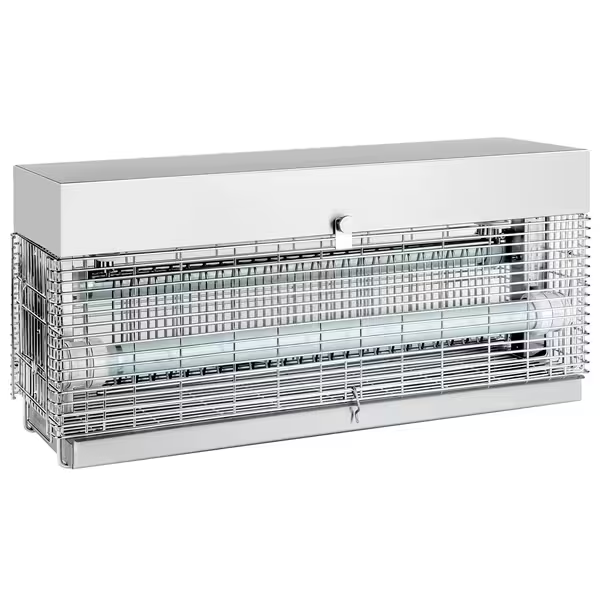
Insect Control in a Professional Hygiene Plan
Insect killers are electrical devices used to control flying insects in commercial indoor areas. In the restaurant industry, hotel industry, bakeries, butcher shops, cafeterias, or production kitchens, they complement operational measures such as cleaning, enclosed storage, and regulated waste disposal procedures.
Integration into the actual work area is crucial. A unit in the prep area has different requirements than a solution near the counter or dining area. In sensitive areas, therefore, it is not only range and performance that matter, but also the capture principle, noise levels, maintenance access, and a location that does not interfere with either food or traffic flow.
Select the appropriate operating range, power rating, and design
The most important factor in selecting a unit is its coverage area. The product line covers compact areas of about 10–20 m² as well as larger areas up to 150–300 m². Depending on the model, the lamp configuration ranges from 1 x 9 watts to 4 x 20 watts. However, larger isn’t necessarily better: The fixture should be suited to the actual room size, the room layout, and the location where it will be used.
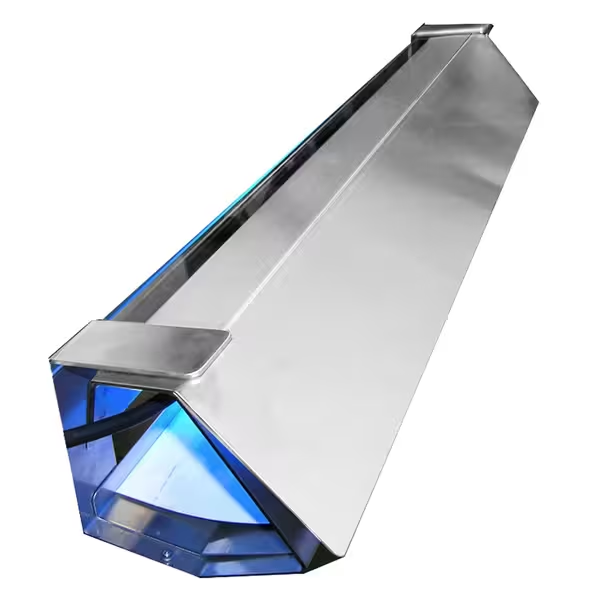
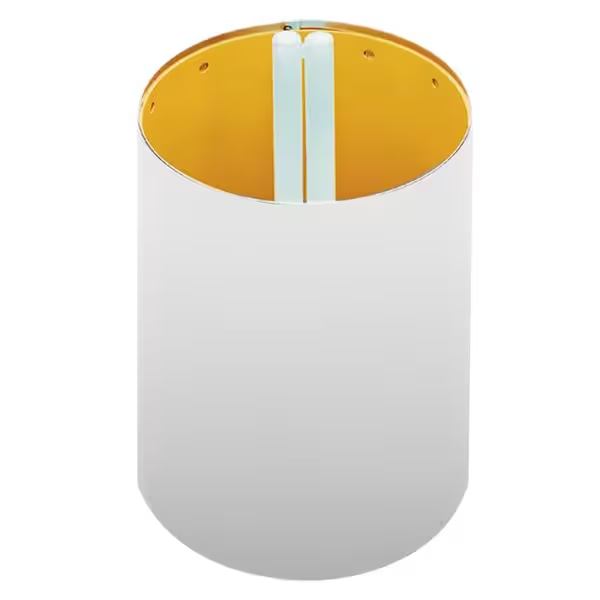
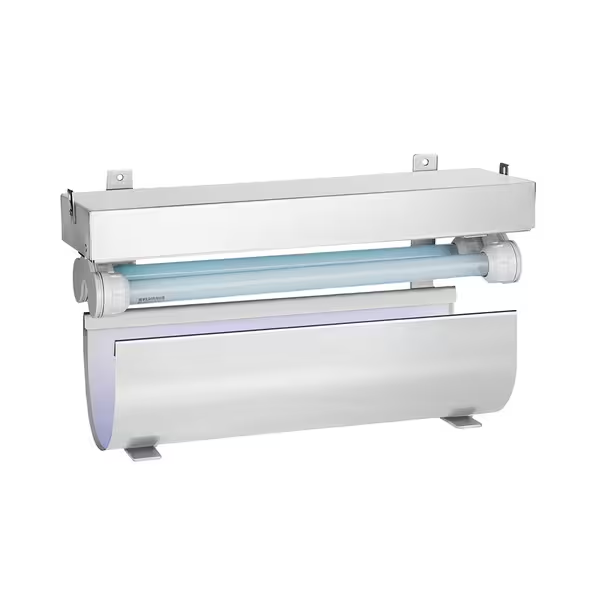
The design also influences how the unit is used. Options include round and half-shell units, adhesive-mounted units, countertop built-in units, as well as floor-standing and ceiling-mounted units. For example, a compact countertop unit measuring approximately 570 x 120 x 120 mm can be integrated differently than a larger freestanding or ceiling-mounted unit measuring approximately 680 x 190 x 500 mm.
Integrating Location and Assembly into the Workflow
Insect killers should be placed where their attractant effect can be put to good use without causing new disturbances. Direct competition from strong light sources, unfavorable sightlines to the outdoors, or installation directly above open food items can make the placement unsuitable. For permanent installations, check dimensions, accessible outlets, and cleaning access in advance; many units operate on 230 V.
In small kitchens, every wall and countertop space counts. A wall- or ceiling-mounted unit can free up counter space, while a countertop-mounted unit in areas near the sales floor can be more discreet. In larger production areas, however, adequate coverage is more important than the smallest possible design.
Hygiene, Cleaning, and Durability in Everyday Life
Stainless steel housings are ideal for everyday use in the food service industry because their sturdy, smooth surfaces make regular cleaning easier. Depending on the model, flying insects are attracted by UV light and then captured using adhesive film or a collection solution. Adhesive film must be checked and replaced, and collection trays must be emptied and cleaned regularly.
In areas exposed to moisture or splashing water, special attention should also be paid to the specified protection rating. Some models, for example, have an IP54 rating. It is also important that consumable parts and light sources remain accessible so that maintenance does not require unnecessary disassembly.
Quick Checklist for Selection
-
Adjust the coverage area to the room size and actual usage.
-
Select the filtration method based on hygiene requirements and the installation location.
-
Determine in advance whether the unit will be mounted on a wall, ceiling, floor, or counter.
-
Check the dimensions, 230-V connection, and protection rating at the planned location.
-
Include replacement of the adhesive film and UV tubes, as well as cleaning of the collection tray, in your routine.
Combining Insect Exterminators in a Cost-Effective and Practical Way
A suitable insect killer supports a consistent hygiene process, but it is no substitute for proper operational organization. It is particularly useful as part of a comprehensive approach that includes cleaning procedures from the Rinsing & Cleaning category, easily accessible stainless steel work surfaces, and proper ventilation. In this way, in addition to insect control, potential causes such as leftover food residue, hard-to-reach areas, or unnecessary heat and odor buildup are also taken into account.
Proper sizing is particularly important from an economic standpoint. A unit that is too small may not adequately cover the intended area; an unnecessarily large model increases the purchase cost, space requirements, and ongoing energy consumption.
When making an investment, it’s also worth considering the product’s lifecycle. Factors such as the purchase price and wattage are important, but so are the availability of adhesive films or light bulbs, the time required for cleaning, and ease of access for maintenance. For businesses with long operating hours or multiple locations, a standardized approach to equipment and consumables is helpful: it simplifies inspections, reordering, and employee training. When replacing equipment, a readily available, appropriately sized solution can shorten the duration of temporary operational workarounds.
Choosing an Insect Killer for Professional Use
The right solution depends on the area of application, trapping method, installation, protection rating, and maintenance requirements. By balancing these factors with the size of the space and operational procedures, you can achieve insect control that integrates seamlessly into kitchens, warehouses, counters, or production areas and effectively supports daily hygiene practices.