


Dish Towels for the Food Service Industry and Commercial Kitchens
Dish towels help dry dishes, silverware, and kitchen utensils in professional dishwashing and kitchen settings. Durable cotton designs and convenient multi-packs make it easy to change them regularly and ensure a reliable supply of towels during daily operations. Dish Towel Guide »
Color
Width
Depth
Price
Dish towels as an integral part of professional workflows
Dish towels are reusable towels used to dry clean dishes, silverware, and kitchen utensils. In restaurants, fast-food joints, hotels, cafés, cafeterias, and catering companies, they support the processes involved in washing, drying, and preparing dishes.
Their importance is particularly evident where dishes need to be made available quickly. During the lunch or dinner rush, operations must not come to a standstill because clean dish towels are missing or are already heavily saturated. A well-planned rotation system helps ensure that used dish towels are replaced in a timely manner and that work in the dishwashing area continues smoothly.
Even in smaller kitchens, having towels stored within easy reach is important. Folded dish towels can be stored in a space-saving manner in drawers, shelf compartments, or closed storage areas next to the dishwashing equipment. This keeps used and fresh towels clearly separated.
Choose the right cotton, size, and style
When it comes to dish towels, the material, dimensions, and workmanship determine how well they fit into your daily routine. Cotton is grippy, absorbent, and suitable for frequent use. It reliably absorbs moisture and, with proper care, can be reused regularly.
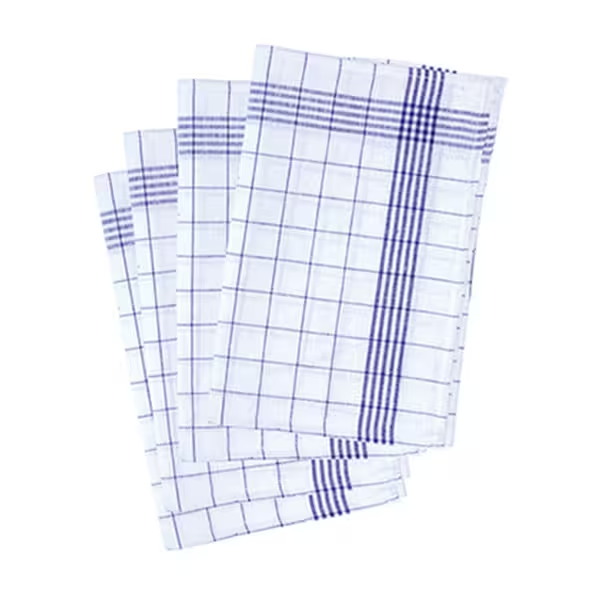
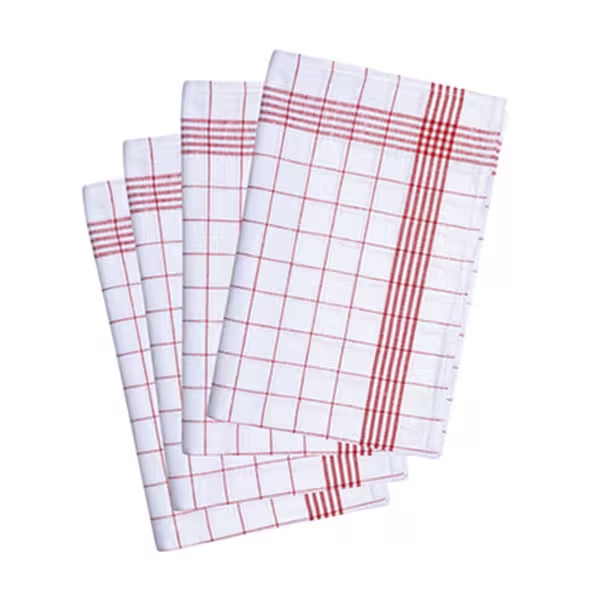
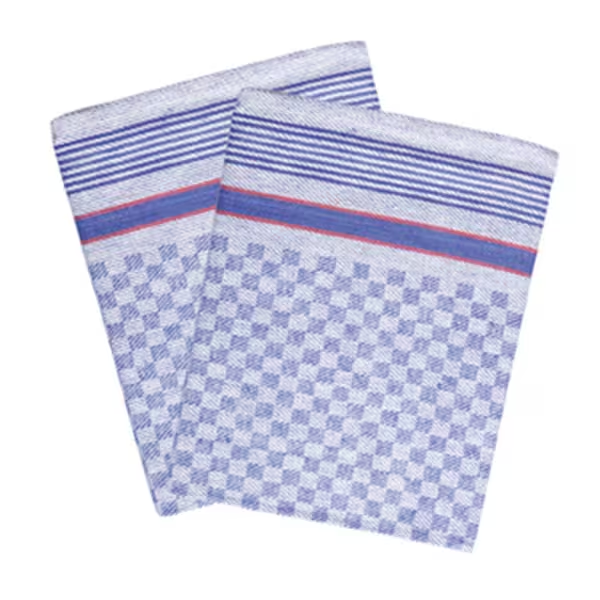
Classic dish towels measuring 500 × 700 mm offer a handy size for standard drying tasks. Larger sink towels, measuring approximately 450 × 900 mm, provide more surface area and are suitable for work areas where durable towels are used more frequently and for longer periods.
In addition to size, color and pack quantity are also important. Red and blue versions can be assigned internally to different work areas or shifts. This color-coding system does not replace a hygiene protocol, but it makes it easier for the team to quickly identify which towels are needed. Packs of 10 ensure a predictable supply and facilitate the rotation between use, laundering, and restocking.
Quick Checklist for Choosing Dish Towels
Before placing an order, a few specific criteria can help you make the right choice:
- Choose materials based on absorbency, texture, and care requirements
- Adjust dimensions to fit dishware size, handling needs, and workspace
- Plan package quantities based on shifts and laundry schedules
- Use colors for clear internal organization
- Follow the washing and care instructions for each item
It’s not just about how many cloths are in use at any given time. The time between use, collection, washing, drying, and restocking should also be factored into your demand planning.
Hygiene and Care in Daily Life
Dish towels come into regular contact with moisture. If they remain wet for an extended period or are used for different tasks, they quickly lose their practical usefulness. Regular replacement and dry storage between uses therefore help ensure clean operations.
Fresh dish towels should be kept in a protected, easily accessible place. Used towels should be collected separately and washed according to the respective care instructions. Heavily soiled towels from other work areas should not be used together with towels intended for clean dishes.
For cleaning work surfaces, microfiber cloths specifically designed for this purpose are the better choice. This ensures that dish towels are used exclusively for drying dishes and kitchen utensils. They are also not intended as a substitute for certified heat protection.
Short distances between washing, drying, and serving
Well-placed dish towels reduce unnecessary walking in the dishwashing area. If the supply area, work surface, and return area are located close together, the team can quickly dry clean dishes and return them to the shelves, serving area, or prep area.
An open shelf on stainless steel cabinets provides a sturdy and easy-to-clean work surface. In larger establishments, it’s worth designating specific areas for storage, drying, and a collection bin for used dish towels. This way, clean and used textiles come into contact with each other less frequently.
Dish towels are not a substitute for adequately sized dishwashing or drying equipment. Rather, they assist with follow-up tasks where residual moisture needs to be absorbed, individual items need to be dried further, or kitchen utensils need to be made available again quickly.
Incorporate dish towels into the towel rotation in a cost-effective way
Economic benefits do not come from the lowest possible unit price alone. Durability, washability, package size, and actual daily needs all combine to affect ongoing costs.
Stocking levels that are too low lead to frequent shortages or unnecessary extra washes. An adequate supply facilitates regular changes, reduces the need to improvise, and eases the burden on the team during busy shifts. In settings with multiple work areas, clear color and quantity planning can also help maintain an overview.
Together with suitable dishwashing cabinets and organized storage, dish towels become part of a stable dish cycle. The right design depends on frequency of use, desired towel size, maintenance requirements, and the number of daily changes. This creates a simple yet reliable solution for professional kitchen and dishwashing operations.