


Trash Can Coolers & Food Waste Disposal for the Food Service Industry and Commercial Use
Trash can coolers support the hygienic temporary storage of food scraps, wet waste, and organic kitchen waste in commercial settings. They help reduce odors, organize waste disposal areas efficiently, and reliably integrate waste management processes into daily kitchen operations. Trash Can Coolers & Food Waste Disposal Guide »
Amount container
Number of Doors
Capacity
Width
Depth
Height
Price
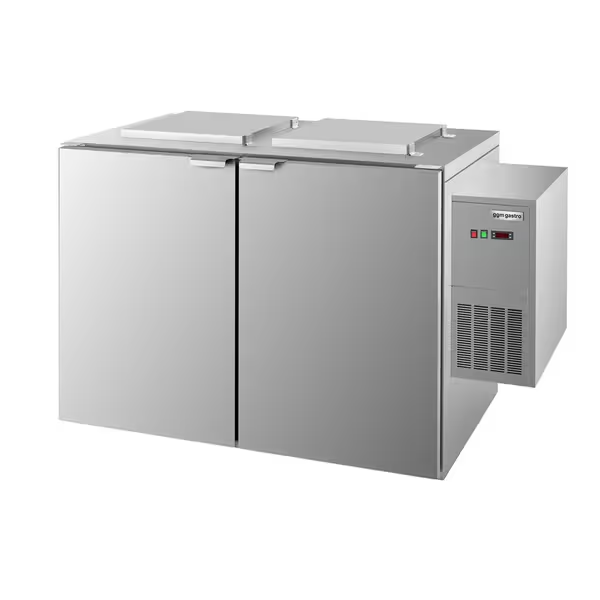
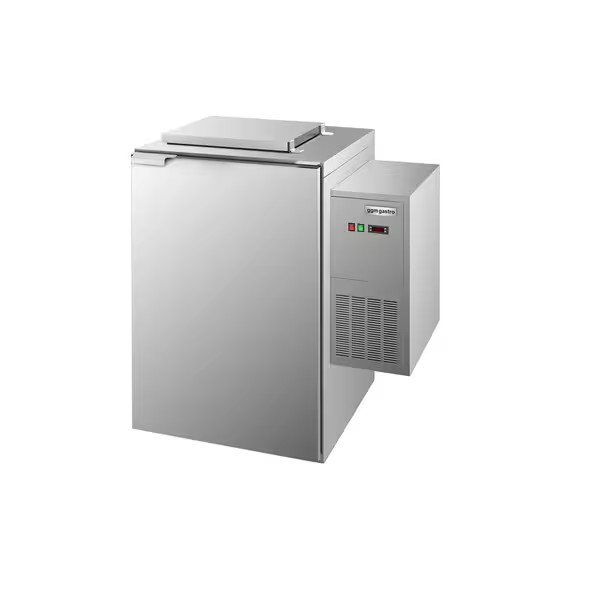
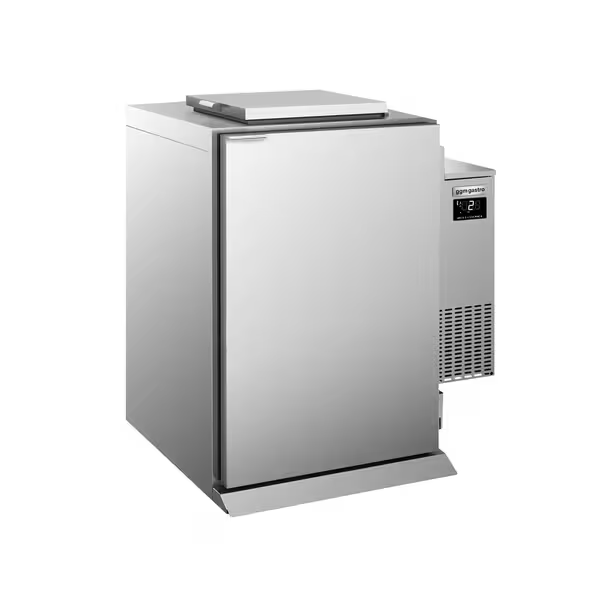
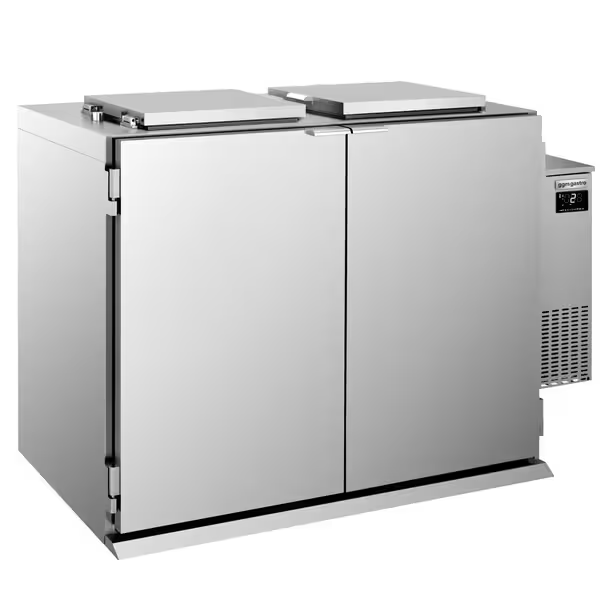
Trash Can Coolers & Food Waste Disposal as Part of Professional Kitchen Hygiene
Refrigerated trash cans and food waste disposal systems offer refrigerated solutions for the temporary storage of organic waste, food scraps, and wet waste in the food service industry, hospitality industry, catering, cafeterias, butcher shops, and food-processing facilities. They are used wherever perishable leftovers should not be left unrefrigerated in waste areas and where hygiene, odor control, and clear disposal procedures play an important role in daily operations.
Especially in high-traffic establishments, waste isn’t generated evenly but in waves: during prep, after the lunch rush, during evening service, after buffets, or when cleaning production areas. A refrigerated trash bin provides a dedicated, cooled storage station for this purpose. Food scraps are not collected haphazardly but are temporarily stored in a controlled manner in existing 120- or 240-liter bins. This supports clean operations and eases the workload on the team because the waste disposal area remains more organized.
Planning Waste Cooling Properly: Capacity, Location, and Work Routes
The right waste refrigeration system depends primarily on the amount of waste, bin size, floor space, and operating mode. Small restaurants, cafés, or snack bars often operate at lower capacity and benefit from compact units designed for a single bin. Commercial kitchens, cafeterias, hotels, or catering businesses typically require greater capacity, such as for two 120-liter bins or larger 240-liter bins.
Location is also important. Ideally, a waste bin cooler should be placed where food scraps can be disposed of quickly and easily without disrupting clean production areas, dishwashing return lines, or storage zones. In practice, this could be a separate disposal area behind the kitchen, a well-ventilated side room, or a covered outdoor area. The key is to keep distances short and ensure the area is easy to clean.
A quick checklist can help with the selection:
-
What bin size is used at your facility: 120 liters or 240 liters?
-
Is a single-door model sufficient, or would a two-door model make more sense?
-
Is a drop-in flap needed so that food scraps can be quickly disposed of?
-
Does the unit’s depth, width, and height fit within the planned waste disposal area?
-
Is a plug-and-play connection feasible for the existing location?
Hygiene, Stainless Steel, and Cleaning in Daily Use
Food scraps, wet waste, and organic kitchen waste bring moisture, odors, and a heavy cleaning burden. That’s why durable materials and smooth, easily accessible surfaces are especially important. Stainless steel is a practical choice in commercial settings because the material is durable, hygienic, and suitable for frequent cleaning. Doors, gaskets, filling flaps, and interior surfaces must also be designed so that they can be cleaned quickly as part of daily operations.
Refrigeration does not reduce the need for cleaning, but it does facilitate more controlled temporary storage. Especially in warm ambient temperatures, during long operating hours, or when there is a high volume of food waste, a refrigerated waste area can help reduce odor formation and uncontrolled contamination in the work environment. For establishments with clear hygiene processes, this is an important component alongside dishwashing organization, cleaning routines, and clearly separated work areas.
Depending on the operational concept, suitable additions can be found in the categories Dishwashing & Cleaning, Stainless Steel Furniture, and Cold Rooms & Refrigeration Units.
A Cost-Effective Approach to Garbage Can Coolers
A trash can cooler isn’t a visible revenue-generating area, but it can make a noticeable contribution to operational stability. When food scraps are organized, cooled, and collected close to the appropriate processing point, there are fewer trips to locate items, fewer improvised workarounds, and more order in the return process. This is particularly effective during peak hours, when the kitchen, dishwashing area, and service staff are all working simultaneously.
Sizing also has economic implications. A unit that’s too small quickly leads to overflowing bins or frequent bin changes. A unit that’s too large ties up floor space, which is often in short supply in small kitchens or utility rooms. The right solution lies between having sufficient capacity and making sensible use of space. Those who consider bin size, waste volume, cleaning routines, and location together during the planning phase usually make the more sustainable decision.
Integrate food waste disposal effectively into the operational plan
Effective food waste disposal doesn’t begin with removal. It’s part of the kitchen workflow: preparation, production, service, return, washing, and disposal must all work together. A restaurant with evening service generates different volumes of waste at different times than a cafeteria with a concentrated lunchtime rush. A butcher shop or production kitchen, in turn, deals with different types of waste and has different cleaning schedules than a café or bistro.
Waste bin coolers are particularly effective when combined with clear routes, appropriately sized bins, easily accessible disposal areas, and regular cleaning.
At GGM Gastro, commercial customers can find trash can coolers and food waste disposal solutions for businesses of various sizes. This selection helps businesses organize their waste areas in a hygienic, organized, and practical way—from compact kitchens to higher-traffic production or institutional food service operations.