


Prep Tables
Prep tables combine refrigerated storage, a hygienic work surface, and ingredients within easy reach in a compact workstation. They support professional kitchens in food preparation, assembly, portioning, and streamlined workflows during daily operations. Guide to Prep Tables »


Price
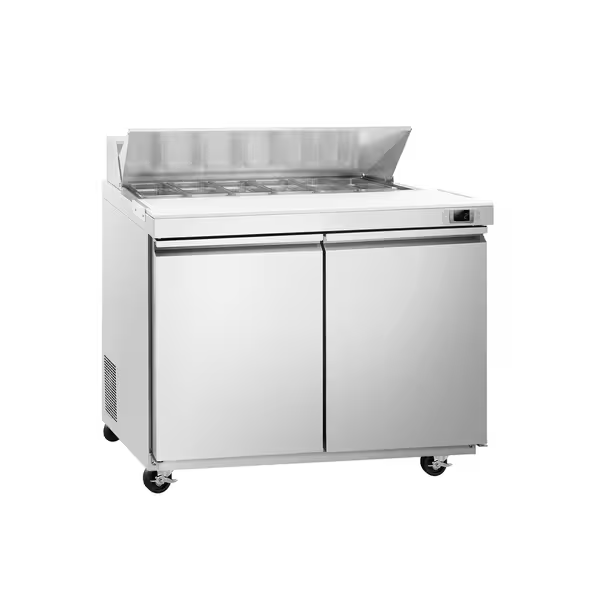
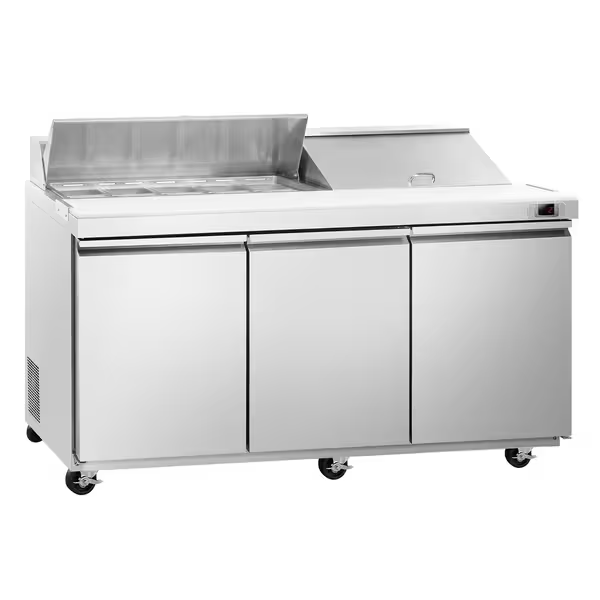
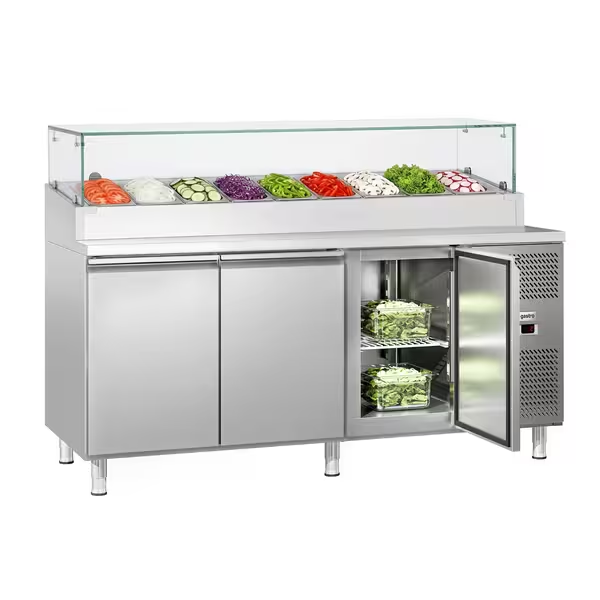
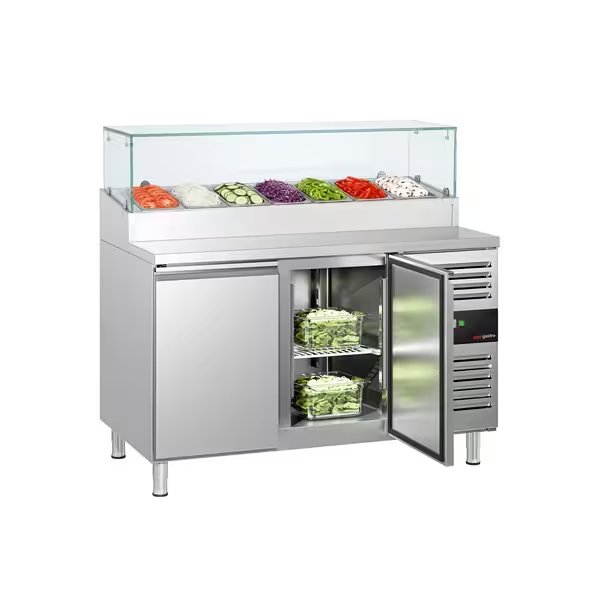
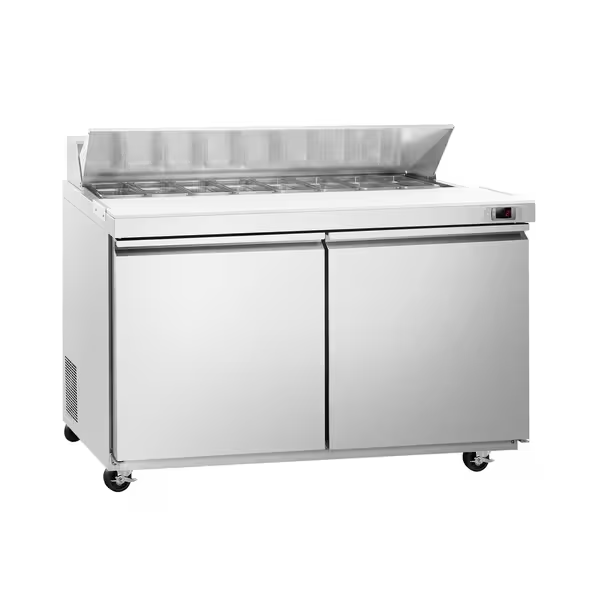
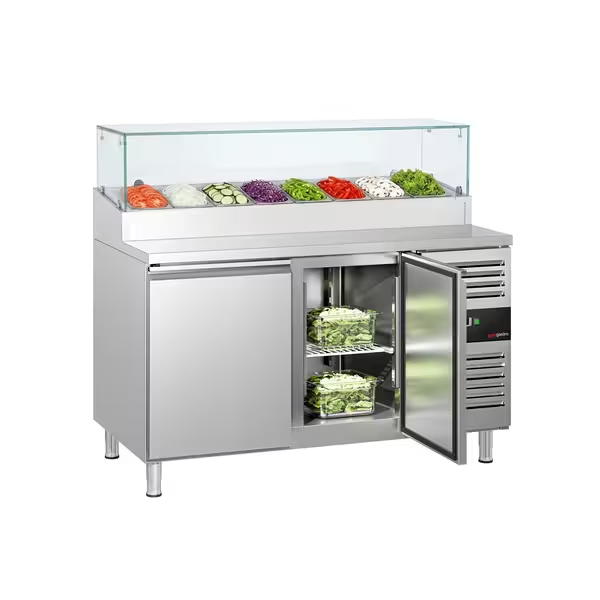
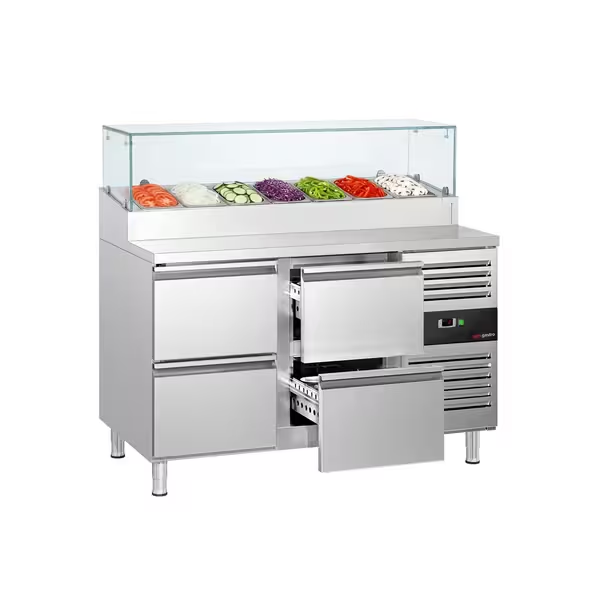
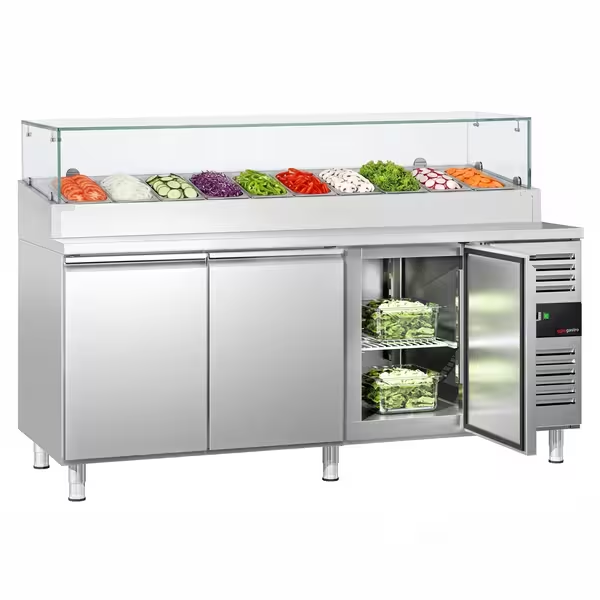
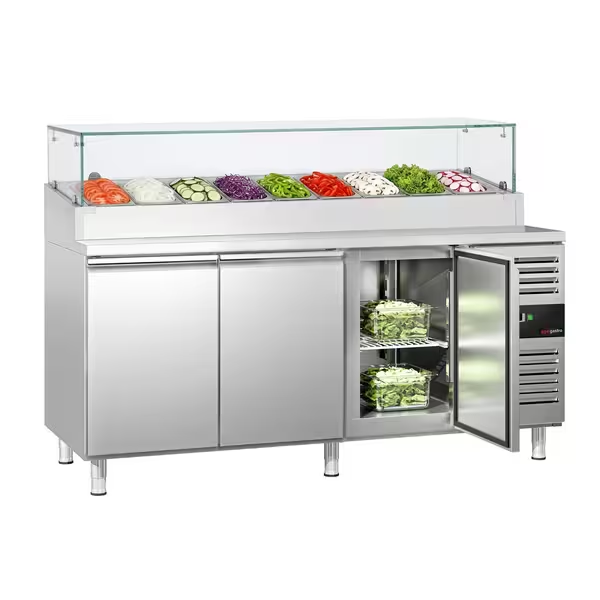
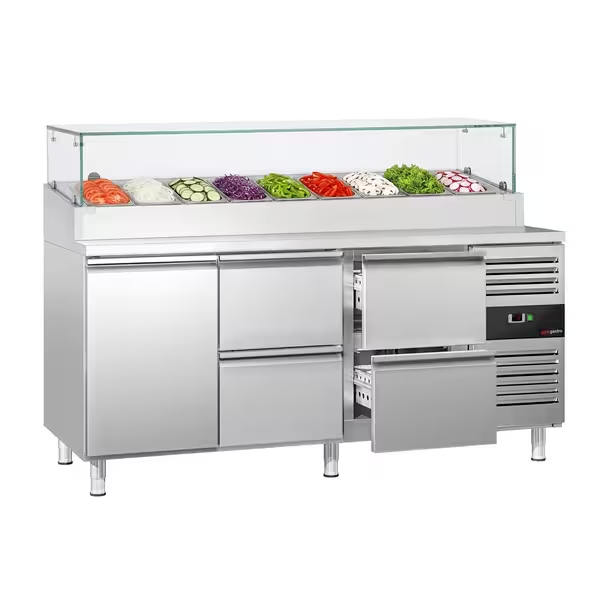
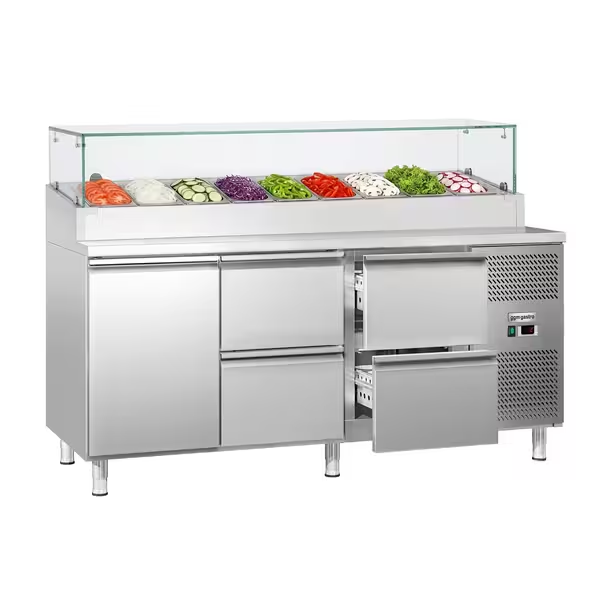
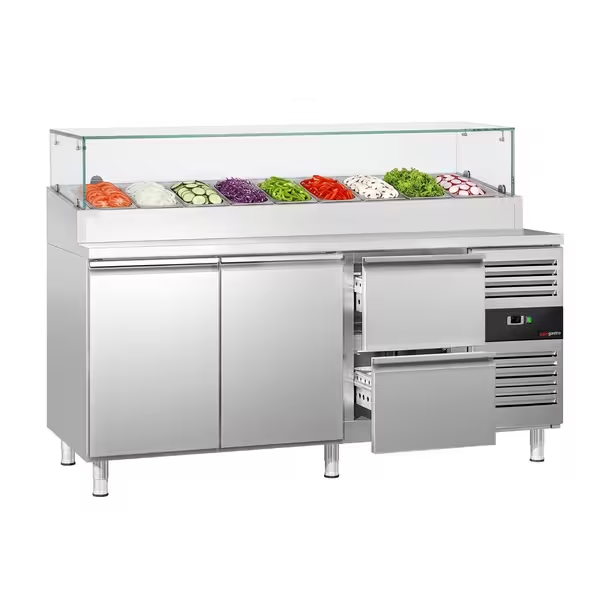
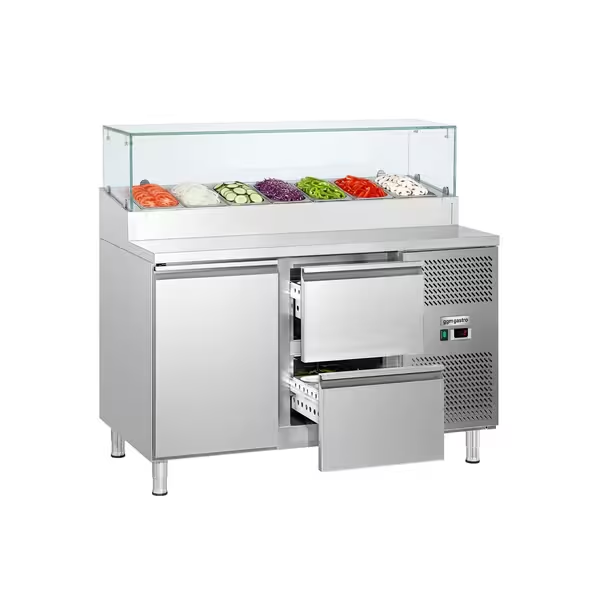
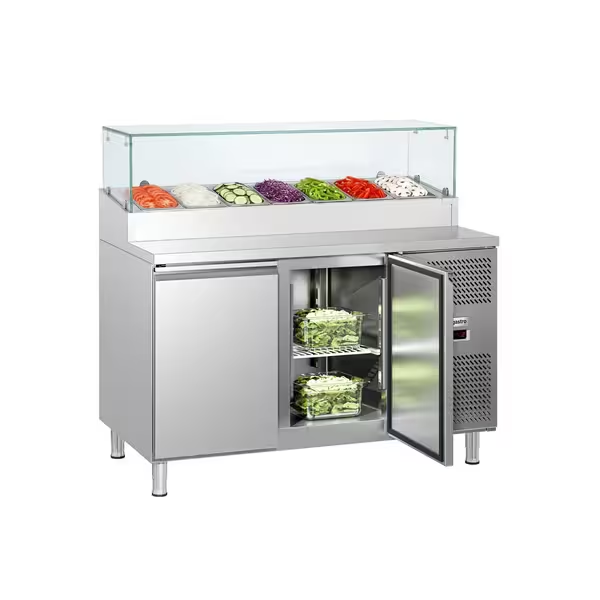
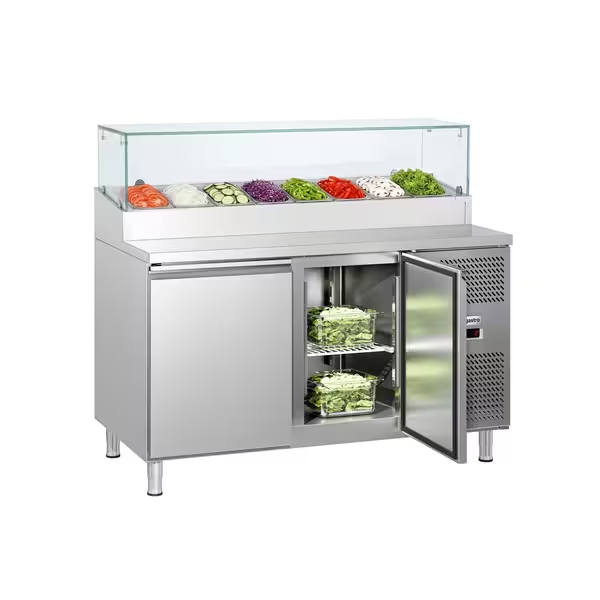
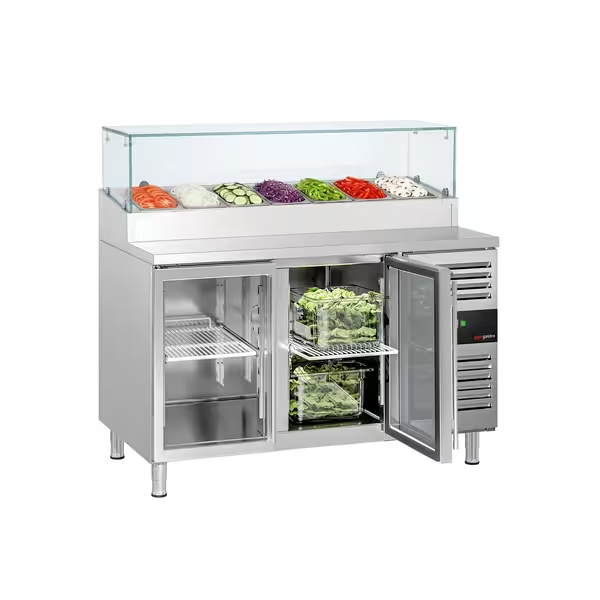
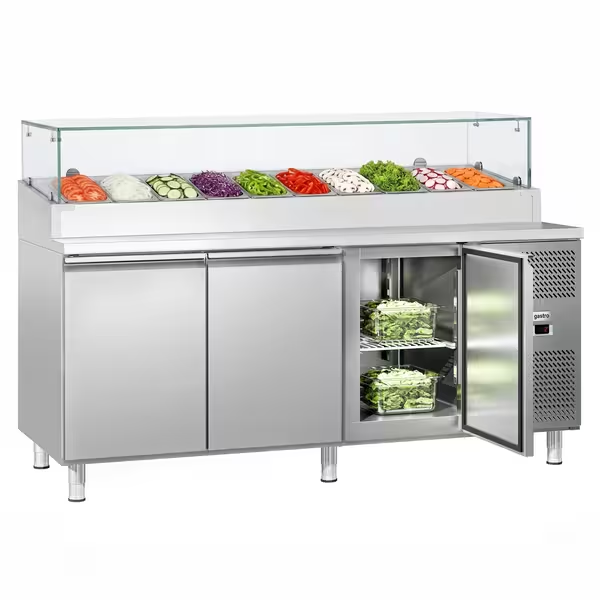
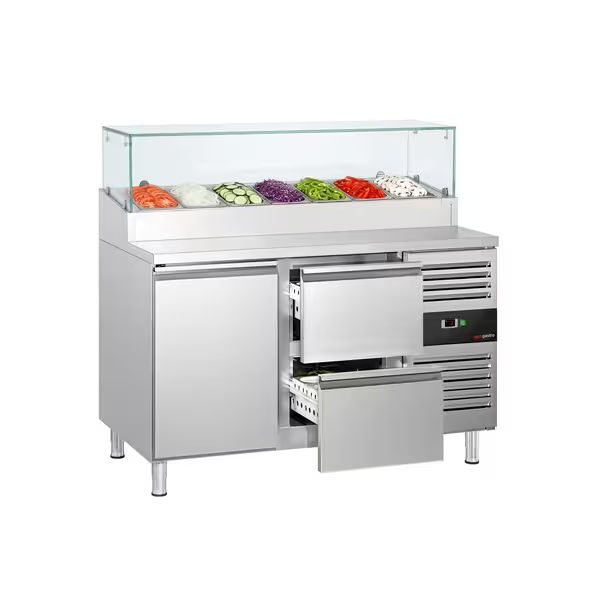
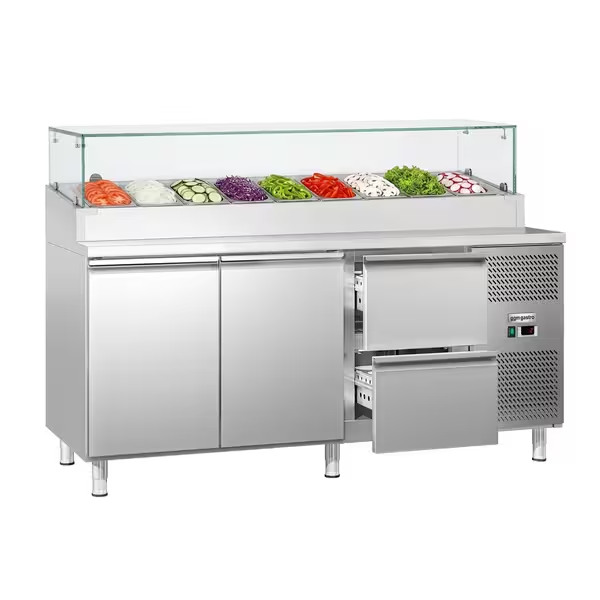
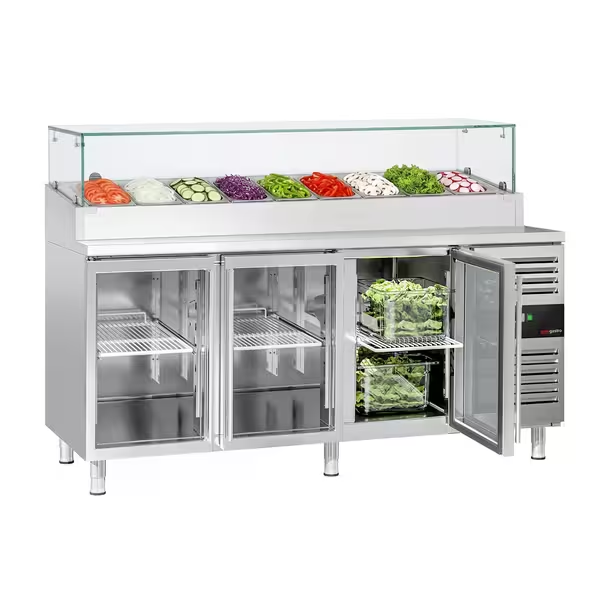
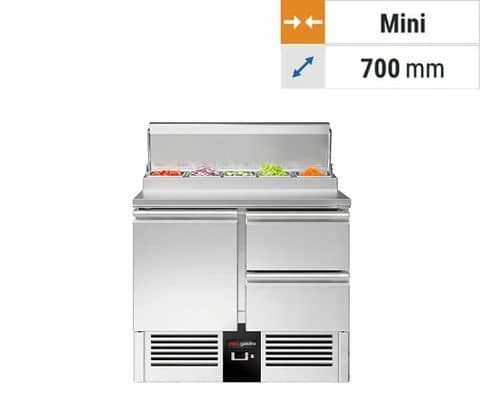
Prep tables as the central workstation in a professional kitchen
Prep tables are refrigerated workstations designed for professional food preparation. They combine a work surface, refrigerated storage, and—depending on the model—GN inserts or ingredient containers, ensuring that prepared ingredients remain readily available right at the workstation.
In the food service industry, hospitality, snack bars, catering, and institutional food service, prep tables play a key role in the flow between storage, preparation, and service. They are particularly well-suited for establishments where ingredients are frequently retrieved, portioned, or processed directly—such as for salads, bowls, sandwiches, or grilled dishes. The practical benefit lies in short distances: ingredients remain chilled, neatly organized, and available right where they’re needed in the workflow.
Which prep tables fit your workflow?
The selection should be based not only on width or price, but on the actual workflow in the kitchen. Small kitchens benefit from compact models that combine counter space and refrigeration in a limited area. In larger production kitchens, wider prep tables with multiple doors or drawers are useful when several employees need to prepare or restock at the same time.
Key decision criteria include, above all, the overall dimensions, the volume to be cooled, the number of doors or drawers, the GN compartment layout, and the temperature range. Models with GN 1/3 or GN 1/6 compartments are suitable for frequently used ingredients that need to be kept separate and easily accessible. Widths such as 1360 mm, 1510 mm, 1795 mm, or 2020 mm help adapt the table to the available space and production volume. Those who primarily want to store and prepare ingredients should clearly distinguish prep tables from dedicated refrigerated tables, which place greater emphasis on refrigerated space and work surfaces.
A quick checklist for selection:
- Does the width fit the available space and the planned work zone?
- Are doors, drawers, or a combination of both needed?
- Which GN sizes are used for daily mise en place?
- Is the temperature range sufficient for the intended ingredients?
- Is there enough counter space for cutting, assembling, and portioning?
Short distances, a well-organized mise en place, and a calmer atmosphere during peak hours
During peak hours, preparation often determines whether operations run smoothly. A prep table reduces trips to the main refrigeration unit and prevents ingredients from being searched for, moved around, or stored haphazardly during service. Especially during high-volume periods—such as at lunchtime, in snack bars, or at takeout establishments—a well-placed table can significantly reduce the workload at the workstation.
Structure is also important during the prep phase. If ingredients are pre-portioned, labeled, and stored in appropriate GN containers, the workstation can be set up more quickly and cleaned in a more organized manner after service. For establishments with salad or fresh food concepts, a comparison with Saladetten may be useful, provided the focus is more on visible product presentation and direct service.
Materials, Hygiene, and Durability in Daily Use
Prep tables see heavy use: moisture, chilled food, knives, changing containers, grease, cleaning agents, and mechanical stress are all part of everyday life. Stainless steel is an ideal material because it is durable, hygienic, and easy to clean. Smooth surfaces, sturdy doors, heavy-duty drawer slides, and easily accessible interior spaces make daily maintenance a breeze.
Practical details should also be considered during planning: the door hinge side, the installation area, sufficient air circulation, an appropriate working height, and access to the refrigeration system all have a lasting impact on daily usability. A prep table should not be placed where it blocks walkways or where clean and unclean areas intersect. In addition, stainless steel furniture can help integrate preparation, storage, and shelving areas seamlessly into the kitchen layout.
Think Economically: Equipment Must Be Suited to the Business
A well-designed prep table does more than just keep the workspace organized. It can help make better use of work time, manage ingredients more effectively, and simplify the standardization of recurring processes. This is especially important when multiple people are working at the same station or when new employees need to be quickly integrated into established workflows.
The investment makes good business sense, especially when the table resolves a real bottleneck: excessively long walk distances, a lack of refrigerated prep space, insufficient counter space, or disorganized restocking processes. Those already working with pizza or sandwich assembly processes should consider whether specialized pizza refrigerated tables better fit their production workflow. For many mixed-concept operations, however, classic preparation tables offer the more flexible solution.
Buy food preparation tables at GGM Gastro
GGM Gastro offers prep tables for a variety of business sizes, workflows, and space constraints. The key is finding the right combination of dimensions, cooling capacity, GN organization, ease of use, and ease of cleaning. The result is a workstation that isn’t viewed in isolation but is meaningfully integrated into preparation, production, and service.
Anyone planning prep tables should therefore always start with the daily workflow: What ingredients are needed, how often are they restocked, how much space is available, and what workload arises during service? With this perspective, a refrigerated work table becomes a functional building block for greater structure, hygiene, and stability in professional kitchen operations.