


Dishwasher Cabinets
Sink cabinets combine a sink, countertop, and enclosed storage space into a compact stainless steel solution for professional kitchens. They facilitate efficient workflows for washing, draining, and storing kitchen equipment in the restaurant, hotel, and institutional food service industries. Guide to Sink Cabinets »
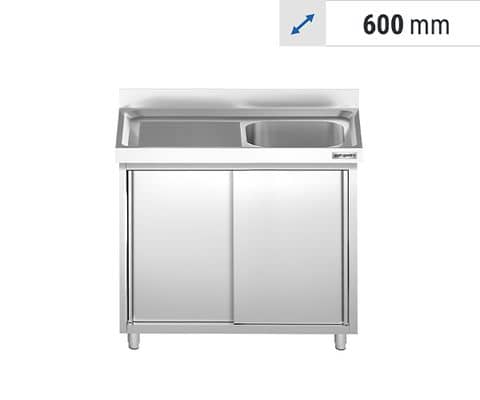
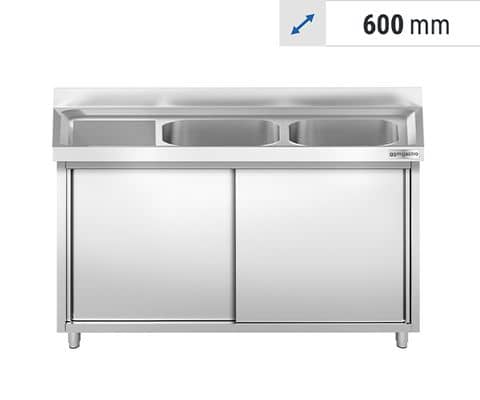
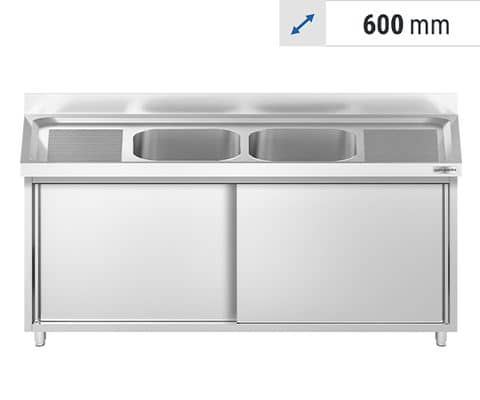
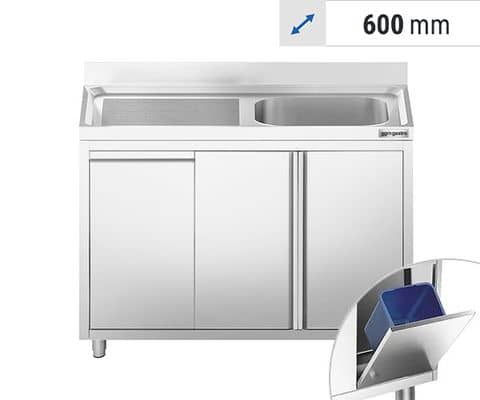
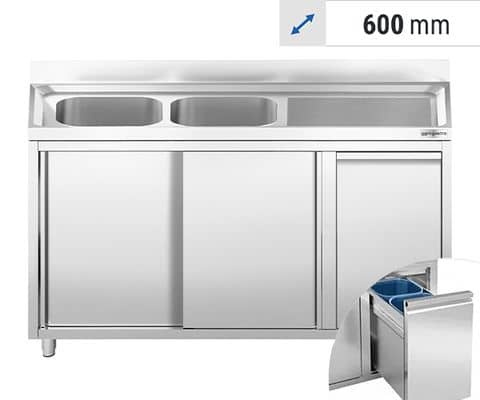
Sink Units with Cupboards - 700 mm Deep
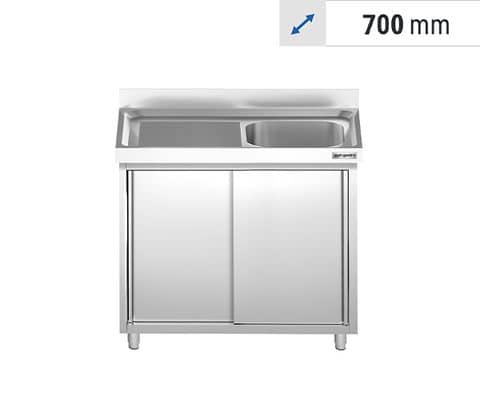
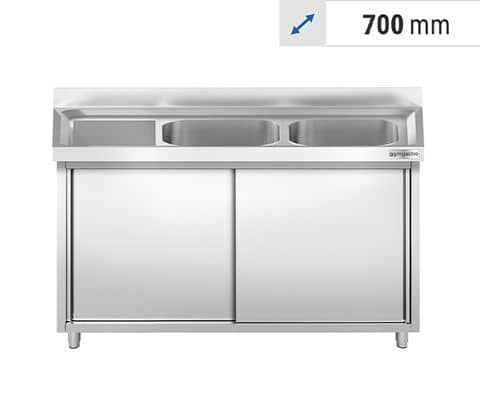
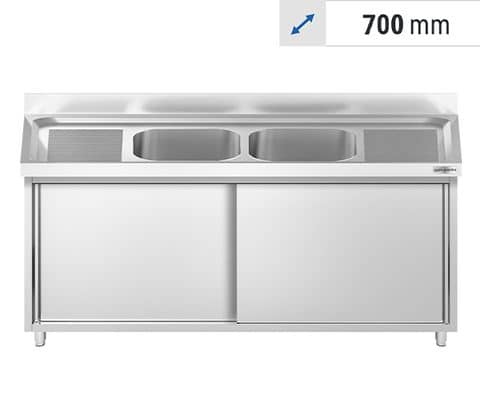
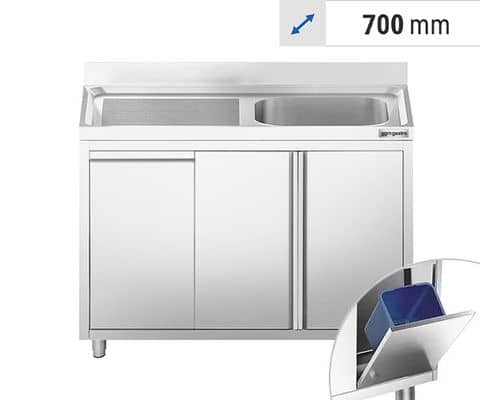
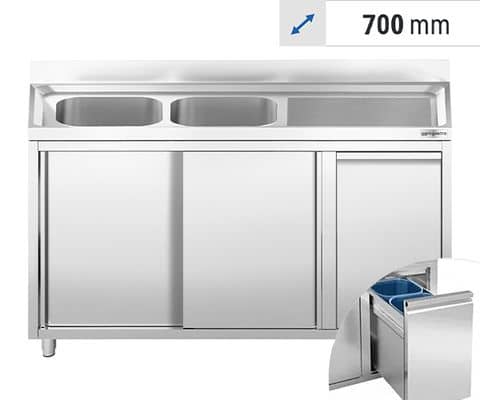
Sink cabinets as the functional foundation for clean kitchen operations
Sink cabinets are stainless steel units featuring an integrated sink and a closed base cabinet. They are used wherever dishes, kitchen utensils, GN containers, or work equipment need to be washed, set aside, and stored within easy reach.
In professional kitchens, the sink area is not considered a secondary space but rather one of the areas that influence the entire workflow. When dirty dishes come back, pots need to be washed, or work tools are missing for the next preparation task, the organization of the sink area determines the pace and order of operations. A suitable dishwashing cabinet provides a designated space for this: the top for washing and draining, the bottom for cleaning supplies, buckets, small work tools, or other utensils.
Dishwashing cabinets are essential for restaurants, cafés, hotels, snack bars, cafeterias, bakeries, catering businesses, and production kitchens. Especially in small kitchens, they help make efficient use of space. In larger kitchens, they facilitate a clear separation between washing, return, and storage.
Choose the Right Dishwasher Cabinet Model
The choice isn't just about the width of the cabinet. What matters most is how the sink cabinet fits into your workflow. A single-bowl model is often suitable for compact kitchens, smaller volumes of dishes, or additional cleaning stations. Two sinks are useful when you want to separate different steps, such as pre-rinsing and final rinsing, or cleaning different utensils.
The position of the sinks also affects daily use. A sink on the left or right should align with the direction of movement, the drain line, and the adjacent countertop. Centered sinks can be useful when working from both sides or when the sink cabinet is used as a central washing station. A draining rack is helpful when washed items need to be temporarily stored before being placed on shelves, in cabinets, or returned to production.
Key decision criteria are:
-
Number and size of sinks appropriate for the volume of dishes
-
Width and depth suited to the available kitchen space
-
Sink position aligned with traffic flow and return path
-
Door type suited to the space in front of the cabinet
-
Enclosed storage space for better organization in the sink area
Sliding doors are often practical for narrow walkways because they do not require additional space when opening. Hinged doors, on the other hand, offer direct access if there is sufficient space to move in front of the sink cabinet.
Materials, Hygiene, and Durability in Daily Use
Dishwashing cabinets are subjected to heavy use in everyday life. Moisture, cleaning agents, mechanical stress from pots, containers, and dishes, as well as frequent opening and closing, are all part of normal use. Stainless steel is therefore the ideal material for commercial dishwashing areas: The surface is durable, easy to clean, and promotes a hygienic work environment.
It’s important to choose equipment that’s suited to actual use. This includes sturdy doors, easily accessible interiors, a practical working height, and sufficient space around the sink. During the planning phase, you should also verify that the water connection, drain, and siphon are compatible with the intended location. Especially when modernizing existing spaces, it’s important to carefully check the dimensions and connection setup before making a purchase.
A sink cabinet is no substitute for a dishwasher, but it complements the manual dishwashing and food preparation area. It can also be effectively combined with sink tables, stainless steel cabinets and matching work cabinets when the washing area, counter space, and storage are designed as a cohesive zone.
Quick Checklist for Making a Purchase Decision
A sink cabinet is a good fit for your business if it not only fits into the floor plan but also improves daily workflow. Before making your selection, consider the following:
-
How much dishwashing volume occurs during peak hours?
-
Do you need one or two sinks?
-
Should the sink be positioned on the left, right, or in the center?
-
Is there enough space for hinged doors, or would sliding doors be better?
-
Is additional storage space needed right next to the sink?
These questions help you avoid making the wrong purchase. A sink cabinet that’s too small can quickly lead to clutter and a messy countertop. On the other hand, a model that’s too large can block valuable kitchen space. The most cost-effective solution is one that meets your actual needs and reliably supports your daily dishwashing routine.
Integrating Dishwasher Cabinets Cost-Effectively into Kitchen Design
A well-planned dishwashing cabinet can make teamwork noticeably easier. Equipment is available again more quickly, the return area remains more organized, and cleaning supplies don’t get lost on open shelves. This reduces search times, promotes hygiene, and ensures smoother operations during peak periods.
For operators and managers, it’s not just the purchase price that matters. What’s crucial is whether the equipment will last a long time, fit the kitchen space, and simplify daily processes. In a small snack bar, a compact combination of sinks and storage space is often what matters most. In a commercial kitchen or cafeteria, on the other hand, a wide dishwashing cabinet with two sinks and a clear drainage system may be more practical.
GGM Gastro offers sink cabinets for various business sizes and applications. This allows the sink area to be equipped to suit the available space, dish volume, and kitchen organization—from compact solutions for small kitchens to heavy-duty stainless steel equipment for higher-traffic establishments. Selecting dishwashing cabinets based on the number of sinks, dimensions, door type, and workflow logic lays a solid foundation for efficient and hygienic kitchen operations.