


Kebab/Flatbread Slicer
A döner/flatbread slicer helps food service establishments cut döner bread and flatbread evenly in half, into thirds, or into quarters. It is particularly well-suited for snack bars, kebab shops, barbecue restaurants, and takeout establishments with recurring preparation routines. Guide to Kebab/Flatbread Slicers »
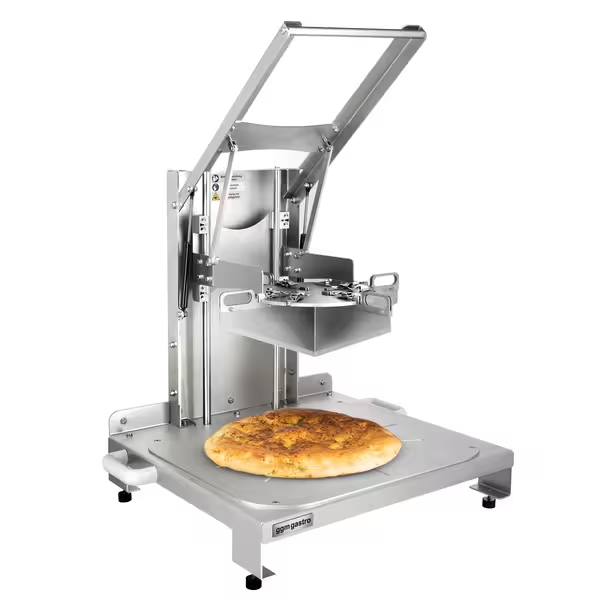
Kebab/Flatbread Slicer for Effortless Preparation in Everyday Restaurant Operations
A döner/flatbread slicer is a manual cutting device designed for commercial establishments that regularly cut flatbread or döner bread into uniform portions. It is primarily used in settings where a large number of loaves must be prepared quickly and where a clean, consistent cut streamlines the workflow.
In kebab shops, snack bars, Middle Eastern grill restaurants, and take-out establishments, preparation often determines the speed and smoothness of service. If flatbreads are cut individually with a knife only during service, this creates extra steps precisely when orders need to be processed quickly. A flatbread slicer shifts this step to the preparation phase and ensures that portions of flatbread are ready and organized.
The practical benefit lies not only in the cut itself. Breads that are evenly halved, thirded, or quartered are easier to top, calculate, and serve. This supports standardized portions, reduces unnecessary rework, and helps the team work in an organized manner even during peak hours.
What Criteria Matter When Choosing a Flatbread Slicer for Your Business
When choosing a doner/flatbread slicer, there’s more to consider than just the slicing function. The key factor is whether the machine is suited to your workload, available space, and preparation processes in your establishment. A manual tabletop unit with a stable base is particularly well-suited for establishments seeking a robust, easy-to-use solution that does not require an electrical connection.
Key decision-making criteria include:
-
Slice size appropriate for the bread formats used
-
Number and arrangement of the blades
-
Sturdy construction for frequent use
-
Hygienic, easy-to-clean materials
-
Space requirements on the work table or prep line
A machine with a stainless steel body fits well in professional work environments because stainless steel is durable, hygienic, and suitable for frequent cleaning. Given repeated contact with bread, moisture, grease, and cleaning agents, the choice of materials is a key factor in ensuring suitability for everyday use. Removable or easily accessible blades facilitate cleaning and reduce the effort required after preparation.
Dimensions also play a role. In small snack kitchens, every centimeter of counter space counts. In larger production areas, the slicer can be permanently integrated into a prep line, for example next to stainless steel cabinets, bread storage, and the sandwich assembly station. This creates a clear workflow from preparation to cutting to serving.
Effectively Combining Workflow, Ergonomics, and Process Safety
A döner/flatbread slicer is particularly useful when it’s logically integrated into the workflow. The ideal location is near the bread storage area, but separate from hot grilling or serving zones. This keeps the cutting area organized, hygienic, and easily accessible.
During the preparation phase, several loaves can be sliced one after another and stored within easy reach. During peak hours, the team then doesn’t have to switch back and forth between the grill, the assembly station, and the cutting area. This saves time moving around and reduces interruptions. A simple, clear operating logic is particularly advantageous for small teams or rotating staff: load the bread, perform the cutting operation, remove the portions, and keep the work surface clean.
Ergonomics is an economic factor here. Repeated cutting with a hand knife takes time and effort. A manual slicer with a guided cutting process promotes more consistent movements and reduces strain on the hands during frequent repetitions. This is particularly relevant in establishments with long operating hours, a high order frequency, or multiple preparation cycles per day.
Hygiene, Cleaning, and Proper Combination in the Workplace
At first glance, cleaning bread products may seem less critical than cleaning meat or fish. In everyday commercial use, however, crumbs, flour residue, grease stains, and moisture are left behind. That’s why a doner bread slicer needs smooth, durable surfaces and easily accessible blade areas. The easier it is to clean the cutting surfaces and guide elements, the better the machine fits into daily hygiene routines.
To create a well-organized workspace, it’s worth combining the machine with functional work surfaces, clear bread storage, and a nearby sink or cleaning station. In high-volume establishments, prep tables, sink units and a preparation area, even if the slicer itself does not require an electrical or water connection. The key is the workflow: Bread must be easily accessible, the cutting area must remain clean, and the sliced portions must be able to be processed further without any detours.
Economic Benefits Through Stable Processes
A suitable kebab/flatbread slicer doesn’t support theoretical optimization, but rather a concrete everyday situation: many identical cutting tasks, little time, limited space, and a team that must work reliably. When preparation steps are performed more consistently and quickly, service becomes more predictable. This can reduce pressure during peak hours and make teamwork easier.
The economic benefit comes from the accumulation of small, repeated improvements: less manual cutting, fewer variations in bread portions, cleaner preparation, and shorter workflows. For businesses that serve a high volume of döner, kebab, or flatbread, this type of equipment can therefore be a useful tool for achieving greater process stability.
A good quick check before purchasing:
-
What bread sizes are processed daily?
-
Are the loaves cut in half, into thirds, or into quarters?
-
Is there enough counter space available for a tabletop unit?
-
How often does the unit need to be cleaned per shift?
-
Does the operation fit the team and the existing prep workflow?
Conclusion on the Kebab/Flatbread Slicer
A döner/flatbread slicer is particularly worthwhile for commercial establishments that want to prepare bread portions regularly, neatly, and without unnecessary manual labor. When combined with a well-designed work surface, short workflows, and clear hygiene routines, it supports smoother preparation and more reliable service during daily operations.