


Sesame/Peanut Butter Machines & Oil Presses
Sesame/peanut butter machines and oil presses enable the commercial production of creamy pastes, nut butters, and edible oils. Depending on the type of product, they are suitable for restaurants, delicatessens, artisanal producers, and other businesses with regular in-house production. Guide to Sesame/Peanut Butter Machines & Oil Presses »
Price
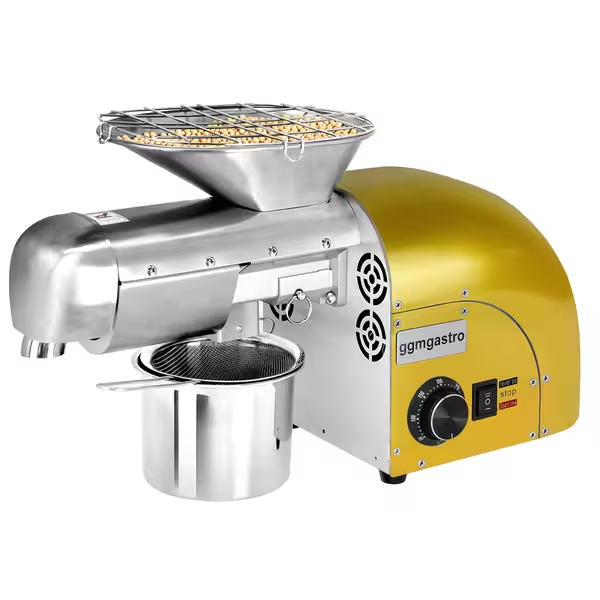
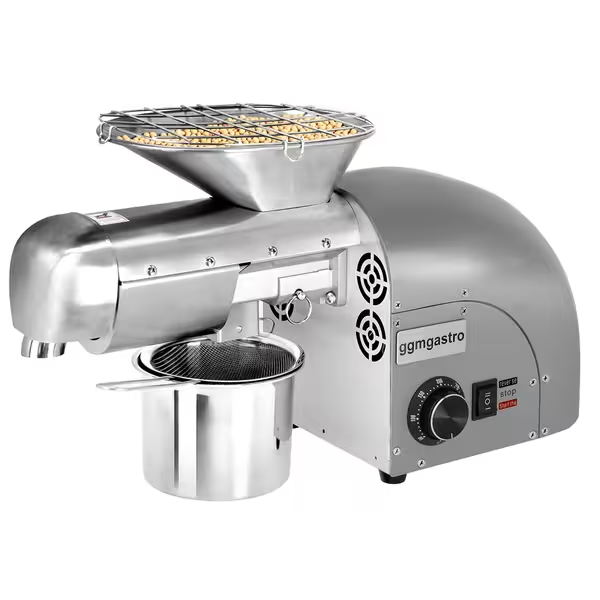
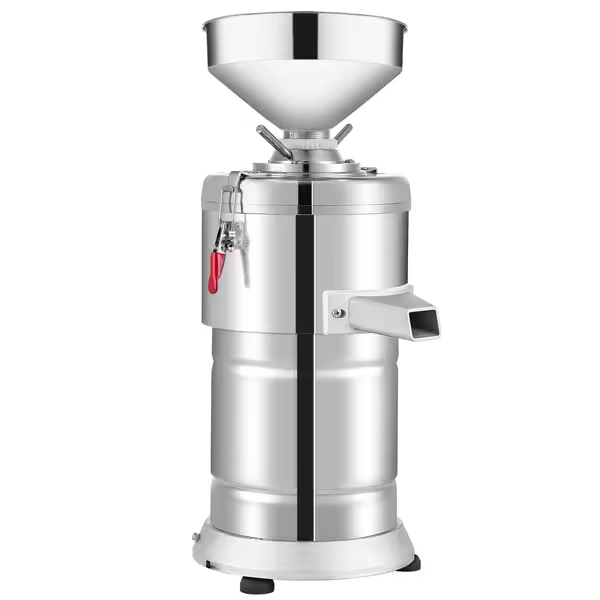
Sesame/Peanut Butter Machines & Oil Presses for Home Production
Sesame and peanut butter machines process suitable nuts or seeds into a paste-like, as uniform as possible mixture. Oil presses, on the other hand, are used to extract oil from suitable oil-bearing raw materials and separate it from the solid press residue. This clear functional distinction is the first step in the selection process.
These devices are relevant for, among others, Middle Eastern restaurants, vegan and vegetarian establishments, delicatessens, hotels, cafés, or small production kitchens. Custom recipes can be created to meet specific needs, adapted to the menu, and prepared in predictable quantities. This approach focuses not only on the finished product but also on controllable processes, traceable ingredients, and consistent preparation.
Select a grinder or oil press that matches your product line
A sesame or peanut butter machine is the right choice for making tahini, peanut butter, or other suitable nut butters. The grinding machines offered in this category operate at a power output of 0.8 kW and have a processing capacity of up to 15 kg per hour. This is particularly well-suited for businesses that produce on a regular basis but do not require an industrial production line.
Electric oil presses serve a different purpose. With a power output of 1.8 kW and a capacity of about 5 to 8 kg per hour, they are designed for processing suitable seeds and kernels. The raw materials that can be used depend on the specifications of the respective model.
The following factors are particularly important when making a selection:
- Desired end product: paste, puree, or oil
- Planned daily demand and required hourly output
- Available floor space at the production site
- Electrical connection and power consumption
- Accessibility for filling, unloading, and cleaning
Plan Workflows and Space Requirements Realistically
The machine should be located where raw materials can be prepared and added, and where the finished product can be collected directly. In a small restaurant kitchen, a compact workstation on a sturdy stainless steel work table may be sufficient. In a production kitchen, a clearly structured workflow is often advisable: ingredient preparation, processing, collection containers, temporary storage, and cleaning.
During the preparation phase, a well-organized workspace reduces unnecessary walking. During peak hours, the machine should not obstruct the rest of the kitchen operations. Sufficient clearance around the filling hopper and the outlet makes refilling easier and prevents containers from having to be placed haphazardly.
Delicate or pre-prepared ingredients can be stored in suitable refrigerators and freezers until they are processed. It is crucial to maintain a clear separation between raw materials, finished pastes or oils, and cleaning supplies.
Hygiene and Cleaning for Pastes and Oils
Sesame, nuts, and oils leave behind greasy residue that must be thoroughly removed with frequent use. Smooth, durable surfaces and easily accessible areas make daily cleaning easier. Thorough cleaning is especially important when switching between different recipes, as nuts and sesame seeds can be allergens.
Materials such as stainless steel promote hygienic working conditions and better withstand regular mechanical stress. After production, the filling area, grinding or pressing zone, outlet, and collection container should be cleaned promptly. Suitable sink units provide a dedicated cleaning area for this purpose without unnecessarily mixing clean and contaminated work areas.
Before installation, dimensions, stability, and power supply should also be factored into the planning. The unit requires a sturdy, level surface and must not slip during operation or restrict access to other workstations.
Quick Check for Business Decisions
- Is the goal to produce a creamy paste or to extract oil?
- Does the hourly output cover the planned batches and peak volumes?
- Is there enough space for filling, collection, and cleaning?
- Are the power rating and electrical supply suitable for the location?
- Are cleaning, raw material storage, and further processing clearly organized?
In-House Production as a Key Component of Business Operations
In-house production can give businesses more control over recipes, consistency, and production volume. Whether it makes economic sense depends on raw material costs, capacity utilization, labor time, cleaning, and actual sales. A properly sized machine supports predictable operations; a solution that is too large, on the other hand, ties up space and capital, while a machine that is too small unnecessarily prolongs the production process.
For filling or portioning the finished product, suitable filling machines can support the rest of the process, depending on the business model. This addition is particularly useful when larger quantities are regularly produced for sale, preparation, or distribution to multiple locations.
The right solution for the intended application
Sesame and peanut butter machines and oil presses differ not only in their capacity but, above all, in their function. A clear assessment of the end product, production volume, space requirements, and cleaning effort simplifies the selection process and prevents purchasing equipment that does not meet actual needs. When well integrated into the workflow, these machines support structured, needs-based in-house production.