


Hand Blenders for Professional Food Service
Hand blenders make it easy to quickly prepare soups, sauces, purees, creams, and other dishes right in the pot or container. Depending on the quantity being processed, the length of the wand, and the speed settings, there are suitable solutions available for small kitchens, restaurants, catering businesses, and commercial kitchens. Hand Blender Guide »




Product type
Capacity
Price
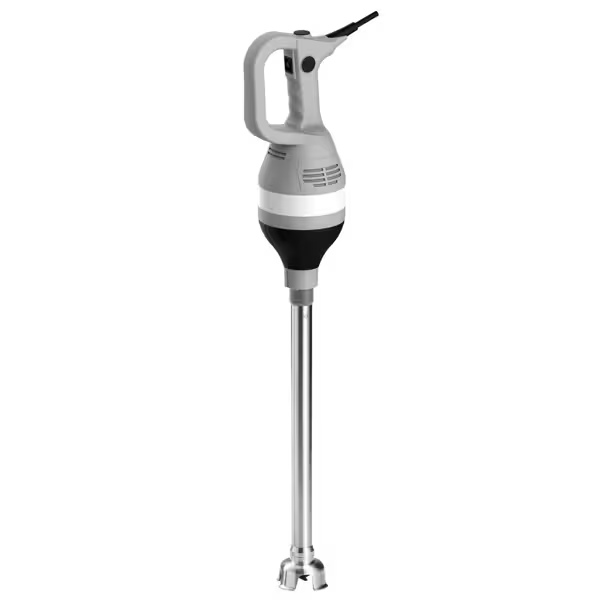
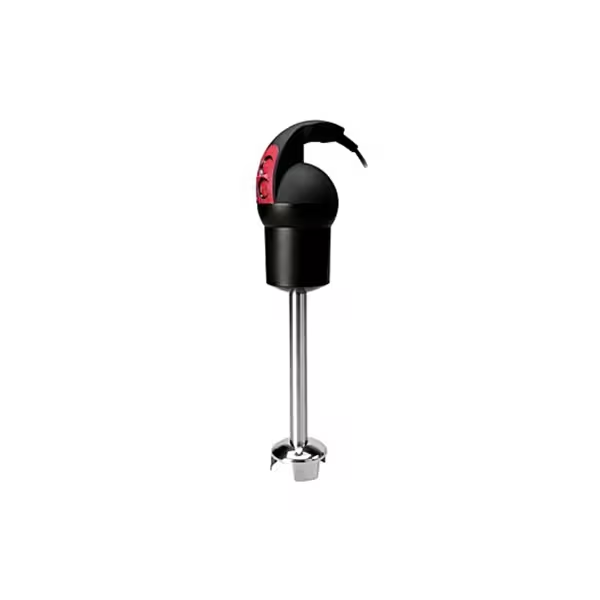
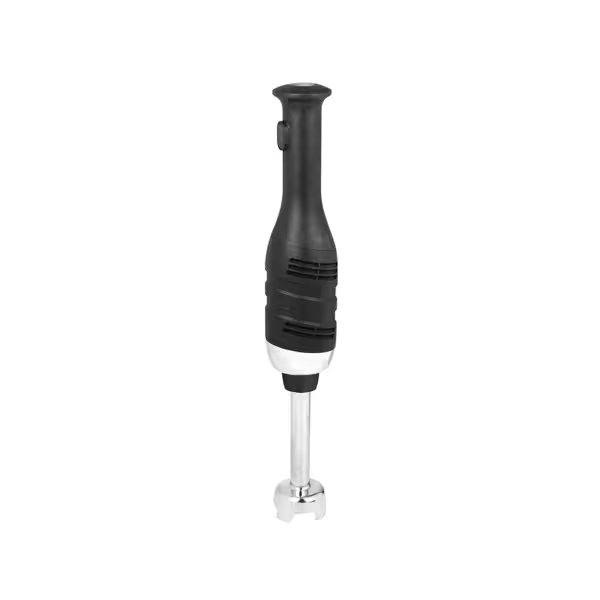

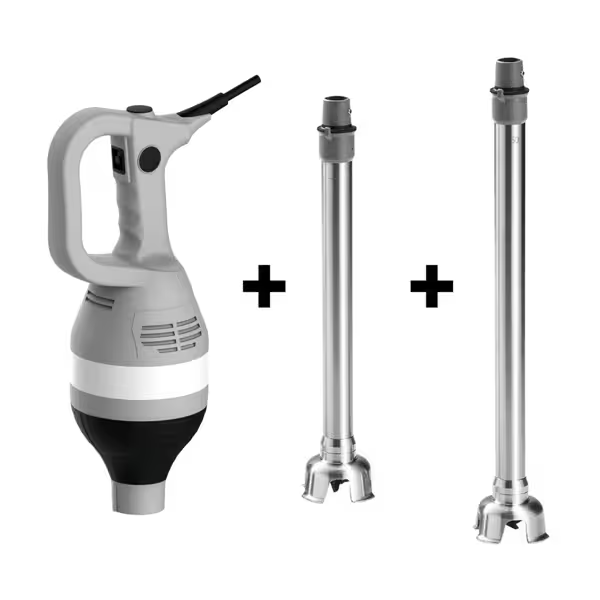
Hand Blenders: A Flexible Solution for Professional Food Preparation
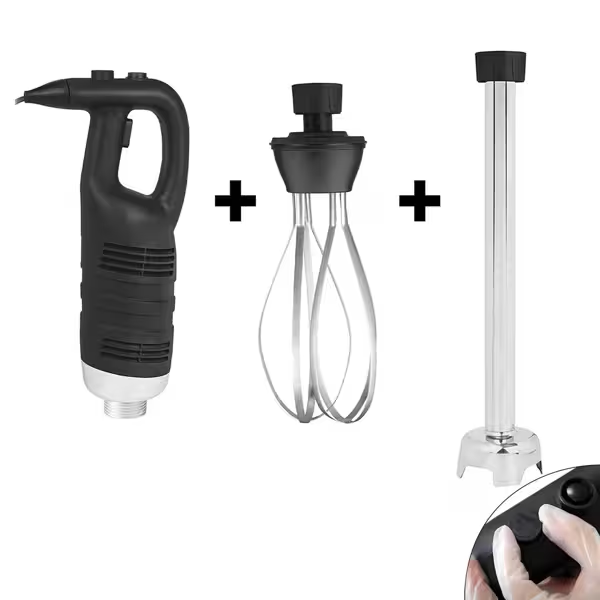
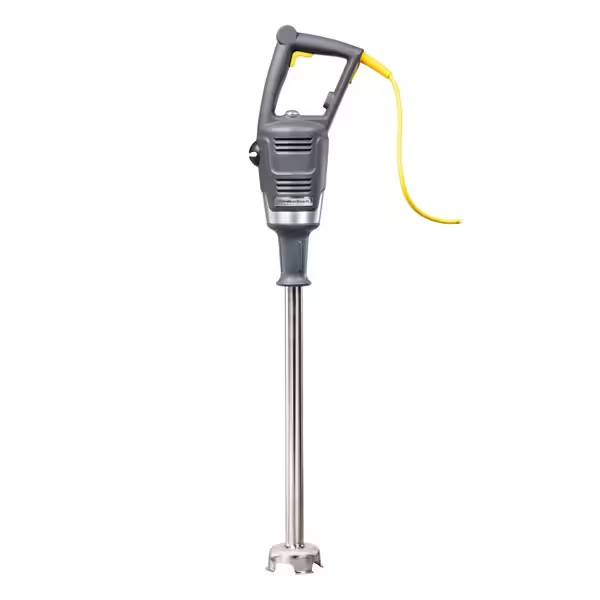
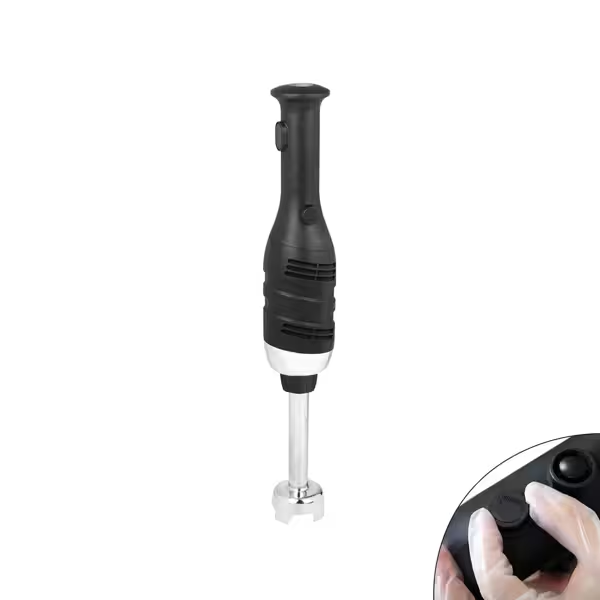
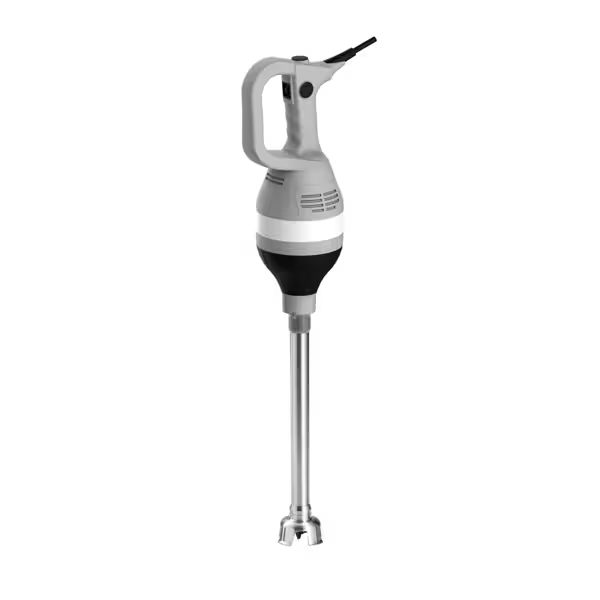
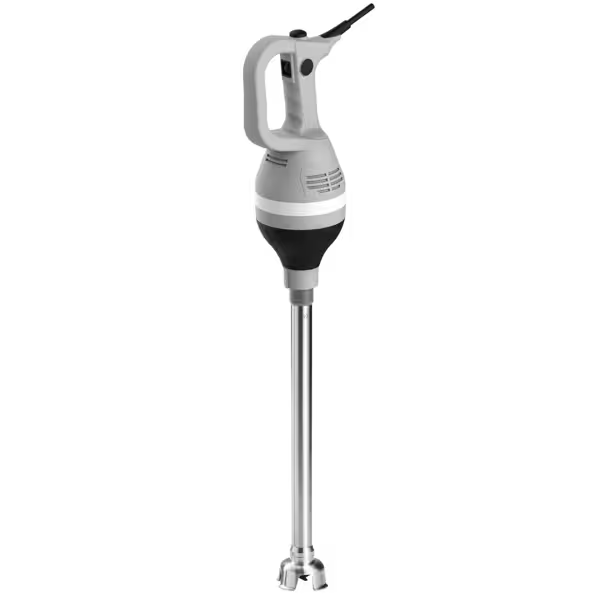
A professional immersion blender is a motor-driven handheld appliance used for blending, pureeing, emulsifying, and whipping food directly in the processing container. Unlike appliances with a fixed mixing bowl, soups, sauces, purees, or creams can be processed directly in a pot, GN container, or cooking pot without the need for additional transfer.
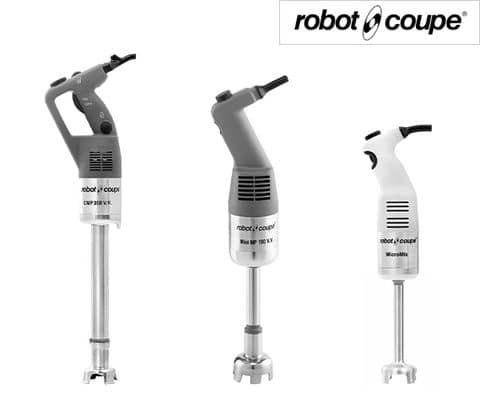
In restaurants, hotels, cafeterias, catering companies, and production kitchens, hand blenders primarily simplify recurring preparation steps. They help produce consistent textures and process larger quantities in a short amount of time. Compact models are suitable for smaller batches, while more powerful models with long blending rods are designed for deep containers and larger production volumes.
Adjust the power, rod length, and quantity to suit the operation
The right choice isn't based solely on wattage. The key factors are how often the appliance is used, what foods are being processed, and the typical quantities involved. Fine soups or dressings have different requirements than thicker purees or large batches in institutional food service.
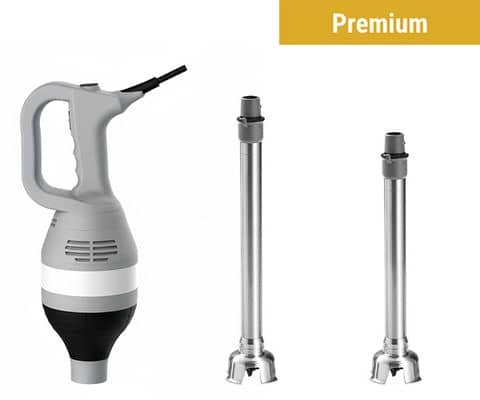
The length of the immersion blender must be suitable for the container being used. A shaft that is too short will not reliably reach the bottom of a deep cooking pot. Conversely, an unnecessarily long shaft can make handling difficult when using small pots. The weight of the appliance and the position of the handle also affect ergonomics, especially when processing several batches in a row.
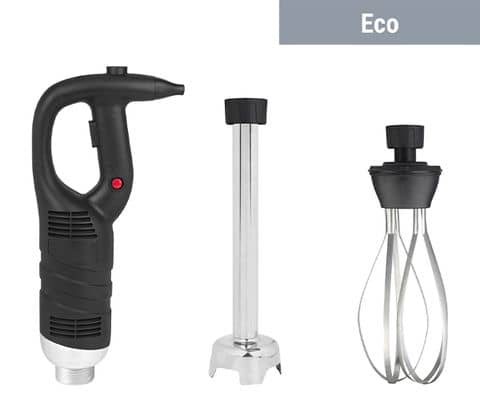
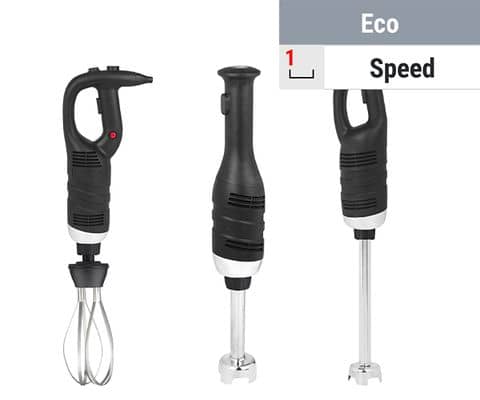
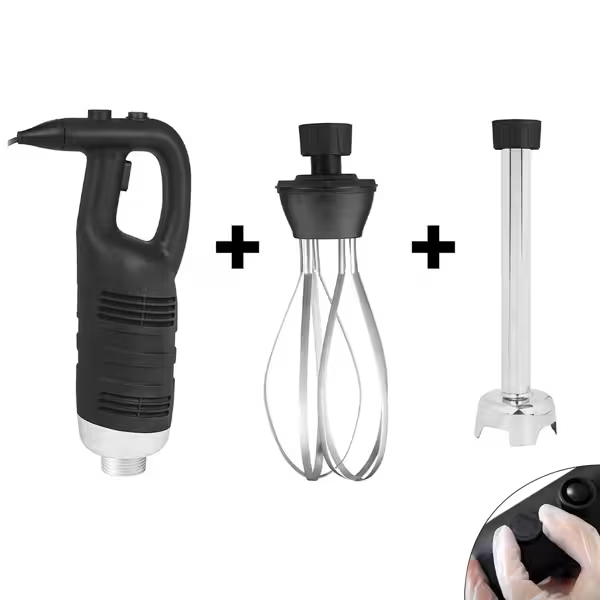
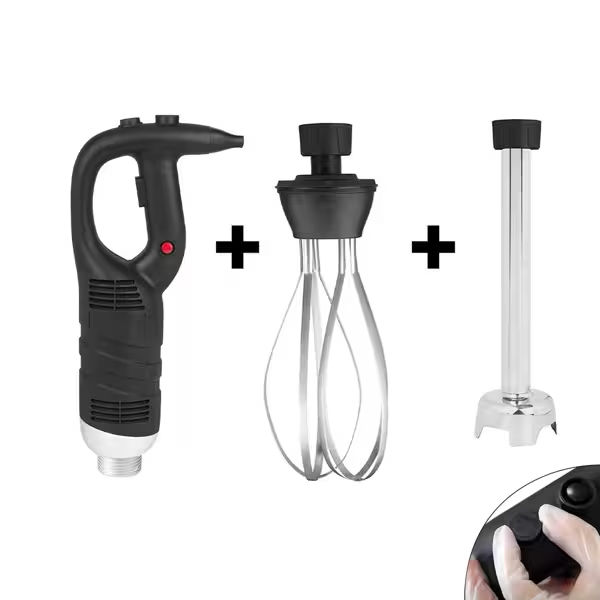
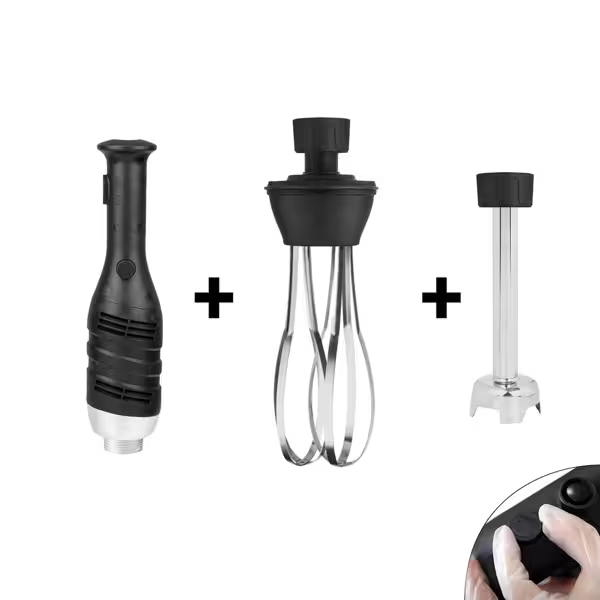
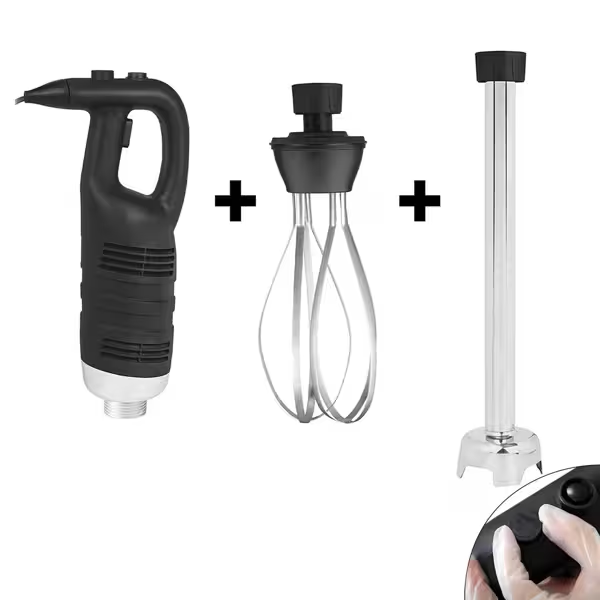
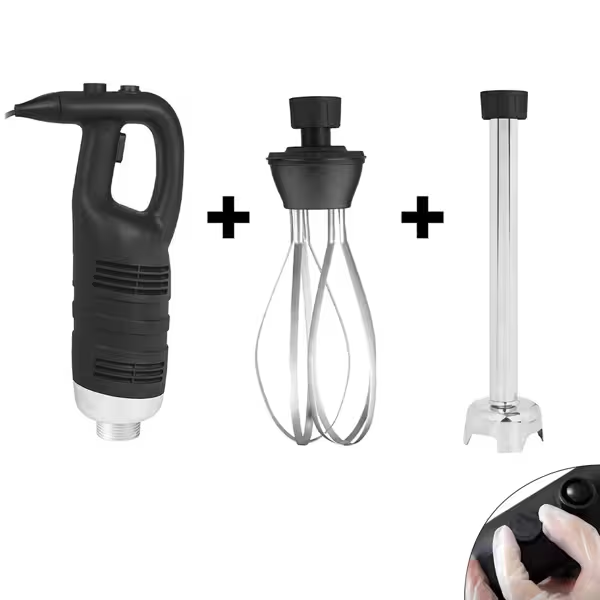
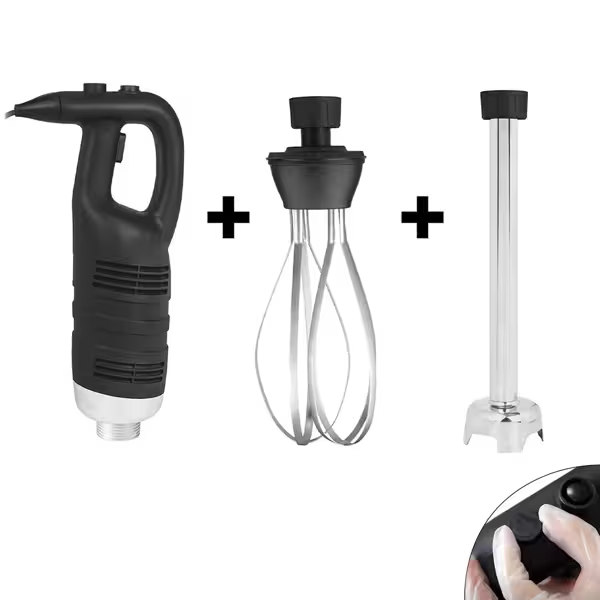
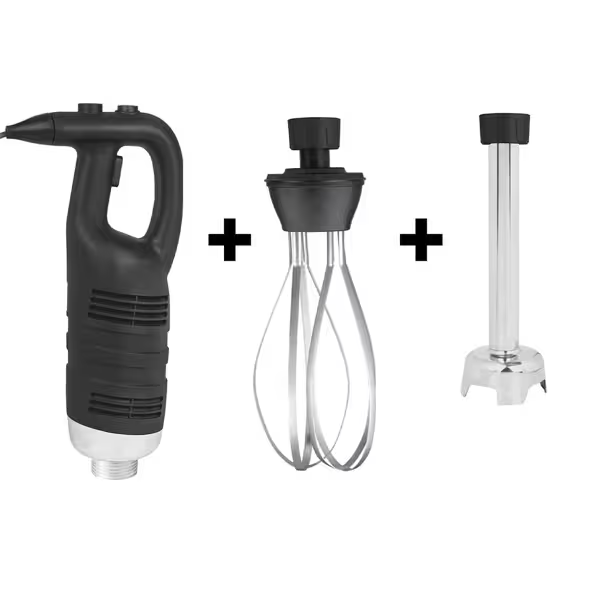
Models with a fixed speed are suitable for clearly defined standard tasks. An adjustable speed offers more control when preparing different consistencies or when delicate ingredients need to be incorporated slowly at first. With modular systems, the motor unit, mixing wand, and other attachments can be combined to suit the specific task.
Quick Checklist for Choosing a Commercial Hand Blender
- Realistically determine the processing capacity and bowl depth
- Adjust power and speed to the consistency of the food
- Choose between a fixed or adjustable speed setting based on intended use
- Compare fixed blender arms with interchangeable attachment systems
- Consider weight, handle, and cleaning requirements for daily use
Improve Workflows During Preparation and Peak Hours
The biggest practical advantage is the ability to process food directly at the workstation. A sauce can be pureed right in the pot without having to transfer it to a separate container. This saves additional steps and reduces the amount of washing up. During preparation, larger quantities can be processed one after another, while in smaller kitchens, a compact hand blender can be used flexibly at different workstations.
To ensure a smooth workflow, the appliance needs a designated spot near the containers being used. A wall mount keeps the hand blender and accessories within easy reach and protects the components from being set aside haphazardly. A sturdy stainless steel countertop allows you to prepare ingredients and safely set the appliance down after use. When switching frequently between different recipes, a clear cleaning routine helps ensure hygienic separation of preparations.
Material, Cleaning, and Durability in Daily Use
In professional models, parts that come into contact with food are often made of stainless steel. This material is durable, hygienic, and suitable for contact with moist, warm, or fatty foods. Removable mixing rods, bells, or blades make cleaning easier, provided the design allows for quick and safe removal.
After each use, residues should be removed from the area around the blades, the protective bowl, and the connection points. This is especially important for sauces, creams, and fatty foods, as deposits can accumulate in hard-to-reach areas. Appropriate overload protection can provide additional safeguards for the motor during intensive use. For everyday commercial use, therefore, it is not only maximum power that matters, but also the machine’s durability during repeated use.
Integrating a hand blender effectively into your kitchen setup
A hand blender works most efficiently when preparation, processing, and cleaning are well coordinated in terms of space. Ingredients can be portioned out on prep tables, placed in suitable containers, and processed immediately. For larger quantities, proximity to cooking pots or other deep cooking containers is important. For attachments, blades, and accessories, clearly organized storage is recommended so that needed components remain readily available.
Those who regularly perform a variety of tasks can choose a set that includes a hand blender and a whisk. The hand blender handles soups, purées, and emulsions, while the whisk is suitable for lighter mixtures, creams, or whipping. For very compact or heavy-duty chopping applications, however, the Cutter category remains functionally separate.
Make cost-effective choices and use them appropriately over the long term
A properly sized hand blender ensures smooth operations, reduces the workload on the team, and makes it easier to achieve consistent results. Units that are too small can quickly reach their capacity limits when processing large quantities, while oversized models can be unnecessarily heavy or unwieldy.
Therefore, the key factors in the purchasing decision are processing capacity, wand length, speed control, attachment system, ease of cleaning, and durability. A solution tailored to the size of the operation can be more easily integrated into daily preparation and can make a reliable contribution to food production over many repeated uses.