


Salamander Grills / Pita Ovens
Salamander grills / pita ovens are ideal for quickly broiling, browning, toasting, and reheating food in professional food service settings. They support streamlined workflows in snack bars, bistros, restaurants, hotel kitchens, and snack concepts. Guide to Salamander Grills / Pita Ovens »



Width
Operation type
Design/Equipment
Number of Burners
Maximum Temperatur
Power
Power Connection
Price
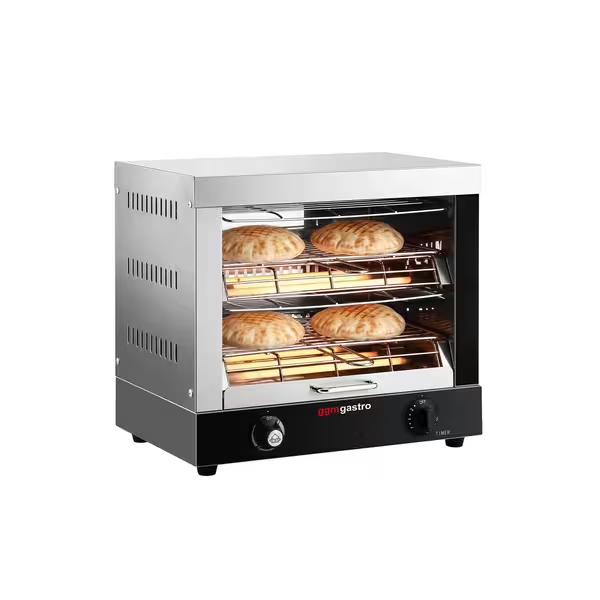
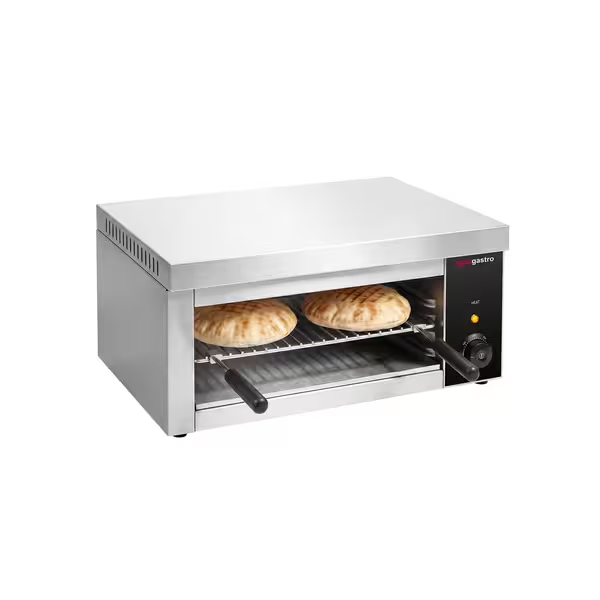
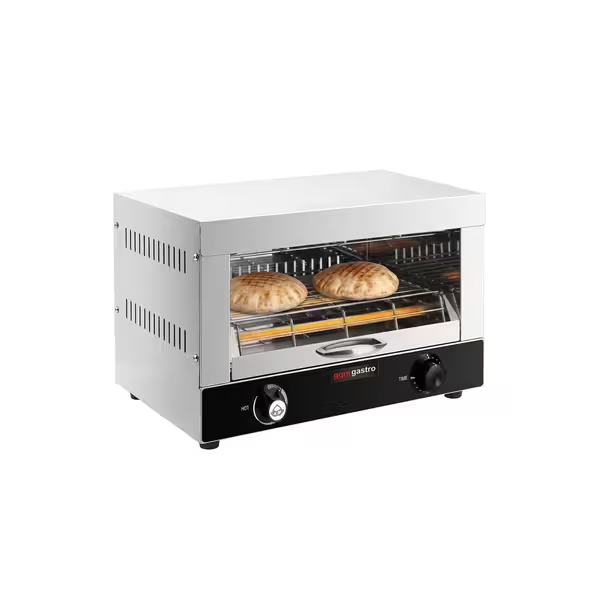
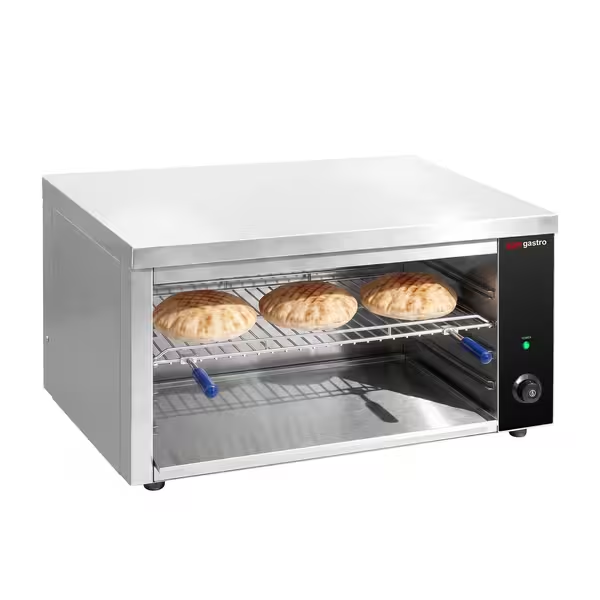
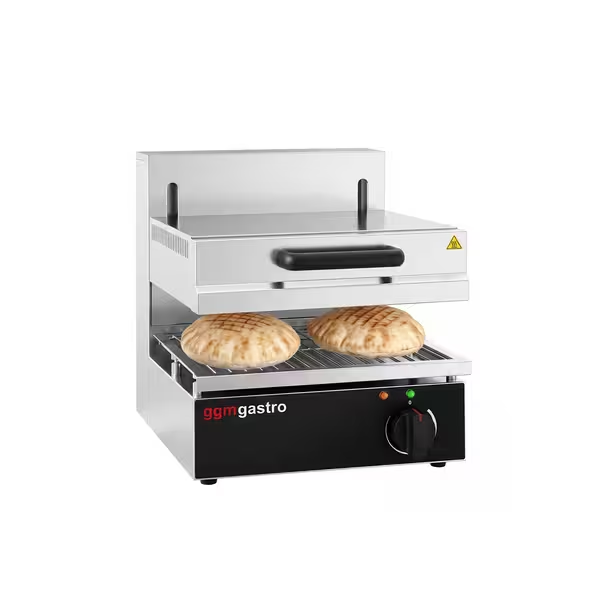
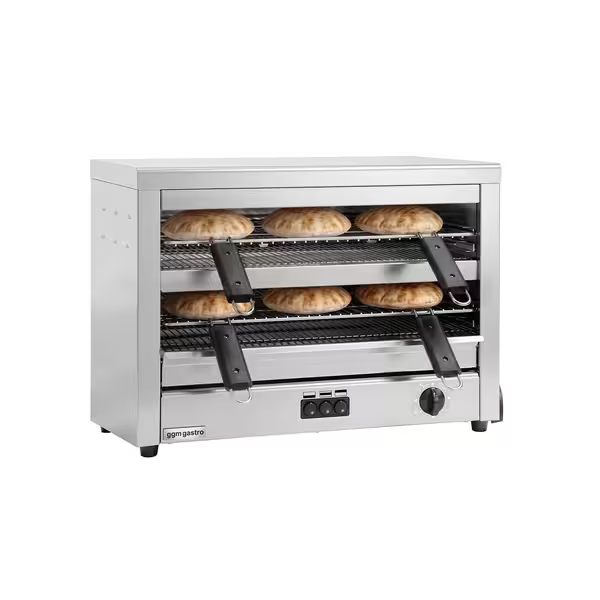
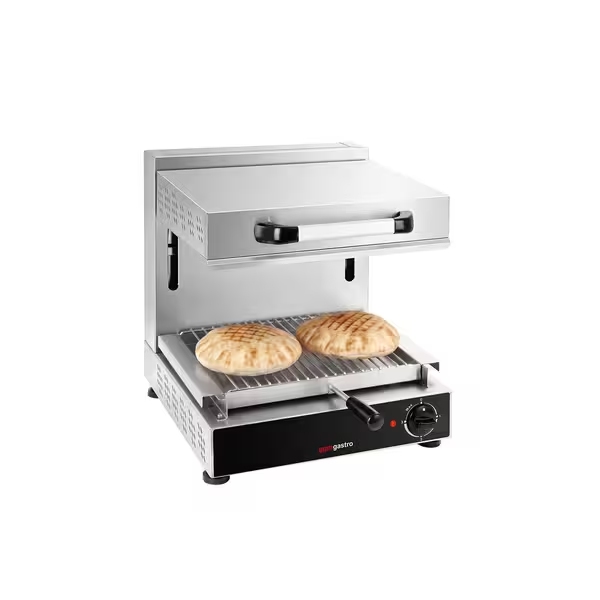
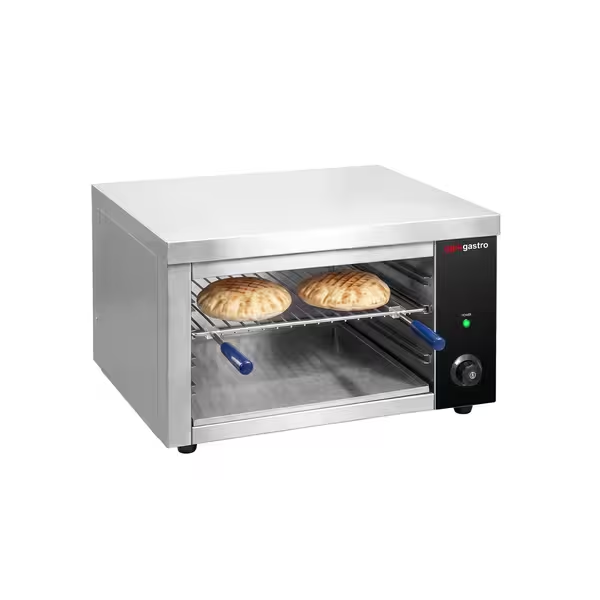
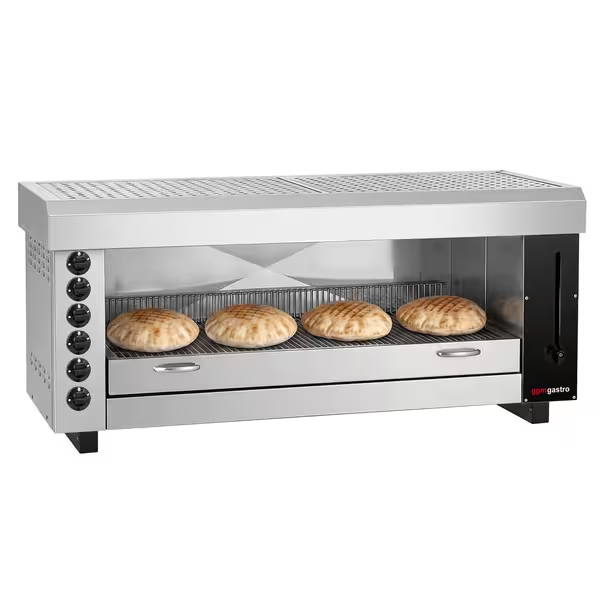
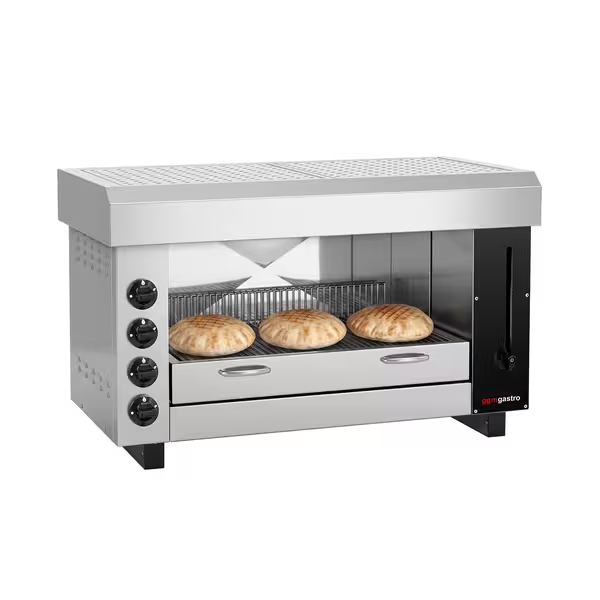
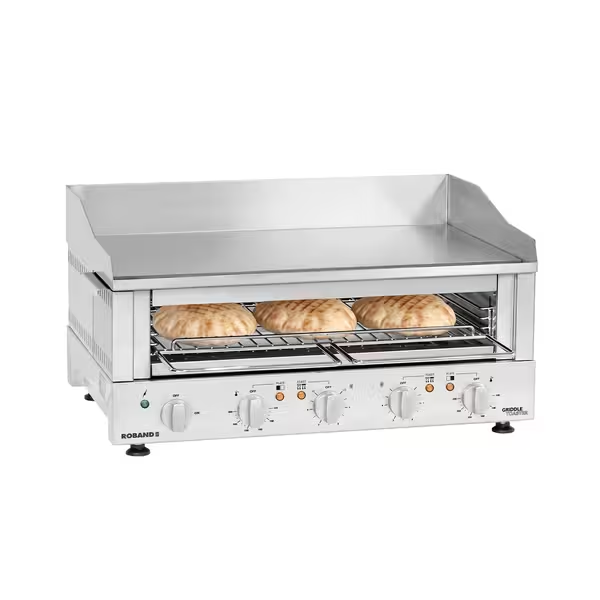
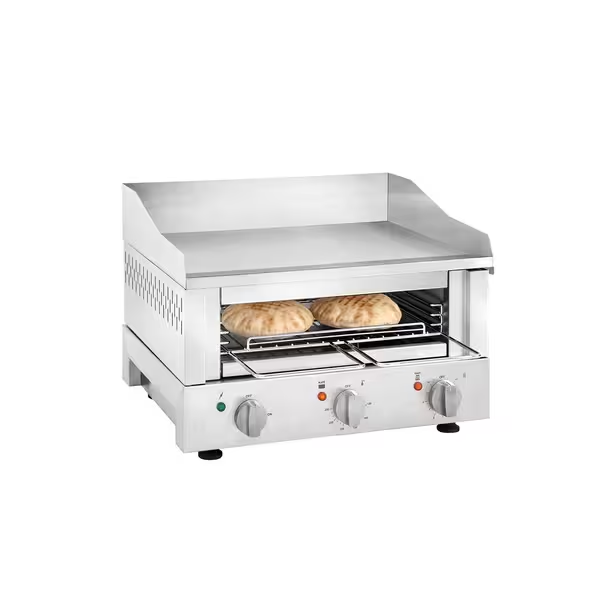
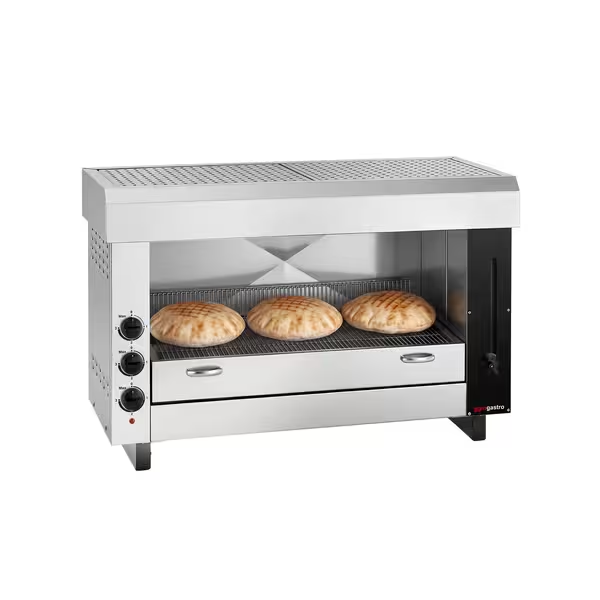
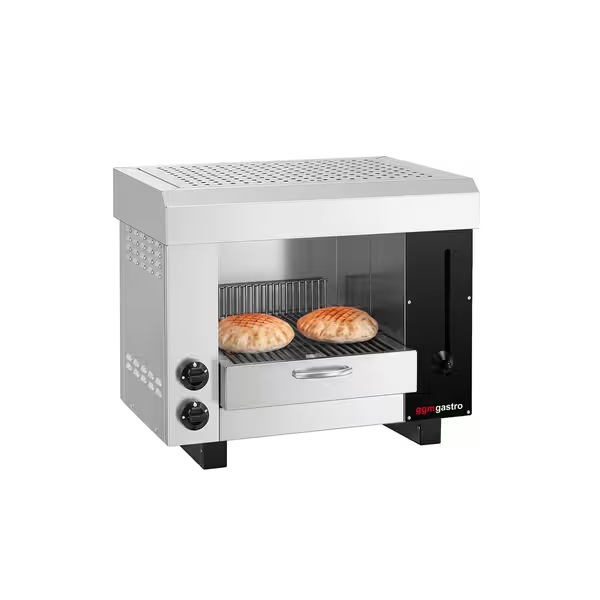
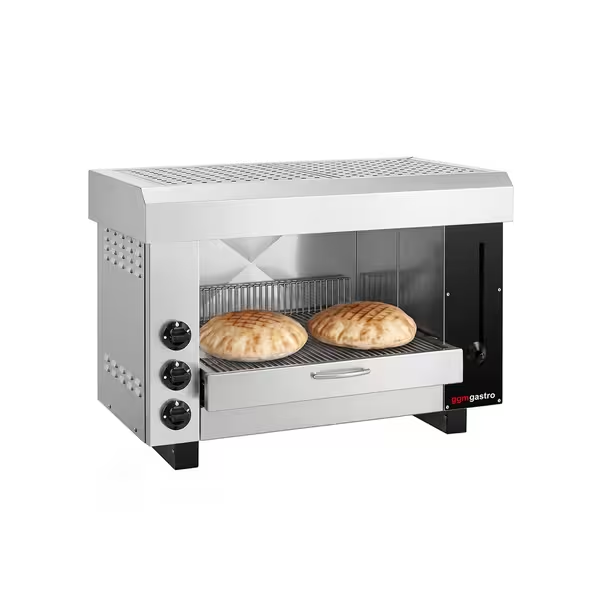
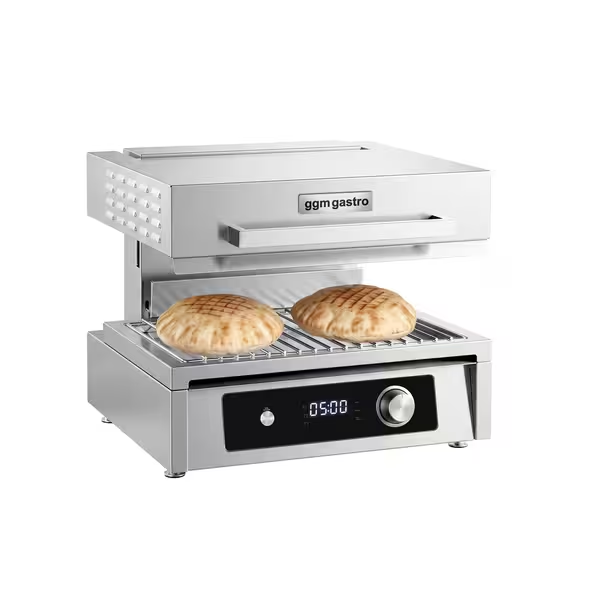
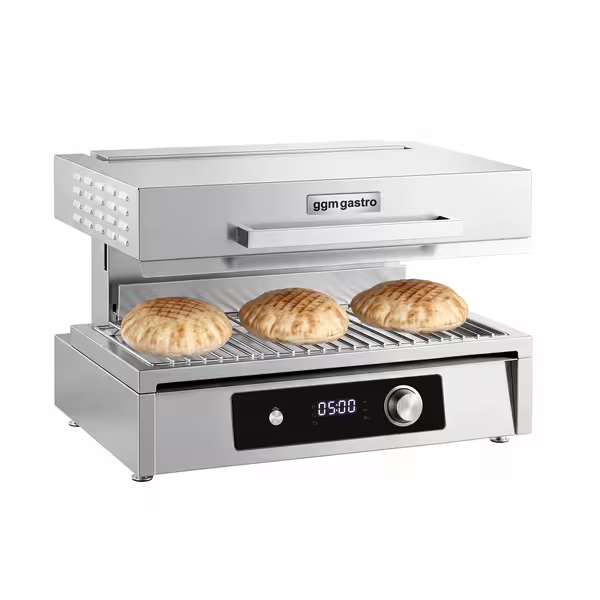
Salamander Grills / Pita Ovens for Quick Food Preparation in Everyday Restaurant Operations
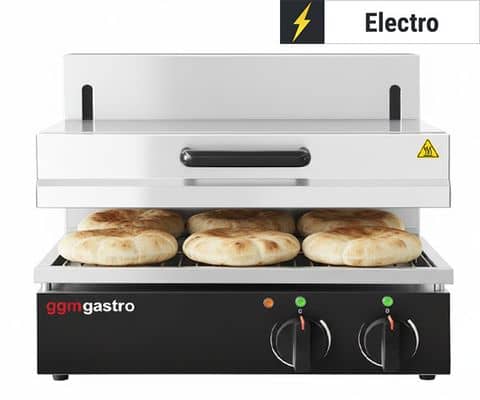
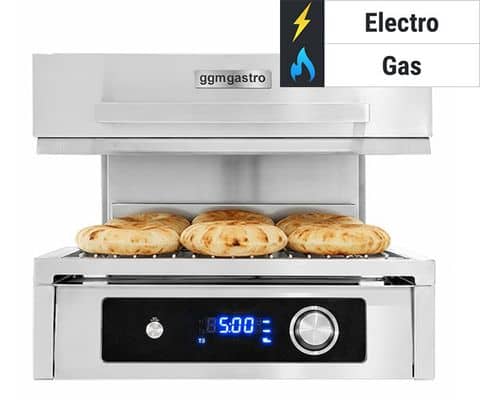
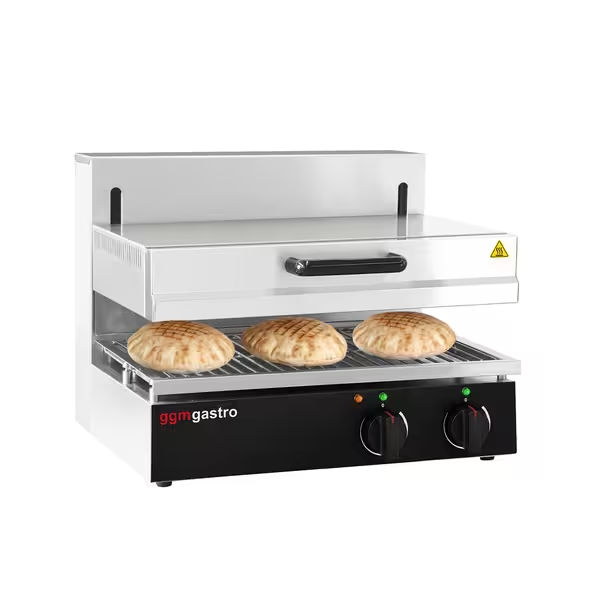
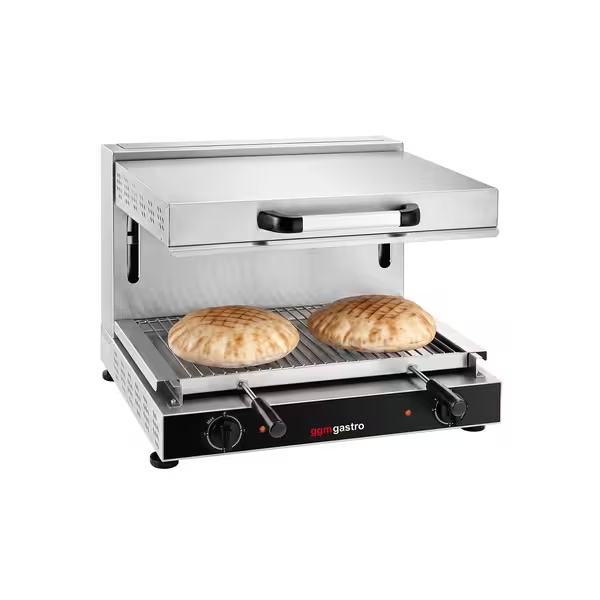
Salamander grills / pita ovens are compact commercial kitchen appliances with intense top heat that brown, bake, gratinate, or reheat food just before serving. In practice, they are used wherever pita, flatbread, baguettes, toast, casseroles, cheese dishes, or plate components need to be finished quickly.
Especially in high-volume establishments, it’s not just the raw heating power that counts, but how well the appliance integrates into the workflow. A salamander at the serving counter can streamline the final step of the process: dishes are prepared, briefly broiled, and served immediately. In a snack bar or kebab shop, the focus is often on pita and flatbread, while restaurants and bistros tend to use Salamander grills for gratins, snacks, or to finish individual components.
Which Salamander grills / pita ovens are right for your business?
The choice depends heavily on the intended use. Compact electric salamanders with a 230-volt connection are particularly well-suited for smaller kitchens, snack stations, or flexible retrofits. More powerful models with a 400-volt or gas connection are a good choice when multiple portions need to be prepared quickly and higher heat output is required.
The design also plays a role. Slide-in salamanders are compact, robust, and suitable for many standard applications. Lift-type salamanders allow for more precise control of the distance between the food and the heat source. Infrared salamanders use intense, direct heat and enable quick browning times. For pita ovens, heating zones, interior dimensions, rack area, and burner output are important criteria to ensure that bread, flatbreads, or snacks are heated evenly.
The following factors are particularly relevant to the purchasing decision:
-
Power source: gas, 230 volts, or 400 volts
-
Power and heating zones for the desired baking cycle
-
Unit width, depth, and usable interior space
-
Design: slide-in, lift, or infrared
-
Ease of cleaning thanks to stainless steel surfaces, racks, and drip pans
Planning, Space Requirements, and Integration into the Kitchen Lineup
A salamander grill is most effective when placed where the final step in food preparation takes place. In many kitchens, this is the area between the hot food preparation station and the serving area. There, the appliance helps ensure short distances, clear handoffs, and a clean finish, without keeping food waiting unnecessarily long.
In smaller establishments, every centimeter of floor space counts. Countertop units can be easily placed on stainless steel furniture or suitable base units, provided the connections, ventilation, and operating space are adequate. For gas appliances, the existing gas supply and professional installation are particularly important. For electric appliances, the voltage and connected load must match the existing infrastructure.
In production kitchens or high-volume snack concepts, it’s worth considering the capacity per work phase: How many pitas, baguettes, or plated meals need to be ready in just a few minutes? Is a compact salamander sufficient, or would a wider pita oven with multiple heating zones make more sense? These questions combine appliance size, workflow, and serving speed to inform a sound decision.
Hygiene, Materials, and Durability Under Intensive Use
Salamander grills and pita ovens involve heat, grease, crumbs, and frequent handling. That’s why materials and ease of cleaning are key factors in everyday use. Stainless steel housings, removable grates, grease-collection trays, and smooth surfaces make daily maintenance easier and support hygienic operations. This is especially important when the appliance is used regularly during long operating hours.
Mechanical stress also plays a role: racks are slid in, baking sheets are moved, flatbread is placed on them, crumbs are removed, and surfaces are cleaned regularly. Robust construction helps ensure smoother daily operation. Combined with matching dishwashing cabinets and clear cleaning routines, the appliance integrates more seamlessly into kitchen workflows.
Quick Guide to Choosing Salamander Grills / Pita Ovens
The right salamander isn’t determined by power output alone, but by the interplay of the menu, timing, and cooking surface.
-
For pita, flatbread, and quick snacks: Pay attention to interior dimensions, rack space, and heating zones.
-
For small kitchens: Check for compact tabletop models with the appropriate connection type.
-
For peak hours: Plan for power output, number of burners, and heating performance.
-
For smooth operations: Consider space at the pass and short distances to the serving area.
-
For easy maintenance: Prefer stainless steel, removable components, and drip pans.
Smart combinations for a cohesive operational concept
Salamander grills and pita ovens are not standalone, isolated units. They work best when preparation, heating, serving, and cleaning are all coordinated. In snack bars and fast-food establishments, combining them with prep tables can be useful so that ingredients are prepared and kept within easy reach. In restaurant kitchens, suitable work surfaces, refrigerated base units, and clearly defined service areas help ensure a smooth finish during peak hours.
For establishments serving pita, flatbread, or baked snacks, proximity to packaging, plate storage, or serving areas is also important. This creates a workspace that not only heats food but also supports the entire final stage of production.
Buy Salamander Grills / Pita Ovens at GGM Gastro
GGM Gastro offers salamander grills and pita ovens for a variety of business sizes and applications: from compact electric salamanders to high-performance gas pita ovens designed for high-volume production. This selection helps businesses prepare food quickly, evenly, and in a well-organized manner.
By selecting the power, connection type, dimensions, design, and cleaning requirements that best suit their specific operation, businesses can lay a solid foundation for consistent workflows at the serving counter, in snack production, or in a snack bar. This turns a compact appliance into a practical building block for efficient foodservice processes.