


Donut Machines for the Food Service Industry and Commercial Use
Donut machines facilitate the predictable, commercial production of donuts—from portioning to controlled frying. Depending on production volume and operational workflow, you can choose from automatic, semi-automatic, and manually assisted solutions. Donut Machine Guide »
Product type
Power Connection
Capacity liters
Capacity
Width
Depth
Height
Price

Properly Classifying Donut Machines in Professional Settings
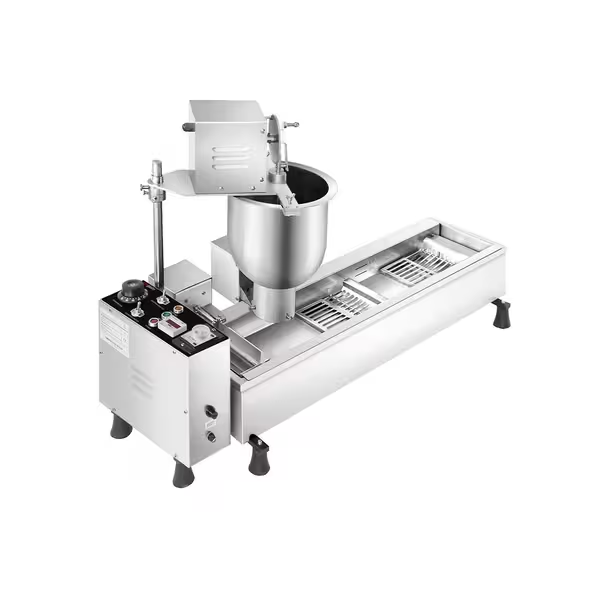
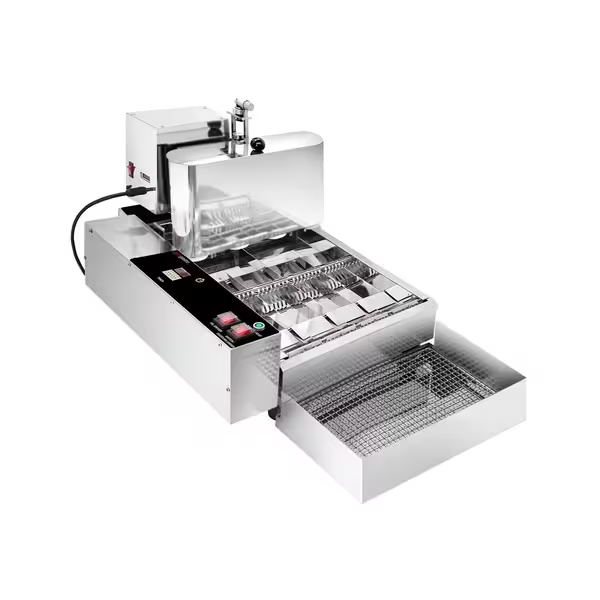
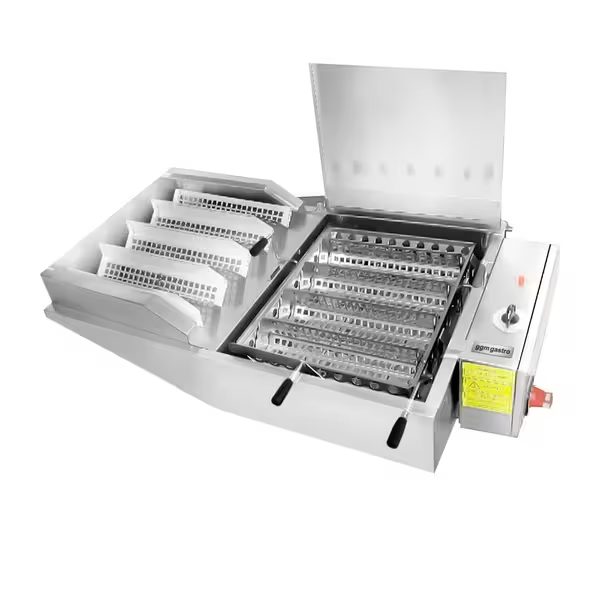
Donut machines are designed for the commercial production of donuts and, depending on the model, combine portioning, frying, turning, and dispensing into a single, defined production process. They are particularly well-suited for cafés, bakeries, snack bars, doughnut shops, catering companies, and other concepts that need to produce predictable, recurring quantities with consistent processes.
The first factor to consider when making a selection is the actual peak load. The current product line includes, for example, automatic models capable of producing approximately 250 to 400 donuts per hour, automatic machines capable of producing around 400 donuts per hour, semi-automatic deep-fryers capable of producing about 360 donuts per hour, and electric donut fryers capable of producing around 240 donuts per hour. Such performance figures are more meaningful than the sheer daily output: what matters is how many donuts are actually needed during the peak sales period.
Automatic or semi-automatic: It depends on the workflow
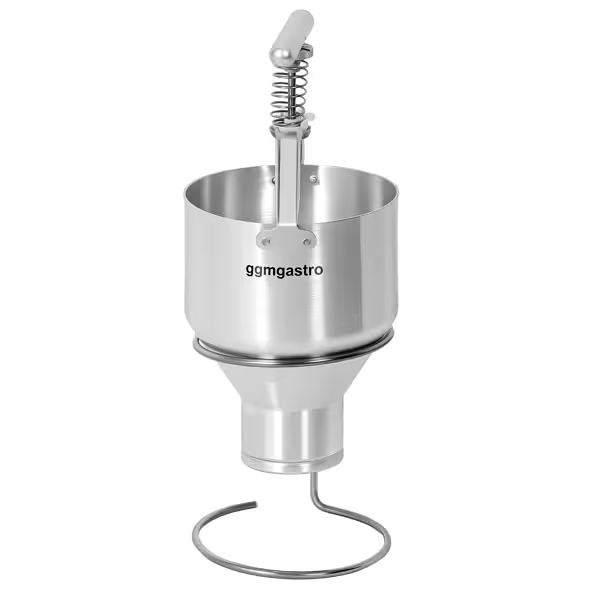
A key selection criterion is the degree of automation. Fully or largely automated donut machines can handle multiple process steps continuously. Semi-automatic models allow for more staff intervention, while a manual dough dispenser primarily assists with portioning. Which solution makes the most economic sense depends on how much staff is available, how consistent the workload is, and to what extent production should be standardized.
During peak hours, an automated line can ease the workflow if the dough is prepared and the removal of finished donuts proceeds without a backlog. For smaller quantities, however, a more compact, semi-automatic solution may make more sense because it takes up less space and does not provide more capacity than the business actually uses.
Space Requirements, Connection, and Integration of the Donut Machine
A donut machine should not only fit in the space but also integrate into the workflow. Before purchasing, you should therefore check the dimensions, design, required clearance, and electrical connection. In a small café kitchen, a compact design is often more important than maximum capacity. In a production kitchen with heavy lunchtime, weekend, or event traffic, greater capacity can be beneficial if preparation, removal, and further processing can keep pace.
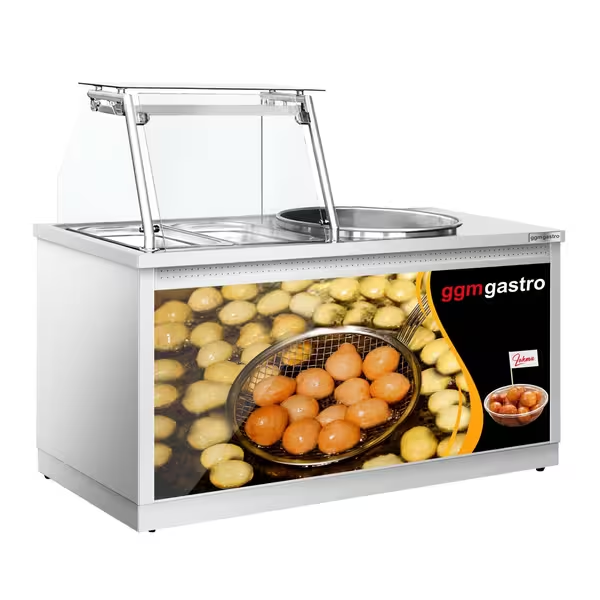
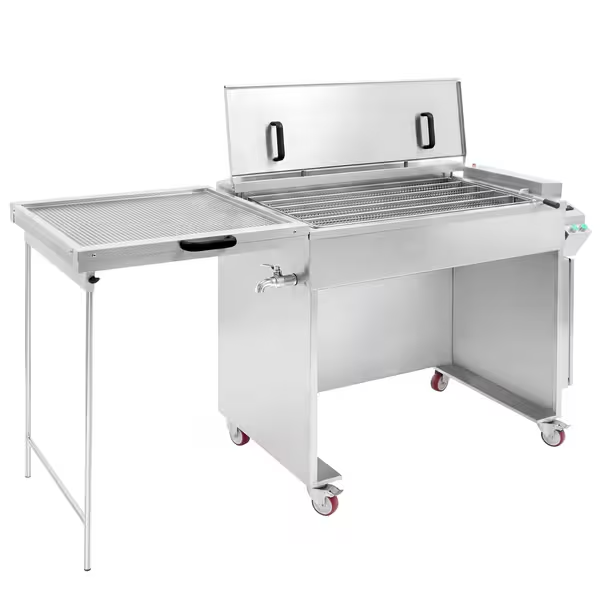
Short distances help maintain a steady production pace. Dough, tools, and containers should be within easy reach without blocking the hot production zone. Matching stainless steel furniture creates a sturdy work surface around the machine. If prepared ingredients are kept chilled, the refrigeration should also be organized in such a way as to avoid unnecessary walking distances.
Hygiene, Cleaning, and Durability in Daily Use
For equipment that operates with hot oil, cleaning and accessibility are among the most important day-to-day considerations. Stainless steel surfaces are a practical choice in professional settings because they are durable and easy to clean. At the same time, it’s important to assess how easily the grease tray, drip pans, and parts that come into contact with food can be accessed. Frequent use, heat, oil, mechanical stress, and regular cleaning cycles place significantly greater demands on materials and workmanship than occasional use.
The infrastructure must also be compatible with the machine. Power requirements and the installation location should be clarified before placing an order; in cases of intensive oil production, the existing ventilation must also be factored into the planning. For establishments that fry food regularly, a frying oil filter can help maintain the frying oil, provided it fits your production workflow.
Quick Check Before Selecting:
-
Desired output per hour during peak times
-
Automatic, semi-automatic, or manual operation
-
Available floor space and design
-
Electrical power rating and existing connection
-
Access for cleaning and grease management
Planning Donut Machines as a Cost-Effective Production Component
Properly sized donut machines can simplify workflows because recurring steps are organized more clearly and production volumes can be planned more effectively. The economic benefit does not come solely from high production volumes. The key factor is whether capacity, staffing, actual sales, and available floor space are well-aligned. An oversized machine ties up space and capital; a model that is too small can become a bottleneck during peak times.
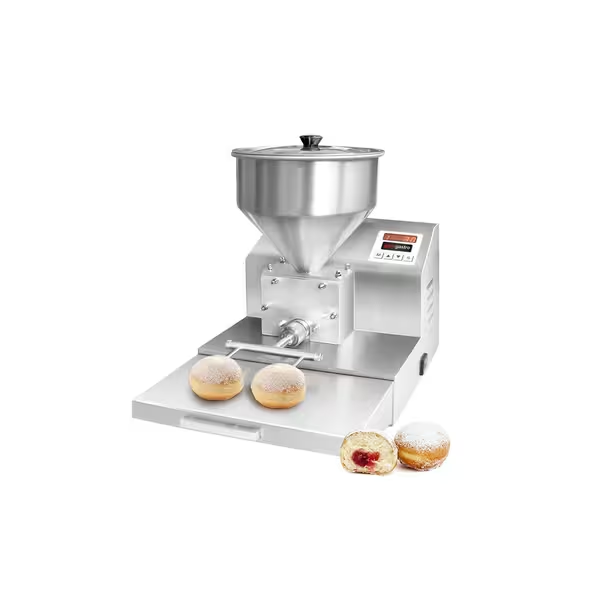
To ensure a smooth workflow, the machine should be designed as part of a clear production line. A dough dispenser can standardize portioning, while a filling machine supports a downstream step for filled donuts. Preparation, frying, removal, cooling, and, if applicable, filling should be organized to minimize cross-traffic and unnecessary repositioning.
Anyone selecting donut machines for an existing or new operation should therefore not limit their comparison to the purchase price alone. Production capacity, level of automation, footprint, connections, cleaning requirements, and the expected workload in day-to-day operations together form a solid basis for decision-making. This allows you to choose a solution that fits your current concept and does not unnecessarily complicate future adjustments.