


Furnishings for Stores, Salons, and Offices in Professional Settings
From coffee and cold beverages to employee meals and meeting rooms, all the way to restrooms and hygiene areas: The right equipment for stores, salons, and offices supports smooth operations beyond the actual core business. Which equipment makes sense depends primarily on the number of employees, customer and visitor traffic, the layout of the space, and the desired range of services. Guide to Equipping Stores, Salons, and Offices »
Basic equipment









Furnishing Stores, Salons, and Offices: Planning Auxiliary Areas Thoughtfully
Professional equipment for stores, salons, and offices includes appliances and supplies for beverage service, light refreshments, customer and meeting areas, waste management, as well as sanitation and hygiene. Unlike in the foodservice industry, the focus here is not on a large production kitchen. Rather, the equipment is designed to reliably organize everyday ancillary processes. In a hair salon, for example, providing beverages for waiting customers can be important. A retail store may need coffee and a compact staff kitchen. In an office, on the other hand, multiple meeting rooms, larger teams, and regularly visiting business partners may place higher demands on coffee, beverage, and restroom areas. The starting point for planning is therefore usage: Who uses the equipment, how often is it needed, and where in the facility do regular trips or wait times occur?
Adjust the coffee supply to match employee and customer traffic
Coffee is a daily staple in many stores, salons, and offices. Fully Automatic Coffee Machines & Coffee Makers can serve employees, customers, and visitors alike, depending on the intended use. The most important factor in making a selection is the actual number of beverages served. A small salon that occasionally offers customers a cup of coffee has different requirements than an office with 50 employees and several meetings a day. The type of beverages also influences the needs: Is regular coffee sufficient, or are espresso, cappuccino, and other specialty coffees regularly requested? In addition to the machine’s capacity, the entire workspace should be taken into account. Coffee beans or ground coffee, cups or mugs, milk, sugar, stir sticks, and cleaning supplies all need designated storage spaces. Water and, if necessary, water treatment systems should also be included in the planning. A well-organized coffee station prevents supplies from being scattered across various cabinets or having to be constantly restocked during peak usage times.
Set up a coffee station where it will actually be used
The location of a coffee machine has a greater impact on the daily workflow than it might seem at first glance. If the main coffee machine is located far from the workstations, it results in many extra trips every day. If, on the other hand, it is situated directly in a narrow reception or walkway area, people waiting there can block the path. The ideal location therefore depends on how the space is used. In a salon, it makes sense to place the beverage station near the reception and waiting area. In an office, a location between several work areas or near a break room is often more functional. In larger businesses, the question may also arise as to whether a single central station is sufficient or whether several smaller stations would better distribute foot traffic. It is not maximum technical performance alone that matters, but rather the combination of capacity, location, and number of users.
Quick Checklist for Choosing the Right Equipment
Here are five points to help narrow down your actual needs:
- Number of users: How many employees, customers, and visitors use the facilities regularly?
- Beverage selection: Are only coffee and tea provided, or are chilled beverages also available?
- Layout: Is there a reception area, waiting area, break room, or multiple meeting rooms?
- Catering: Are only beverages offered, or should employees also be able to heat up food they’ve brought from home?
- Sanitary Facilities & Hygiene: How frequently are the washrooms and restrooms used each day?
These factors determine which equipment can be provided centrally and where it makes more sense to have multiple decentralized stations.
Add a compact tea station
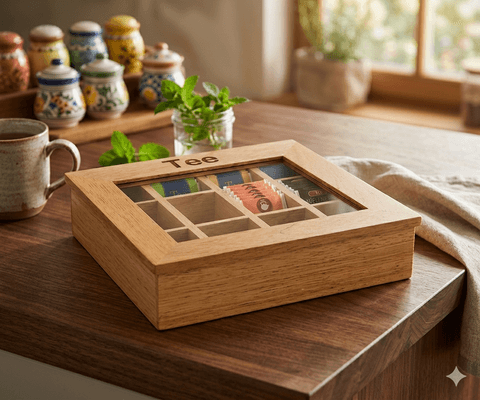
Not every employee or guest drinks coffee. Tea makers & teapots can therefore be a simple addition to the beverage station. Especially in meeting rooms, customer areas, and break rooms, they allow you to offer a wider variety of beverages without having to set up a separate, elaborate workstation. Tea boxes can keep different varieties neatly organized and readily available. Clear organization is also important here. Cups, tea, water, and accessories should be available at the same station whenever possible. If hot water is dispensed in one place, tea bags are stored in another room, and cups must be fetched from a separate kitchen, a simple beverage ends up requiring an unnecessarily large number of steps. For this reason, it often makes sense to combine the coffee and tea areas.
Use minibar refrigerators for small service areas
Not every business needs a large beverage refrigerator. Minibar refrigerators can be a good option in situations where a modest selection of chilled beverages needs to be available in a compact space. This could be, for example, a small meeting room, reception area, lounge, or an office with a small number of employees. The main advantage is the minimal space required. However, actual usage is the deciding factor. If large quantities of water and soft drinks are served daily, a very small refrigerator will result in frequent restocking. The size of the unit should therefore not be chosen solely based on which niche is still available. What matters is how many beverages are needed between two restocking cycles.
Sizing Beverage Refrigerators for Higher Consumption
When beverage consumption is high, beverage refrigerators become increasingly important. They allow you to store water, soft drinks, and other suitable beverages in an organized and easily accessible manner. Especially in larger offices or businesses with regular customer traffic, having sufficient refrigerated storage can simplify daily operations. It’s important to distinguish between working stock and reserve stock. The refrigerator does not need to hold the company’s entire beverage supply. Larger reserves can be stored separately and restocked regularly. Location is key. A beverage refrigerator for employees should ideally be placed in or near the break room. A unit for customers or visitors, on the other hand, may be better suited closer to the reception area, waiting area, or meeting space. This ensures that beverages are available exactly where they’re actually needed.
Using Conference Refrigerators in Meeting Areas
In companies that hold regular meetings, a unique supply system develops. Conference refrigerators can provide chilled beverages directly in or near meeting rooms. This eliminates the need to fetch supplies from a more distant lounge or storage area for every meeting. Short service distances can be particularly important when multiple meetings follow one another immediately. Water, glasses, and any other beverages can be prepared in advance. After the meeting, supplies are restocked, and the room is ready for the next appointment. If there are multiple conference rooms, it’s worth considering whether a central supply is sufficient or if individual areas require their own reserves. The key factor is not only the number of rooms but also how often they are used simultaneously.
Design Meeting Rooms for Quick Setup
Keeping beverages cold is just one part of a well-functioning meeting area. Glasses, mugs, serving trays, tea, and other supplies also need designated spots. The more clearly the supplies are organized, the faster a room can be prepared for the next meeting. This is particularly important in companies where receptionists, administrative assistants, or other staff regularly host clients and business partners. A small, central supply area in the immediate vicinity can reduce long walks. At the same time, the meeting room itself should not be cluttered with large quantities of spare items. Ideally, it should contain only what is needed for the current use.
Salons: Organizing Customer Service Without Unnecessary Trips
In hair salons, beauty salons, and other salon concepts, the beverage selection can be an integral part of customer service. Coffee, tea, or chilled beverages should therefore be made available in such a way that employees do not have to leave their workstations for extended periods of time. However, the beverage station does not require a full-scale commercial kitchen. A compact setup consisting of a coffee maker, a small refrigerator, tableware, and clearly organized accessories can be sufficient for many concepts. The key factor is customer traffic. If multiple customers are being served at the same time and beverages are offered regularly, the station should have sufficient capacity so that refilling and cleaning do not become an additional step during every treatment. Dirty dishes also need a designated return area and should not be collected and scattered across the reception area or workstations.
Stores: Separate the employee area from customer service
In the retail sector, on-site catering can serve two distinct purposes. Employees may need coffee, cold beverages, and a space for breaks. Depending on the business concept, customers or business partners may also be served. These two functions do not necessarily have to take place at the same station. An internal employee kitchen can be equipped more functionally, while the customer area remains deliberately compact and presentable. Especially in areas where customers receive advice or face longer wait times, beverages can serve as an added service. However, it is important that the catering facilities do not interfere with the actual sales process. For example, a coffee machine located right next to a heavily trafficked checkout or in a narrow walkway can cause more disruption than it is worth.
Offices: Planning Equipment Based on Team Size and Attendance
When it comes to offices, the amount of space should not be determined solely by the number of workstations available. What matters is how many employees are actually on-site at the same time. Hybrid work can result in a company having many workstations, yet daily usage of coffee, beverage, and break areas is significantly lower. On certain team or meeting days, however, usage can spike sharply. Facilities should therefore account for typical peak times. Coffee machines, refrigerators, and restroom areas, in particular, see heavier use in the morning hours, during breaks, or around larger meetings. A setup that seems sufficient on a daily average can become a bottleneck precisely during these short periods.
Plan for Microwaves for Compact Employee Meal Service
Not every office or retail store needs a professional kitchen. Microwaves can provide a compact solution in staff rooms and break rooms for heating up food that employees have brought from home or prepared in advance. When planning, the number of simultaneous users is key. A single microwave may be sufficient for a small team. However, if many employees take their lunch break at the same time, wait times can quickly arise. Work surfaces and storage areas are also part of the space. Food must be unpacked, transferred to another container if necessary, and then taken away again. Cutlery, dishes, and trash cans should be conveniently located nearby. In this way, a small technical solution becomes a functional break area.
Provide ice cubes only where there is a genuine need
Mini ice makers can be a practical addition for individual customer service, meeting, or beverage concepts. However, they are not a necessary component of every office or salon. The investment makes the most sense in settings where beverages with ice are regularly served and there is actual demand for them. Water supply—or refilling—as well as dispensing and cleaning are also part of the process. Additional equipment should therefore meet the same standards as the rest of the furnishings: it will be given a permanent place only if it is used regularly and provides a concrete operational benefit.
Coordinate tableware and glassware for use and return
Coffee and beverage offerings require appropriate cups or glasses. Not only is the number of users a factor, but also the speed at which used tableware is cleaned and made available again. In a small lounge with only a few beverage options, a comparatively small supply is sufficient. An office with several conference rooms, on the other hand, may have significantly more glasses and cups in circulation at any given time. Especially during meetings, sufficient reserves should be available so that dishes do not have to be washed immediately after each meeting before the next one can begin. At the same time, unnecessarily large inventories create additional storage requirements. The inventory should therefore be tailored to the highest typical concurrent usage and the existing cleaning process.
Positioning in-store POS systems to align with the sales process
For retail and individual salon concepts, payment processing is also part of the operational infrastructure. Point-of-sale systems should be used where ordering, service provision, or merchandise sales and payment naturally converge. Location is particularly crucial. The point-of-sale area must be easily accessible to customers but should not block central walkways. At the same time, employees need sufficient workspace for the actual sales-related processes. In salons, for example, the cash register can be part of the reception and appointment scheduling area. In a retail store, it often marks the end of the customer’s journey. Small accessories and supplies should also be arranged in such a way that the area remains uncluttered.
Organize waste separation right where it's generated
Packaging, paper, coffee grounds, and other waste are constantly generated even outside of food service establishments. Waste sorting systems can help clearly organize the various waste streams right at the source. The requirements in an office kitchen differ from those in customer areas or restrooms. It makes particular sense to place waste bins where waste is actually generated. A central bin located far from the coffee or break area creates extra walking distance and increases the likelihood that smaller waste bins will be improvised as supplementary containers. Capacity and emptying frequency should also be well-matched. A very small bin in a heavily used break room requires frequent emptying, while oversized systems take up unnecessary space.
Sizing Sanitary Facilities Based on the Number of Visitors and Employees
Sanitary facilities are among the operational areas that must function continuously, even if they are not part of the company's core business. Soap & Disinfectant Dispensers as well as toilet paper and other dispenser systems should be scaled to the daily user volume. In addition to capacity, ease of monitoring and refilling are particularly important. A business with few employees requires different supplies than a store with high customer traffic or a larger office building. Supplies should be stocked in such a way that employees can restock the areas without having to walk long distances. High-traffic restroom areas, in particular, benefit from clear restocking schedules rather than waiting until supplies are completely depleted before taking action.
Choose a hand dryer that suits your actual needs
Hand dryers can be an option for equipping wash areas. Factors such as the number of users, room size, and the desired operating concept play a role in the decision. Alternatively or in addition, appropriate paper and towel systems can be used. What matters is not so much a one-size-fits-all solution as a functional process: Wash hands, dry them, and leave the area without consumables or waste accumulating unchecked. Cleaning and maintenance are also part of day-to-day use. The equipment should therefore not only function on the day of installation but also be maintainable over the long term with reasonable effort.
Organize first-aid supplies so they are visible and accessible
First-aid supplies are part of a company’s basic equipment—items that are rarely needed in everyday operations but must be immediately available when needed. Their location should therefore be clearly defined and known to all employees. A single, clearly designated location is more practical than several scattered, disorganized stockpiles. Regular inspections are also part of proper organization. Used or expired items must be replaced in a timely manner. In larger facilities, it may be advisable to take distances and different work areas into account when determining the location.
Adapt the equipment layout to the available space
Especially in existing stores, salons, and offices, there is often only limited space available for auxiliary areas. A coffee maker, a refrigerator, and a microwave may technically fit into a niche—but the area still requires additional space for cups, food, supplies, and service. That’s why it’s important to measure more than just the width of the appliances. Doors must be able to open, appliances must remain accessible, and employees need sufficient space to move around. Small spaces in particular benefit from clear prioritization. Equipment used daily should be placed in easily accessible locations; rarely used appliances shouldn’t permanently occupy the most valuable work surfaces.
Consider Cleaning Right from the Start When Setting Up
Coffee, tea, food, and heavily used restroom areas require regular cleaning. Appliances and furniture should therefore be arranged so that countertops and floors remain easily accessible. For example, a kitchenette that is too cramped can make it difficult to remove crumbs, liquids, or dust. Coffee machines and refrigerators also require regular maintenance. Surface cleaning products should be organized and stored according to their intended use, without unnecessarily cluttering the actual work or customer areas. The easier it is to perform regular cleaning, the less work time is spent rearranging items and cleaning hard-to-reach spaces.
Make a Conscious Decision Between Centralized and Decentralized Supply
As a business grows, the question arises as to whether a single central refreshment station is sufficient. A large office kitchen can efficiently serve many employees, but it requires employees in distant areas to walk longer distances. Multiple small coffee stations shorten these distances, but they increase the number of machines, the cleaning effort, and the need for refills. The situation is similar for conference and client areas. The appropriate structure depends on the building’s floor space, the number of users, and the organization. Often, a combination works best: central supplies and larger appliances are consolidated, while selected areas are provided with smaller working stocks. This way, large reserves do not need to be kept at every location.
Size facilities based on peak usage rather than average usage
Shops, salons, and offices also experience peak times. In an office, coffee machines may run particularly frequently in the morning and after the lunch break. In a salon, several customers may be waiting for appointments at the same time. Meeting rooms may be occupied almost continuously on certain days. The equipment should be able to handle these typical peaks. Oversizing the equipment makes just as little sense as having insufficient capacity. A very large coffee machine for just a few drinks a day ties up budget and floor space unnecessarily. A solution that’s too small, on the other hand, causes wait times precisely when many people need to be served at the same time. The appropriate size is therefore based on the highest level of regular, recurring use.
Prioritize operational needs based on cost-effectiveness
When setting up a facility, the first priority should be to invest in equipment that is used on a daily basis. For many businesses, coffee service, beverage refrigeration, restroom supplies, and waste management are the key areas. Microwaves, conference room refrigerators, ice makers, and other auxiliary equipment should follow, depending on the actual usage plan. For existing businesses, it’s also worth taking a close look at specific pain points. Do employees constantly have to walk long distances to get drinks? Do lines form at the coffee machine in the morning? Are cold drinks or glasses regularly in short supply during meetings? Do soap dispensers need to be refilled very frequently? These observations provide better guidance for investment decisions than a list of as many additional devices as possible. Economically sound equipment solves recurring everyday problems while keeping maintenance, energy, and space requirements manageable.
Professionally Equip Stores, Salons, and Offices with GGM Gastro
From small shops or salons to larger offices with employee kitchens and multiple meeting rooms, the number of users, spatial layout, and service needs vary significantly. The right equipment is therefore determined by beverage consumption, customer and employee traffic, catering options, and sanitation and hygiene requirements. GGM Gastro offers professional equipment for these needs, ranging from coffee and tea machines to minibars, beverage and conference refrigerators, as well as microwaves, waste separation systems, glasses, tableware, and sanitation and hygiene equipment. This allows for the creation of setups tailored to specific needs, whether for compact customer and employee areas or for higher-traffic office, retail, and meeting areas.