


Refrigerated counters for the food service industry
Refrigerated counters combine refrigerated storage space with a durable work surface, thereby facilitating short distances, clean food preparation, and smooth workflows in everyday professional kitchen operations. They are ideal for establishments that store ingredients directly at the workstation and simultaneously require a sturdy surface for preparation, plating, or production steps. Guide to Refrigerated Tables for the Food Service Industry »
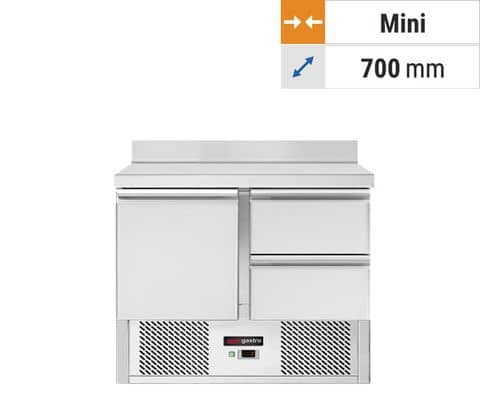
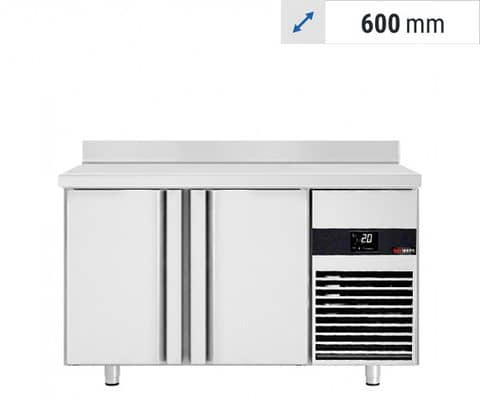
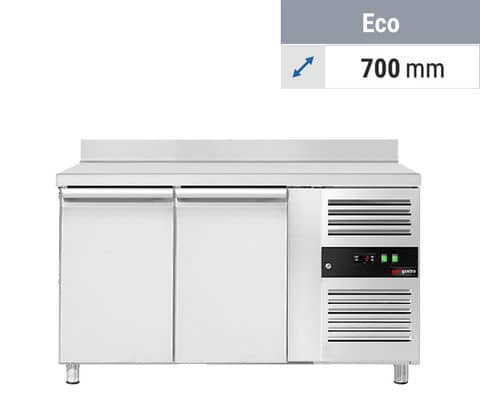
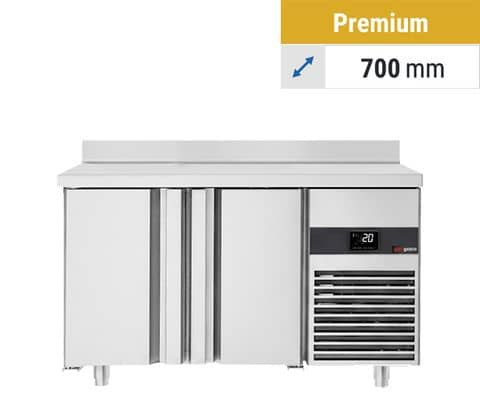
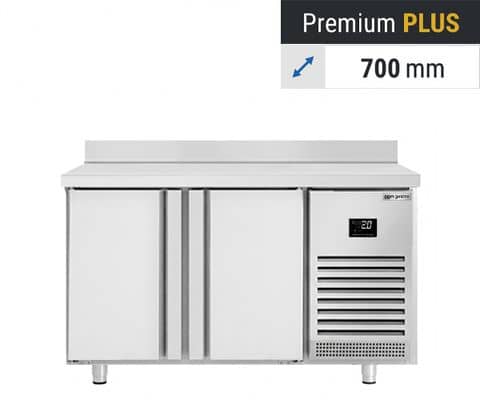

More refrigerated counters & freezer counters








What Refrigerated Counters Do in a Professional Setting
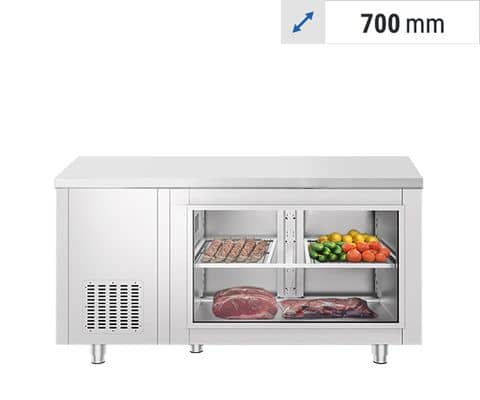
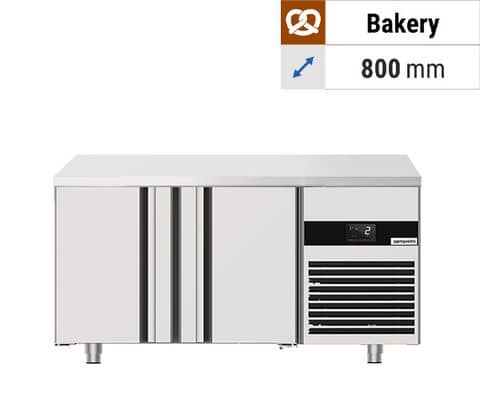
Refrigerated counters are commercial refrigeration units with an integrated countertop that combine refrigeration and a work surface into a single unit. In restaurants, snack bars, hotels, bakeries, and institutional food service settings, they help keep prepared ingredients within easy reach, reduce walking distances, and streamline production.
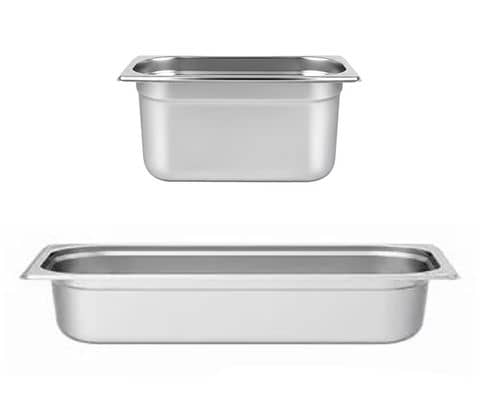
Refrigerated work tables offer a practical advantage, especially in high-volume operations: ingredients, GN containers, or prepared components are located directly beneath the work surface rather than in a distant refrigerator. This is particularly relevant during peak hours when every movement counts—such as during the lunch rush, on the production line, or in compact kitchens with limited space. A refrigerated counter is therefore not just storage space, but an integral part of the workflow.
Which refrigerated counters are right for your workflow
When selecting refrigerated counters, operators should pay particular attention to five key factors: interior layout with doors or drawers, countertop depth, usable refrigerated volume, temperature range, and integration into the existing kitchen layout. These criteria determine whether the refrigerated counter truly streamlines daily operations or simply takes up extra counter space.
Drawers are useful when working frequently with prepared containers, inserts, or sorted ingredients. Doors are more suitable when larger containers, boxes, or flexible interior space are required. Depth is also important: Models with a depth of 600 mm or 700 mm must fit the existing workline, traffic flow, and ergonomic requirements. In small kitchens, a compact design may be practical, while in production kitchens, more counter space and a larger cooling capacity offer advantages. Refrigerated base units and preparation tables can complement the design but do not always replace the function of traditional refrigerated tables.
Planning for Refrigerated Counters in Your Daily Work Routine
A refrigerated counter works best when it’s located where food preparation and serving actually take place. In practice, this means: close to the workstation where food is assembled, portioned, prepared, or plated. In a kitchen with pre-production, it can keep prepared items readily available right at the work surface. During service, it reduces the distance between storage, preparation, and serving.
A typical example is the preparation phase before the lunch rush: ingredients are already sorted and chilled, leaving the countertop above free for portioning, assembly, or quick production steps. The refrigerated counter is equally helpful in compact kitchens where freestanding refrigerators would be too far from the actual workstation. The key factors here are not only the dimensions but also whether the doors, drawers, handle placement, and interior layout are suitable for daily use.
Quick Checklist for Selection:
- Does the depth of the refrigerated counter match your existing kitchen layout?
- Are doors or drawers more practical for your workflow?
- Is the cooling capacity sufficient for peak hours and prep work?
- Is the countertop durable and easy to clean hygienically?
- Is the location such that it actually shortens daily workflows?
Materials, Hygiene, and Durability in Continuous Use
In everyday commercial use, refrigerated display cases must reliably withstand moisture, cleaning chemicals, frequent opening and closing, and mechanical stress. Stainless steel is therefore the obvious choice in professional settings because it is durable, hygienic, and easy to clean. It’s important to choose a design that remains practical even during continuous use: smooth surfaces, clean transitions, sturdy seals, and an interior that’s easy to maintain during daily operations.
It’s also wise to consider compatibility. Anyone working with GN containers or looking to supplement existing workstations should check the dimensions, interior layout, and usable height before purchasing. A plug-and-play connection, as well as sufficient space for installation and cleaning, are factors that are often more important in practice than additional feature details. Stainless Steel Furniture and products in the Sinks and Cleaning category play a direct role in planning here when work zones need to be organized efficiently.
Why the Right Refrigerated Counters Make Economic Sense
Well-chosen refrigerated counters contribute to more stable workflows because they logically integrate refrigeration, workspace, and access. This can simplify food preparation, reduce spontaneous searches and walking distances, and help the team work more efficiently during peak hours. The operational benefits do not come from the equipment alone, but from its proper integration into the workflow.
Especially during renovations, when replacements are needed, or as workload increases, it’s worth considering refrigerated counters not in isolation, but as part of a cohesive operational concept. When refrigeration, work surfaces, cleaning, and adjacent stations are well-coordinated, a single investment translates into a noticeable reduction in the workload of day-to-day operations. Refrigerated tables are therefore particularly useful when a business wants to refrigerate close to the production area, maintain a clean work environment, and make efficient use of available space.