


Shoe-polishing machines for professional use
Shoe-cleaning machines enable the quick cleaning and polishing of shoes in hotels, reception areas, and other commercial indoor spaces. These compact devices make it easy for guests and employees to care for their shoes right on the spot. Shoe Polishing Machines Guide »
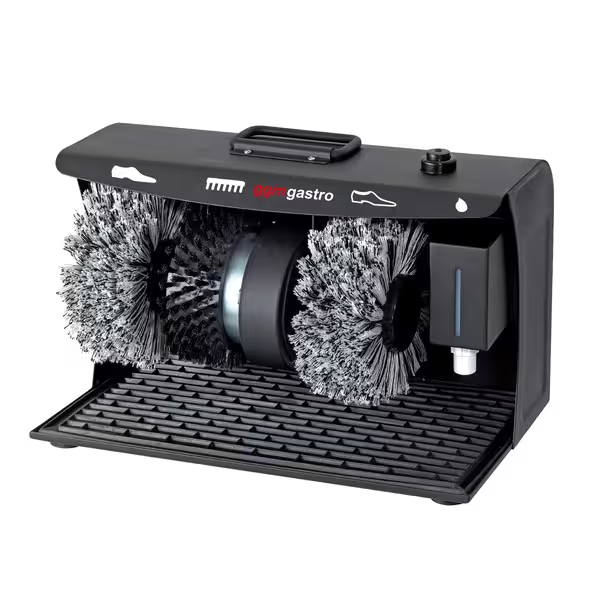
Shoe-polishing machines for smooth operations in professional settings
Shoe-polishing machines are electrically powered devices designed for quickly cleaning and polishing shoe surfaces. In commercial settings, they are particularly well-suited for hotels, reception areas, and other locations where a neat appearance and ease of use are essential.
In day-to-day operations, their advantage lies less in complex cleaning capabilities than in their immediate availability: guests or employees can remove light dirt and polish their shoes without having to keep manual brushes or separate shoe care supplies on hand. Especially in high-traffic entry areas, this can help integrate shoe care into existing routines as a quick, straightforward process.
Planning for Shoe-Polishing Machines: Space, Connections, and Use
When planning, the most important factors are location, footprint, and power supply. The compact model currently available in this category measures approximately 400 x 240 x 245 mm, requiring only a modest footprint, and operates on 230 V. This allows it to be used in many typical indoor locations, provided there is a suitable outlet and sufficient space to move around the machine.
It makes sense to place it where it can be used without detours: for example, near the reception desk, coat check, or staff entrance. During peak hours, the machine should not be placed in walkways or emergency exits. At the same time, it must remain easily accessible for cleaning and refilling. A foot pedal helps ensure a smooth workflow, as the machine can be activated without bending over or any additional manual effort.
Choosing the Right Brushes, Power, and Features
When it comes to shoe-polishing machines, four criteria are particularly important: brush configuration, motor power, ease of use, and maintenance features. Our model operates at 120 watts and features three brushes: a cleaning brush for removing light dirt, as well as two polishing brushes. This setup is practical when different polishes or light- and dark-colored shoes need to be treated separately.
A built-in shoe polish dispenser reduces the number of steps required and keeps the setup compact. It’s also important for operators to select a machine that matches the actual usage profile. A shoe-polishing machine in a hotel lobby is used differently than one that’s only occasionally used in a staff area.
Quick Checklist for Selection:
-
Does the footprint of approximately 400 x 240 x 245 mm fit the intended location?
-
Is a 230-V outlet accessible without obstructive cable routing?
-
Are one cleaning brush and two polishing brushes sufficient for the typical types of shoes?
-
Does the shoe polish dispenser make sense for the intended usage scenario?
-
Are the brushes and housing easily accessible for regular maintenance?
Durability and Maintenance in Daily Use
A powder-coated steel housing is ideal for commercial settings because it is designed to withstand the mechanical stresses of daily operation. Nevertheless, regular maintenance remains crucial: Dirt on the brushes and housing should be removed, and the shoe polish dispenser should be kept clean. This ensures the machine remains fully functional and makes maintenance efforts predictable.
Protective features are also important in day-to-day operation. An overload shut-off can protect the motor from excessive strain. It does not replace proper use, but it does support reliable operation. A shoe-polishing machine is intended for the care of shoe surfaces and does not replace either the wet cleaning of heavily soiled footwear or the cleaning of work areas.
Shoe Care as Part of a Coherent Business Strategy
A strategically placed shoe-cleaning machine is particularly useful in areas where cleanliness and public image go hand in hand. In entryways and reception areas, it can be integrated into an overarching cleaning strategy alongside cleaning machines and cleaning carts as part of an overarching cleaning strategy without taking over their functions. The distinction remains clear: The shoe-polishing machine cares for the shoes, while other cleaning equipment handles floors and work surfaces.
Therefore, the purchase price alone is not the only economically relevant factor. What matters more is whether the equipment, usage demands, and location are a good fit. A compact, easy-to-use device can minimize cleaning distances, reduce the need for manual assistance, and support a well-organized workflow. At the same time, operators should select only those functions that are actually used in their own operations. In the event of a short-term need for a replacement, organizational selection factors should also include product availability, suitable shipping options, and accessible customer support.
Choosing Shoe-Polishing Machines Suited to Everyday Operations
When making a purchase decision, you should consider the frequency of use, types of shoes, available space, a 230-V outlet, and desired cleaning features together. The current GGM model combines 120 watts of power, three brushes, a shoe polish dispenser, foot-operated control, overload protection, and a steel housing in a compact design. This makes it particularly easy to evaluate this product category based on the specific location of use and actual usage needs.