


Air Conditioning Systems
Air conditioning systems help restaurants and other food service establishments reliably regulate the temperature in dining areas, hotel rooms, offices, and common areas. At GGM Gastro, you’ll find professional solutions for individual commercial spaces, tailored to specific room sizes and equipped with practical features. Air Conditioning Guide »
Price
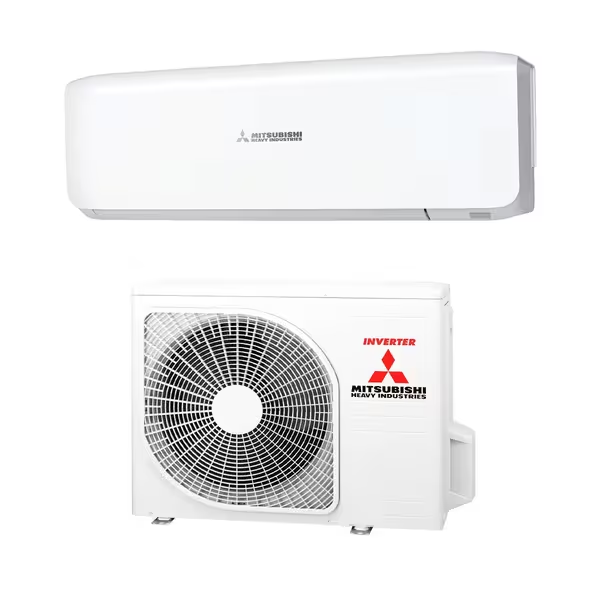
Air Conditioning Systems for the Food Service Industry: Professional Control of Indoor Climate
In the restaurant industry, air conditioning systems are used to precisely control the temperature of individual rooms—such as in a restaurant, café, hotel room, office, reception area, or lounge. They do not improve kitchen exhaust air and do not replace ventilation, but rather ensure that certain indoor areas remain comfortable to use even under heat stress.
In everyday commercial operations, indoor climate is a practical operational factor. In a dining area with intense sunlight, many guests, or long operating hours, heat can quickly reduce the comfort level. Employees also benefit from better-tempered areas when orders, service, and preparations must be handled intensively over several hours. For smaller restaurants, cafés, bars, hotels, or administrative areas, air conditioning systems are therefore a sensible addition when individual rooms need to be cooled in a controlled manner.
What Really Matters When Choosing an Air Conditioner
The most important factor is the size of the room. At GGM Gastro, the focus is on air conditioning units for rooms up to 31 m² and up to 44 m². This allows you to quickly narrow down your selection without getting bogged down in technical details. It is crucial that cooling capacity, room volume, usage, and heat sources are well-matched. A small dining room with few seats has different requirements than a heavily frequented lounge area or a hotel room exposed to intense sunlight.
Equally important is what’s included in the package. Models that include an indoor unit, an outdoor unit, and a remote control provide a clear foundation for planning. The indoor unit is positioned inside the room, while the outdoor unit is installed outside the building. Before purchasing, you should determine where both components can be installed appropriately and whether the structural requirements for connection and installation are met.
A quick checklist can help you decide:
-
Check room size: up to 31 m² or up to 44 m²
-
Determine the intended use: dining room, office, hotel room, or lounge
-
Allow space for the indoor and outdoor units
-
Consider operation, noise level, and airflow
-
Prepare for professional installation and connection
Air Conditioning Systems in Day-to-Day Operations: Quiet, Accessible, and Well-Placed
An air conditioner shouldn’t be chosen based solely on performance. In a restaurant or café, it’s also important how discreetly the wall-mounted unit can be integrated into the space. Guests should find the temperature comfortable without being bothered by drafts, noise, or poor placement. In hotel rooms or meeting rooms, easy operation via remote control is particularly important because different people will be using the unit.
Cleaning and maintenance are also key to ensuring the system’s suitability for everyday use. Filters, the housing, and the air outlet should be checked and cleaned regularly to ensure the system operates reliably. In food service establishments, dust, moisture, grease particles from adjacent areas, or long operating hours can increase wear and tear. Therefore, an easily accessible installation is important. The air conditioner should be positioned so that maintenance and cleaning are not unnecessarily complicated.
Looking at Air Conditioning Systems from an Economic Perspective
The right air conditioning system is more than just a luxury. It can help ensure that rooms remain usable even on warm days, that employees can work with greater focus, and that guests feel comfortable for longer. The choice becomes economically significant above all when the system is suited to actual usage: not undersized, not unnecessarily oversized, and sensibly integrated into the space.
For operators, it is particularly important not to view the purchase in isolation. Room size, operating hours, energy consumption, maintenance access, and installation costs all go hand in hand. Careful planning in these areas helps avoid poor purchases and creates a solution that supports day-to-day operations. Especially when it comes to modernization, replacement needs, or a new opening, a clear product selection helps better assess investments.
A Coherent Operational Concept Instead of a One-Off Solution
Air conditioning systems should always be considered in the context of the overall room design. In the kitchen, exhaust air, steam, and grease buildup are separate issues from room cooling. For these areas, solutions from the field of ventilation are recommended. When it comes to storing temperature-sensitive foods, cold storage rooms and refrigeration units or other refrigeration equipment are relevant. For dining rooms, offices, hotel rooms, and common areas, however, the focus is on controlled room temperature and comfortable air distribution.
In establishments with retail space, a counter, or a buffet, air conditioning can also be integrated with other systems without compromising functionality. While beverage refrigerators keep products at the right temperature, an air conditioning system maintains a comfortable indoor environment for guests and staff. This creates a cohesive operational concept in which product cooling, indoor comfort, and workflows are clearly separated yet sensibly coordinated.