


Delivery Service Equipment for Professional Food Service Establishments
From the right packaging and insulated boxes to the organized handoff to drivers: Professional delivery service equipment keeps orders organized, protected, and ready for transport between the kitchen and the customer. Which solutions are best depends primarily on the menu, delivery time, order volume, vehicle type, and the number of orders being dispatched simultaneously. Guide to Delivery Service Equipment »



Setting Up a Delivery Service: The Last Mile Begins with Packaging
Professional delivery service equipment includes transport boxes, insulated bags, food packaging, labeling solutions, and other supplies for preparing, packing, and delivering restaurant orders. The real challenge doesn’t begin at the customer’s front door. As soon as a dish leaves the kitchen, the process changes fundamentally. Meals are not served directly at a restaurant table but must be fully assembled, packaged, assigned to an order, handed over to a driver, and transported over a certain distance. In this process, the main course, side dish, sauce, beverage, and dessert may come from different production areas. An efficient delivery service therefore requires a clear transition between the kitchen and the delivery process.
Plan the packaging station as a separate work area
Whenever possible, delivery orders should not be prepared in just any available corner of the traditional kitchen workstation. If a significant portion of orders are for delivery, it’s worth setting up a dedicated packing station. This is where the components of an order are brought together. Packaging, bags, cutlery, napkins, sauces, and other necessary items are located directly at the workstation. This reduces walking distance and makes it easier to keep track of items. The station should offer enough space to assemble multiple orders at the same time without mixing up individual items. Maintaining a clear overview is especially crucial during peak hours. Three or four open orders with similar dishes are easier to process correctly if each order has a designated spot within the dispatch area.
Select packaging based on the dish and transit time
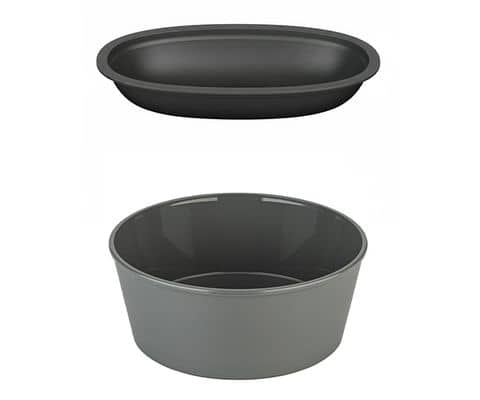
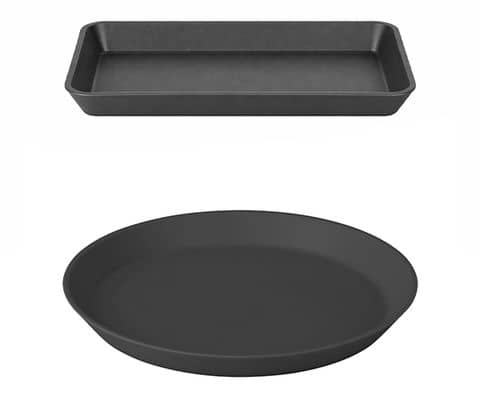
Not every food item has the same packaging requirements. Pizza boxes serve a different purpose than meal trays for multi-component dishes. Burgers, pasta, rice dishes, salads, and dishes with sauce each require their own suitable formats. Factors to consider when selecting packaging include portion size, texture, and delivery time. The packaging should provide enough space without being unnecessarily large. At the same time, the containers must remain easy to stack and store in the packaging area. The number of different formats also affects operations. Each additional box requires storage space, restocking inventory, and a separate step in the packaging process. A sensibly standardized packaging system can therefore simplify the work if multiple dishes can be accommodated using the same basic formats.
Quick Checklist for Choosing the Right Delivery Service Equipment
Five factors can help narrow down the actual needs:
- Menu offerings: Which items are delivered, and what types of packaging do they require?
- Delivery time: How long do orders typically spend in transit between the kitchen and the customer?
- Peak volume: How many orders leave the kitchen during the busiest 30 to 60 minutes?
- Means of transport: Are deliveries made by car, scooter, bicycle, or a combination of vehicle types?
- Order Structure: Do orders consist primarily of individual dishes or more extensive menus with multiple components?
These factors determine what types of packaging, transport containers, and preparation areas are needed.
Thermal boxes as an interface between the restaurant and the driver
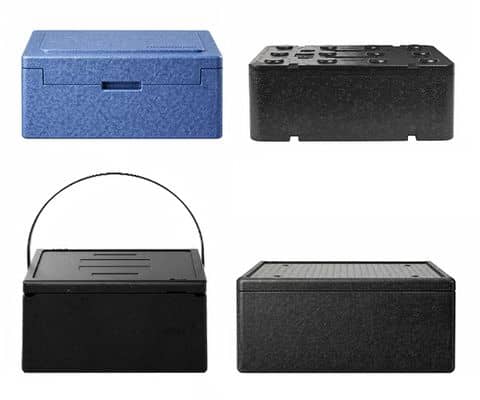
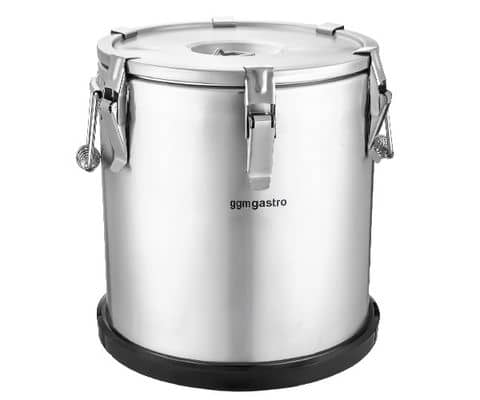
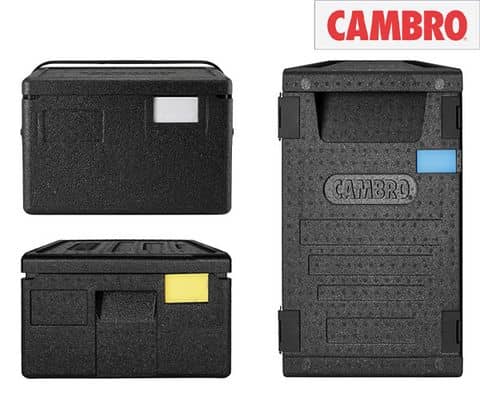
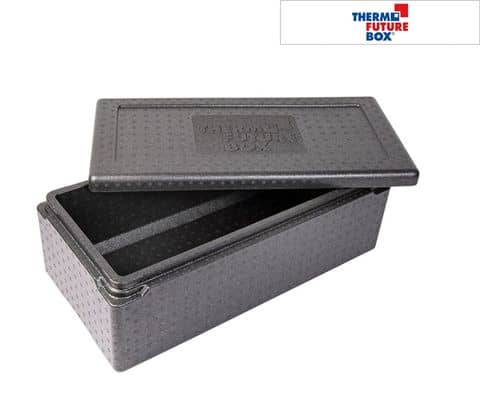
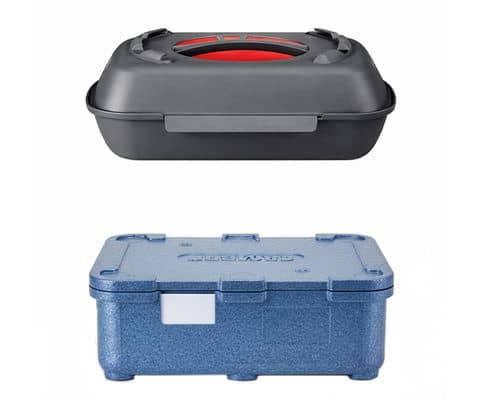
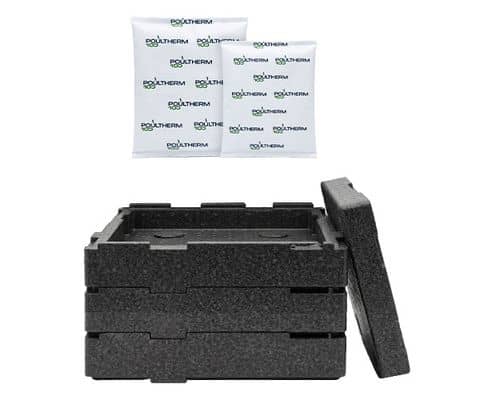
Insulated boxes are among the essential tools for a food delivery service. They create a designated transport space between the pre-packaged order and the customer. Factors to consider when selecting a thermobox include interior volume, dimensions, planned packaging formats, and the number of orders transported at once. A very large box offers plenty of volume, but it isn’t automatically the most practical solution for every route. If you’re primarily delivering single or smaller orders, other sizes may make more sense than for bundled routes with multiple orders. Loading logic also plays a role. Orders should be arranged so that drivers do not have to remove all other orders from the box at the first delivery stop. The transport box thus serves not only as an insulated container but also as an organizational tool for the route.
Scooters and bicycles require different transportation solutions
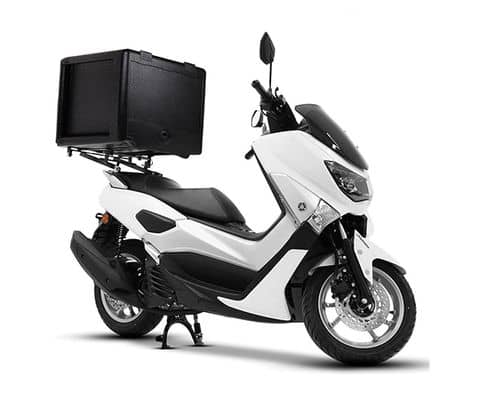
Not every delivery service uses cars. In densely populated areas, orders are often delivered by bicycle, e-bike, or scooter. For this, the size, weight, and mounting of the transport solution must be compatible with the respective vehicle. Insulated boxes for scooters & bicycles are particularly well-suited for such applications. The transport capacity must be balanced against practical handling. A large box can hold more orders, but at the same time affects the vehicle’s weight and maneuverability. A very small solution, on the other hand, limits the possible route planning. Typical package sizes also play a role. A service that mainly delivers pizza requires different interior dimensions than a delivery service using compact meal boxes.
Tailor pizza and burger bags to the product mix
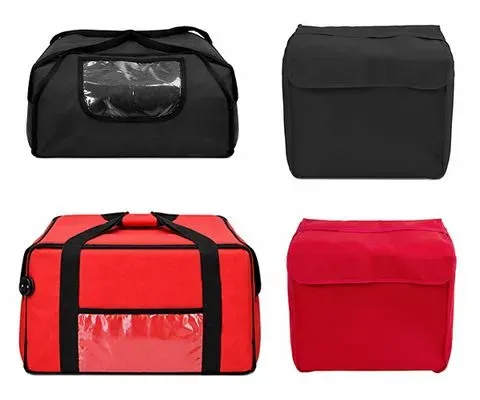
Pizza & Burger Bags offer another way to organize pre-packaged food for transport. Pizza, in particular, poses special challenges for transport logistics due to its flat, wide boxes. It must be possible to stack multiple boxes on top of one another without having to constantly rearrange them during the trip. Burger and meal orders, on the other hand, may require more flexible configurations. Therefore, the key factor is which products make up the largest share of the delivery business. A pizza delivery service can standardize its transport equipment more than a restaurant that delivers pizza, burgers, salads, and desserts all at once. The number of orders per route also influences the required inventory of bags.
Use Electric Transport Bags Based on Their Intended Application
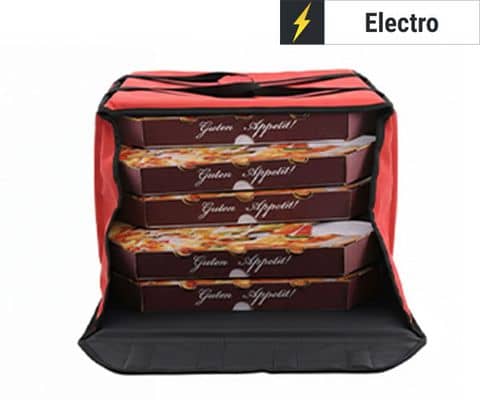
Electric pizza bags—or heated delivery bags—can be an additional option for certain delivery models. Their usefulness depends in particular on delivery time, product type, and route structure. It’s important to consider more than just the bag itself; loading, preparation, and organizational assignment to the respective driver are also part of the process. When multiple drivers set out at the same time, a sufficient number of ready-to-use delivery solutions must be available. Additional technology is therefore particularly valuable when it solves a specific problem in day-to-day delivery operations. For short delivery routes with very fast turnaround times, different priorities may apply than for longer routes.
Organizing Menu Boxes for Complete Orders
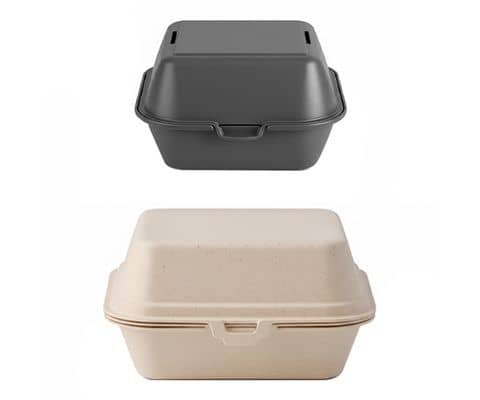
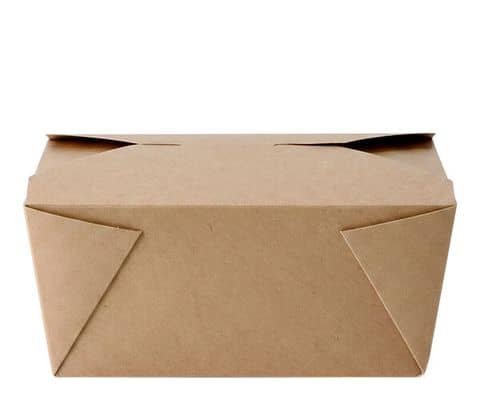
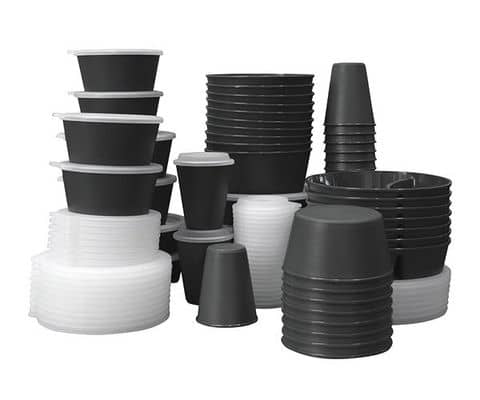
Meal boxes can be used when multiple items in a single order need to be packaged together. It’s important that the packaging system and the menu work in harmony. If a different container size is needed for nearly every dish, the packaging inventory grows rapidly. Employees must first select the right container for each order, while the warehouse and packing station have to accommodate more different items. A manageable system consisting of just a few carefully selected formats can speed up the workflow. Lids should also be taken into account. Containers and their matching lids should be kept right next to each other at the workstation. If they are stored separately, this creates additional search and retrieval paths—precisely in the area where efficiency is most critical during peak delivery times.
Scooters and bicycles require different transportation solutions
Not every delivery service uses cars. In densely populated areas, orders are often delivered by bicycle, e-bike, or scooter. For this, the size, weight, and mounting of the transport solution must be compatible with the respective vehicle. Insulated boxes for scooters & bicycles are particularly well-suited for such applications. The transport capacity must be balanced against practical handling. A large box can hold more orders, but at the same time affects the vehicle’s weight and maneuverability. A very small solution, on the other hand, limits the possible route planning. Typical package sizes also play a role. A service that mainly delivers pizza requires different interior dimensions than a delivery service using compact meal boxes.
Tailor pizza and burger bags to the product mix
Pizza & Burger Bags offer another way to organize pre-packaged food for transport. Pizza, in particular, poses special challenges for transport logistics due to its flat, wide boxes. It must be possible to stack multiple boxes on top of one another without having to constantly rearrange them during the trip. Burger and meal orders, on the other hand, may require more flexible configurations. Therefore, the key factor is which products make up the largest share of the delivery business. A pizza delivery service can standardize its transport equipment more than a restaurant that delivers pizza, burgers, salads, and desserts all at once. The number of orders per route also influences the required inventory of bags.
Use Electric Transport Bags Based on Their Intended Application
Electric pizza bags—or heated delivery bags—can be an additional option for certain delivery models. Their usefulness depends in particular on delivery time, product type, and route structure. It’s important to consider more than just the bag itself; loading, preparation, and organizational assignment to the respective driver are also part of the process. When multiple drivers set out at the same time, a sufficient number of ready-to-use delivery solutions must be available. Additional technology is therefore particularly valuable when it solves a specific problem in day-to-day delivery operations. For short delivery routes with very fast turnaround times, different priorities may apply than for longer routes.
Organizing Menu Boxes for Complete Orders
Meal boxes can be used when multiple items in a single order need to be packaged together. It’s important that the packaging system and the menu work well together. If a different container size is needed for nearly every dish, the packaging inventory grows rapidly. Employees must first select the right container for each order, while the warehouse and packing station have to accommodate more different items. A manageable system consisting of just a few carefully selected formats can speed up the workflow. Lids should also be taken into account. Containers and their matching lids should be kept right next to each other at the workstation. If they are stored separately, this creates additional search and retrieval paths in the very area that needs to operate particularly quickly during peak delivery times.
Assign all sauces, side dishes, and beverages
Delivery orders often consist of several individual components. The main dish may have been prepared correctly, but the order is still considered incorrect if the sauce, side dish, or beverage is missing. The packaging station should therefore have a clear checkpoint. Dishes come from the kitchen, cold components may come from another station, and beverages come from the refrigerator. Only once all components have been assembled is the order released to the driver. Clear assignment is especially important when there are multiple similar orders. Order numbers or other clear identifiers can help ensure that production, packaging, and the driver can unambiguously identify the same order.
Using Labels for Sorting and Handoffs
Labels & Label Cards can serve various organizational purposes within a structured dispatch process. For example, they can help assign individual packages to an order or keep multiple components of a larger order together. A consistent system is crucial. If the kitchen, packing station, and driver use different terms, questions will still arise despite the labeling. Especially when multiple orders are being prepared simultaneously, it should be immediately clear which packages belong together. This also allows special notes within the company’s own ordering process to be passed on to the next station in a more structured manner. Labeling does not replace a final inspection, but it can make the process significantly clearer.
Use sealing technology wherever it benefits the process
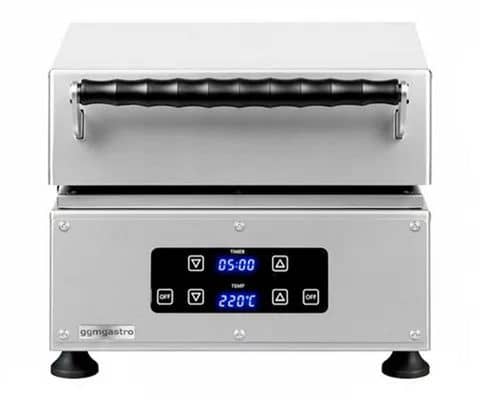
Sealing machines can provide an additional option for preparing certain packages for transport and delivery. Whether such a solution makes sense depends on the packaging system and your company’s delivery concept. The device should be integrated directly into the packaging process. If a completed order must first be moved to another room for this purpose, it creates an additional process step and thus a potential bottleneck. Consumables also need to be kept in sufficient supply at the workstation. As with any delivery technology, the benefit does not come from the device alone, but from the fact that it fits seamlessly into the normal order flow without causing unnecessary interruptions.
Consider hot and cold components separately
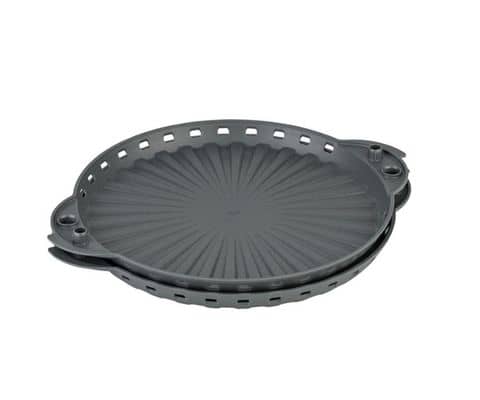
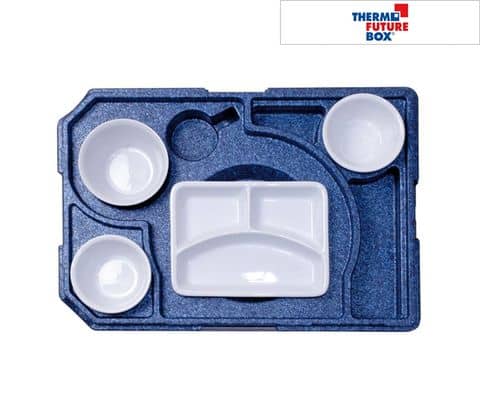
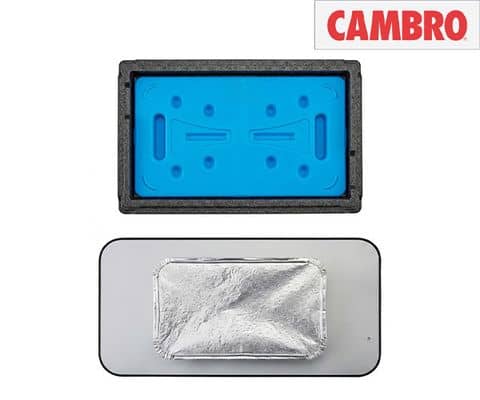
An order may contain products with very different requirements. A hot main course, a cold salad, dessert, and a beverage should therefore not automatically be treated as a single transport unit. Depending on the product assortment, separate sections within the preparation area or appropriate transport solutions may be advisable. Chilling & Warming Trays can be used as a supplement in certain transport or serving concepts. Above all, it is important to understand the order structure. A delivery service that handles almost exclusively hot dishes has different logistics than a restaurant whose menus regularly combine hot and cold components. These differences should be taken into account as early as the packaging and dispatch stages.
Place the dispatch area between the kitchen and the exit
The ideal staging area is located where completed orders arrive from the kitchen and drivers can pick them up without disrupting kitchen operations. If it’s too far inside the kitchen, the driver creates unnecessary foot traffic between cooking stations. If it’s too far from the pass, on the other hand, it means extra walking for the kitchen or packing team. The dispatch area should therefore be viewed as a handoff zone. On one side, the completed order arrives from production. There, it is checked, packaged, and prepared for pickup. On the other side, the driver picks up the fully prepared order. This way, neither group has to intrude on the other’s workspace.
Separate drivers from pickup customers
Many delivery service companies combine delivery with traditional pickup. This means that both drivers and customers may be waiting for ready orders at the same time. When both groups use the same small pickup area, questions and confusion can quickly arise. A clearly designated pickup area can therefore be helpful. Drivers need to quickly find their way based on order number or route. Pickup customers, on the other hand, need clear instructions from staff during the handoff. Walking distances should also be taken into account. Waiting drivers should, if possible, avoid blocking the entrance, the register, or the restaurant service area. Especially during busy evening hours, a separate pickup zone can significantly relieve pressure on the entire front-of-house area.
Do not mix delivery orders with restaurant receipts
A restaurant that also offers delivery often operates at two different service speeds. Restaurant orders are processed through the regular serving line. Delivery orders, on the other hand, must be packaged separately and handed over to a driver. If both types of orders end up in the same area without clear differentiation, the likelihood of mix-ups increases. The kitchen should therefore be able to identify which sales channel a dish is intended for. The order is then routed to the appropriate dispensing station. A dish for the dining room goes to the restaurant pass. A delivery order goes to the packing station. A takeout order, in turn, may have its own pickup point. This separation becomes particularly valuable when all three channels are experiencing high volume at the same time.
Plan Order Volume After the Delivery Peak
The delivery business often revolves around short time windows. Therefore, the average over an entire business day says little about the required packaging and dispatch capacity. What matters most is the number of orders during the busiest period. If 40 or 80 orders are shipped within an hour, it’s not just the kitchen that needs to be able to produce that volume. Packaging, quality control, order preparation, and handoff to drivers must also support the same throughput. Otherwise, a bottleneck at the packing station will result in prepared meals waiting to be assembled. The delivery process therefore begins with the question: How many complete orders can the dispatch area reliably process per hour?
Keep multiple orders organized and readily available at the same time
During a busy delivery period, multiple orders are often ready or nearly ready at the same time. This requires the staging area to have a clear structure. Orders can be organized, for example, by pickup time, driver, or route. Which approach works best depends on your specific order and driver model. It’s crucial that the team doesn’t have to search through multiple bags every time a driver arrives. Different order sizes should also be taken into account. A small individual order requires significantly less space than an order for multiple people. Accordingly, larger bags or transport containers should not completely block the dispatch area.
Take Tour Structure into Account When Determining Transport Capacity
Not every driver handles just one order at a time. With well-planned routes, multiple orders can be delivered one after another. However, this increases the demands on transport capacity and organization. Orders should be accessible in the order they are needed. If the first delivery stop is stowed at the very bottom of a fully loaded box, each handoff takes extra time. The total distance also plays a role. The more stops a route contains, the longer individual orders spend in transit. The menu, packaging, and route planning therefore influence one another. A larger delivery box is only an advantage if the consolidated route actually makes operational sense.
Stock packaging materials directly at the point of use
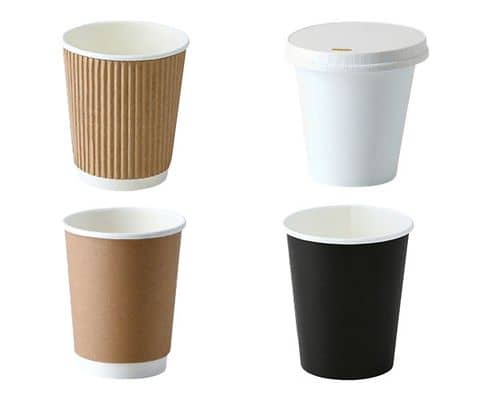
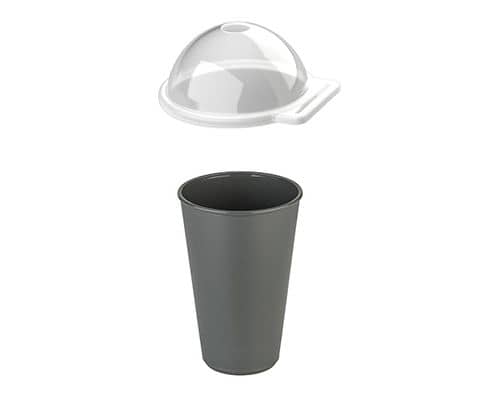
Delivery packaging takes up a surprising amount of storage and workspace. Cardboard boxes, meal trays, lids, cups, bags, and napkins must be available in sufficient quantities. However, the entire stock does not need to be kept right next to the packing table. A two-tiered stocking system makes sense: The immediate work supply is kept within easy reach at the station, while larger reserves are stored separately and replenished regularly. This keeps the workspace organized. Items used particularly frequently should be within the most direct reach. Packaging used less frequently can be stored further away. This principle corresponds to “mise en place” in the kitchen: Items that are constantly needed must be available without having to search for them.
Keep the packaging system as simple as possible
A delivery service can significantly increase its operational complexity if too many different types of packaging are used at the same time. Each additional size requires inventory, storage space, and restocking checks. Staff also need to know which box goes with which dish. That’s why, when planning the menu, it’s worth asking whether multiple products can be sensibly standardized into just a few packaging formats. This doesn’t mean using unsuitable containers. Rather, it’s about avoiding unnecessary variations. A clearly structured system simplifies ordering, warehousing, and packaging alike.
Check the delivery menu for transportability
Not every dish that works well when served directly at a restaurant table is automatically just as suitable for delivery. Between the kitchen and the customer lie packaging, wait times, and transportation. The delivery menu should therefore also be evaluated based on how well individual dishes hold up during this process. Dishes with many components that need to be packaged separately, for example, create more work at the dispatch station. Other items require particularly large or unusual packaging. An effective delivery menu therefore combines appeal for the customer with a production and packaging system that remains manageable even during peak order periods.
Organize the POS system and delivery orders together
Point-of-sale systems can be an integral part of the ordering and payment process, depending on the business. Clear assignment is particularly important when there are multiple sales channels. Restaurant service, takeout, and delivery should remain traceable during operations so that orders are routed to the correct production and serving channels. The practical benefits are especially evident during peak times. When employees first have to rely on various slips of paper or verbal instructions to determine whether a completed order is to be picked up or delivered, it creates unnecessary coordination. A clearly organized flow of information therefore supports the physical flow of goods from the receipt to the driver.
Schedule time for cleaning the transport equipment
Transport boxes and delivery bags are used repeatedly and are therefore an integral part of daily operations. After a delivery run, they must be returned, inspected, and—depending on their use—cleaned or prepared for the next use. This requires a designated return area. If used bags are randomly placed next to the packing station, ready-to-use and returned equipment get mixed up. This issue becomes particularly important when there are multiple drivers. Clean, available transport solutions should be clearly separated from equipment that needs to be processed first. Therefore, sufficient drying and storage space must also be factored into the planning.
Optimize the delivery service based on the actual bottleneck
When delivery times are long, the first thought is often to hire additional drivers. However, the bottleneck may actually occur much earlier. Perhaps the kitchen is producing orders quickly enough, but they’re waiting to be packaged. Perhaps the final inspection takes too long. Maybe there aren’t enough delivery bags, so a driver has to wait for a colleague to return. Or orders may be ready to go, but it’s unclear which drivers should pick them up. A bottleneck analysis therefore examines the entire process:
Production → Packaging → Inspection → Preparation → Driver Pickup → Transport → Customer.
The economically sound investment starts where time is regularly lost and subsequent process steps are held up.
Prioritizing Delivery Service Equipment Based on Cost-Effectiveness
When opening a new location, the initial priority is on products that are part of nearly every order. This includes appropriate food packaging, sufficient transport capacity, and a clearly organized packing and pickup area. Specialized bags, sealing equipment, labeling, or additional temperature control solutions are then added based on the actual delivery model. A pizza delivery service has different priorities than a restaurant serving a variety of dishes with few delivery orders. The number of drivers also influences the requirements. Each driver on the road at any given time requires sufficient transport capacity, while it makes sense to plan for additional reserves to account for cleaning, driver absences, or high order volumes. The investment is therefore based on actual delivery operations rather than on the most extensive equipment list possible.
Equip Your Delivery Service Professionally with GGM Gastro
From pizza delivery services and burger concepts to restaurants with an additional delivery business, order structures, packaging requirements, and delivery routes vary significantly. The right delivery equipment is therefore determined by the menu offerings, delivery times, peak order volumes, vehicle type, and the coordination between the kitchen and drivers. GGM Gastro offers professional equipment for this purpose, ranging from thermal boxes and transport containers to pizza and burger bags, as well as pizza, meal, and other food packaging, labels, sealing technology, and complementary cooling and warming solutions. This enables the targeted expansion of both complete dispatch areas for new delivery concepts and individual transport and packaging processes as the delivery business grows.