


Filter Coffee Makers for the Food Service and Commercial Sectors
Filter coffee makers enable the reliable preparation of larger quantities of coffee in restaurants, hotels, catering, and institutional food service. Depending on your needs, you can choose from compact models, dual-chamber machines, and solutions with thermal carafes or automatic water refilling. Filter Coffee Maker Guide »
Product type
Power Connection
Number of Brewing Groups
Capacity liters
Capacity
Width
Depth
Price
Planning the Use of Filter Coffee Makers for the Food Service and Commercial Sectors
Filter coffee makers prepare large quantities of filter coffee consistently and with relatively little effort. They are particularly common in cafés, hotels, breakfast areas, cafeterias, catering establishments, and other commercial settings where coffee needs to be available in clearly predictable quantities.
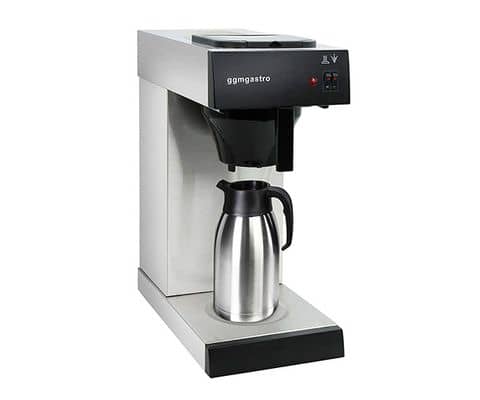
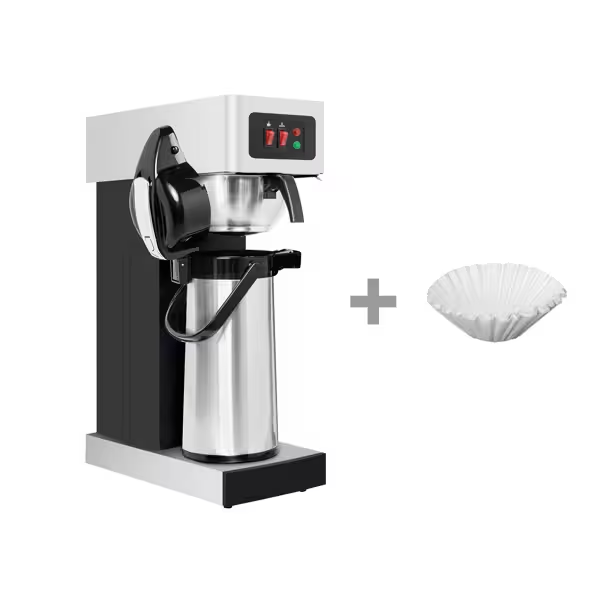
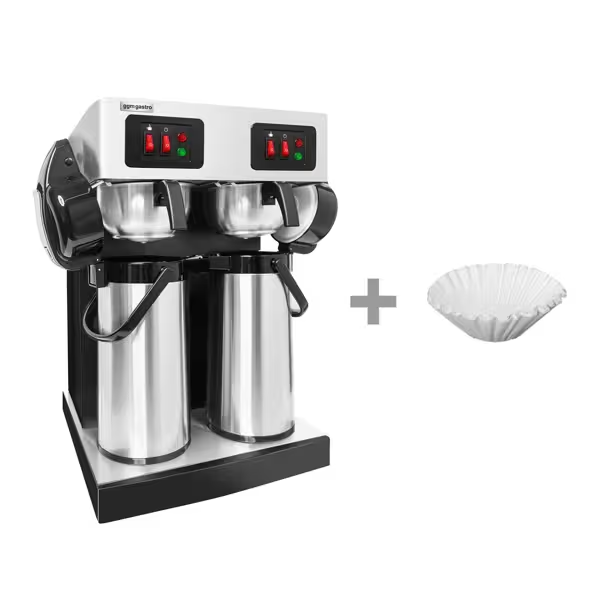
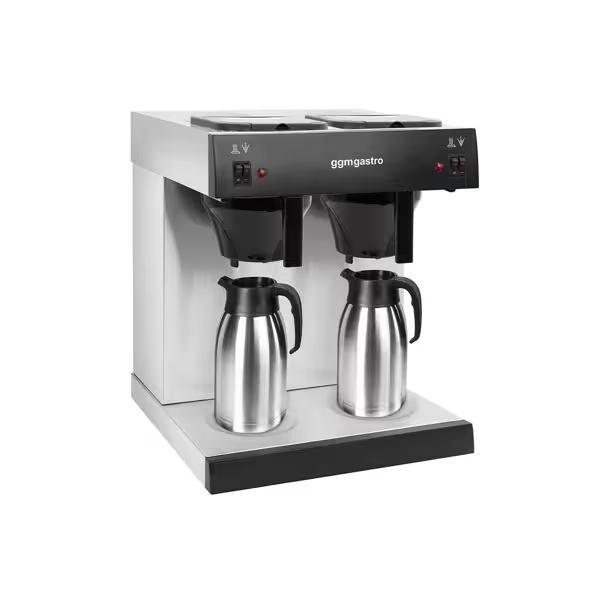
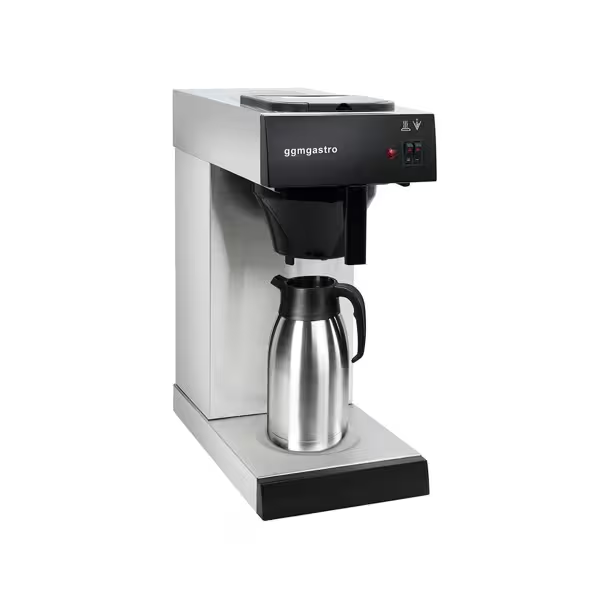
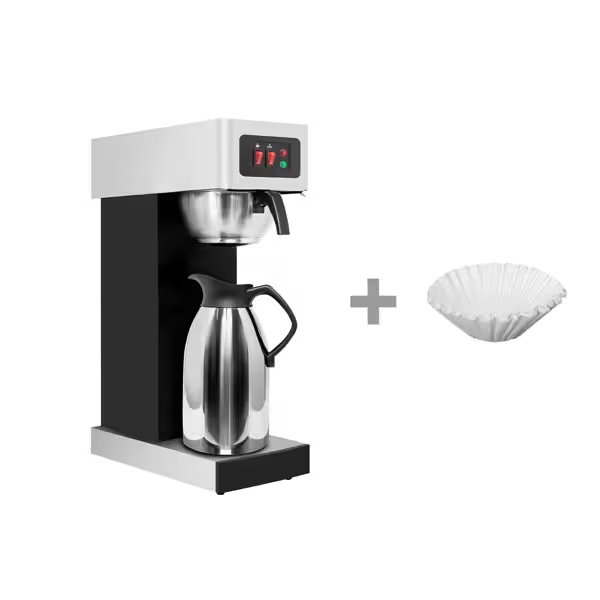
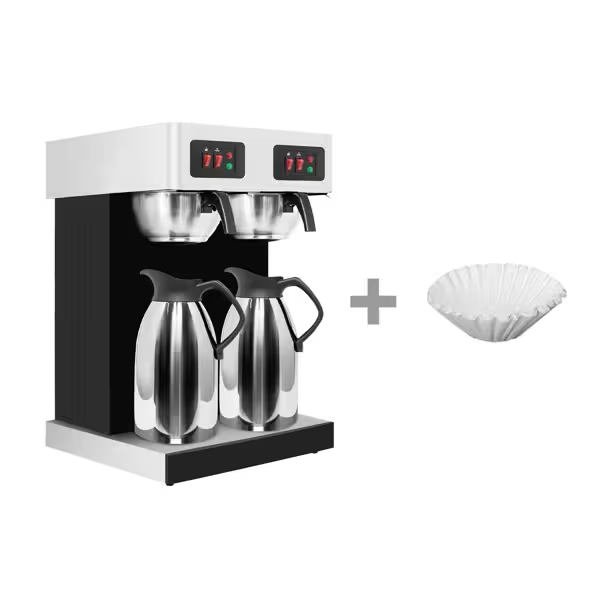
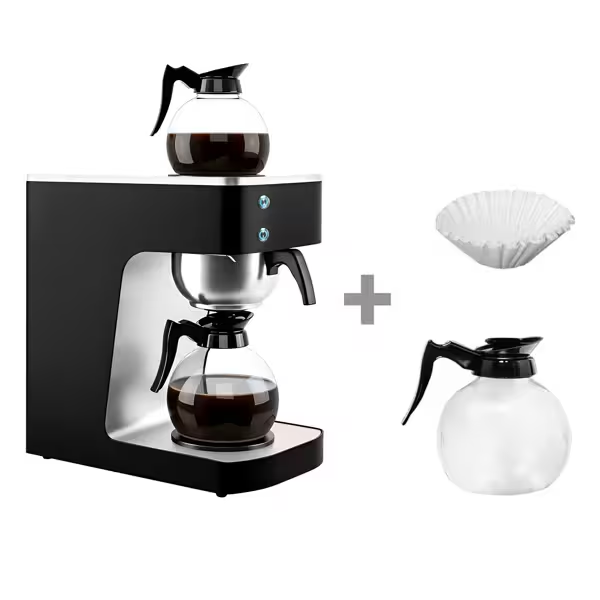
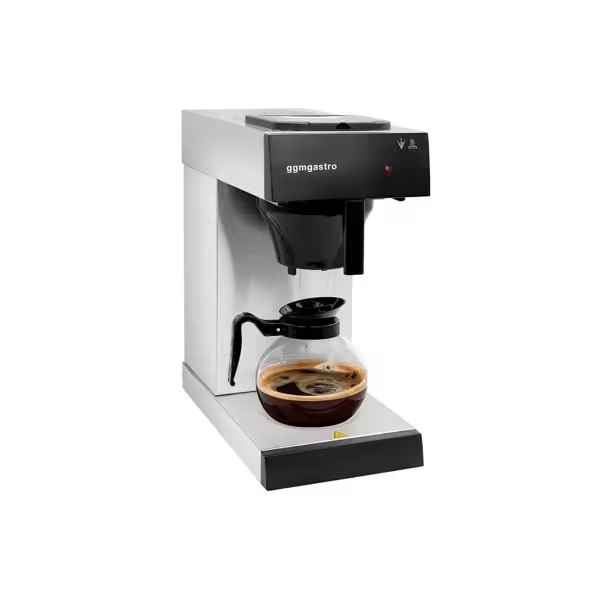
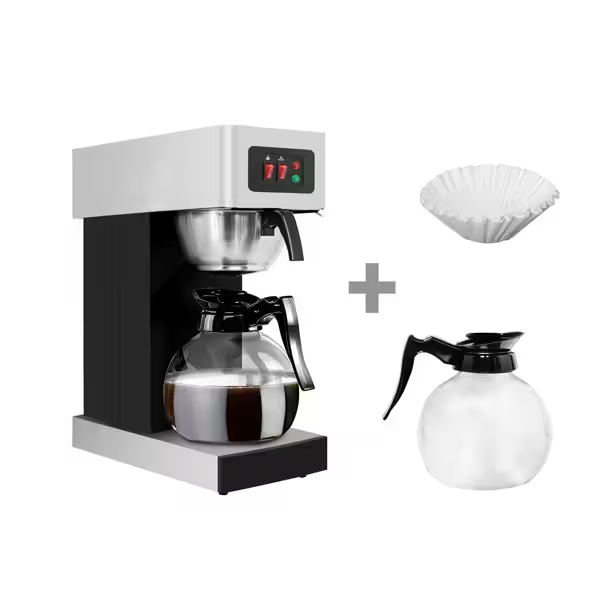
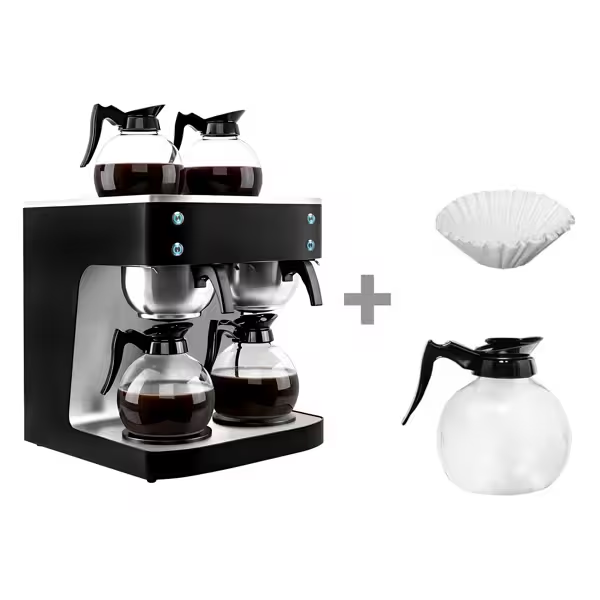
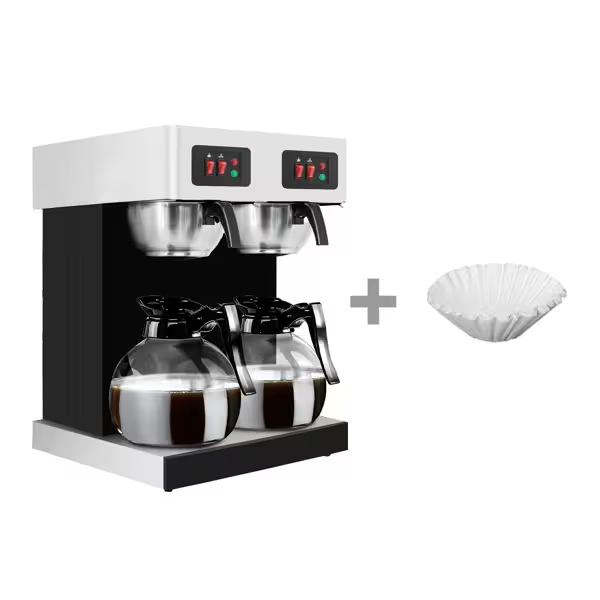
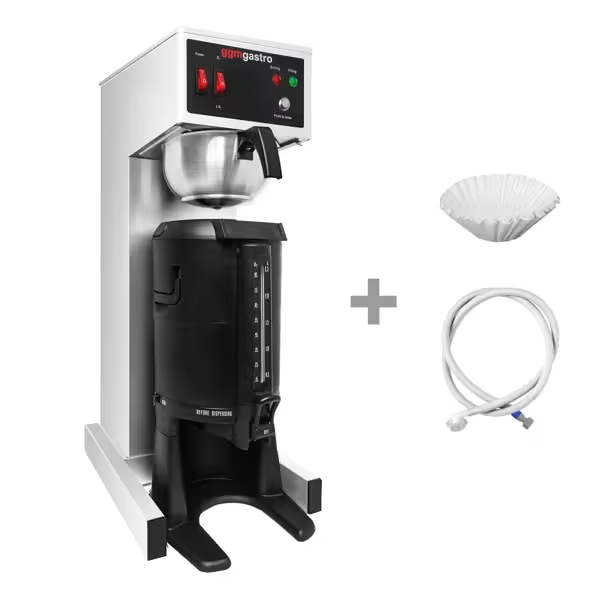
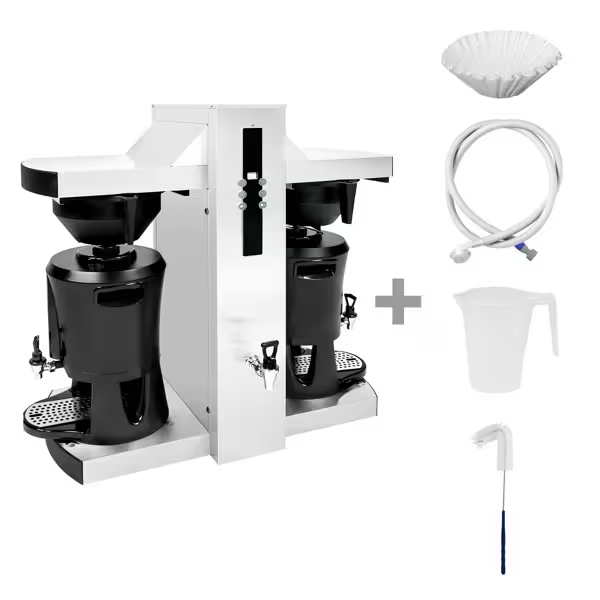
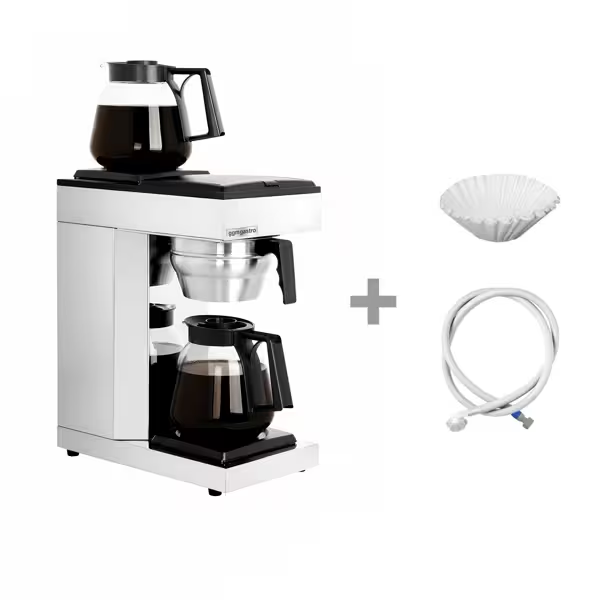
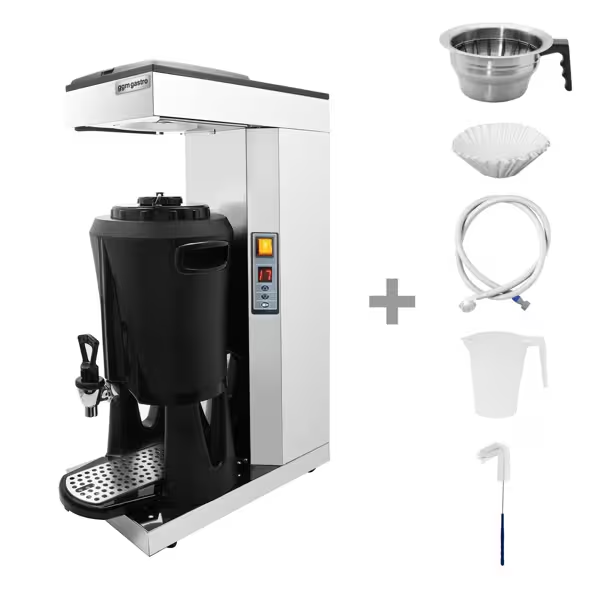
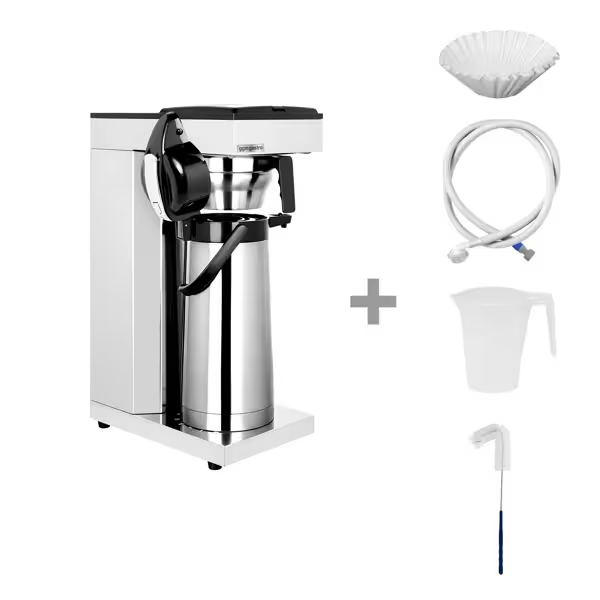
In everyday professional use, therefore, it’s not just the volume of a pot that matters. What’s crucial is how quickly the machine can brew another batch, how the coffee is dispensed, and whether the machine can handle actual peak demand. Compact models with a capacity of about 1.8 to 2.2 liters are suitable for manageable quantities. For higher usage, dual-filter coffee makers, multiple warming trays, or larger systems with thermal carafes can better support operations. This category also includes models with automatic water refilling and versions up to 5 liters, which are designed for significantly higher dispensing volumes.
Choosing the Right Capacity, Pot, and Water Supply
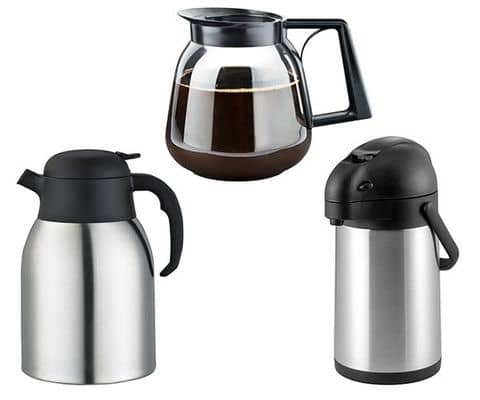
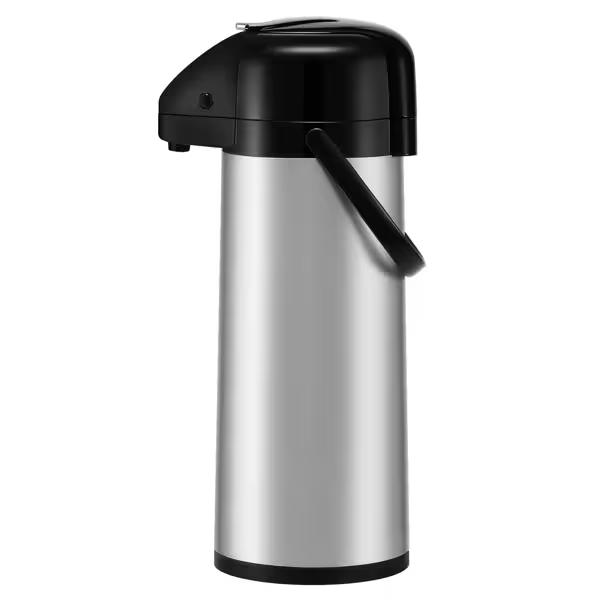
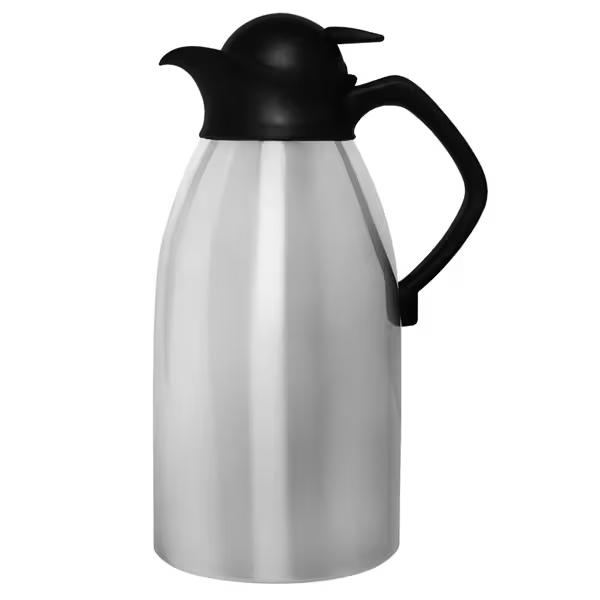
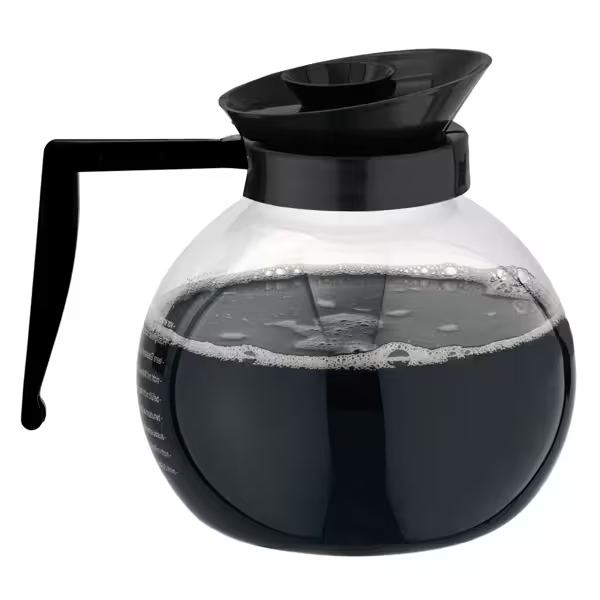
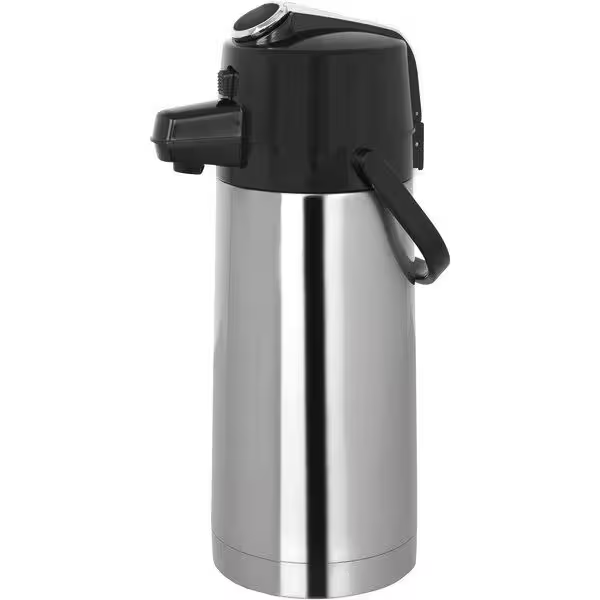
When making their selection, operators should not average demand over the entire day but rather consider the peak usage period. A café that regularly refills its coffee requires a different solution than a hotel that serves many cups in a short period of time during breakfast. For direct serving, glass carafes with a warming plate can be practical. Insulated carafes, pump-style thermoses, or thermal containers, on the other hand, allow for more flexible serving because the coffee does not have to remain on a heating element continuously. Suitable glass and insulated carafes should therefore be taken into account when selecting equipment.
The water supply also influences the workflow. Machines with manual filling are easy to use for smaller quantities. For regularly high demand, automatic water filling can reduce manual steps. Depending on the model, 230 V or 400 V is required; larger models may also require a permanent water connection. For example, a 5-liter system may require a 3/4-inch water connection. Before purchasing, you should therefore check the power supply, water connection, installation space, and the width and depth of the machine.
Quick Checklist for Selection:
-
Determine peak demand in cups or liters per hour
-
Specify the type of carafe and desired dispensing method
-
Choose between manual or automatic water refilling
-
Check for 230 V, 400 V, and, if applicable, a water connection
-
Plan for installation space, cleaning, and descaling
Integrating Filter Coffee Makers into the Workflow
A well-chosen machine helps ensure a smooth coffee-making process when brewing, refilling, and dispensing follow one another in a logical sequence. In a breakfast area, it can be helpful to have several thermal carafes prepared and ready before peak hours. In a smaller café, however, it’s often more important to have a compact machine within easy reach so that fresh coffee can be brewed in manageable batches.
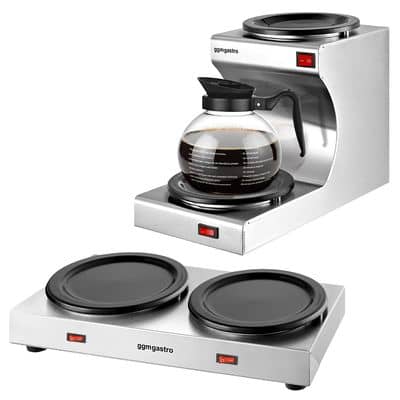
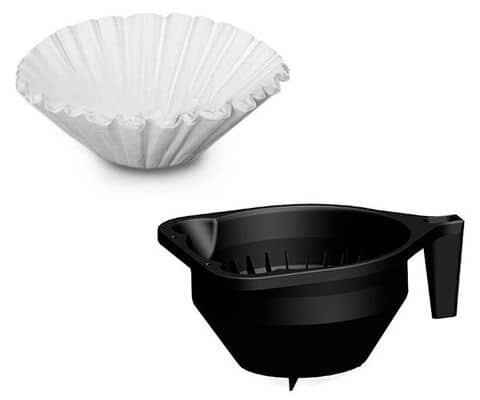
The machine’s placement should be chosen so that refilling water, changing filters, and swapping out pots can be done without unnecessary movement. Additional warming plates can be helpful for certain workflows, but should only be used where multiple pots are actually needed simultaneously. Filter paper and filter holders are an integral part of the brewing process and should be stored in close proximity to keep the workspace organized.
Cleaning, Descaling, and Durability in Day-to-Day Operations
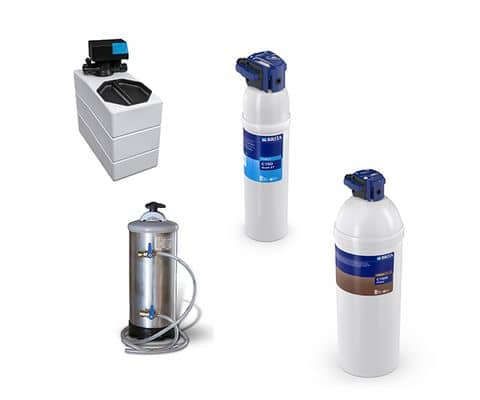
In commercial settings, filter coffee makers are often used several times a day. Stainless steel surfaces are practical for this purpose because they are durable and easy to clean. At the same time, the carafes, filter area, spout, and water-carrying components must be maintained regularly. Limescale buildup can impair brewing performance and operational stability; therefore, water hardness should be taken into account when planning maintenance. Where local water quality requires it, a suitable water treatment system can be a useful addition to the equipment configuration.
What matters is not only how quickly a machine can be cleaned, but also whether this task can be reliably integrated into opening and closing routines. Easily accessible components and a clear descaling routine help prevent unplanned downtime and keep the equipment operational in the long term.
Think economically: choose the right size instead of just buying big
A filter coffee maker is a cost-effective choice when its capacity matches actual needs. Machines that are too small can result in frequent rebrewing and long wait times during peak hours. Oversized machines, on the other hand, take up space, consume more power, and tie up the investment budget without automatically offering any advantages in everyday use.
For businesses with higher throughput, specific capacity ratings are therefore more important than the machine’s size alone. Larger models, for example, can produce around 40 liters or about 200 cups per hour, while smaller 2-liter machines are designed for significantly lower volumes. The right solution supports predictable restocking, clear workflows, and reliable dispensing. By evaluating capacity, carafe type, connections, cleaning requirements, and actual peak demand together, you can make a more sound investment decision and integrate the filter coffee machine effectively into daily operations.