


Heating Plates
Warming plates keep coffee and tea ready to serve for longer in professional settings and help ensure a smooth workflow at the counter, buffet, or coffee station. For cafés, hotels, bistros, catering services, and conference areas, they offer a compact solution when hot beverages need to remain reliably available. Guide to Hot Plates »
Width
Depth
Height
Price
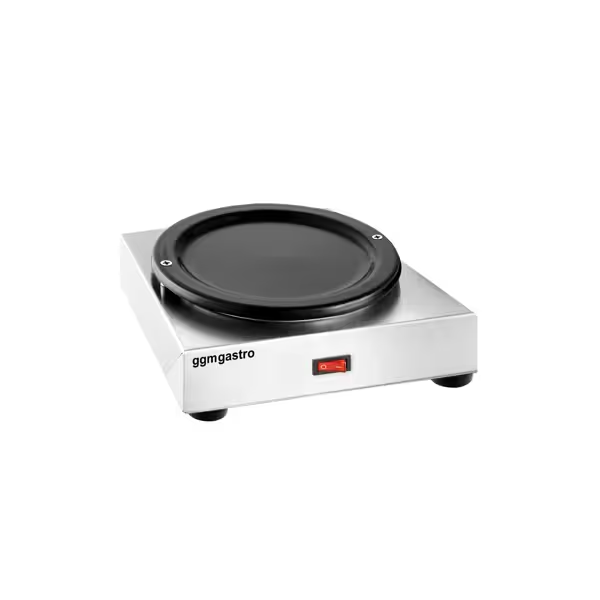
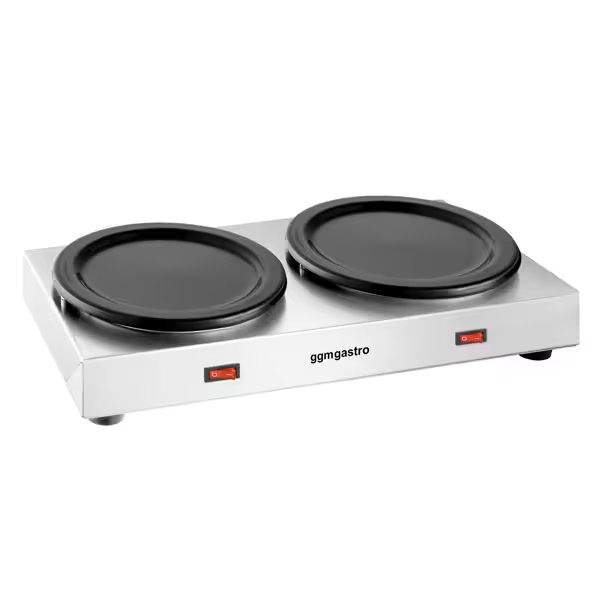
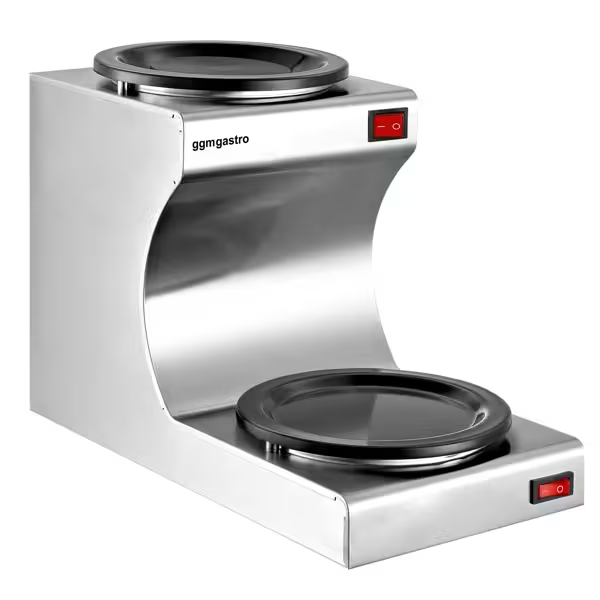
Warming plates for coffee and tea, and predictable service procedures
Warming plates are electric tabletop devices that keep pots of coffee or tea warm via a heated surface. In the foodservice industry, they are primarily used in situations where hot beverages are not served fresh one at a time, but need to remain ready for service over a certain period of time.
In everyday life, this applies to classic coffee stations in cafés, breakfast buffets in hotels, meeting rooms, catering areas, or self-service areas. A suitable warming plate reduces unnecessary trips because the staff doesn’t have to replace or brew each pot immediately. At the same time, the setup remains organized: one pot on the plate, clearly positioned, and easily accessible.
This simplicity is especially important in small spaces. A compact unit with a single heating surface fits on many counters, service tables, or buffet modules. For higher customer volume, models with two heating surfaces are useful—for example, when coffee and tea are served simultaneously or when two coffee pots are kept in rotation one after the other. Combined with coffee makers or fully automatic coffee machines, this creates a simple, easy-to-manage beverage station.
Which hot plate is right for your business
The choice depends less on the size of the machine alone and more on the service workflow. A single carafe is often sufficient for small cafés, satellite stations, or short conference breaks. Two hot plates are useful when serving multiple guests at the same time, when breakfast service runs longer, or when the team wants to serve coffee and tea separately.
Key decision criteria include:
- Number of pots: 1-plate unit for low volume, 2-plate unit for simultaneous service
- Power: 60, 120, or 160 watts depending on the model and usage scenario
- Footprint: compact dimensions for counters, buffets, or service stations
- Material: stainless steel housing for heavy-duty use and easy cleaning
- Operation: on/off switch and clear power connection for quick setup
The size of the pots also matters. Many warming plates feature round heating surfaces, typically around 174 mm in diameter. This ensures that standard coffee and tea pots sit securely on the plate. For optimal operation, it’s important that the pot, heating surface, and location are well-matched: a pot that’s too large will wobble, while one that’s too small will slow down the process.
Placement, Hygiene, and Use During Operation
Warming plates are most useful when they are logically integrated into the workflow. At a breakfast buffet, the warmer is ideally placed where guests or service staff can quickly access it without getting in each other’s way. In cafés or bistros, it belongs in a dry, easily accessible spot near the coffee station.
Cleanup remains a practical consideration. Coffee, tea, condensation, and sugar residue are part of everyday life at a beverage station. Smooth stainless steel surfaces are easier to wipe down and fit well into hygienic work areas. It’s important to have a stable, level surface, sufficient distance from water sources, and an easily accessible power outlet. For coffee stations with multiple components, cup warmers can be added without replacing the function of the warming plate.
Efficiency Through Simple Technology Instead of Unnecessary Complexity
A warming plate isn’t a large piece of equipment, but it can noticeably stabilize service. When coffee is kept warm during a breakfast rush, an event break, or bistro service, the team has more flexibility. Rebrewing, refilling, and serving can be better timed.
This becomes particularly cost-effective in establishments with recurring peak times. The investment is manageable, and the benefits include fewer interruptions, clear beverage organization, and a neat and orderly appearance at the service counter. Especially for understaffed teams, equipment that works without extensive training and doesn’t complicate the workflow is essential.
Integrate warming plates into the coffee station in a practical way
A good coffee station isn't just about the brewing equipment. It requires counter space, access to electricity, room for pots, cups, sugar, milk, and cleaning supplies. Warming plates can therefore be easily combined with stainless steel furniture or service tables if the area is in constant use. In buffet or catering settings, a clear layout helps guests find their way around and allows staff to refill items quickly.
It’s important to maintain clear boundaries: warming plates in this category are intended for coffee and tea pots. For food, GN containers, or buffet dishes, other warming solutions should be considered. This keeps the category clearly focused and makes the purchasing decision easier.
In a nutshell
Warming plates are a practical solution for businesses that want to keep coffee or tea ready to serve for an extended period of time. Key factors to consider include the number of pots, power output, footprint, material, and ease of cleaning. By selecting options that align with your specific service workflow, you can create a calm, organized, and practical beverage station for everyday use.