


Stainless Steel Drawer Cabinets for the Food Service Industry
Drawer cabinets provide easily accessible storage space for kitchen utensils, silverware, and cooking tools right at each workstation. Depending on the model, they can be used as freestanding cabinets or as part of a stainless steel kitchen unit. Drawer Cabinet Guide »




Product type
Building depth
Width
Design/Equipment
Number of Doors
Number of Drawers
Quality
Load Capacity
Door type
Product material
Price
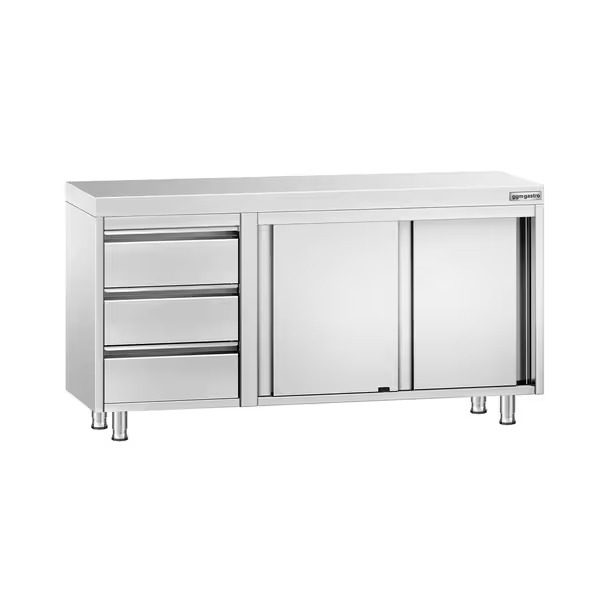
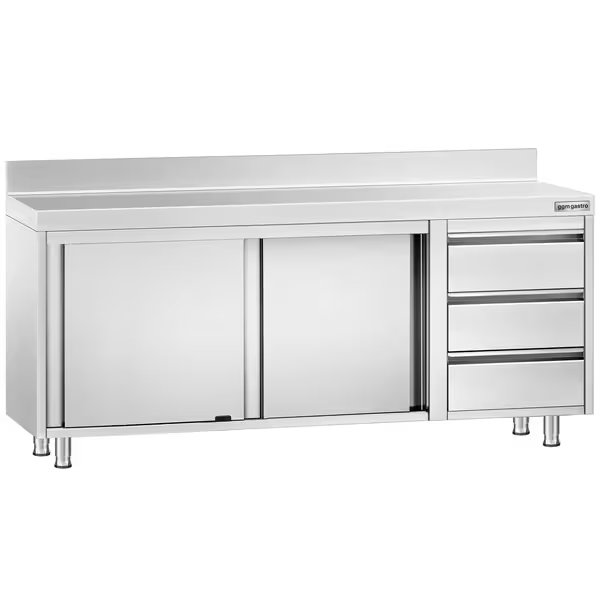
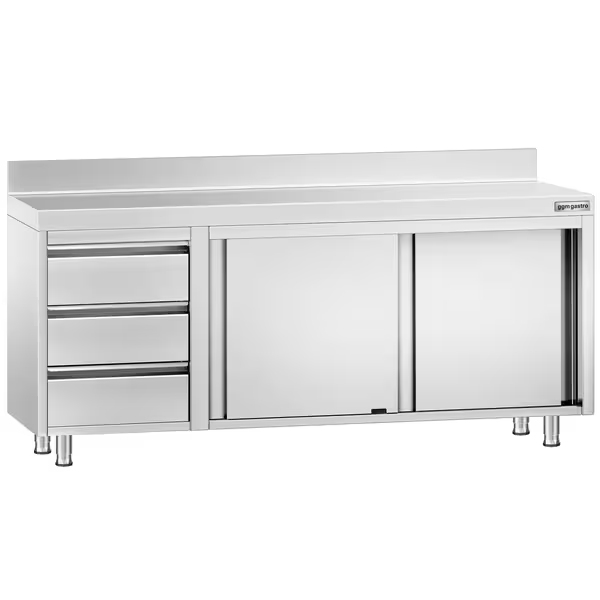
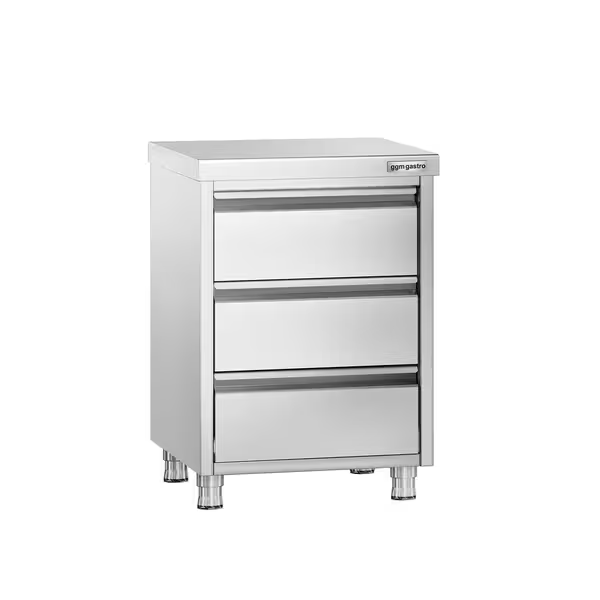
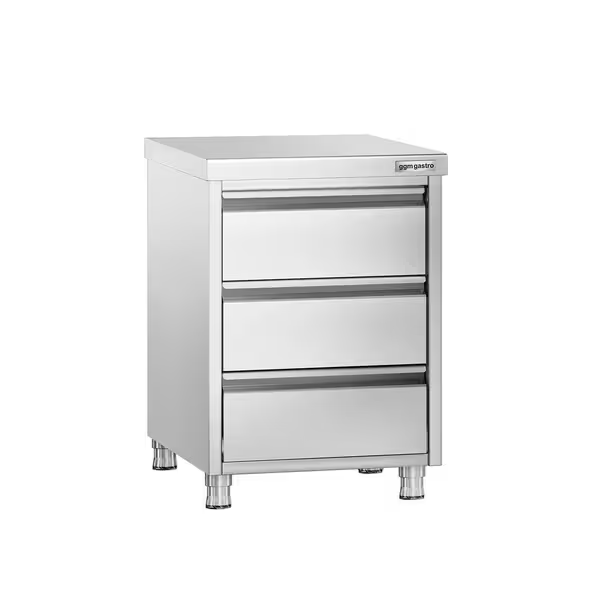
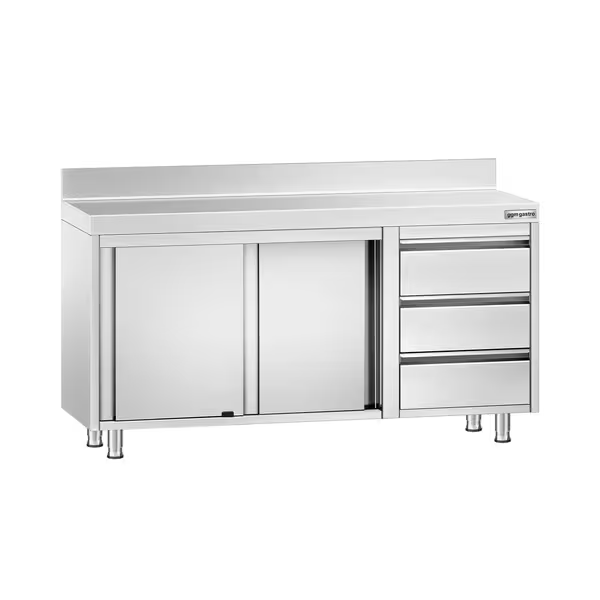
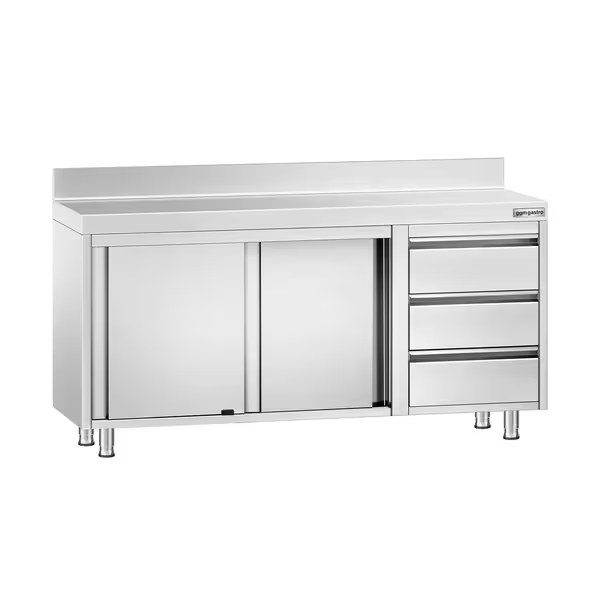
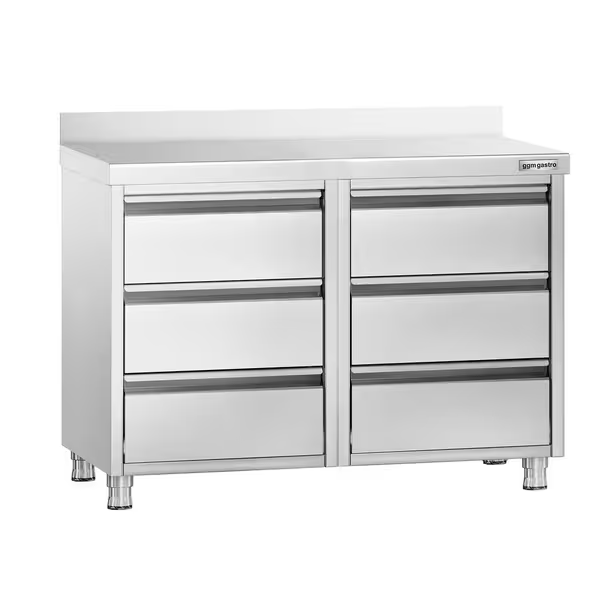
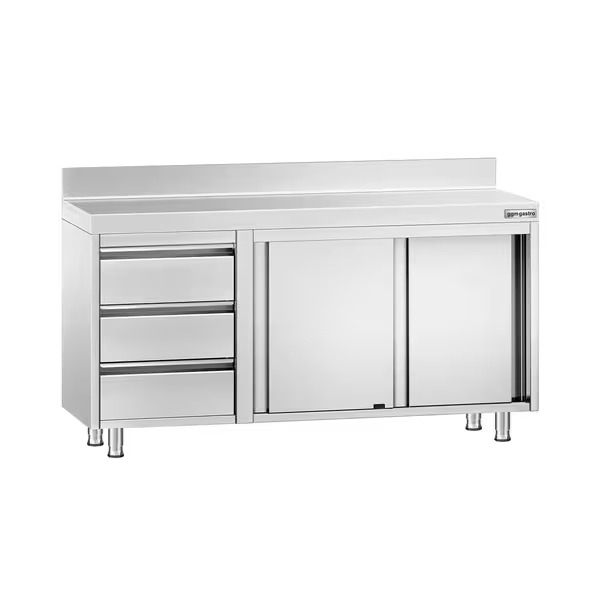
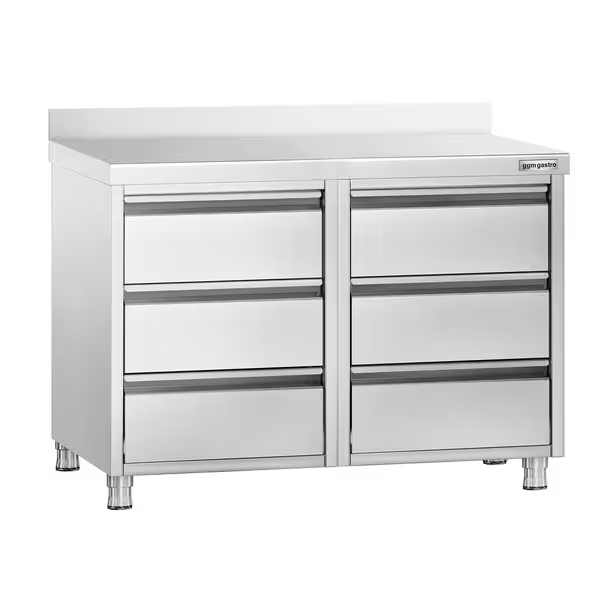
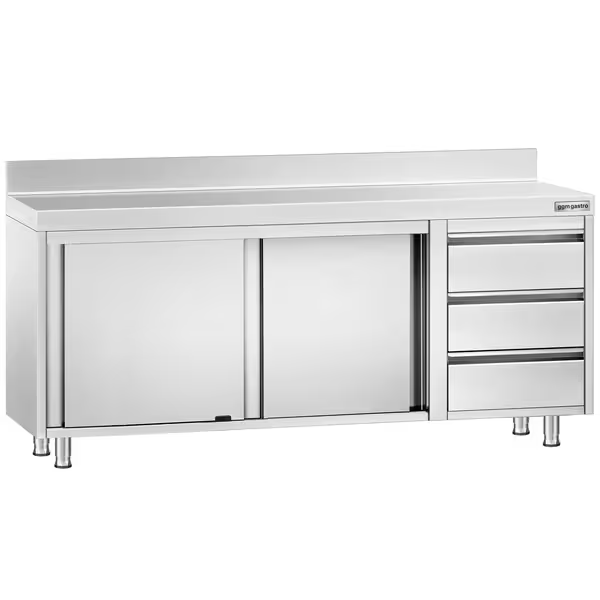
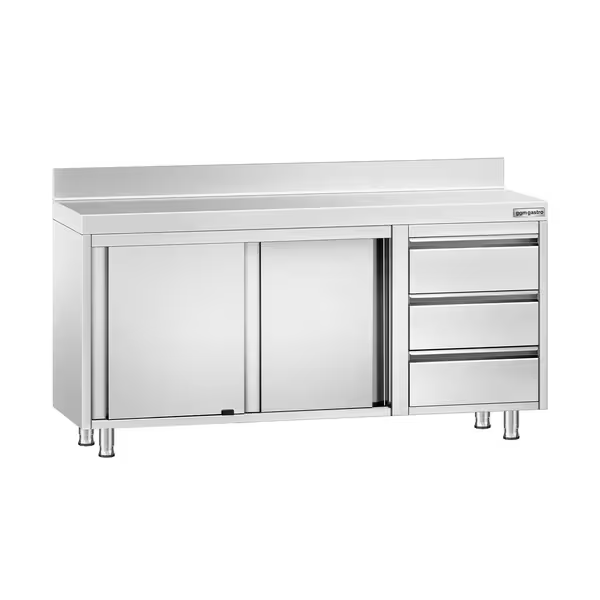
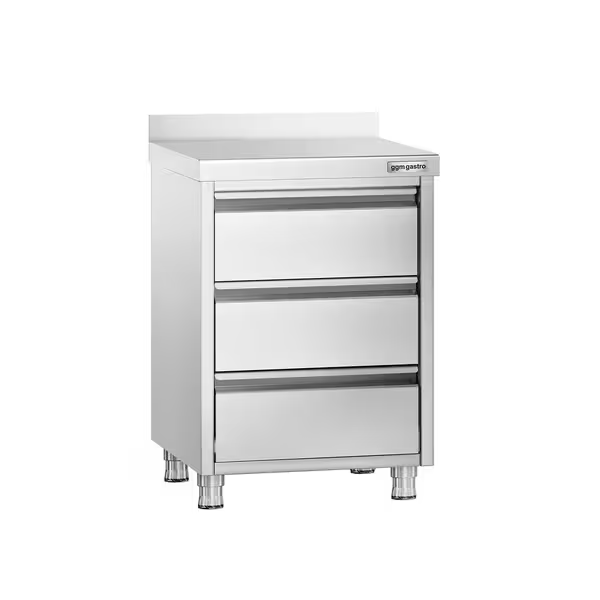
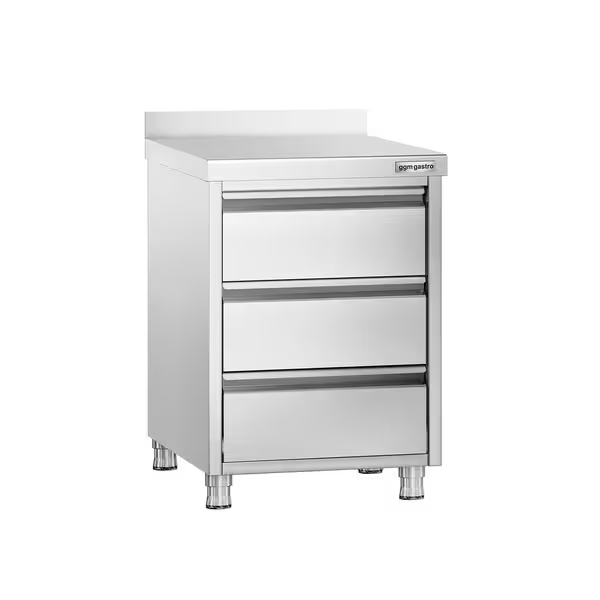
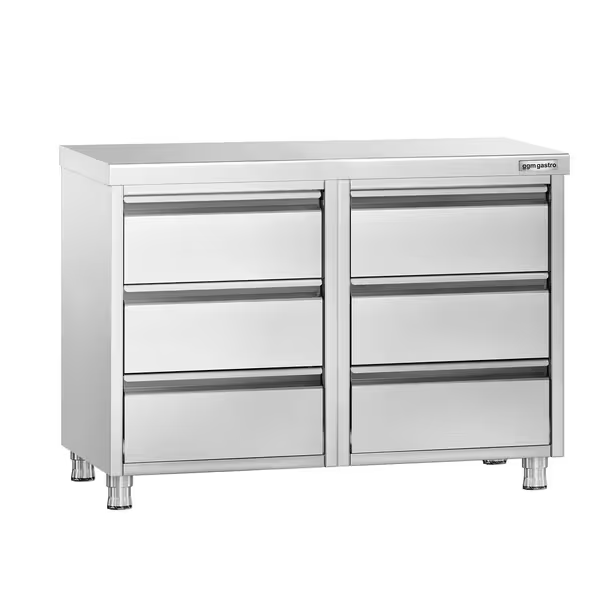
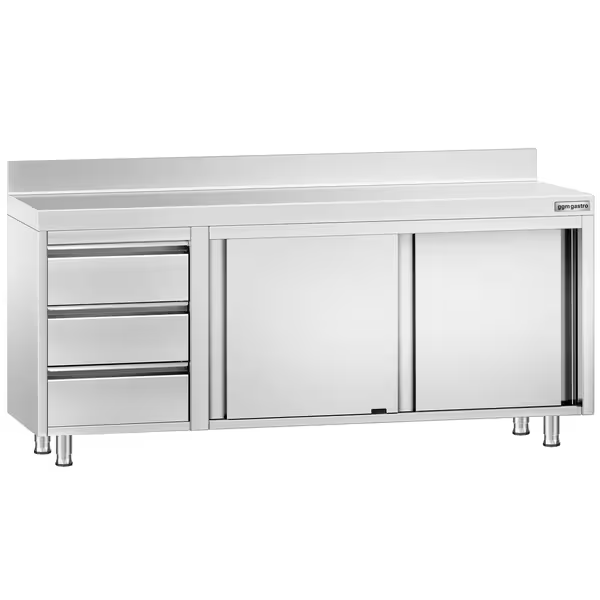
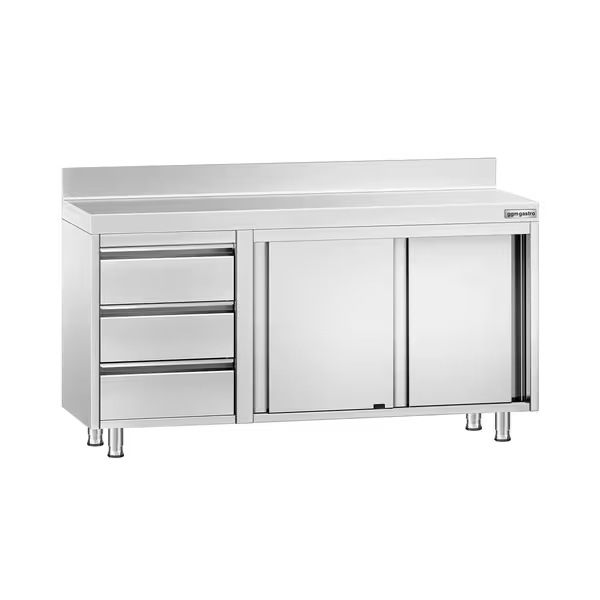
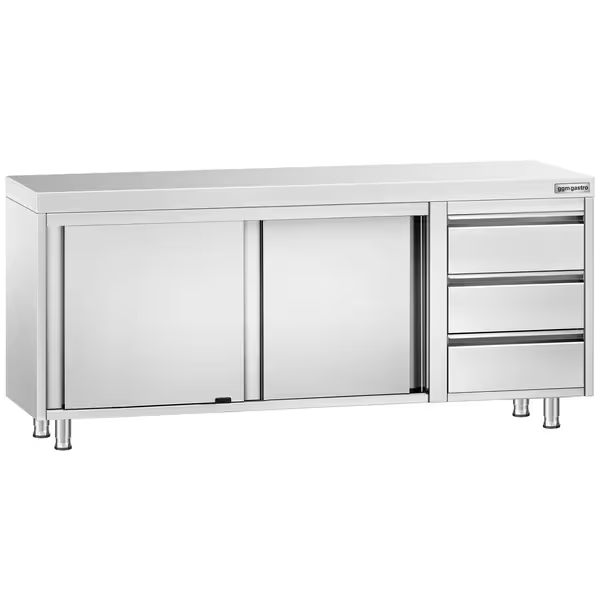
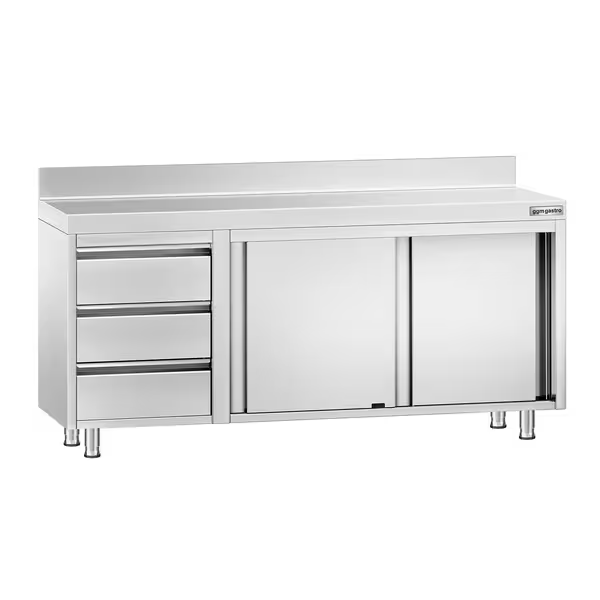
Drawer cabinets help keep things organized right at your workspace
Drawer cabinets are stainless steel kitchen furniture with pull-out compartments where kitchen utensils can be stored neatly and within easy reach. They are found in restaurants, snack bars, pizzerias, hotel kitchens, and institutional food service, particularly at prep and production stations.
Whether it’s cutlery, scrapers, portioning tools, or frequently used kitchen utensils: having a designated spot makes daily organization easier. During preparation, employees can sort tools by work step. During peak hours, they rarely have to leave the station or search through multiple cabinets for the right tool. Therefore, what matters most is not having as much storage space as possible, but having the right layout at the actual point of use.
Select the appropriate projection depth, extensions, and upstand
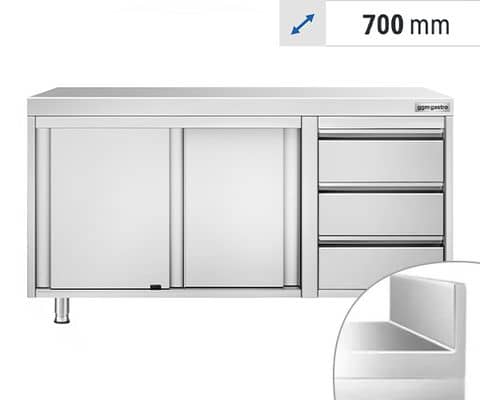
First, the width, depth, and working height should match the existing kitchen layout. GGM Gastro offers models with depths of 600 or 700 mm, among others. When planning, it’s not just the installation space that matters: There must be enough room in front of the cabinet to fully open the drawers, even when multiple people are working at the same time.
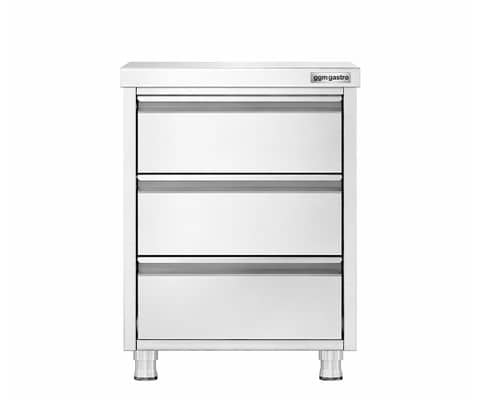
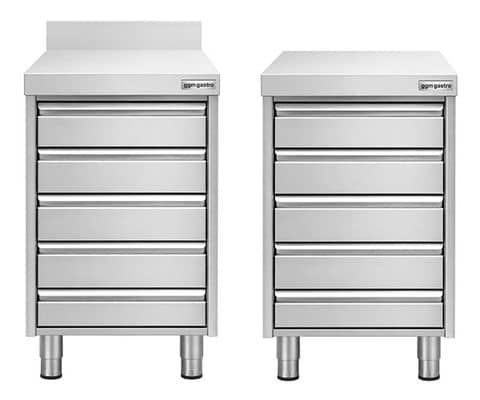
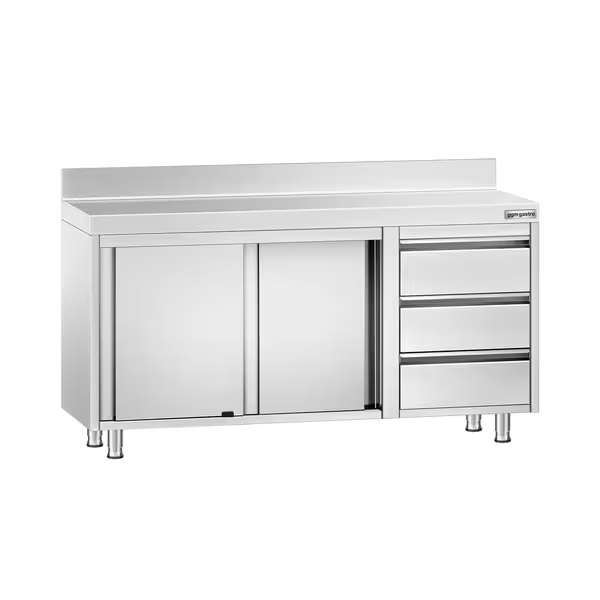
Depending on the model, there are different numbers of drawers to choose from, including versions with one, two, three, four, or six drawers. A few large drawers are suitable for bulkier kitchen tools; several separate compartments help organize smaller items by function. Work cabinets with integrated drawers and sliding doors combine both types of storage. A raised edge can be useful for wall-side workstations because it forms the rear edge of the work surface. Whether a specific design is suitable also depends on the existing cabinet line and the desired layout.
The distinction between Eco and Premium should not be based solely on price: Compare the listed materials, the drawer slides, the scope of delivery, and the load-bearing specifications. A more elaborate design is particularly worthwhile if its features match the actual intensity of use.
Stainless Steel, Pull-Out Drawers, and Cleaning Under Continuous Use
When it comes to frequent opening, moisture, and regular cleaning, the quality of the workmanship is key. The product line includes stainless steel models, including grades AISI 304, AISI 201, and AISI 430. These differ in material properties and corrosion resistance. The decisive factors are the on-site conditions and the specifications for the respective item—not just the term “stainless steel.”
Pay particular attention to handles, guide rails, edges, and the accessibility of the drawer’s interior. Crumbs, grease, or moisture can easily accumulate there during everyday kitchen use. Cleaning agents should be suitable for the specified material. For heavier items, the maximum load capacity of the individual drawer slide is also crucial: A load capacity specification for the entire cabinet does not automatically apply to every drawer.
After cleaning, drawers and guide components should be allowed to dry according to the care instructions. You should also check whether the pull-outs can be removed for cleaning and how readily replacement parts are available. Such details influence the effort and costs over the product’s lifespan.
Shorter walking distances thanks to strategically placed drawer cabinets
In a small snack kitchen, a compact drawer unit can hold frequently used items right next to the preparation area. In a larger production kitchen, on the other hand, a combination of counter space, multiple pull-out units, and enclosed storage is often more practical. This ensures that workflows remain clear even with rotating staff, and unnecessary trips can be minimized. Frequently used utensils belong in easily accessible pull-outs; lower compartments are better suited for less frequently used accessories. This arrangement can reduce the need to bend over and make it easier for new staff members to find their way around.
Planning should include coordination with stainless steel work tables and adjacent work zones. If a station requires chilled ingredients, refrigerated tables can be added; a standard drawer cabinet does not provide active cooling. For specific tasks, such as keeping dough pieces neatly organized in a pizzeria, there are specialized drawer designs. Suitable accessories for stainless steel furniture should be selected based on model compatibility.
Quick Checklist for Choosing the Right Cabinet
-
Dimensions: Width, depth of 600 or 700 mm, and adjust the working height to match the kitchen unit.
-
Drawers: Select the number, interior dimensions, and maximum drawer load based on the equipment.
-
Installation: Allow space for full opening and check for the need for an upstand.
-
Material: Evaluate the stainless steel grade, surfaces, and ease of cleaning based on daily use.
-
Usage: Compare a drawer-only cabinet with combined designs featuring sliding doors.
Buy drawer cabinets from GGM Gastro to suit your needs
The right model supports clear workplace organization, simplifies cleaning routines, and can reduce daily disruptions. Therefore, when making a cost-effective decision, factors such as usage intensity, ease of use, and integration into the kitchen are just as important as the purchase price.
GGM Gastro offers a variety of drawer cabinets and combined cabinet solutions designed to meet commercial requirements. Expert advice, a spare parts service, information on product availability, and Europe-wide delivery options assist with new planning, modernization, and replacement purchases. This allows you to select equipment that fits your available space, staff, and actual operational workflow.